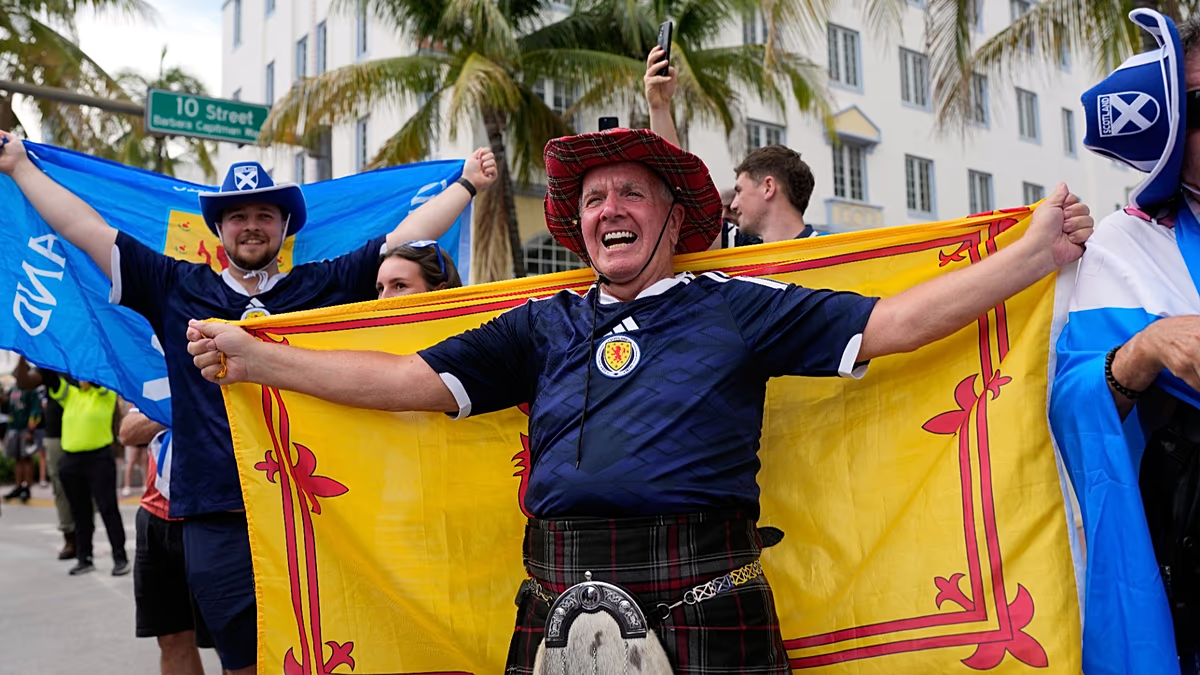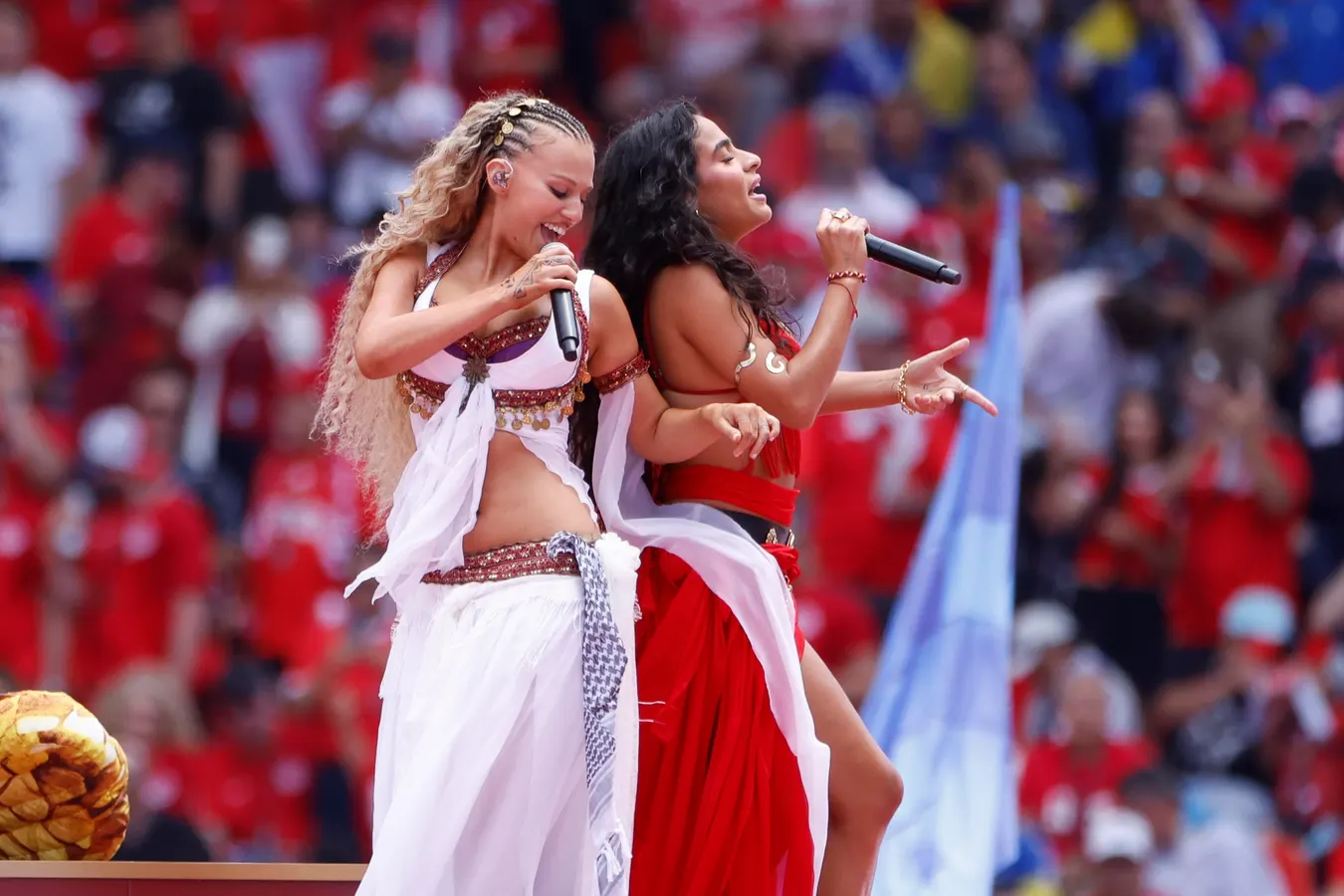
TORONTO, CANADA - JUNE 12: Elyanna and Jessie Reyez perform during the Opening Ceremony before the FIFA World Cup 2026 Group B match between Canada and Bosnia and Herzegovina at Toronto Stadium on June 12, 2026 in Toronto, Canada. (Photo by Jean Catuffe/Getty Images)Getty ImagesThe FIFA World Cup is not just the biggest sporting event on the planet. It is one of the last remaining moments in pop culture where the entire world is paying attention to the same thing at the same time. For artists, that kind of collective attention is increasingly rare and, when approached strategically, it is a genuine opportunity to break through to audiences that a typical release cycle cannot reach.Here are five ways to do it.Clip your music to viral moments as they happen.The most accessible entry point for any artist is also the most time-sensitive. Every World Cup produces a handful of unforgettable moments: a last-minute winner, a shocking upset, a goal that stops the world for a few seconds. Fans immediately flood TikTok and Instagram Reels with edits, highlights, and reaction videos. The song playing underneath those clips travels with every reshare.Nathaniel Kosko, Marketing Director at broke/The Nations, breaks down the psychology behind it: "You want to connect your song to an unforgettable moment in time during the World Cup for the listener. Maybe it’s when Messi got a hat-trick, maybe it's when Germany won 7-1, or maybe it's even when someone got hurt. The audience is there, present your music in a way that compels them to check out your song and you might be onto something."Germany’s victory over Curaçao this tournament has already produced one of the clearest conversation spikes of the 2026 World Cup so far, with World Cup-related discussion surging by more than 25,000 tweets on the day of the match as fans reacted across social platforms. Every one of those posts is a potential placement. An artist who has a record ready and moves quickly enough to attach it to that wave is not chasing the algorithm. They are riding it. MORE FOR YOULOS ANGELES, CALIFORNIA - JUNE 11: Mexico fans celebrate after their National Team scored the first goal during their match against South Africa at a watch party at LA Plaza de Cultura y Artes on June 11, 2026 in Los Angeles, California. Mexico versus South Africa is the first game in FIFA World Cup 2026 and Los Angeles will host 8 matches during the global tournament. (Photo by Mario Tama/Getty Images)Getty ImagesShow up at watch parties.Social media reach and in-person presence are not mutually exclusive, and the artists who treat them as complementary will have the advantage. Relvyn Lopez, Director of Marketing at Right Hand Co., makes the case for direct audience engagement: "The easiest thing to do would be to attach new music onto viral social media trends and moments, either from the artist's main account or an alternative account, but I think the best way to build real long-term fans and memories is to be directly engaged with audiences. Offering to perform at watch parties, both official and unofficial, allows an artist to create genuine relationships not only with potential fans, but with venues and event promoters. There's a party every day. Be a part of the festivities and watch how organic opportunities start to form through that hard work."The watch party angle is underutilized. For independent and mid-level artists especially, showing up in the rooms where people are already gathered around a game creates the kind of memory that content alone rarely manufactures. When a song plays at the exact moment a goal goes in, it gets fused to that memory permanently.Think globally, not just virally.The World Cup is not a domestic moment. It is the rare cultural event where fans from every continent are locked into the same conversation, which means artists who approach it with a regional mindset are leaving the majority of the opportunity on the table.Joe Aboud, Founder of 444 Sounds, frames it directly: "The World Cup gives artists access to something incredibly rare: a truly global audience. It's one of the few cultural moments where fans from every continent are paying attention to the same conversation at the same time. Artists who can authentically tap into that shared global energy have the chance to reach audiences in ways that simply aren't possible during a normal release cycle."The ceiling on that reach is not small. Shakira’s "Waka Waka (This Time for Africa)" became the defining proof of concept. The song was inescapable across highlight packages, fan edits, and broadcast coverage throughout the 2010 tournament. It has since registered over a billion streams on Spotify and its video remains one of the most-watched music videos of all time on YouTube. That longevity is a direct result of how thoroughly the song became the sonic backdrop for a shared global moment. Most artists cannot land an official FIFA anthem deal, but that has never been the requirement. The clipping strategy and live presence work globally without it.MEXICO CITY, MEXICO - JUNE 11: Danny Ocean performs during the Opening Ceremony before the FIFA World Cup 2026 Group A match between Mexico and South Africa at Mexico City Stadium on June 11, 2026 in Mexico City, Mexico. (Photo by Carl Recine/Getty Images)Getty ImagesCollaborate across borders.If the World Cup itself is defined by nations competing on the same stage, the artists who understand that and build their music accordingly will resonate with more of that audience. Glenn Tobey, Director of Strategy and Operations at 444 Sounds, puts it plainly: "The World Cup is a reminder that music and sport share the same superpower: they bring people together across languages, countries, and cultures. For artists, the opportunity isn't simply to attach themselves to the event. It's to create something that reflects that global spirit. That's why collaborations are so powerful during moments like this. The goal isn't just global reach. It's creating something that feels as international as the audience experiencing the World Cup itself."The brands have already figured this out. Coca-Cola launched its 2026 World Cup campaign with a reimagined version of Van Halen’s "Jump" performed by J Balvin, Amber Mark, Travis Barker, and Steve Vai, engineering one piece of music to travel across Latin American, North American, and rock demographics simultaneously. That cross-demographic architecture through deliberate multi-artist collaboration is a model available to independent artists willing to think globally about who they bring into the room. Aboud points to producer RedOne’s recent work with JIHYO of TWICE, LUDMILLA, French Montana, and rising artist Adriana C as exactly that kind of release, artists from different countries and genres creating something designed to move across cultural lines.Tap into the soccer community's content ecosystem.Soccer has one of the most active and engaged fan content ecosystems of any sport in the world, and the World Cup supercharges it. Kosko underscores the scale: "Soccer might be the biggest community in the world and there is no better time to promote than during the FIFA World Cup. Whether on TikTok or Instagram, soccer has the biggest global impact of any sport and it shows. Players are gaining tens of millions of followers, fans are tuned into every single edit, highlight, and recap."That ecosystem is not passive. Fans are actively searching for music to soundtrack their content. Fan-made football anthems have been raking in millions of plays across YouTube, TikTok and Instagram ahead of this tournament, with some outperforming official FIFA commissions in engagement. Artists who position themselves within that ecosystem, whether through fan page outreach, soccer creator partnerships, or simply making music that sounds like a goal celebration, are tapping into a distribution channel that activates itself.The window is narrow. The World Cup runs through July 19. The conversation is happening now, and for artists willing to move fast, stay culturally present, and soundtrack the moments people are already sharing, the exposure on the other side can last far longer than the tournament itself.
5 Ways Artists Can Use The World Cup As A Marketing Power Move
The FIFA World Cup is not just the biggest sporting event on the planet, here's how artists can put it to good use.
1,326 words~6 min read