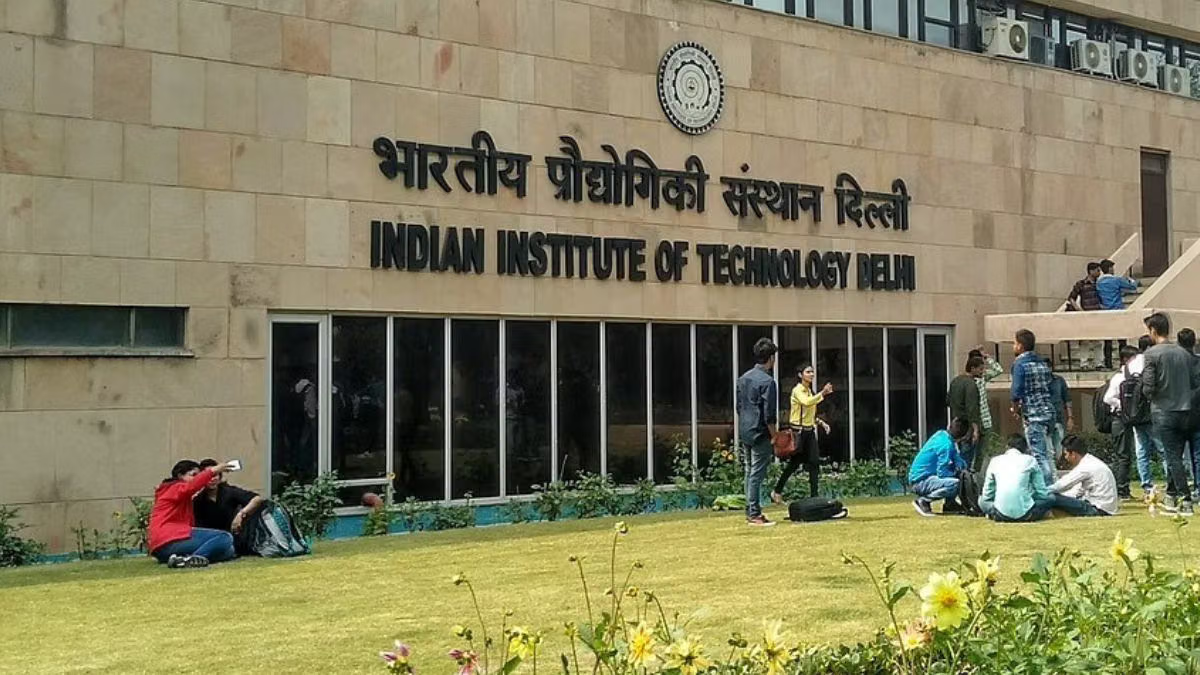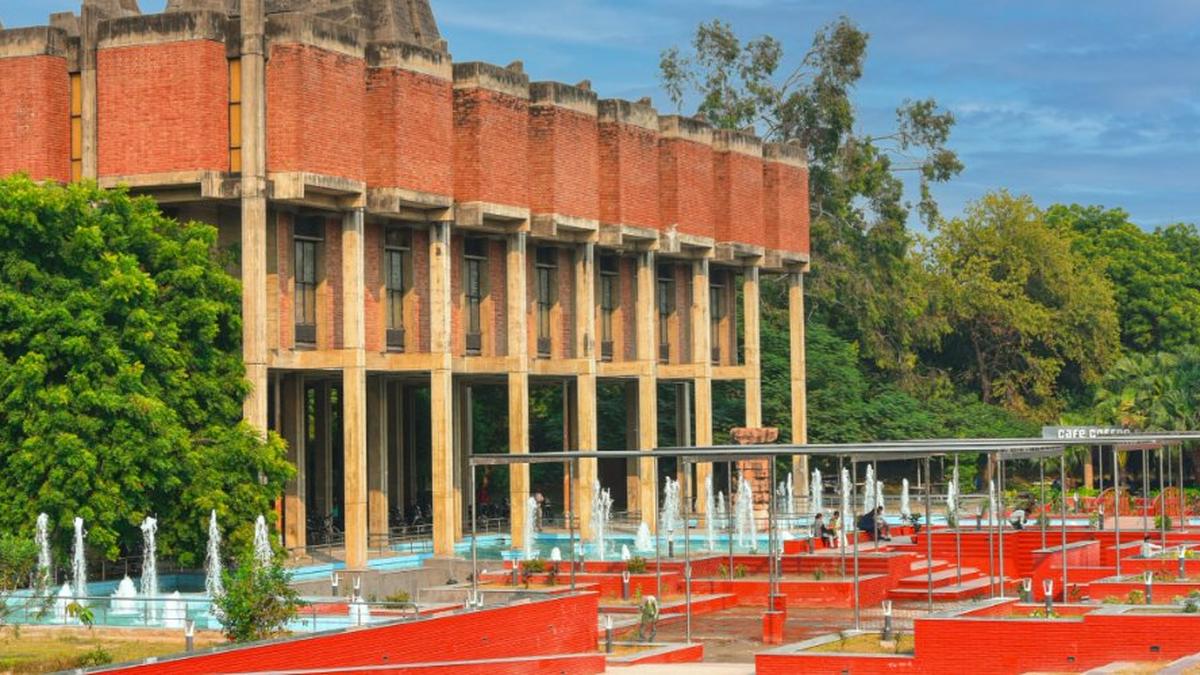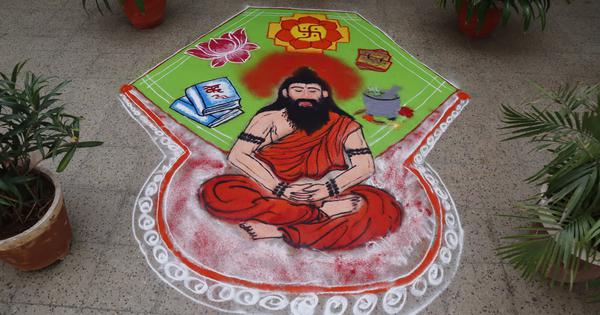
‘There are now Indian Knowledge System hubs at IIT-Kharagpur, IIT-Gandhinagar, IIT-Bombay, and IIT-Kanpur. Those at Kanpur and Mandi in particular have emerged as ‘leaders’ in the “research” of “consciousness”, reincarnation, and “Vedic” biology. These words are within quotes because, as with the Indian Knowledge System, what they claim to stand for in name is not what they stand for in substance’. Photo: iksindia.org
For a few decades now, a project called the ‘Indian Knowledge System’ (IKS) has sought to integrate traditional Indian wisdom into modern educational curricula. There is a legitimate quest to reclaim India’s indigenous intellectual history and to elevate an informal cultural aspiration into a part of education — but the IKS of today is not it.The real IKS might focus on the linguistics of Panini, the Nyaya school of logic, the Kerala school of mathematics, the development of Wootz steel, and so on. But the IKS being institutionalised, including under IIT-Mandi director Laxmidhar Behera, is concerned with “Puranic science”, mythology as history, ritual as technology, and an open contempt for verifiability.The more aggressive avatar of IKS was formalised by the National Education Policy (NEP), 2020. It began by documenting breakthroughs in metallurgy and ancient mathematics before increasingly blurring the lines between historical scholarship and theological revivalism. There are now IKS hubs at IIT-Kharagpur, IIT-Gandhinagar, IIT-Bombay, and IIT-Kanpur. Those at Kanpur and Mandi in particular have emerged as ‘leaders’ in the “research” of “consciousness”, reincarnation, and “Vedic” biology. These words are within quote marks because, as with the IKS, what they claim to stand for in name is not what they stand for in substance.Proponents of pseudoscienceThe IKS centres’ proponents say they endeavour to “decolonise” the Indian mind. This is farcical. The Bengal renaissance of the 19th century, including figures such as Jagadish Chandra Bose and Prafulla Chandra Ray, synthesised Indian identity with rigorous scientific study and proved that decolonisation does not have to open the door to pseudoscience. The IKS centres intend to embed myth-based inquiries in the framework of the IITs, leveraging the institutes’ prestige to acquire for their politico-religious dogma a veneer of scientific legitimacy.Recently, IIT-Mandi and IIT-Kanpur hosted a “special session” dedicated to the “science” of reincarnation. The programme proposed using EEG data and astrological birth charts to track “past life memories” in children. The event was attended by speakers from the University of Virginia’s Department of Perceptual Studies (DOPS), itself a controversial entity.The event was a crisis in higher education. Pseudoscience is now well and truly institutionalised, and the participating IITs have signalled their willingness to trade their academic credentials for theological dogma. The ‘researchers’ at the event discussed building a “systematic methodology” for a universal metaphysical claim based on one six-year-old in north India. This is normally called an anecdote.To suggest one child’s neural response could ‘validate’ the concept of reincarnation does a disservice to the best traditions of Indian philosophy. They remain excellent not as peculiar products of their times but because their exponents thought sincerely and carefully about what facts they had. To have the facts we do today and still believe a ‘study’ with a cohort size of one or using a physicalist entity (EEG) to prove a dualist theory (reincarnation) to be credible is silly.The ‘researchers’ proposed to show the child their “past-life-related stimuli”, such as photos of a spouse from a ‘previous life’, and record the brain’s reaction. Given that the group’s own protocol involved “developing familiarity” with the child and collecting photos from the “claimed previous-life family” before the test, the ‘researchers’ are fundamentally creating the very stimuli they claim to be ‘discovering’. This is called confirmation bias. Including astrology in this mix is nonsense.The IKS centres partnered with DOPS for “Western” credibility but the work at DOPS has been notorious for its methodological looseness. Critics have pointed out that in the interval between a death and a supposed rebirth, the ‘previous family’ and the ‘current family’ seem to have ample opportunity to meet, communicate, and line up their stories to fit a cultural narrative of reincarnation. The ‘researchers’ also did not examine the fact that “past life memories” are almost exclusively reported in cultures that already believe in reincarnation.Forceful approachAfter years of trying to change academia from the outside-in using student violence and by revising textbooks, it seems the Hindutva programme has finished shifting its strategy to an inside-out approach with top-down force. Doctoral students were required to attend the “special session”. The centres have used IIT funds and research fellows to ‘hunt’ ghosts as fieldwork. The University Grants Commission’s 2023 guidelines require all students of higher education to take IKS courses for credit. The IITs’ administrators know they are compromising the institutions’ reputation, but they are willing to risk that because their goal is not scientific leadership. It is domestic ideological consolidation.The spreading rot of pseudoscience at the IITs will encourage top-tier Indian talent to move to universities abroad that still see the line between decolonising and science. Good international scientists beginning to look down on IIT degrees because of these “special sessions” will also serve the “atmanirbhar” narrative by separating an elite Indian education from global standards of rationalism. Ultimately, the loop will be closed to leave Indian scholars to be judged only by their loyalty to a specific civilisational project. Published - June 23, 2026 12:57 am IST