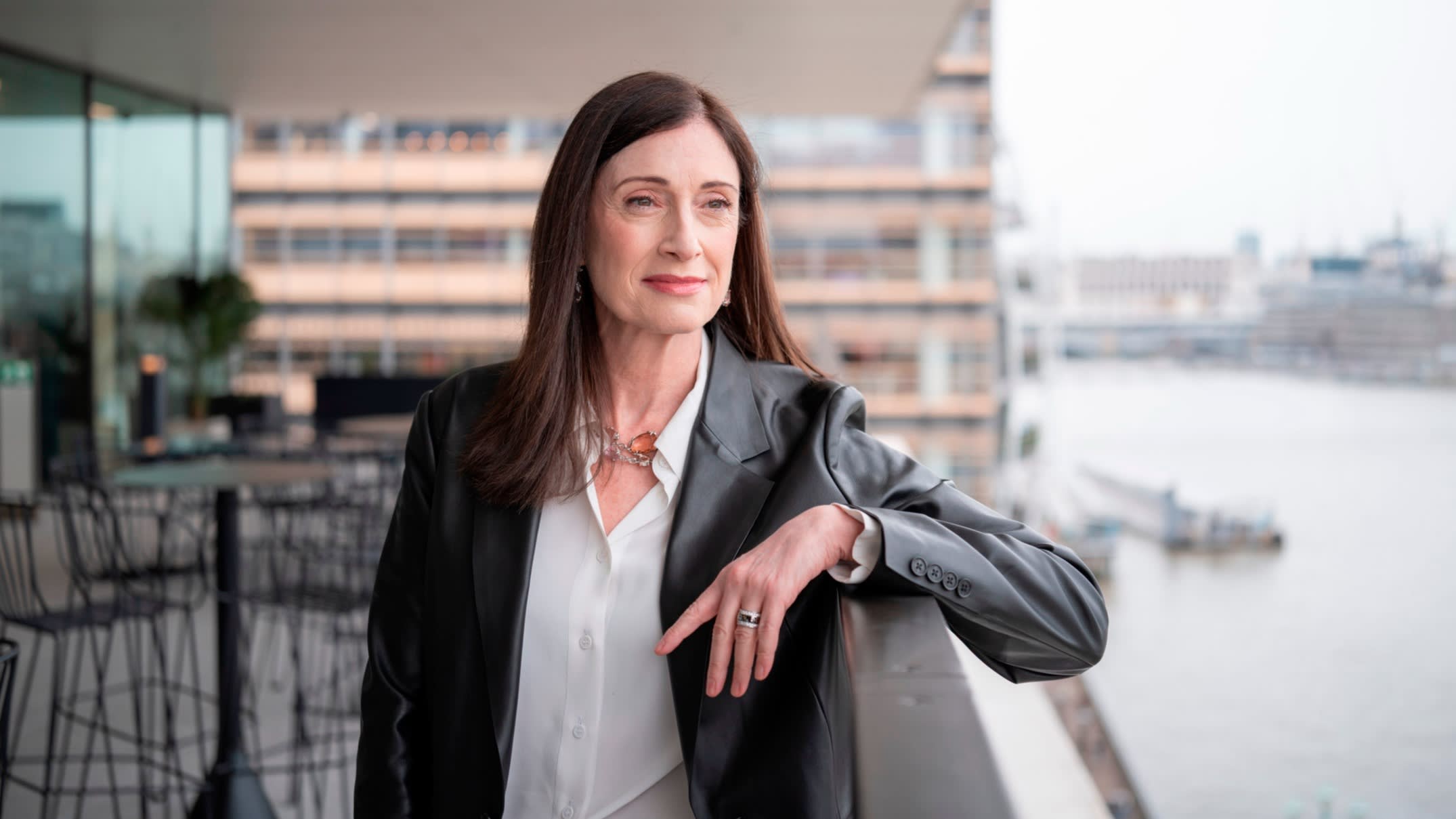
Cindy Rose, the chief executive of WPP, has said the era when clients pay agencies for hours worked and resources used is “dead”, while pay based on outcomes, in her view, is the way forward for agency networks.Speaking at the opening session at Campaign House on the first day of the Cannes Lions Festival of Creativity today (22 June), Rose said: “I think, maybe controversially, the time-and-materials model is dead,” adding that in a “world of AI” where work can be done faster and cheaper, “that's just not a model that's sustainable” in the future.The British agency group is instead looking to adopt an “outcomes-based model”, where how much a client pays for WPP’s services is based on its ability to meet a set of objectives agreed with the client.Jaguar Land Rover, which officially appointed WPP as its global partner for creative, media, production, customer experience and marketing strategy in May after winning a competitive review, is the first public example of WPP’s outcomes-based model. Rose acknowledged that such a model comes with inherent risk, for both client and the agency group it is working with, as remuneration is changeable. However, she insisted, when asked, that WPP will not lose money as a result.She said: “Will I lose money? No. I can't go into the details of the commercials [of the JLR deal], but we've made sure that there's ceilings and floors [to the outcomes], because there's risk on both sides. What if we blow it out of the park? What if we sell more Land Rovers than they've ever sold?”She also predicted that others may soon follow suit, adding: “It's a fabulous model, and I think the market will flip pretty quickly.”The importance of consumer trustRose linked WPP’s outcomes-based model to how the network builds trust with its clients — which is the topic of a new set of five “trust principles” it launched today. They are:1. Clients own and control their data.2. WPP Open is open by design.3. Consumers are people, not IDs.4. AI augments human creativity, it does not replace it.5. We take accountability for driving our clients' growth.She elaborated on the principles in a company blogpost in which she talked about how WPP would not look to “lock in” clients to its tech or allow client data to be used by third parties, in what appeared to be a tacit contrast to some of its main competitors.Rose told the audience at Campaign House she was not “taking shots” at rivals such as Publicis Groupe and Omnicom. The principles are “entirely about what we stand for” and have been released in response to WPP research, which has shown “brand trust and differentiation is at an all-time low”, she said.“I just think consumer trust in brands has never been more important, and brand trust in agencies has never been more important, and I just find it puzzling that the industry hasn't focused on that more, so I wanted to put out a statement and just say: ‘Hey, it's important to us.’”Rose acknowledged that WPP has faced its own questions about trust, including the former Group M’s bribery scandal in China and an ongoing US lawsuit from a former exec, adding that “we're not going to be perfect all the time. No company is, but now we have a framework [the five trust principles] to filter all of this stuff through.”She also noted that WPP has stopped working with LiveRamp, which Publicis is in the process of buying.Shutting out the noiseCannes Lions has reported that entries for this year's awards have been down 25% compared with a year ago. When asked whether this aligns with how many WPP has entered, Rose said: "Yes. I think that's about right."Across this week, Rose said she and her team have 100 events in Cannes, and WPP as a whole has 1500 client engagements – this is despite the fact that the network has a reduced public presence in Cannes this year, as it opted against renting a dedicated beach on the Croisette and kept only the WPP rooftop at the Martinez.Similarly, Publicis in recent years has taken a more “closed-door” approach to Cannes, favouring private meetings with clients over a dedicated presence on the beach.Last week, Publicis launched a spoof-film calling out the ad industry for overpromising on AI in pitches. Rose said she had not seen the film or read about it in the press, adding: “Clients are looking for AI efficiencies for sure, and of course they're valuing human creativity more than ever, so I don't think it's an either or an or. I think it's about finding the right balance.” Separately, former WPP CEO Sir Martin Sorrell described WPP’s performance as “catatonic” in an interview for City AM earlier this month, but Rose declined to comment on that. “I am not going to dignify those remarks with a response,” she said, which received a round of applause from some in the Campaign House audience.On the in-fighting among the industry at large, she said: “I am so focused on my client's success, the success of my people, and getting WPP back on top," adding: “There's a lot of noise, it's designed to keep you from focusing on what's important, and I'm not going to let that happen.”Building a winning mindsetOne of Rose’s biggest goals since taking on the role of WPP CEO at the start of September 2025 has been to give the parent company a sense of culture, which she has said has been lacking. As part of this, she hired psychologist Dr Michael Gervais to work with her leadership team on areas including positive self-talk and how to manage stress.Sharing more about her decision to get Gervais on board, Rose said: “How do you think elite sports teams become champions? How do you think Olympic athletes become champion? They train their minds. It's about high performance. It's about being at your very best every single day.”She added: “Bringing in a high-performance coach just helps us get into a winning mindset."In one final point in her interview, when asked whether WPP will still be around in five to 10 years' time, Rose said: "Rumours of the industry's demise have been greatly exaggerated over time. I don't think this is any different. I think we'll find new commercial models, new way of adding value, and will be even stronger in the era of AI."This story first appeared on Campaign UK.
WPP’s Cindy Rose: ‘The time-and-materials model is dead’
CEO speaks at Campaign House in Cannes about the shift in how clients pay, trust, and ignoring "the noise" from competitors.
1,070 words~5 min read