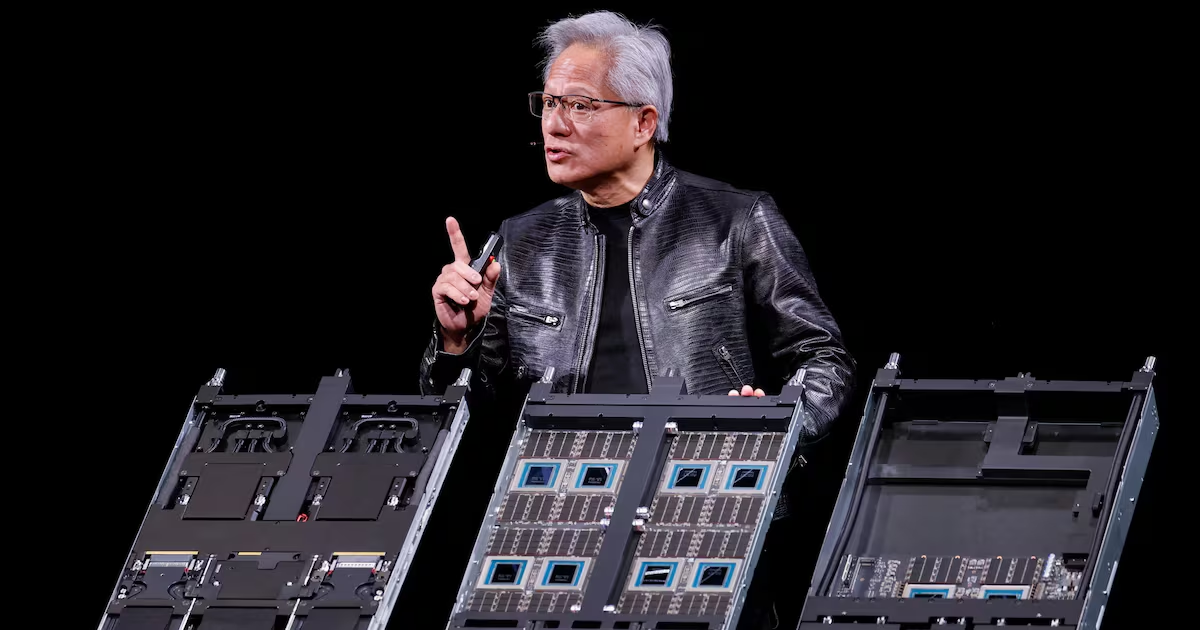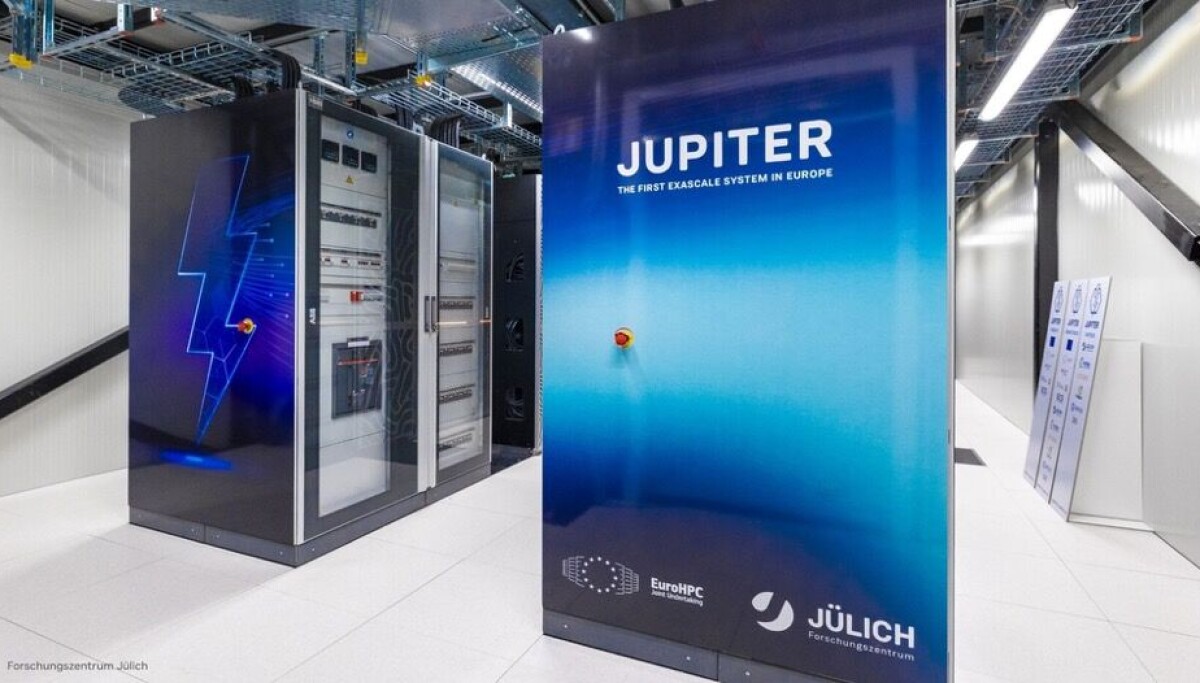
Nvidia is pushing agentic AI for scientific computing, and says that this requires a new scientific computing stack, which the GPU giant is ready to deliver, of course.At the ISC High Performance 2026 event in Hamburg, Germany, Nvidia is lauding its own achievements in supercomputing, highlighting just how many of the world’s top compute clusters use its hardware these days.But just as agentic AI has become this year’s buzzword in the machine intelligence industry, so the GPU slinger is pushing it as the next big thing for supercomputers and their research programs, driven by its next-gen Vera Rubin platform and new software tools.
“We are currently witnessing a massive inflection point with agentic AI. AI is shifting from a tool that simply answers questions to an autonomous system that executes complex tasks,” Nvidia’s senior director of HPC and AI Factory Solutions Dion Harris told the media in a briefing.
The Mission and Vision systems at the Los Alamos National Laboratory (LANL) in the US will be the world's first agentic AI supercomputers when they come online, he says.A new scientific computing stack connects agents, simulation, and AI together to accelerate the next generation of scientific discovery, Harris claims.“Scientists leverage agentic AI co-scientists that call simulators and surrogate models alongside tools and applications, to do everything from planned experiments to write code to run the simulations to simulations and AI and data analytics converging into one single workflow,” he explained.This requires an incredible amount of compute, memory, and networking, which, in Nvidia’s eyes, means supercomputers built on its Vera Rubin and Grace Blackwell platforms, plus Quantum InfiniBand networking, and new software for accelerating discovery.The latter comprises ALCHEMI, DAQIRI, and cuPhoton. The first is described by Nvidia as a domain-specific toolkit for chemical and material discoveries, using the BGR microservice for simulating millions of molecules and structures.