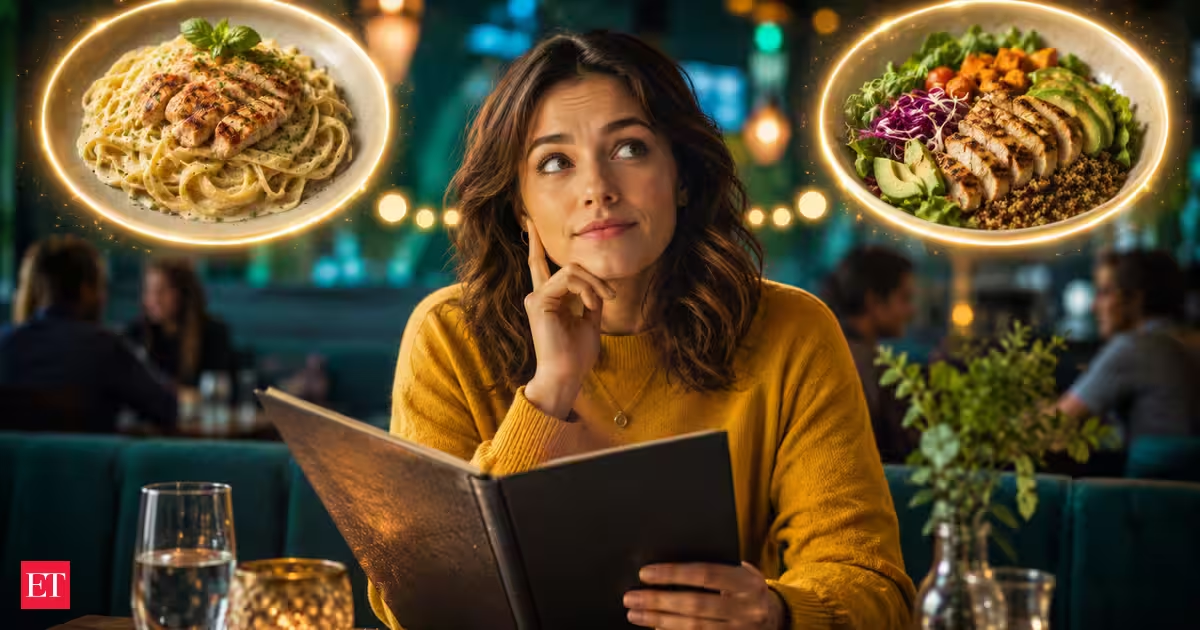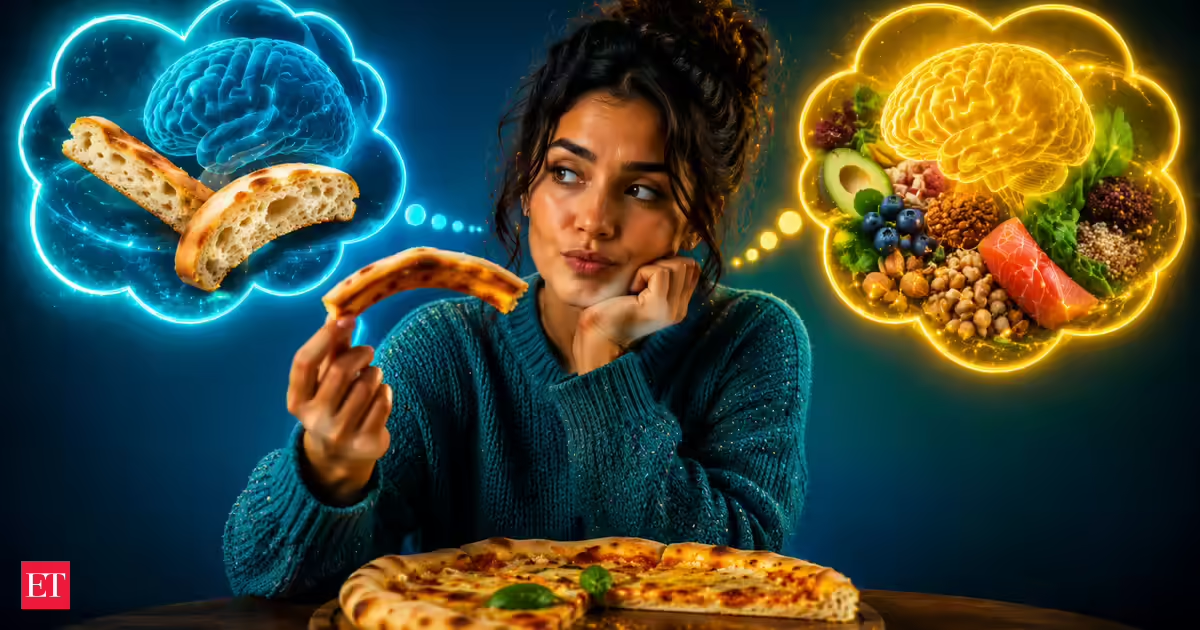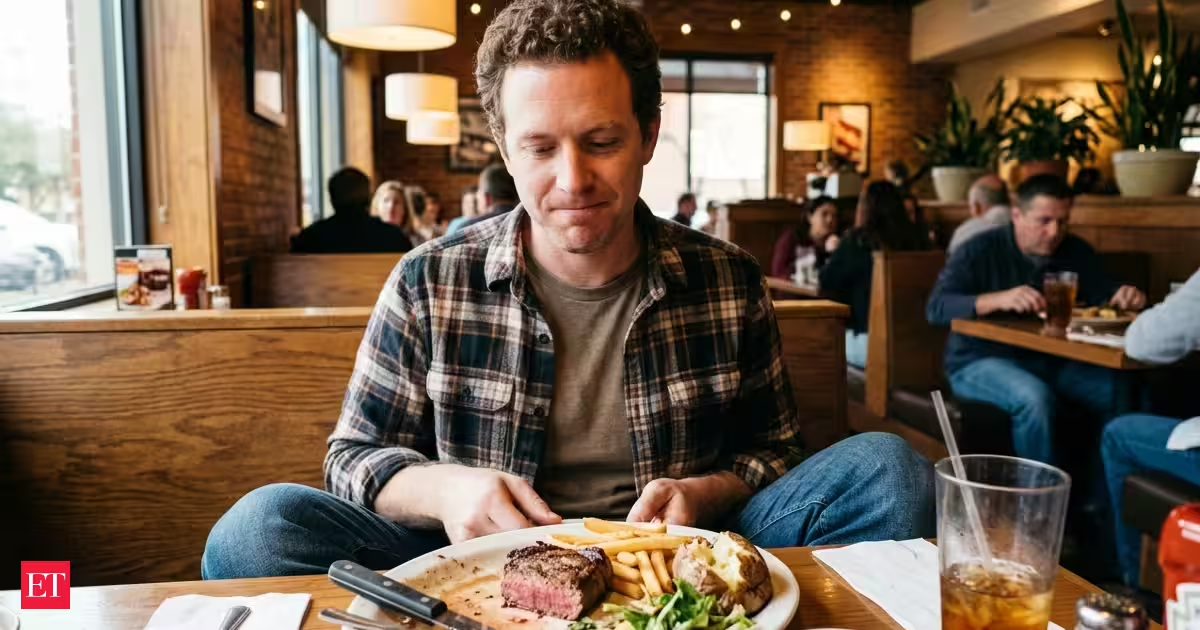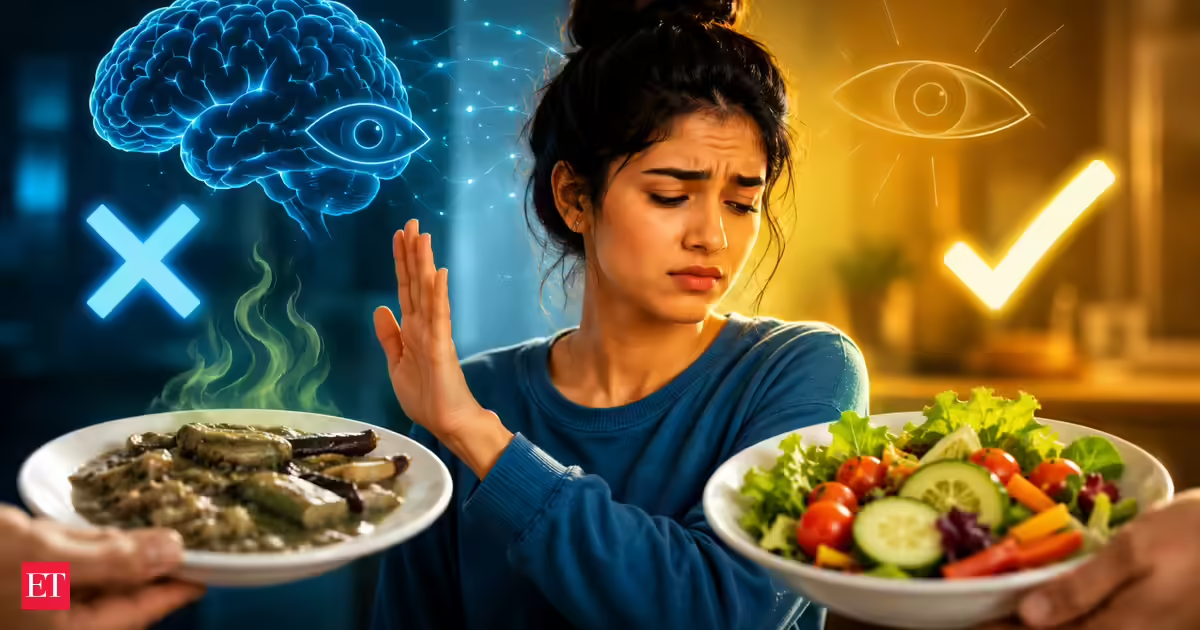
We have all seen it happen. Two people are served the exact same meal. One person immediately begins eating. The other hesitates because the food looks messy, disorganized or simply unappealing. Sometimes they refuse to eat it altogether. To outsiders, this behavior may seem superficial. But psychology suggests something deeper is happening. Humans are visual creatures. In fact, the brain often begins evaluating food long before it reaches the mouth. Researchers have found that appearance heavily influences taste expectations, emotional responses and even perceived safety. For some people, food presentation is not an extra luxury. It is an important part of the eating experience.Here is what psychology says may actually be happening.Psychology says the brain eats with the eyes firstOne of the most widely accepted concepts in food psychology is called sensory expectation. Researchers have found that people form expectations about taste before eating simply by looking at food.Psychologist Charles Spence, an expert in experimental psychology and multisensory perception at the University of Oxford, has extensively studied this phenomenon. His research shows that color, shape, arrangement and presentation significantly influence how people experience flavor. The brain essentially creates a prediction. If food looks fresh and attractive, people often expect it to taste better. If it looks messy or unusual, enjoyment may immediately decrease. This is why restaurants invest enormous effort into presentation. People often say, "We eat with our eyes first." Psychology suggests that statement is more accurate than many realize.Evolutionary psychology says appearance was once a survival toolLong before supermarkets and expiration dates existed, humans relied heavily on visual cues to survive. Evolutionary psychologists believe appearance served as an important safety filter. Humans learned to avoid foods that looked spoiled, discolored or contaminated. This tendency is connected to the Behavioral Immune System.You Might Also Like:The Behavioral Immune System is a psychological defense mechanism that helps humans avoid potential sources of disease before exposure occurs.Researchers Mark Schaller and Damian Murray have extensively studied this concept. The system constantly scans the environment for possible threats. Food is one of its primary targets. For some people, this sensitivity may simply be stronger. Their brains become more cautious when food appears unusual or unattractive.Psychology says disgust is one of the brain's strongest protective emotionsAnother explanation comes from Disgust Theory. Psychologist Paul Rozin has spent decades studying disgust and food behavior. His research suggests disgust evolved as a protective emotion to keep humans away from harmful substances. Interestingly, disgust can be triggered visually.People do not always need to smell or taste something first. An unpleasant appearance alone can activate avoidance. This explains why some individuals instantly reject certain foods. The response may happen before conscious thought even begins. The brain simply says, "Something feels off."Processing fluency may explain why attractive food feels saferAnother important concept is Processing Fluency Theory. Psychologists have found that humans prefer information that is easy for the brain to process. Symmetrical, organized and familiar things require less mental effort. Food is no exception. A neatly arranged meal often feels easier to understand. The brain interprets this simplicity positively.Messy or unfamiliar foods require additional processing. That extra effort can sometimes reduce comfort and enjoyment. Social media platforms have amplified this tendency. Millions of people watch aesthetically pleasing cooking videos every day. Beautiful smoothie bowls, carefully plated pasta dishes and visually satisfying desserts often receive enormous attention. The brain naturally responds to visual harmony.Familiarity also shapes food preferencesAnother explanation comes from the Mere Exposure Effect. Psychologist Robert Zajonc discovered that repeated exposure increases liking. People generally prefer things they encounter regularly. Food traditions become deeply embedded over time.For example, someone who grew up eating neatly presented meals may unconsciously associate presentation with quality. Others raised in environments where appearance mattered less may not pay attention to aesthetics at all. Neither approach is wrong. The brain simply learns different standards.Social media has changed the way people experience foodModern life has amplified visual eating. Food is no longer just food. It has become content. Platforms like Instagram and TikTok have normalized aesthetic expectations. People photograph meals before eating them.Restaurants intentionally design dishes for social sharing. Psychologists call this social modeling. When people repeatedly observe others valuing beautiful food, they may adopt similar preferences. This does not mean they are shallow.It means humans remain highly influenced by their environments. Albert Bandura's Social Learning Theory explains that people frequently adopt behaviors they observe being rewarded by others. Today, aesthetically pleasing meals are constantly rewarded with likes, shares and attention.Psychology says the food is not the story: the brain's prediction system isPsychology teaches us that everyday habits often reveal hidden mental processes. The appearance of food is not the real story: Prediction is, protection is, expectation is.For some people, attractive food creates excitement. For others, unattractive food creates hesitation. Neither reaction automatically means someone is spoiled or dramatic. It simply means the brain is using one of its oldest tools: visual judgment. Because long before humans tasted food, they first had to decide whether it was safe enough to eat. And perhaps that ancient system is still quietly influencing our dinner plates today.FAQsWhy do some people refuse to eat unattractive food?The brain often uses visual information to predict taste, quality and safety before eating.Is judging food by its appearance a psychological trait?Partially. It can be influenced by sensory expectations, familiarity and evolutionary survival mechanisms.
Psychology says people who refuse to eat food that doesn't look appealing aren't being difficult, their brains may be programmed to trust their eyes first
Psychology teaches us that everyday habits often reveal hidden mental processes. The appearance of food is rarely the real story. The brain's need for prediction, its desire for protection, and its reliance on expectations are often what drive these behaviors beneath the surface.
887 words~4 min read