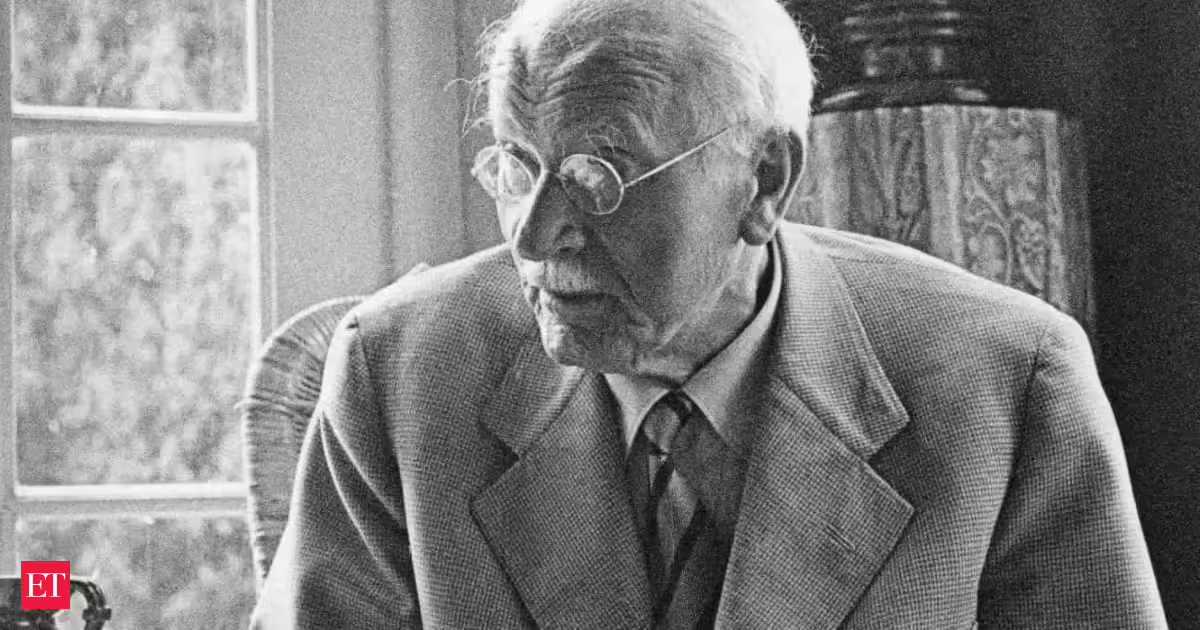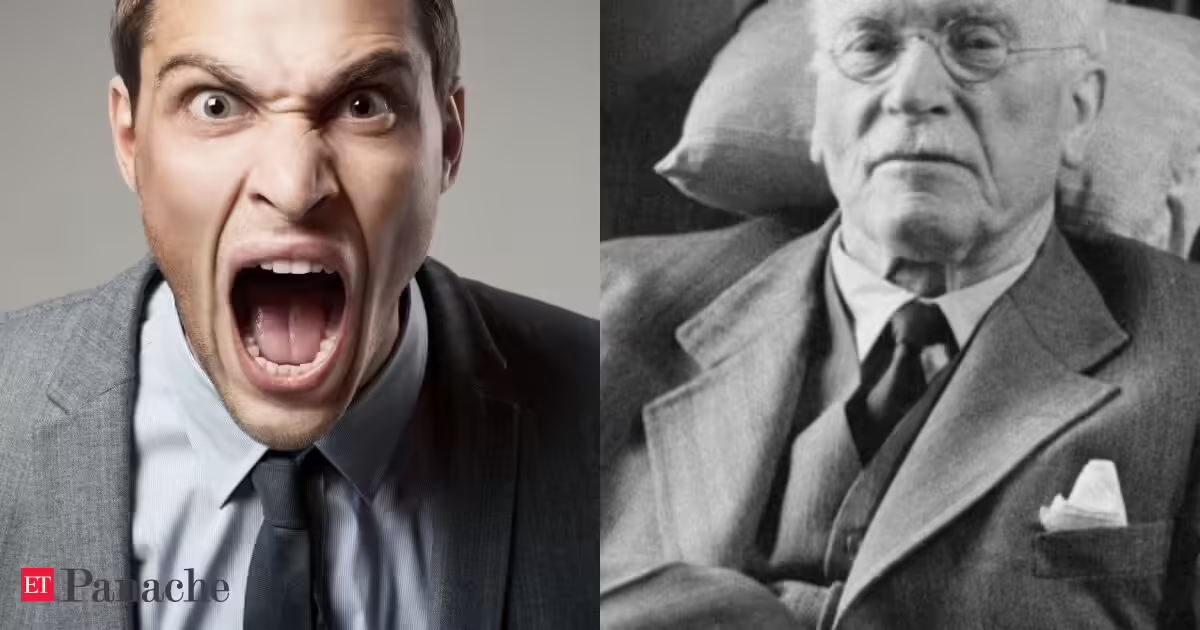
Many people have experienced it. A colleague’s arrogance, a friend’s habit of interrupting conversations, or someone’s constant need for attention can trigger a surprisingly strong emotional response. While most people assume the irritation is entirely about the other person’s behavior, Swiss psychiatrist and psychoanalyst Carl Jung suggested that the answer may be more complicated. Jung once wrote, “Everything that irritates us about others can lead us to an understanding of ourselves.”The observation appeared in Memories, Dreams, Reflections, Jung’s autobiographical work that was compiled and edited by Aniela Jaffé and published after his death in 1961. Although the statement is short, it reflects one of the central ideas that ran through much of Jung’s psychological work: the belief that people often react most strongly to qualities they have not fully recognized within themselves.What Carl Jung meant According to Jung, the traits that bother us most in other people can sometimes act like mirrors. They may point toward feelings, insecurities, desires, weaknesses, or personality traits that we have pushed aside or refused to acknowledge.This idea is closely connected to what Jung called the “Shadow.” In Jungian psychology, the Shadow refers to the hidden or unconscious parts of a person’s personality. These are aspects of ourselves that we may dislike, deny, suppress, or simply fail to notice. Rather than disappearing, however, these qualities remain part of the psyche.Jung believed that people frequently project these hidden elements onto others. As a result, someone else’s behavior can trigger an unusually strong reaction because it reminds us, consciously or unconsciously, of something within ourselves.In simple terms, the person causing irritation may not be the whole reason for the emotional response. Part of the reaction may come from an internal conflict that has not yet been recognized.The psychological idea behind projectionJung’s observation is often discussed through the concept of psychological projection. Projection occurs when individuals attribute thoughts, feelings, or characteristics they find difficult to accept in themselves to someone else.For example, a person who dislikes their own tendency to seek validation may become especially critical of someone they perceive as attention-seeking. Likewise, someone uncomfortable with their own anger may be quick to label others as aggressive.Jung argued that these moments should not simply be dismissed as annoyance. Instead, they can serve as clues. By asking why a particular behavior creates such a strong emotional response, a person may discover hidden fears, unresolved feelings, or aspects of their personality that need attention.This process, Jung believed, is an important step toward greater self-awareness and psychological growth.The man behind the ideaBorn in Switzerland in 1875, Carl Gustav Jung became one of the most influential figures in the history of psychology. He founded analytical psychology, often referred to as Jungian psychology, and developed several concepts that continue to influence therapists, researchers, writers, and educators today.Among his most well-known contributions are the ideas of introversion and extraversion, psychological archetypes, the collective unconscious, synchronicity, and the process of individuation. Many of these theories explored how conscious and unconscious forces shape human behavior.Jung’s work extended beyond clinical psychology. His ideas influenced fields such as literature, religion, mythology, philosophy, and cultural studies. His theories also became the foundation for personality frameworks such as the Myers-Briggs Type Indicator.Understanding the ShadowThe concept of the Shadow remains one of Jung’s most enduring ideas. He described it as the part of the personality that contains traits people would rather not associate with themselves.The Shadow is not always made up of negative qualities. It can also contain talents, emotions, creativity, or ambitions that have been ignored or suppressed. However, because these traits exist outside conscious awareness, they often emerge indirectly.Jung believed that personal growth requires acknowledging these hidden parts rather than denying them. The goal is not to eliminate the Shadow but to understand it and integrate it into a more complete sense of self.
Famous psychologist Carl Jung explains why people get irritated by habits they secretly themselves have: 'Everything that irritates us about others can lead us to an understanding of ourselves'
Swiss psychiatrist and psychoanalyst Carl Jung believed that the traits and habits that irritate us most in other people often reflect hidden or unacknowledged parts of our own personality. In his famous quote, “Everything that irritates us about others can lead us to an understanding of ourselves,” Jung explained the concept through his theory of the “Shadow” and psychological projection. He argued that strong negative reactions can serve as clues to unresolved insecurities, flaws, or emotions within ourselves, making self-awareness and personal growth possible through reflection rather than judgment.
635 words~3 min read