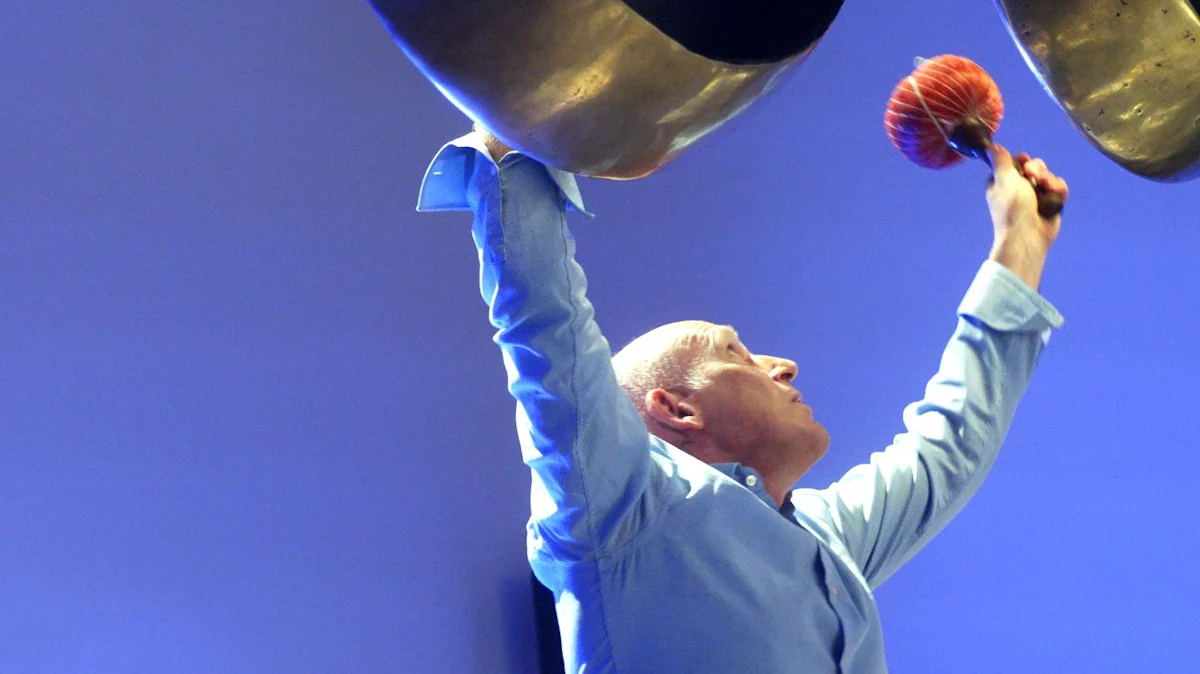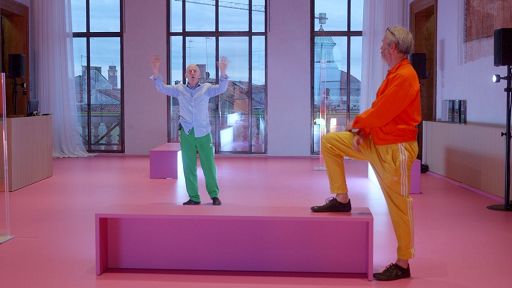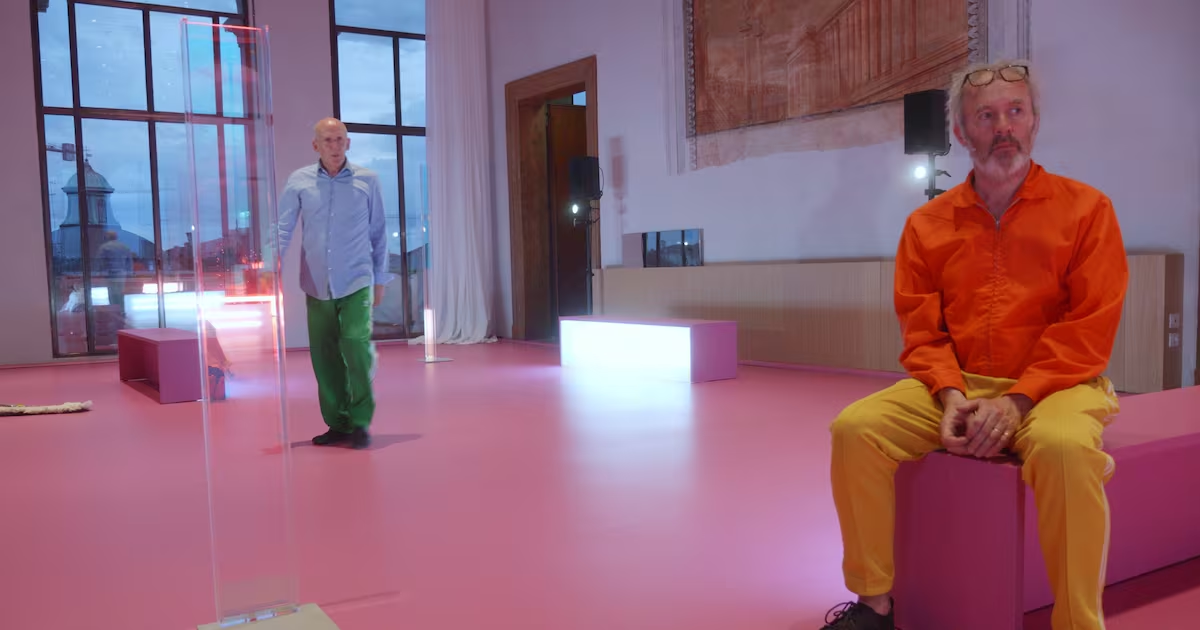
Call me shallow but I made an early calculation that I would not be able to absorb six hours of Samuel Beckett in one day. Two days should do it, I thought.While one of the most baffling stories ever told was being enacted before me, I was distracted by the sound of children playing on the street and the view of a jade-coloured canal from the third-floor gallery space of the Palazzo Diedo in Venice. But that was allowed. As observers and listeners, we were invited to move around the vast room lined with frescoes of Venice and book-ended by high arched windows and curtains billowing in the breeze. We could wander into the connecting rooms, lie down, sit on the floor, look out the window, just as long as we did not take out a mobile phone. For a while, I felt locked out from the mystifying text as the actor Conor Lovett started to move among us, teasing us that “there may be three characters involved”.A statue on the roof of a nearby church seemed to beckon me outside into the sunlight of Venice and away from the confounding story of How It Is, hailed by some as Beckett’s final prose masterpiece, a solid two-fingered salute to conventional storytelling.It is a visionary work that dispenses with capital letters, punctuation and syntax to unleash a torrent of words and disjointed phrases in which there are broad hints of a narrative but nothing to really get your hopes up about plot and character development. Remember, there may be three characters involved. Pim, Pem and Bom are the names that arise from the text but perhaps these three are one and the same. Hard to tell as they collectively and sometimes separately struggle through the mud and the dark, tormenting each other, stabbing each other in the arse and dragging along with them a tin opener and a treasured sack of tins. Occasionally, a pleasant memory of another time and place floats to the surface.Early on as I tried to tune into Lovett’s opening salvo, I saw a man come to the aid of an audience member and help settle a wooden brick under his head as he stretched out on one of the seven benches scattered around the room.Talk about breaking through the fourth wall; the kind deed was by the actor Stephen Dillane, who stood casually among us until he took over the narrative from Lovett. They swap it back and forth over six hours as they stroll, sway, sashay and sometimes crawl from one end of the gallery space to the other. Some days, non-stop. Other days, they break it up into three parts. This summer Venice is awash with challenging art and drama, from the Venice Biennale to the theatre programme curated by Willem Dafoe, but this Gare St Lazare Ireland production hosted by Berggruen Arts and Culture is off the charts in its peerless disregard for the box office and public taste. The opening-day audience of 40 or so is unlikely to be surpassed but the company under Judy Lovett-Hegarty’s direction carries on regardless in the most unflinching demonstration to date of their devotion to Beckett’s genius. For more than 30 years, Gare St Lazare Ireland has been touring Beckett productions around the world with a particular focus on his prose and novels, most memorably the trilogy Molloy, Malone Dies and the Unnameable. They will soon commence work on a new production of Waiting for Godot with Gary Oldman and will present an opera based on Krapp’s Last Tape at this year’s Kilkenny Arts Festival. The company has been working on the three parts of How It Is for more than 10 years, not too surprising given the size of the text and the fact that both Lovett and Dillane have had many other projects on the go. They are presenting the piece in its totality for the first time here in Venice. The production weaves in a sound design by Mel Mercier that allows him to improvise on an Indonesian gong depending on how he reacts to each performance. Simon Bennison’s lighting design must take account of the switch from daylight to night-time over the six hours. The floor, which is the expanse of an Olympic-sized swimming pool, is entirely covered in a magenta tableau designed by Michael Craig-Martin to provide a vivid canvas for the actors to play on.The wisdom of my decision to catch Part Three six days later in the June run was amply rewarded as the production was joined for the first time by guest musician Caoimhín Ó Raghallaigh and his 10-string fiddle. All the preoccupations of Parts One and Two come home to nest in Part Three, which somehow transcends the mysteries of the text due in part to the bantering quality of the narration and the ceaseless repetition of certain phrases. The end arrives beautifully, served up with a tasty groove cooked up by Mercier and Ó Raghallaigh. How It Is is how it is. Simply put, life is a struggle for meaning. Hang in there, says Beckett. Maybe.
How much Beckett can one man take? Denis McClean goes to Venice to find out
For a while, I felt locked out from the mystifying text
850 words~4 min read