Justice for Ukraine
June 22, 2026
By Oleksandra Matviichuk
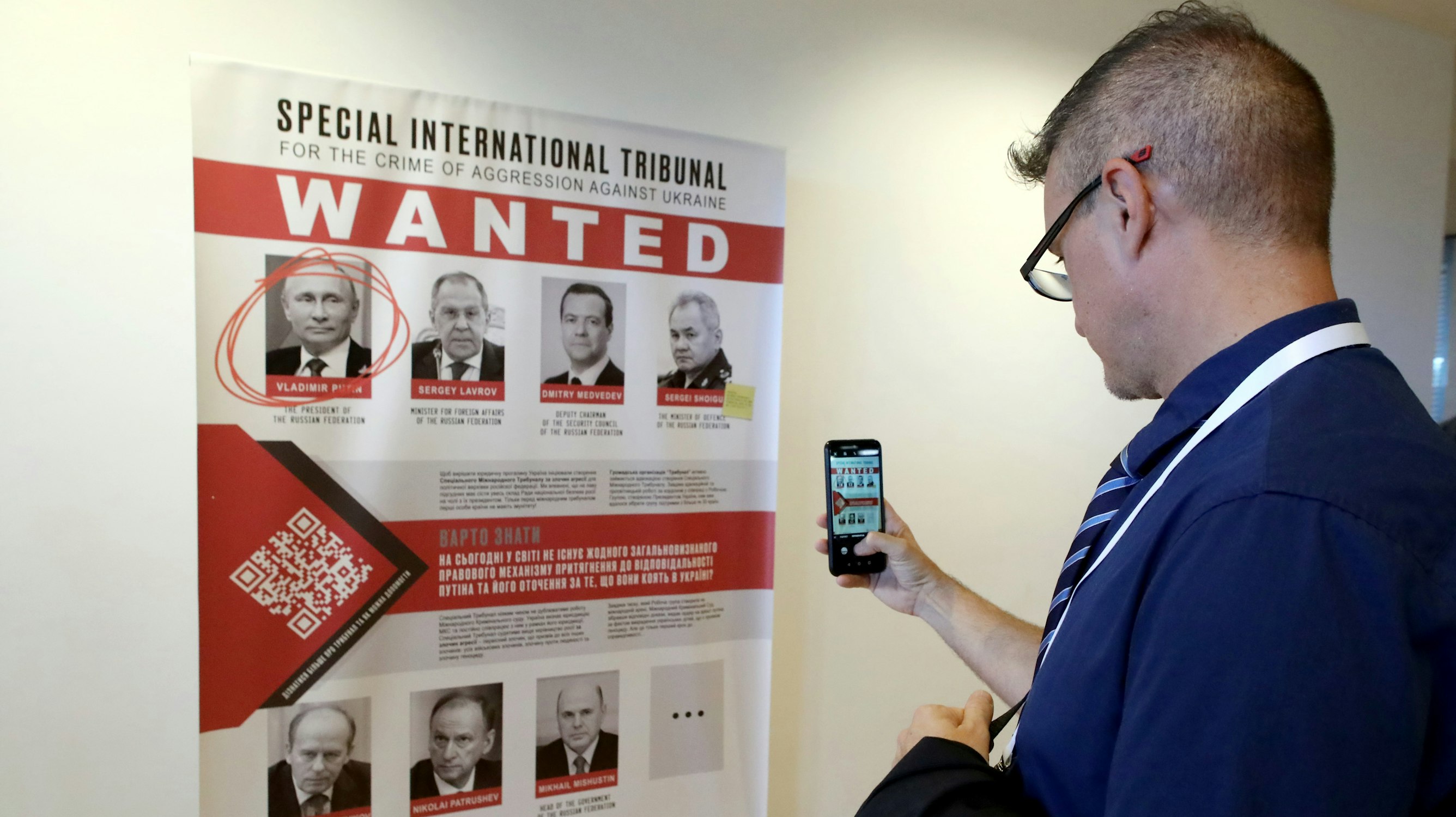
A conference attendee takes a photo of a poster during the Special Tribunal for the Crime of Aggression against Ukraine in Kyiv on August 21, 2023. © Volodymyr Tarasov/Avalon/Newscom
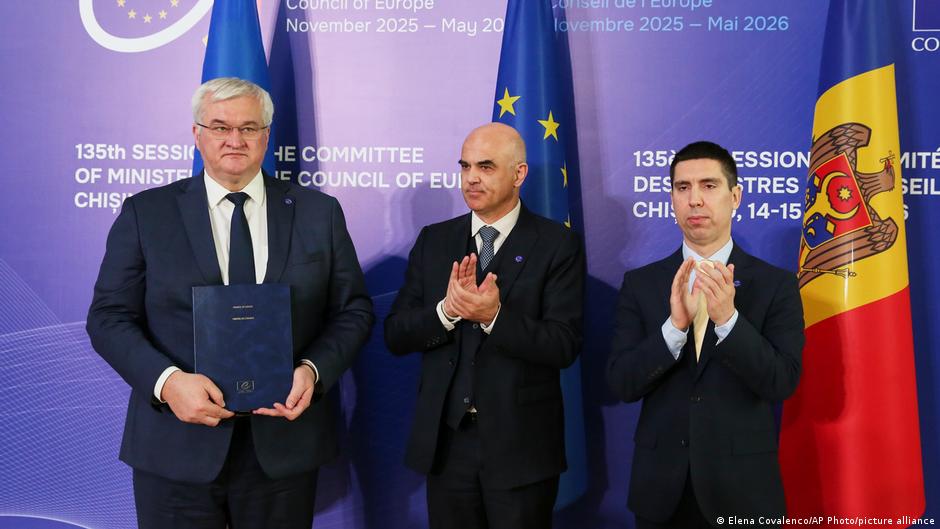
Four years ago, I watched Russian forces circling the capital and wondered how Vladimir Putin and his officials would be held accountable for this act of aggression against Ukraine. Aggression is a specific crime under international law. But I saw that the terror Russia had unleashed on Ukraine was the result of the impunity Russia has enjoyed for decades for its actions in Chechnya, Moldova, Georgia, Mali, Libya, and Syria, to name just a few. It commits aggression because it can.If we want to stop future wars, we must punish the states and their political and military leadership for starting them. In modern history we have only one precedent: the Nuremberg and Tokyo war crimes trials following World War II. Subsequent tribunals for the former Yugoslavia and Sierra Leone focused on war crimes but not the act of planning and initiating war. While Nuremberg and Tokyo were an essential step toward establishing accountability and justice in the last century, they have created the impression that justice is a privilege of the winners of a settled conflict. But justice is not a bonus, it is an essential human right.In Ukraine, we must pursue justice regardless of the war’s trajectory and without waiting for the end of Putin’s regime. While Russia is already being pursued through international courts for its crimes in Ukraine, it is not for the planning, preparation, and execution of the invasion itself. At the International Criminal Court, jurisdiction for the crime of aggression only extends to signatories of the Rome Statute, which does not include Russia. With Russia wielding veto power in the Security Council, United Nations structures are not viable either.We are moving closer to gaining justice. On May 15, 36 countries approved a resolution to support a Special Tribunal for the Crime of Aggression against Ukraine, established by the Council of Europe, with the Netherlands agreeing to host it in The Hague. We at the Center for Civil Liberties, the Ukrainian human rights organization I lead, are proud to have contributed to work that informed the resolution. It was an important victory, and now we need to see more countries lend their weight to the body as well as agree on defining the rules, staffing, and budgets.