AFP, LA PAZ, Bolivia
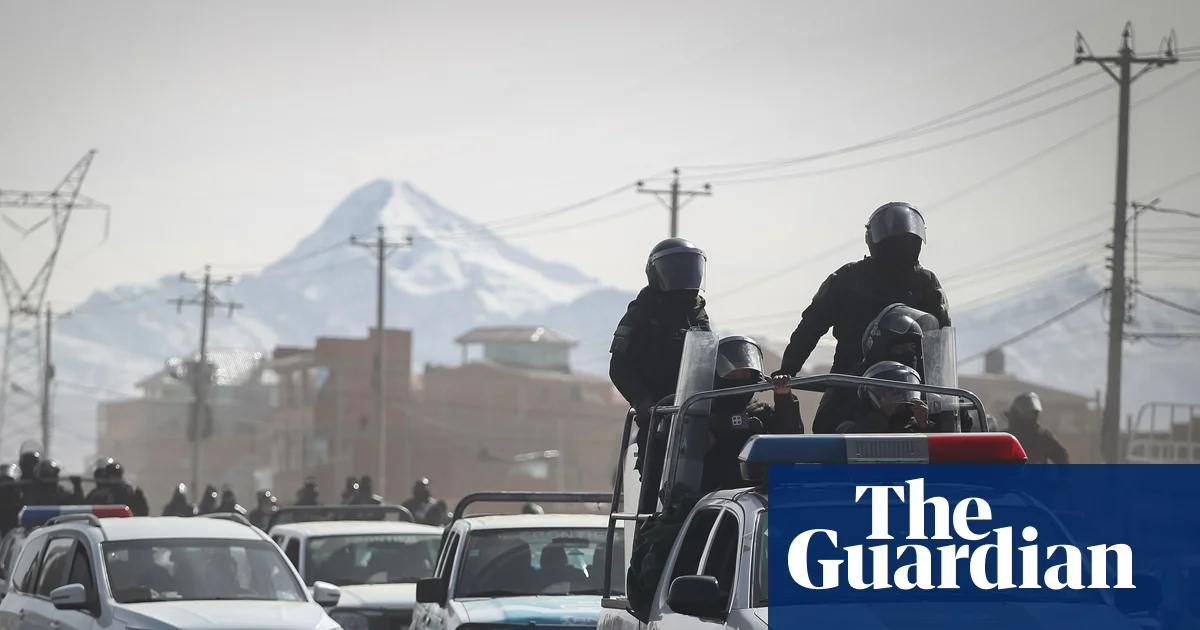
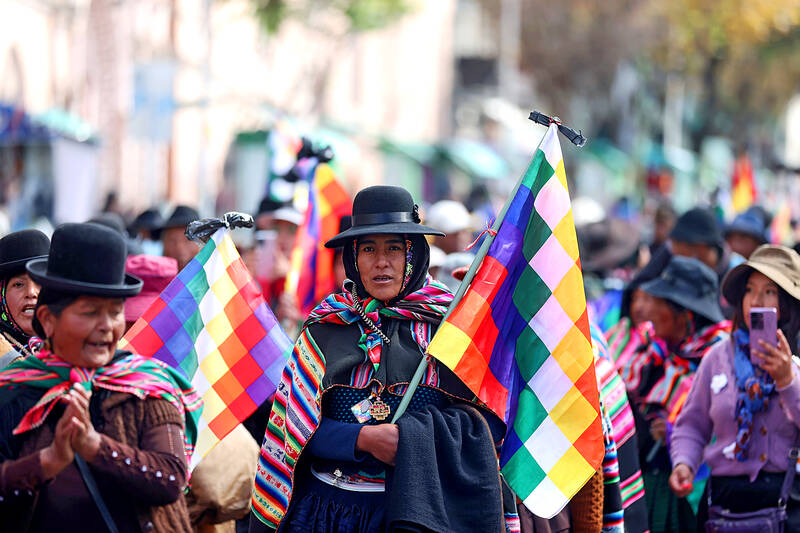
Bolivian police driving bulldozers on Sunday cleared highways and fuel trucks rolled into La Paz after the country’s president declared a state of emergency to remove anti-government roadblocks that had paralyzed the Andean nation. For more than six weeks, unions, indigenous groups and coca farmers have marched through cities and blocked roads across the country with rubble, logs and debris in protest against the conservative government as people endure Bolivia’s worst economic crisis in 40 years. Major cities have experienced acute shortages of fuel, food and medicine, the economy has lost billions of dollars, and the protests have threatened to topple Bolivia’s first non-socialist government in two decades.
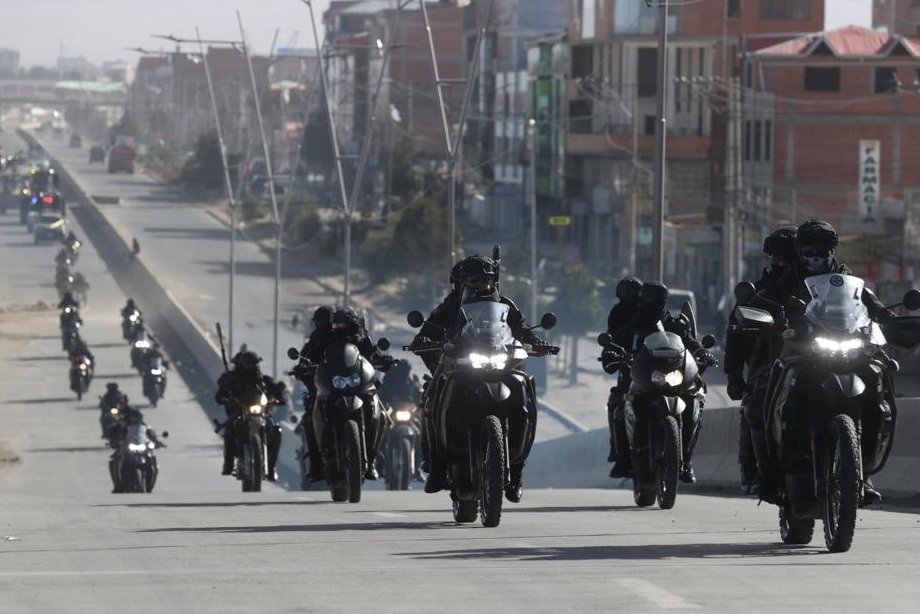
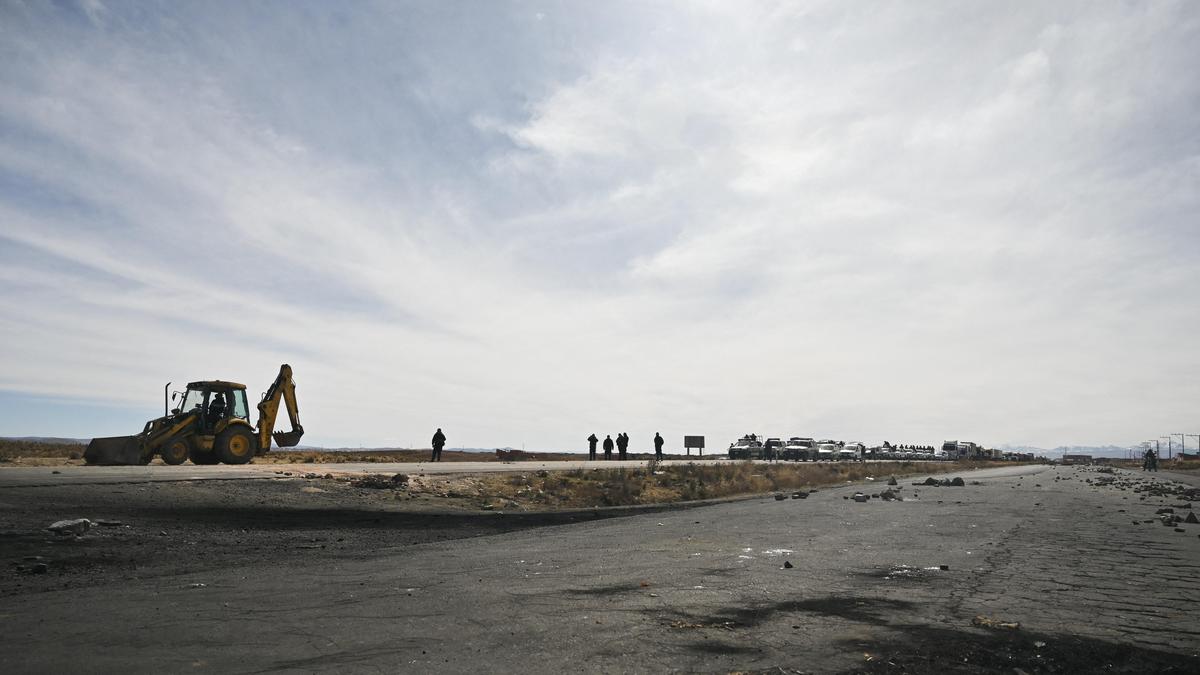
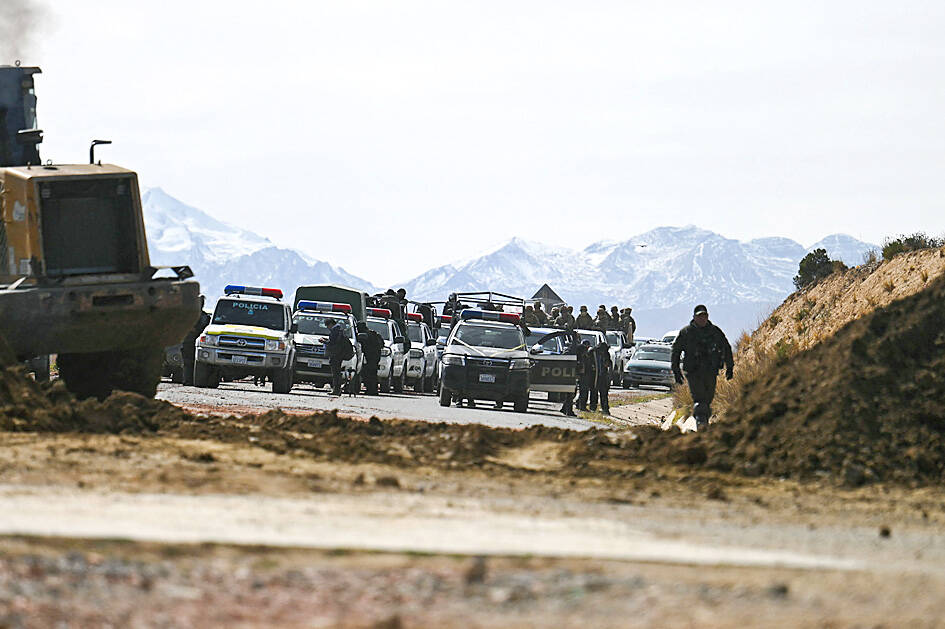
A police convoy waits as a tractor clears the La Paz-Oruro highway in Apacheta, Bolivia, on Saturday.
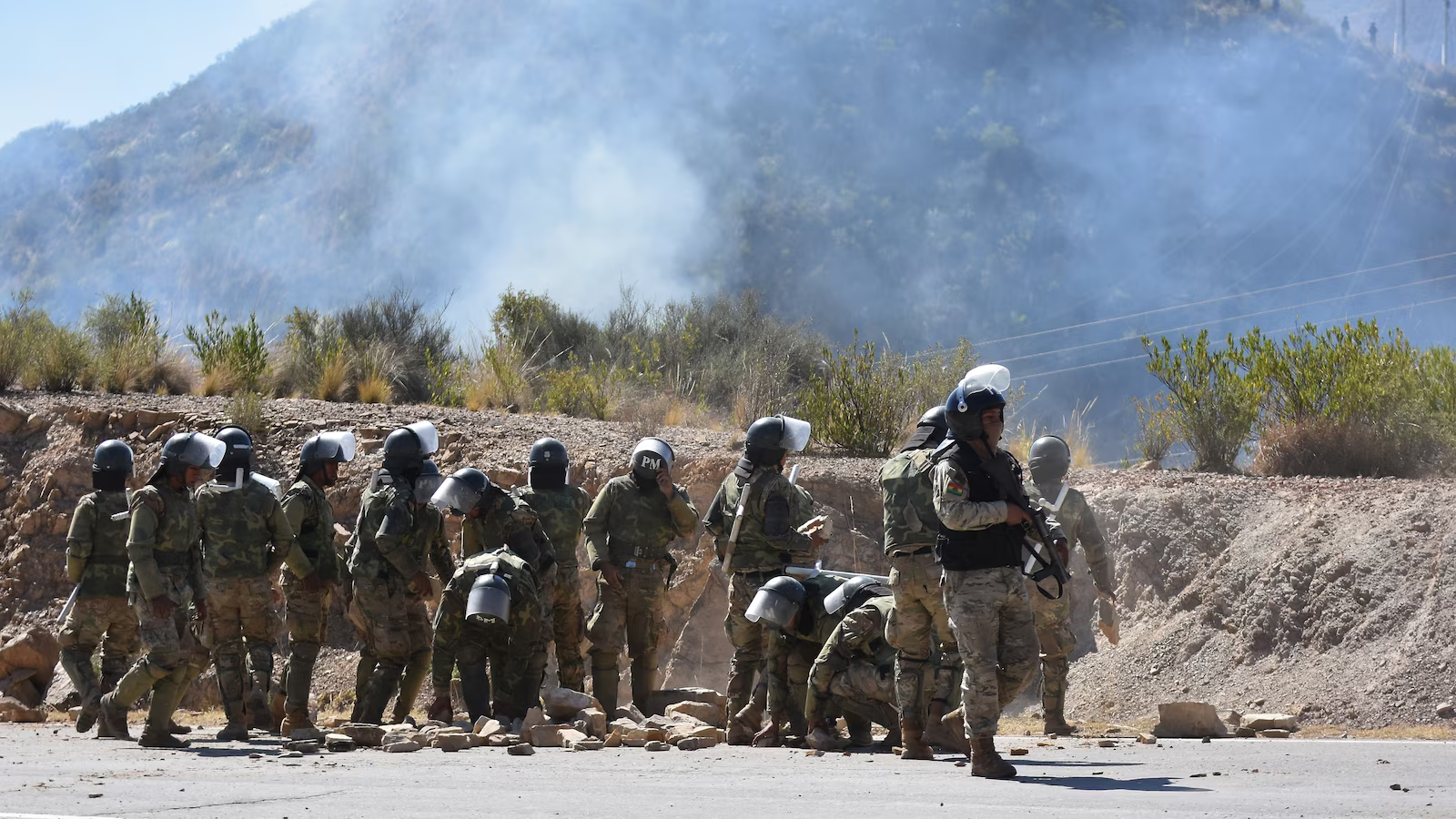
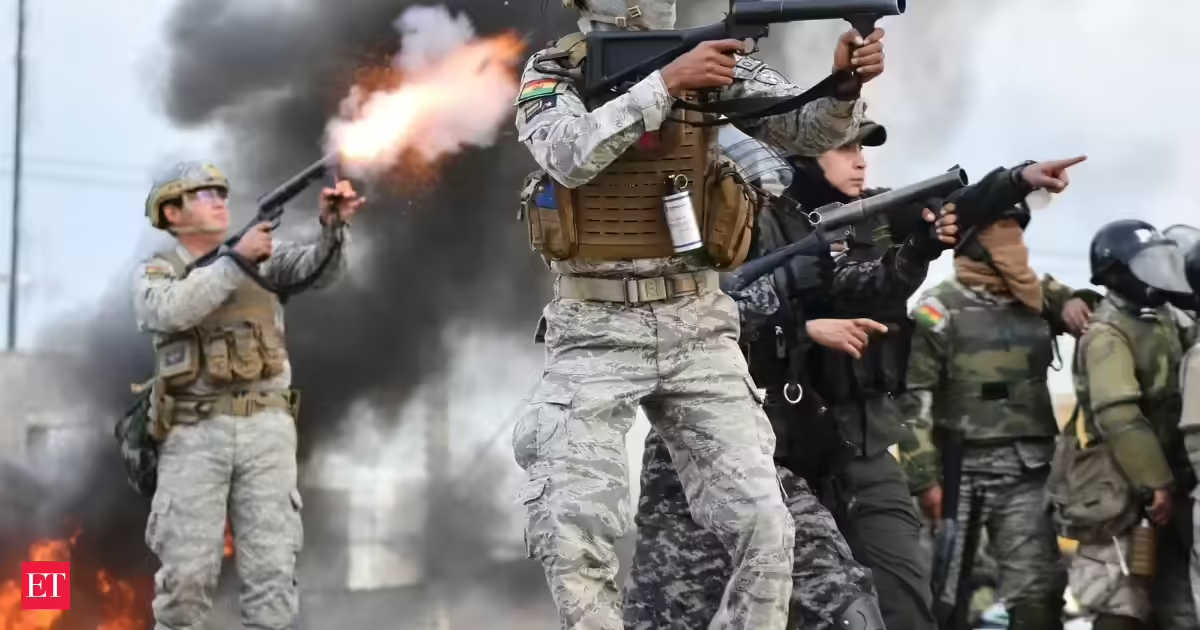
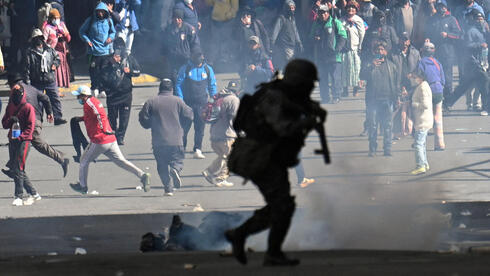
As of Sunday, the number of roads blocked fell from 50 to 12, the Bolivian Highway Administration said. The dozen remaining roadblocks are in Cochabamba, where clashes broke out on Sunday as police fired tear gas on protesters, who hurled stones and incendiaries, aligned with former Bolivian president Evo Morales.
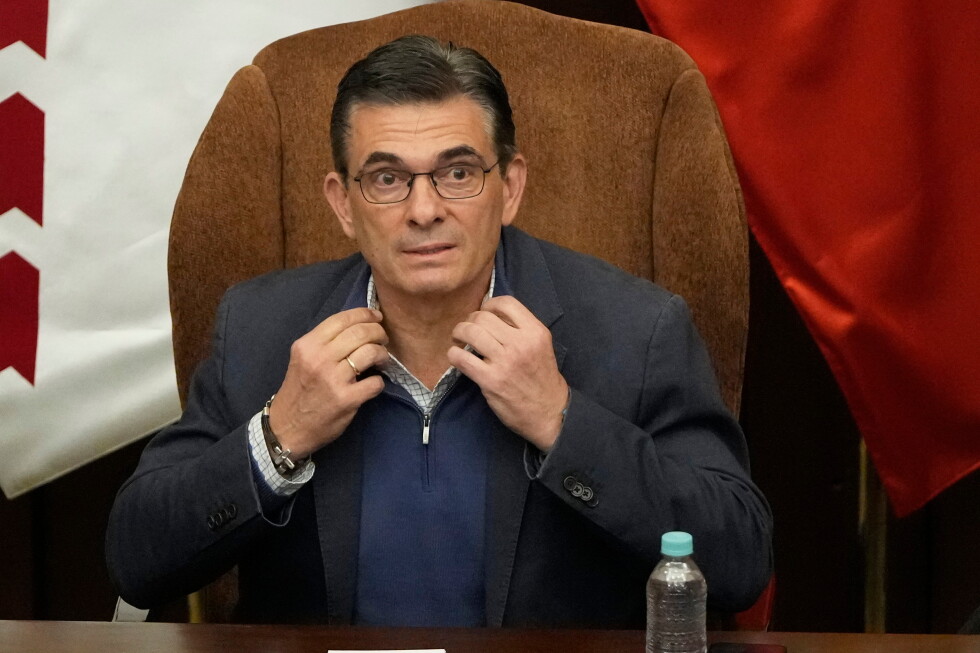
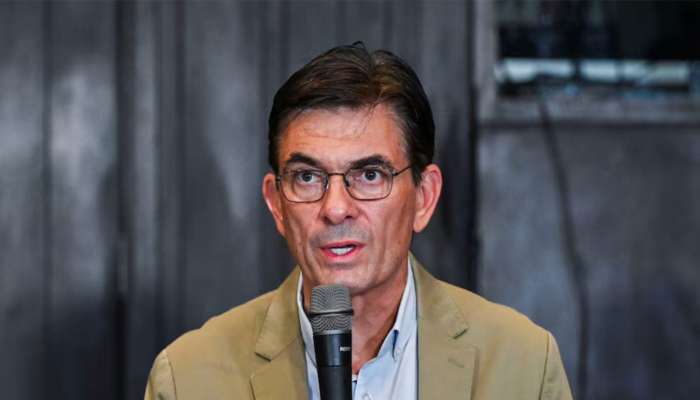
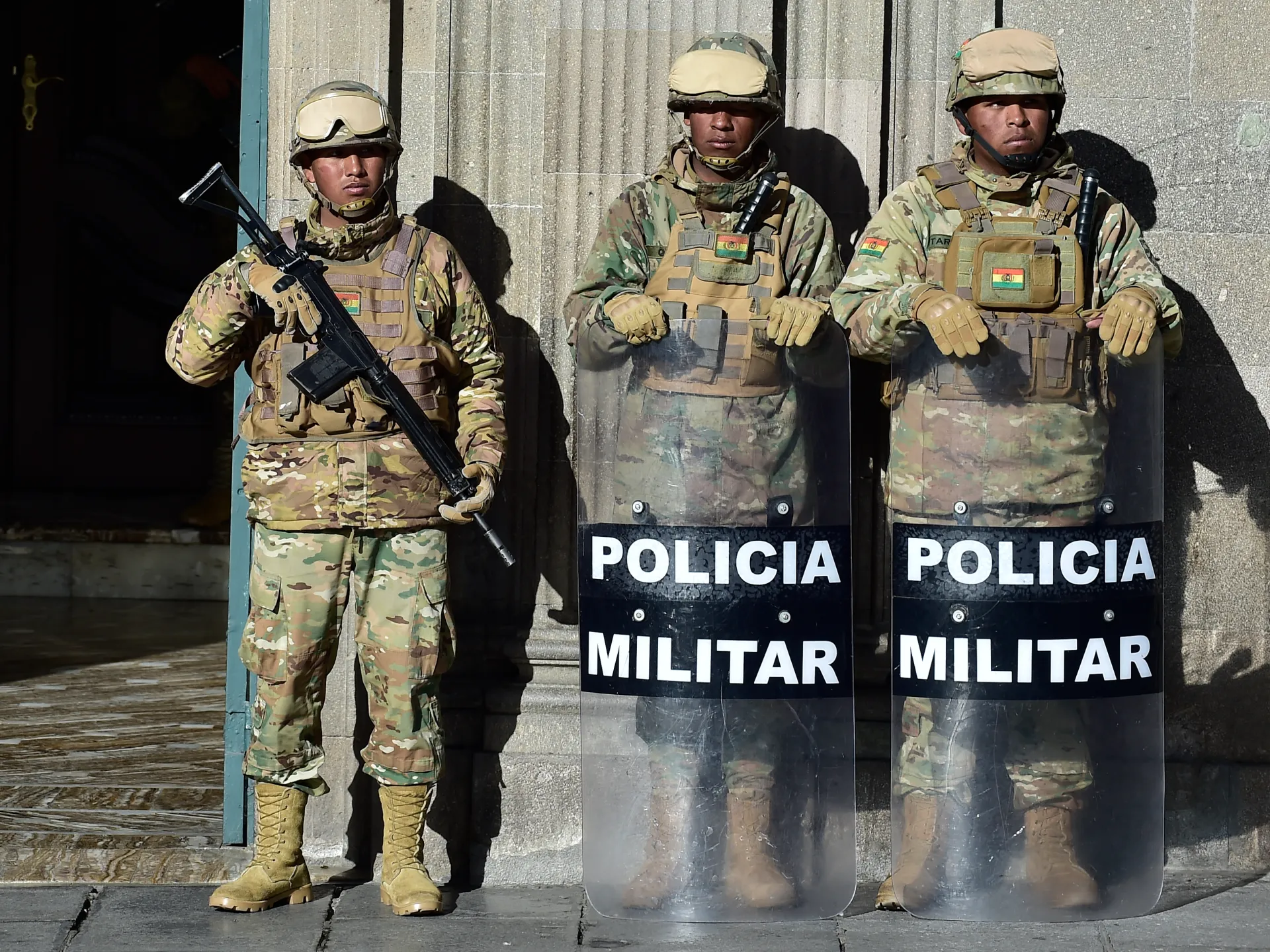
The clashes marked the first such conflict since Bolivian President Rodrigo Paz appeared in a predawn televised address on Saturday to declare a state of emergency and said protesters they would face “the full force of the law” as he moved to end the crisis. Bolivian Minister of Defense Ernesto Justiniano on Sunday told reporters that the roads from La Paz and El Alto to Chile and Peru were “all clear,” after police and soldiers used tractors and excavators to unblock them. “This is a victory for the people. We met with truckers who said their trucks had been stopped, with them, for about 50 days,” he said. After roads were cleared in a high-altitude plateau called the Altiplano, trucks carrying gasoline or diesel fuel started rumbling toward and into La Paz and nearby El Alto, both of which had been experiencing fuel shortages. Security forces on Sunday also worked for a second day to free up a road between La Paz and Oruro, recovering a conduit key for bringing in fuel from neighboring Chile. Bolivian Minister of Hydrocarbons and Energies Marcelo Blanco said fuel trucks were arriving in major cities. “The goal of the decree was to free the country from this blockage,” Blanco said. Paz’s 90-day state of emergency curbs the right to protest and allows the military to be deployed. The protesters want Paz to abandon neo-liberal economic reforms and step down, less than a year after he was elected. The 58-year-old had signaled he was ready to negotiate and, earlier last week, agreed to a deal with one of the country’s major unions to end the crisis. In exchange for a promise not to privatize state companies and to hold further talks, the Bolivian Workers’ Central union agreed to end their protests. However, some Indigenous groups have vowed to fight on, and some major roadblocks remain.