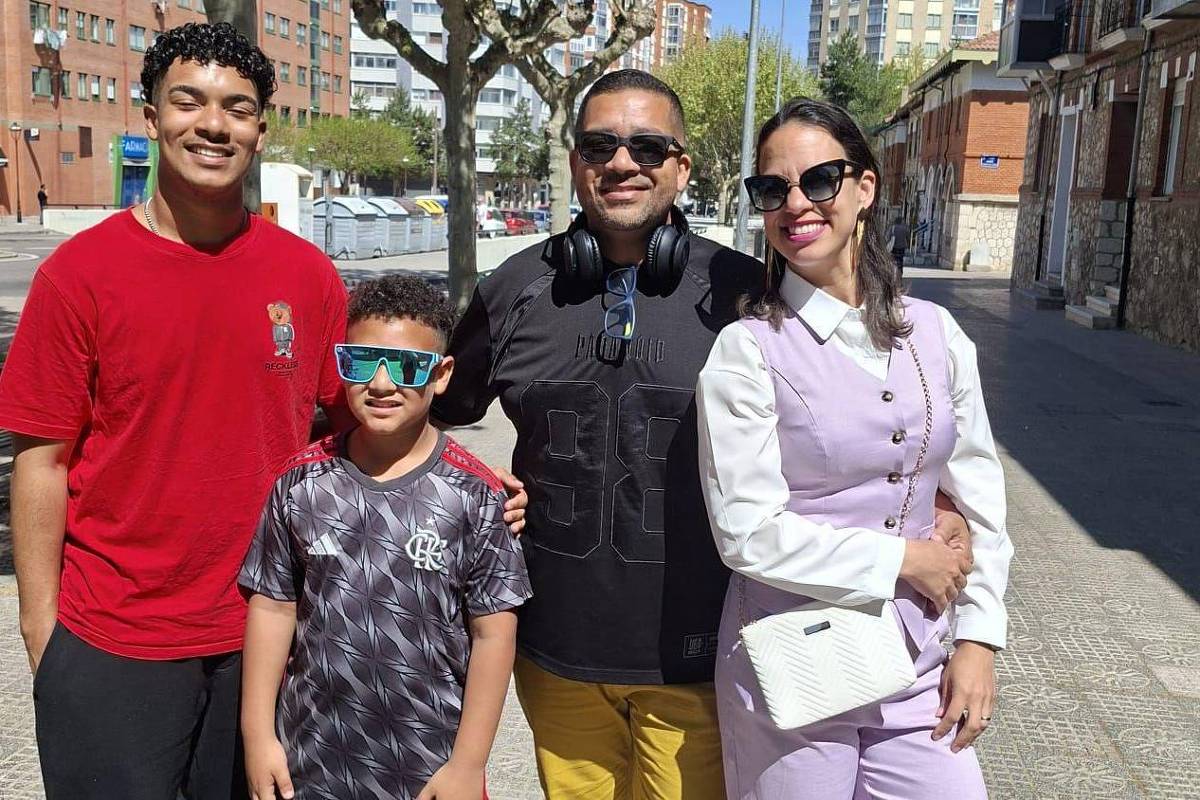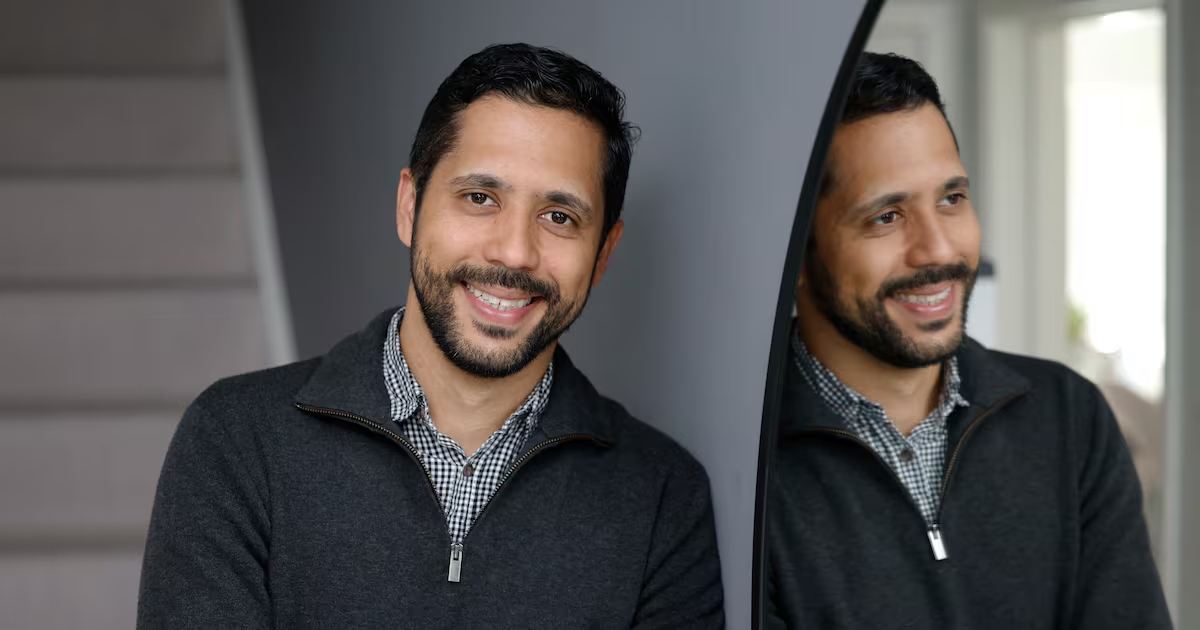
At the Gleneagle Arena in Killarney on Monday, Brazilian national Felipe Silvestre Santos De Morais was granted his certificate of naturalisation by the Irish Government.Close to three years had passed since Felipe submitted his initial application. It is often a slow process, and plenty of applicants find their route to citizenship punctuated by unexplained delays, but this situation was different.The Department of Justice conflated his records with those of another Felipe, who shared a similar series of surnames and, remarkably, the same date of birth. The other man had a long-standing deportation order attached to his file.“I applied for naturalisation because I have been living in Ireland for almost a decade now,” Felipe says. “I’ve lived here since 2016. When I came here, it was just myself and my wife, but now we have three children.”The family lives in Gorey, Co Wexford, where Felipe also serves as an elder at his local church. He works as a software engineer and says, given their rural location, he is very integrated in Irish culture and community.“I had opportunities to move elsewhere in Europe, to countries like Spain or Portugal that are more appealing for Brazilians in terms of weather and even food. But we just love it here. We love the land, we love the people, we love the colour. We love this place,” he says.Felipe Silvestre Santos De Morais: 'I have learned to love this country, so for me [citizenship is] a big step.' Photograph: Nick Bradshaw Felipe began his application for a certificate of naturalisation in October of 2023. In one of his earlier correspondences with the department, he was told that the process takes about 19 months on average. The system had recently changed from postal applications to online, but he describes it as “straightforward” and “easy to follow”. However, the first sign of an error came in February 2024. An acknowledgment letter from the department included Felipe’s application reference and personal ID, but his name had been spelt incorrectly. “When I noticed this difference, I did not panic,” he says. “As a Brazilian, I have a long surname, so I have spent years dealing with spelling errors in documents. I assumed it was just a typo back then.”In August of that year, he was asked to complete an e-vetting application by the National Vetting Bureau (NVB) of An Garda Síochána. Again, his name had been spelt incorrectly on the application, so Felipe responded to the NVB noting the error but was told not to worry.From then on, communication stalled. Felipe emailed the department regularly asking for updates that did not arrive, and he grew concerned. In April 2025, he received a letter from the Repatriation Division of the Garda National Immigration Bureau, advising him that the “Deportation Order made in respect of you on the 27th of October 2017 has now been revoked”, which Felipe could not understand.“I have never been involved in any deportation order,” he says. “I have lived my entire life here in Ireland lawfully with a visa. I held a valid Stamp 4 immigration permission.” Late in 2025, he began submitting Freedom of Information requests, which was advised on the Irish Naturalisation and Immigration Service website. It became apparent that there was no typo, but a case of mistaken identity.Conducting the investigation himself, and dealing with a variety of administrative bodies,he became frustrated at times as he spent “evenings and weekends writing formal responses to the Government”.In April 2026, the Department of Justice wrote to him to acknowledge that his “personal data was associated in error with the data of another person who has the same date of birth and similar name. This breach of GDPR has been reported to the Departments Data Compliance Section and they will deal with the matter as necessary.”An executive officer for the department apologised for the mistake, which “happened due to human error”, they said, adding “procedures have been put in place to prevent such a situation occurring in the future”. In response to a query around these procedures, a spokesperson told The Irish Times that the department “does not comment on individuals”. Felipe stresses that he did not choose to share his story in an attempt to speak negatively about the department, which he believes acted appropriately once the error had been realised, but he feels there is value in shining a light on the experience for other naturalisation applicants.“For those people in the same kind of scenario where I was – months and years without an answer – is to provide them this guidance,” he says. “They can perhaps understand their case. It probably not the same as mine, but they have channels where they can maybe investigate it themselves.”At the end of the process, Felipe views his citizenship as a “gift”. He says: “The persistence to become an Irish citizen is because I love the land and I love the people. I love the quietness of December. I love the blue skies when it is sunny. I love the grey sky when it is cloudy. I have learned to love this country, so for me it’s a big step.”
Brazilian man subjected to ‘mistaken identity’ deportation order gains Irish citizenship
‘We love the land, we love the people’, says software engineer who lives in Wexford with family
TL;DRAI
Brazilian engineer obtained Irish citizenship after 3-year delay; government mistakenly conflated his identity with another Felipe sharing birth date and deportation record. Highlights GDPR governance risks for tech leaders: data deduplication failures in public identity and compliance systems.
854 words~4 min read