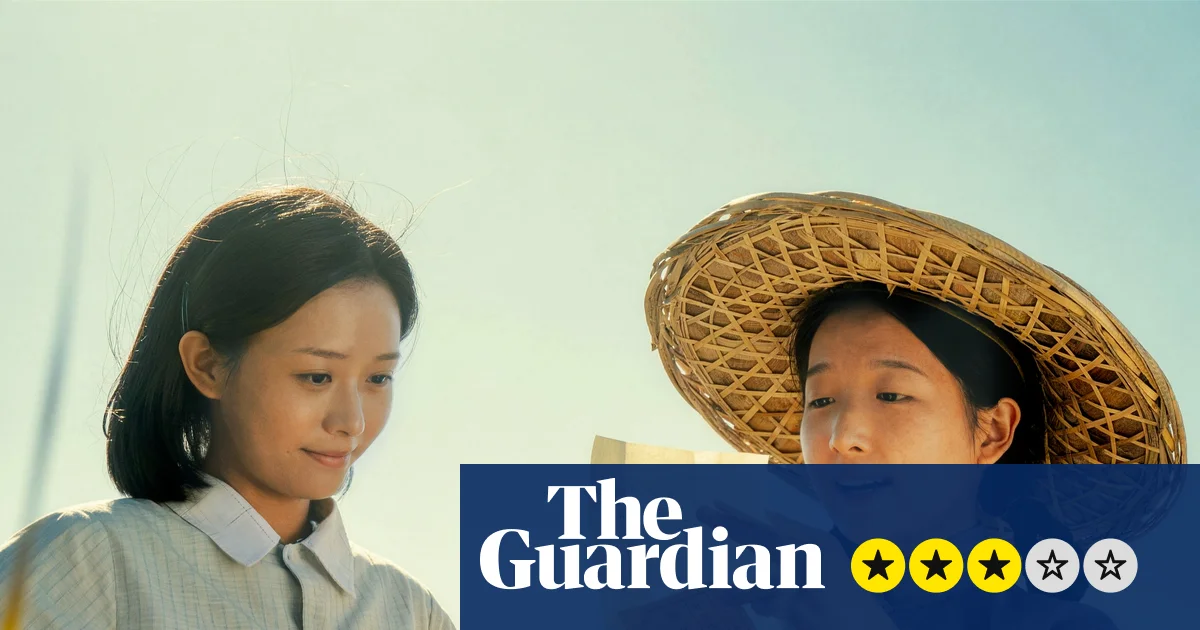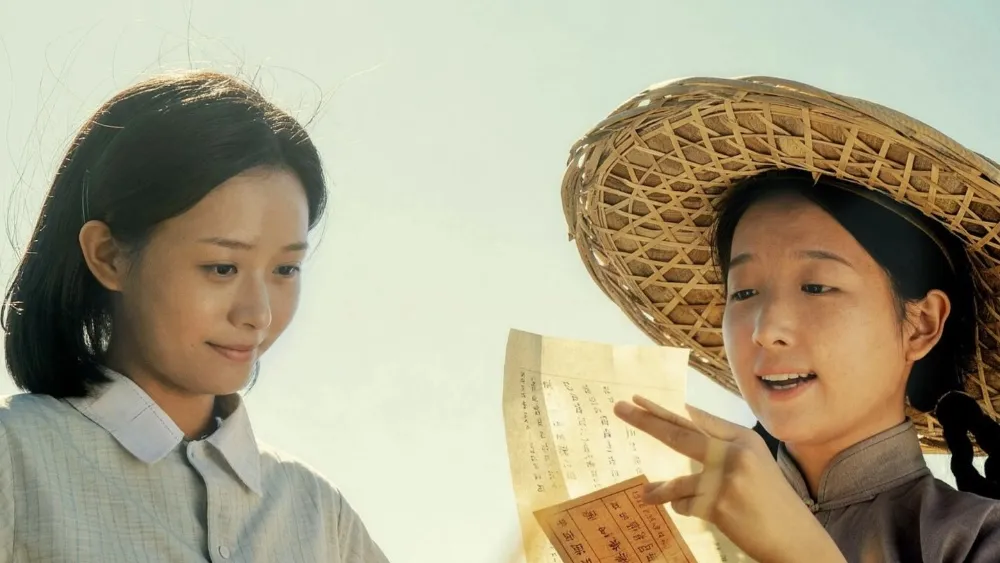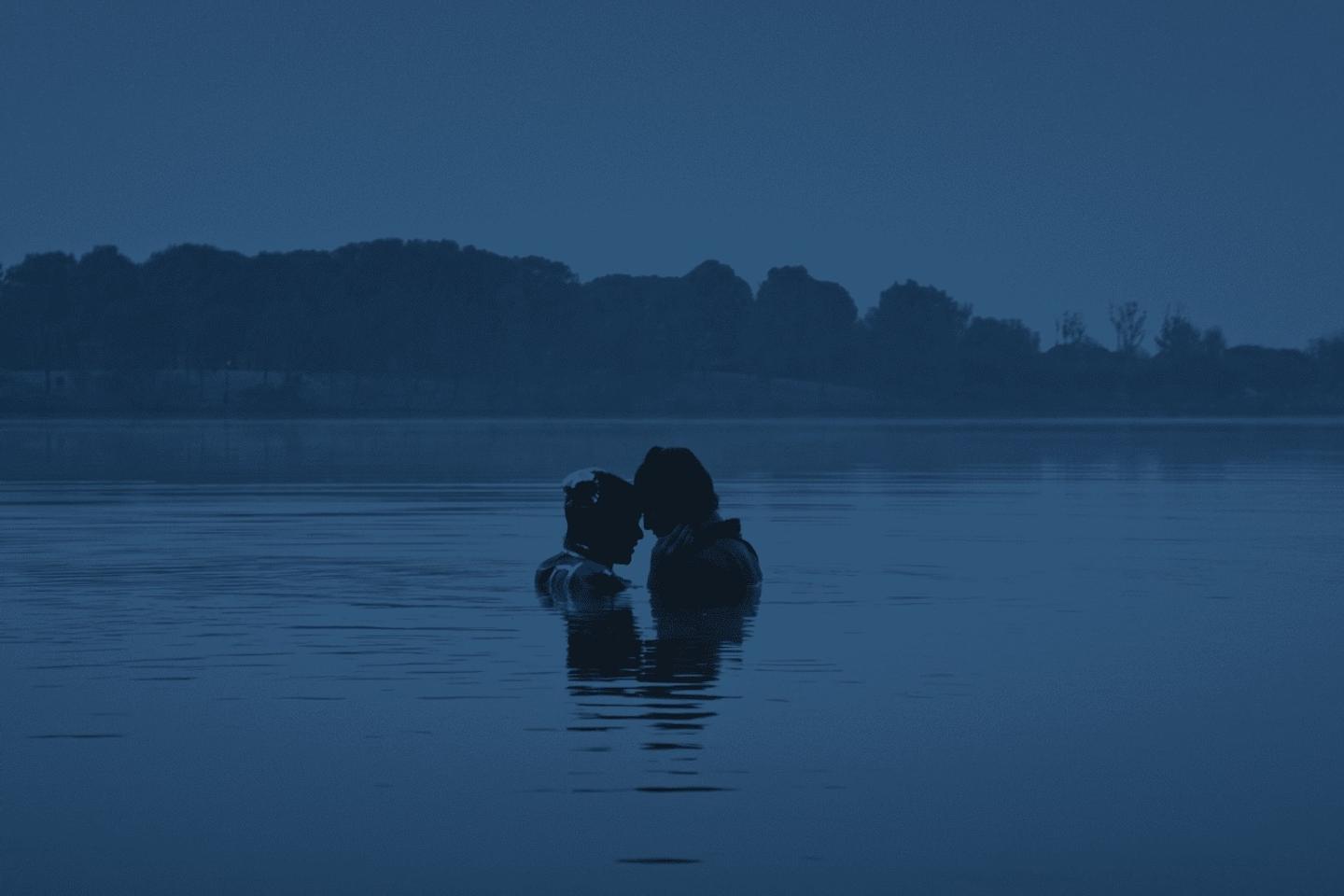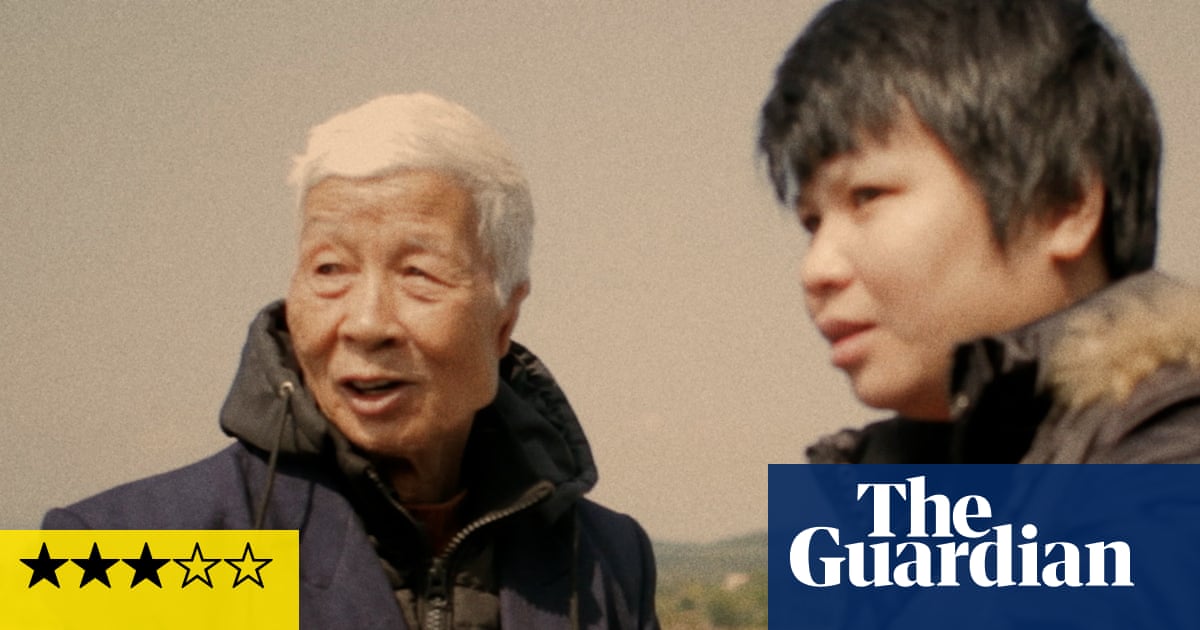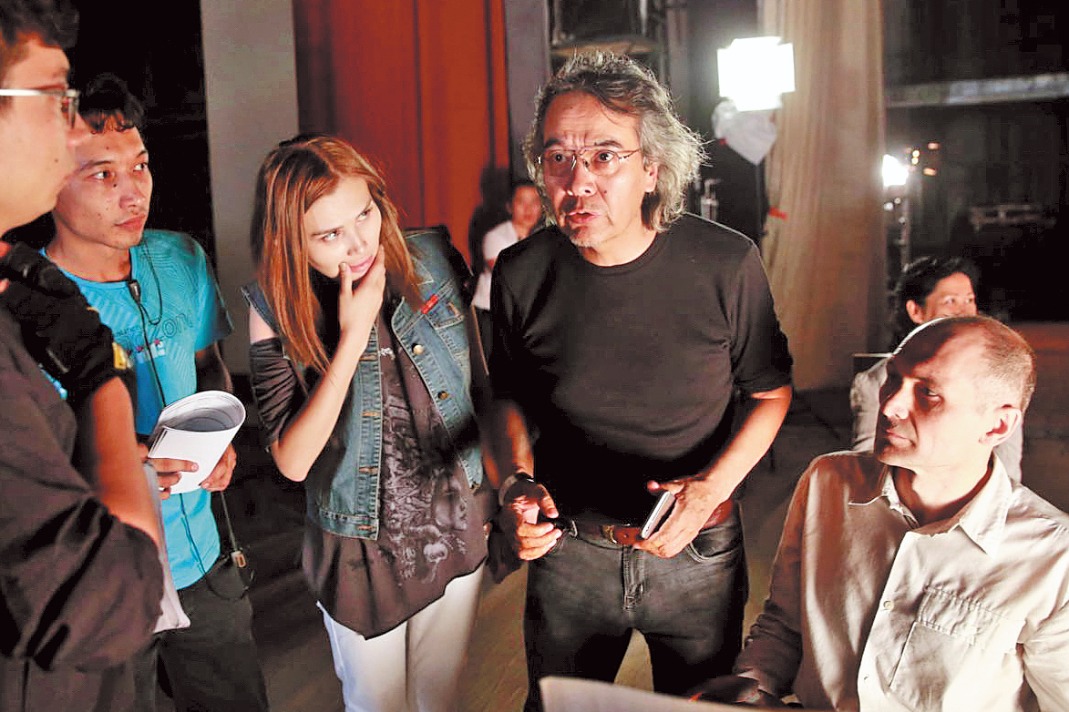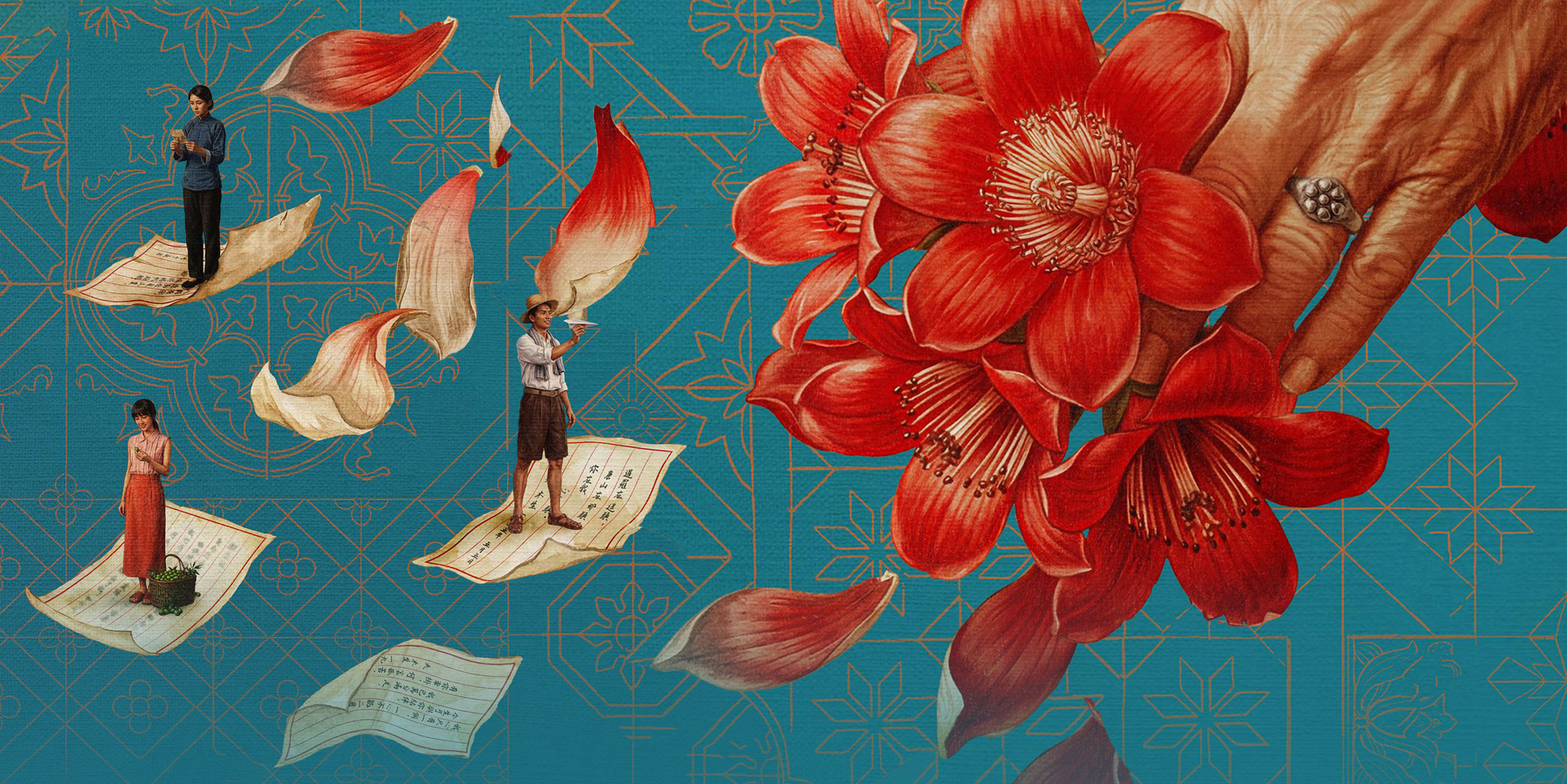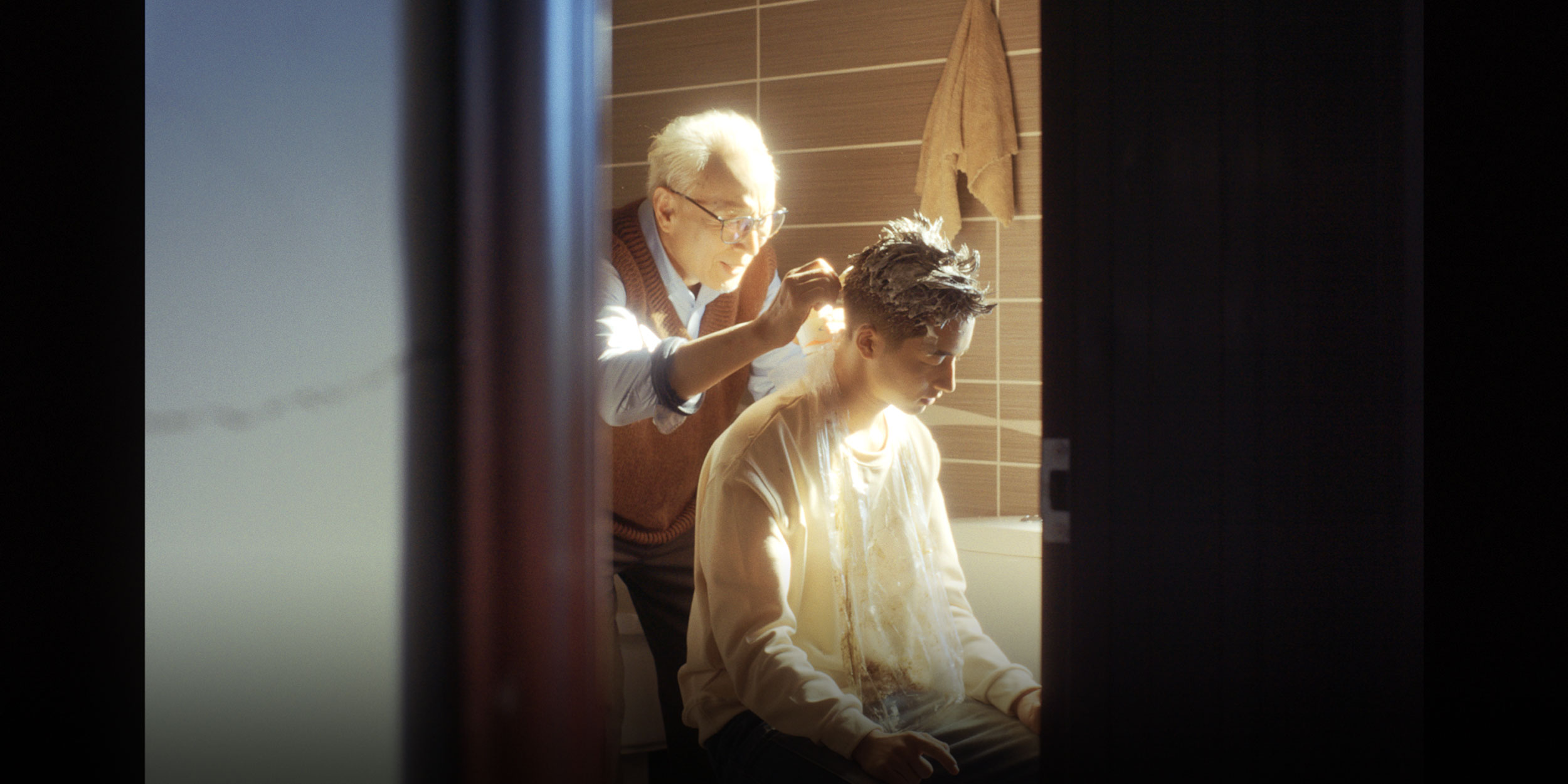
The idea came to Bian Zhuo while he read his late grandfather’s diary.On its yellowing pages, written in elegant cursive script, were missives addressed to the quiet intellectual’s wife, written after she’d passed. “Yuanqing, I miss you so much,” his grandfather had written.“I felt as if I were holding your hand in my sleep. Did you come back to see me?”Later, reflecting upon these diary entries, Bian thought to himself, why not make a film about the love and tensions between the generations of a family similar to his own?With a budget of just 2 million yuan ($300,000) — half financed from his own savings and half borrowed from family — the then-36-year-old filmmaker returned to his hometown of Kunming, capital of the southwestern Yunnan province, to assemble a crew of under 40 people and a cast mostly made up of local amateurs.The result was “As the Water Flows,” which Bian has called a personal project meant to help heal his family’s losses and emotional scars. To his surprise, the film won the Asian New Talent Award for Best Film at the 2025 Shanghai International Film Festival. Later that same year, it received a New Talent Award at the Hong Kong Asian Film Festival and was screened at the Cannes Film Festival this May.The film’s Chinese title, “Cui Hu,” meaning “Green Lake,” refers to the iconic lake in the heart of downtown Kunming, often described as the city’s eye — the spiritual hometown of Kunming natives — whose shores Bian grew up on. Drawing heavily on his relatives’ stories, “As the Water Flows” follows an elderly grandfather who, after losing his wife, seeks companionship again, only to face resistance from his three daughters, thus exploring the subtle tensions between three generations of a Chinese family.During this year’s Shanghai International Film Festival, which concluded this weekend, Bian reflects on his rollercoaster year in an interview with Sixth Tone.This interview has been edited for length and clarity.Sixth Tone: What kind of person was your grandfather? How similar is he to the character of the grandfather in the film?Bian: Looking back now, what I remember most about my grandfather is his silence. He was an old-school intellectual, very quiet, and he never quite seemed happy. Then again, he was apparently quite popular with women when he was young. Quite the elegant, scholarly type.I really got to know him again later, during my graduate studies in the U.S., when I did an oral history project about him. The person in front of the camera was nothing like the man I remembered. He was eager to talk … and he could recount things from decades earlier in vivid detail.That was also when I learned how much (the Cultural Revolution) had impacted him. It had deeply shaped his personality. There was a real complexity to him: proud and insecure at the same time, with both the pride of an intellectual and the sensitivity and temper that often come with it. Sometimes he could even seem a bit dismissive of others.But for me, being around him was always easy. I could just be myself. I never had to worry about meeting his expectations or living up to anything, which was completely different from how things were with my parents.I gave the grandpa in the film almost the same characteristics. The character Pangpang is actually based on me. Even the room in the film is a faithful recreation of my grandparents’ room at our house: a big bed in the middle, a large wardrobe beside it, almost the exact same layout. My grandparents lived with us for many years, and that room was the most familiar space of my childhood.So making the film was, in a way, a form of personal healing. It was a kind of summing up of my own life so far.Sixth Tone: Could you talk about the “unspoken love” between the film’s families?Bian: As the film’s Chinese name suggests, (it can be viewed as) a peaceful lake … And just as there are aquatic plants and silt lying beneath the lake’s calm surface, everyone has complex, untold emotions, too.I think one of the defining traits of Chinese families is that we don’t express love directly. We’re not like a lot of Western families, where “I love you” is said often and where feelings are constantly affirmed in words from childhood on. Our love is mostly demonstrated through action, but sometimes that action crosses a line and turns from eagerness to control.Take the eldest sister, for instance. She genuinely loves her daughter and worries about her. She wants her to have a better path in life but doesn’t know how to say so. Neither of them really knows how to talk things through together, and every loving conversation ends in an argument and the words, “you’re wrong,” “you can’t do this,” or “I’m doing this for your own good.”A lot of Chinese parents … are more used to stating their judgments and anxieties outright. That doesn’t mean they don’t love their children. It means they don’t know how to express that love.As for children, we’re not that direct, either. Take Pangpang. When he realizes his parents’ arguments might be about him, he doesn’t burst out and say, “Don’t fight because of me.” He keeps it inside, processes it on his own, and quietly concludes that he should give up studying abroad.Sixth Tone: As a cinematographer, how do you use the spatial design of the three sisters’ homes to hint at each family’s dynamics?Bian: I was mostly trying to reveal the characters’ psychological states through the spaces they live in, letting the space itself do some of the storytelling.For the second sister’s home, I leaned on lines, frames, and divided spaces. I felt the family was holding onto unspoken secrets, carrying the strain of a fragile middle-class household trying to keep up appearances. I wanted audiences to feel, upon entering that space, as if something was about to be revealed but never quite did, as if a bigger secret were still hidden behind it all.The third sister’s villa is the opposite. I deliberately built a sense of emptiness and isolation. Characters often don’t even share a (cinematic) frame. They’re each in their own corner of the space, separated by distance, mirroring the family’s own estrangement … Once the old man moves in, it feels less like he’s joined the family and more like a person living alone in a very large house.Sixth Tone: You grew up loving Marvel and sci-fi, yet this film is about old age, family, and daily life. How did that shift happen?Bian: I’ve been trying to work this out myself … I realized that what I loved back then and what I make now actually share a common thread: they’re both about people who don’t fit into their era.Whether it’s heroes or villains in Marvel, they’re usually out of step with the mainstream world around them, moving against the current of their time. We romanticize that and call it heroism, but a lot of heroism is really just having the courage to go against your era.“As the Water Flows” is the same. The elderly characters are constantly struggling against the marks their era left on them, trying to undo what that era shaped them into. That’s kind of swimming against the current. So even though the subject matter looks completely different, I’ve actually been drawn to the same kind of person all along.I’ve always felt that no one exists in isolation. To borrow from mythology, we weren’t shaped from clay by Nüwa (Editor’s note: The goddess in Chinese mythology who created humanity). We were shaped, bit by bit, by our era. If you really enter someone’s life, you can see the marks their whole era left on them, and also see what we all share as people, alongside what makes each of us different. That’s why I’d rather start from one specific person, one family, one private memory.Sixth Tone: Facing the dilemma of a high audience rating but low box office takings, you’ve done screening tours to every (major Chinese) city and wrote letters online to appeal for more scheduling opportunities. What kept you going?Bian: I’ve done more than 130 screening tours, a number almost unheard of among directors in China. At first, going on these tours, I was very energetic about it, always ready to engage, and eager to talk with audiences face to face. But after 30 or 40 screenings, then 60 or 70, I started to realize I might be avoiding something, as my anxiety kept coming back.Part of it was avoiding the disappointment of box-office numbers falling short of my expectations, and part of it was avoiding the problems that arose while promoting the film. And there was an even deeper reason: I wanted to find some inner peace by simply staying in motion and not having to face the reality of (the film’s) statistics.Fortunately, most of the time it’s the audience’s response that encourages me … people mostly end up sharing how the film resonates with them due to their own family stories.The screening that stayed with me the most was the film’s premiere at the Shanghai Film Art Center. After the screening, an older man, gray-haired and very thin, stood there waving at me. He told me he was from Kunming, had been living in Shanghai for 20 or 30 years, and hadn’t been back home in all that time. He didn’t go into why his family wasn’t around, and I didn’t push. As he talked, he started to cry. He said watching the film suddenly made him miss home terribly. In that moment, I really felt like what I was doing meant something.Sixth Tone: A lot of young Chinese directors today are leaning toward personal, small-scale storytelling. Is that a kind of survival strategy?Bian: I think that’s always been the survival strategy for young directors. No young director starts out making epic narratives. Pretty much everyone begins from their own experience, entering an era through a slice of their own life.I think that, starting this year, there’s been a clear shift in the collective mood. On one hand, there’s a kind of backlash against big-budget, star-driven productions … On the other hand, audiences today are very “sensitive.” The moment they sense even a hint of preachiness or feel like a film is just trying to take their money, they push back.So in a way, filmmaking has returned to something more primal. You have to be sincere, and you have to make something you actually believe in. For young directors, that sincerity … is also a source of real anxiety. The kind of filmmaking I do tends to lead to limited returns in the market, and the audience I can actually reach is small. So the question becomes: should I keep making films like this? Should I keep holding onto this dream?But I also remind myself that some films don’t have all their value in the present. Sometimes it takes years, even a decade or more, before they’re truly seen and understood. So … I still need to keep making films about people. Not to chase some current mood, not to follow some short-term trend, but to keep, as much as I can, a long-term, honest kind of expression.Editor: Marianne Gunnarsson.(Header image: A still from As The Water Flows. Courtesy of Bian Zhuo)
A Yunnan Lake, Three Generations, and the Director in Between
Sixth Tone sits down with the director for an interview about how his life, and in particular, his relationship with his grandfather, helped shape the internationally acclaimed film.
1,897 words~9 min read