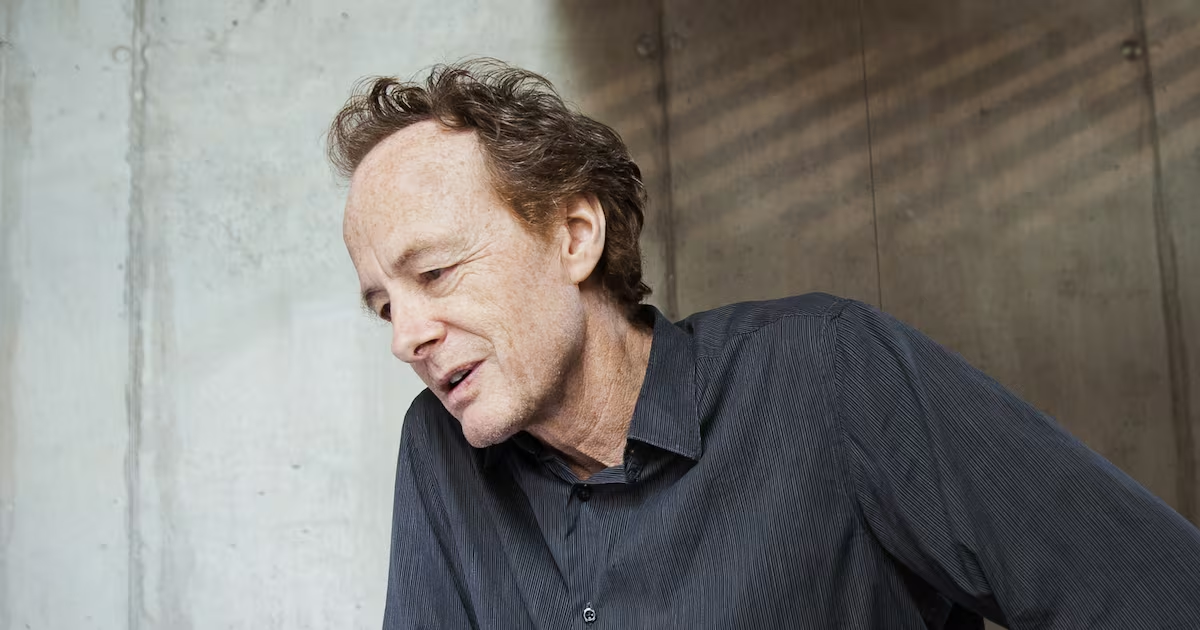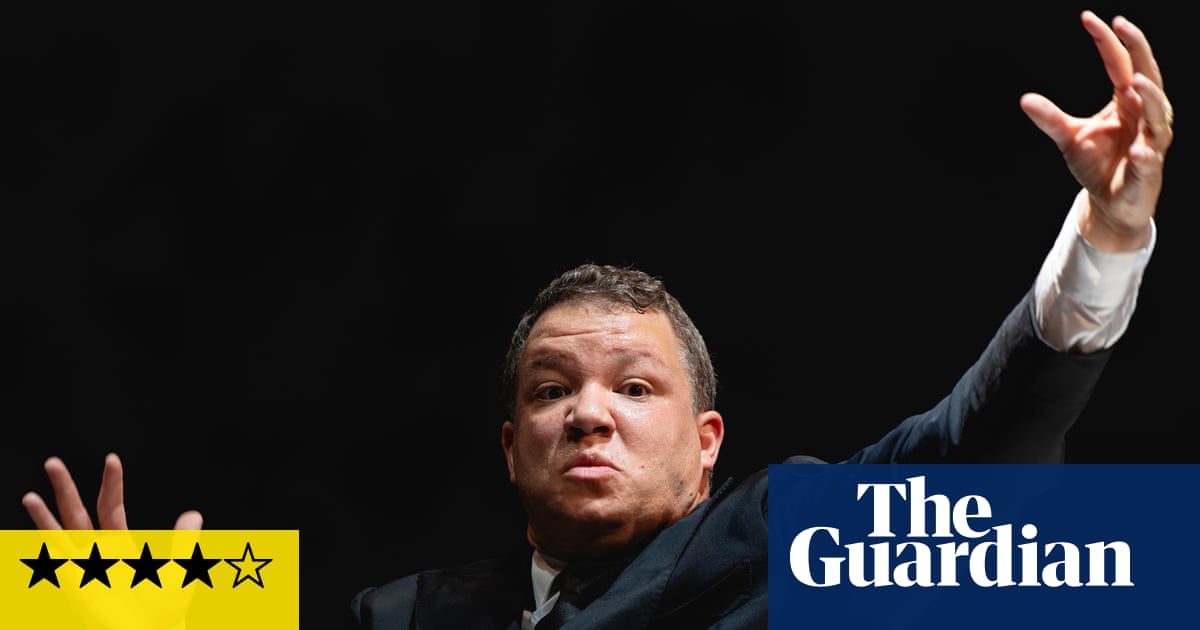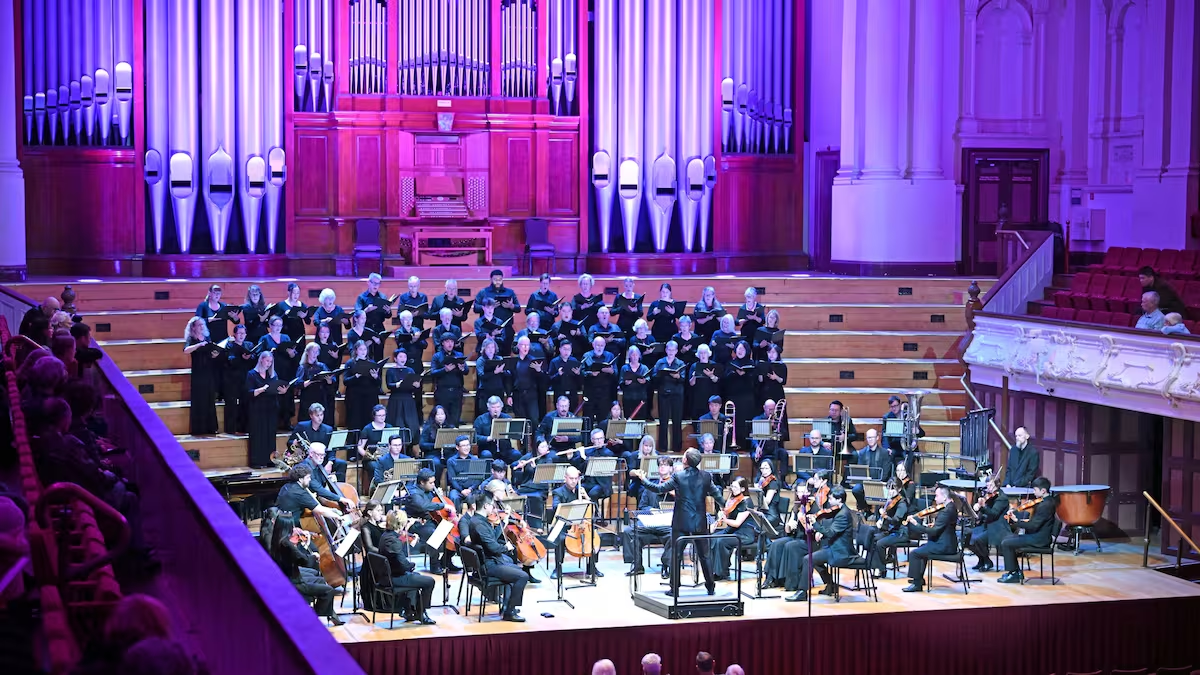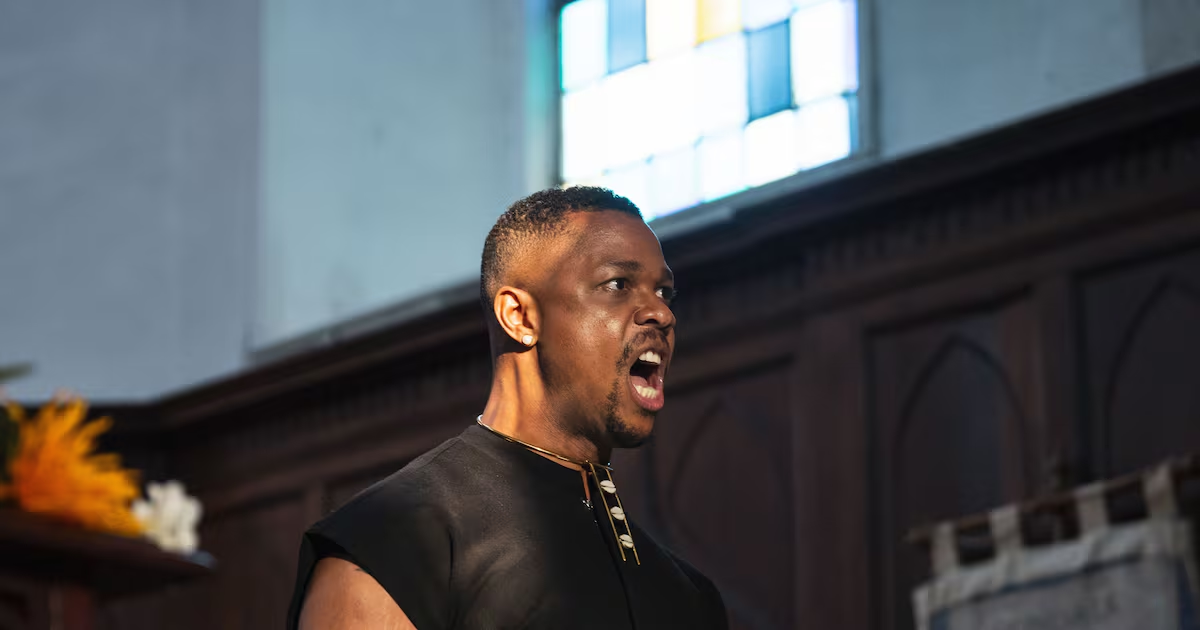
Louth Contemporary Music Society: Coming TogetherVarious venues, Dundalk★★★★☆For its 20th-anniversary Coming Together festival, Louth Contemporary Music Society has reached well back in time, crossing the centuries into the world of Handel and Bach. But it is the new music that makes the strongest impression on Friday and Saturday.The Swiss-born Austrian composer Beat Furrer (who was born in 1954) has been largely under the radar in Ireland. Just a handful of his works have been performed here since 2009, when Carol McGonnell (voice) and Erin Lesser (contrabass flute) performed the sixth scene from his sound-theatre piece Fama.[ Beat Furrer: ‘Somehow I regret being here in the mountains. I really need to go to concerts’Opens in new window ]His music uses extended performing techniques. But those ploys which see performers producing new and unexpected sounds are only a tiny part of the story. In the works featured in Dundalk, the standout feature is the way he blurs the boundaries between voice and instruments. So extreme are the cross-border incursions that sometimes what the ear is hearing is contradicted by what the eye is seeing.Saturday’s portrait concert in the chapel of St Vincent’s Secondary School is introduced by the composer himself, who focuses more on the texts he has set than the music. Coming Together: Beat Furrer introduces his work. Photograph: Sean McMahon His taste in writers and voice-instrument juxtapositions is eclectic. In Mia Vita da Vuolp (In My Life as a Wolf), with words by Leta Semadeni, is performed by the soprano Elina Viluma-Helling and the baritone saxophonist Gerald Preinfalk. Lotófagos (The Lotus-Eaters), with words by Ángel Valente, is performed by the soprano Giulia Zaniboni and the double-bassist Nikolaus Feinig. Prophezeiungen (Prophecies), with words by Sara Gallardo, is performed by the alto Helena Sorokina, with Krassimir Sterev on accordion and Marco Sala on contrabass clarinet. With each work coming across as if it might have been conceived for a previously unheard musical instrument, this programme is a masterclass in musical trompe l’oeil.Coming Together: Elina Viluma-Helling. Photograph: Sean McMahon But that’s not actually the most striking feature of these works, nor of Friday evening’s Canti della Tenebra (Songs of Darkness), with words by Dino Campana, performed by the contralto Cornelia Sonnleitner and the pianist Mary Dullea or the newly composed Litanei (Litany), an intermingling of Italian words by Gaspara Stampa and German words by Ingeborg Bachmann, performed by Viluma-Helling, McGonnell, on clarinet, and a string quartet conducted by the composer, all performed at St Nicholas’s Church.The words deal mostly with dark extremities of human experience; the sounds are new, arresting, sometimes even momentarily unfathomable. It is the sense of musical purpose in performances of compelling advocacy that makes everything so consistently gripping. A memorable experience.Coming Together: Darragh Morgan, Danusha Waskiewicz and Jakob Kullberg at the Oriel Centre. Photograph: Sean McMahon The Saturday-lunchtime concert is in the atmospheric setting of the Oriel Centre at Dundalk Gaol. Jürg Frey’s 2019 String Trio, performed by Darragh Morgan, Danusha Waskiewicz and Jakob Kullberg, has something of the effect of an extreme slow-motion video, the kind where water gushing from a tap becomes a scarcely moving series of droplets. The reason the soft, spaced-out sounds hold together is the way they suggest an unheard greater whole.The tradition of recital programming that Liszt started in 1840, and persists in its essence to this day, is exactly what the US baritone Davóne Tines sets out to counter in Saturday’s closing concert, at St Nicholas’s. Tines’ taste is catholic and his goals ambitious. “I want to find the gospel in Bach, or the restrained classicism and austere abstraction inside a spiritual,” he says. He has a powerful voice, which he projects in an individual manner, mostly forced, after the manner of a speaker at a public rally, but sometimes ethereally intimate, and with occasional excursions into high notes normally the preserve of female voices.The problem of the evening, in which he is partnered by the sometimes wayward pianist John Bitoy, is that his larger-than-life personality makes a range of music that is very different, including Caroline Shaw, Julius Eastman, Bach and Handel, sound disappointingly similar.Coming Together: Charles Corey at the Spirit Store. Photograph: Sean McMahon The performances of 10 of Harry Partch’s 1930-33 Lyrics of Li Po (by Luke Fitzpatrick, voice and adapted viola) and 1943 US Highball (by Charles Corey, voice and adapted guitar) at the Spirit Store on Saturday are disappointing.There is a feeling of dutifulness in the presentation of highly personal material by the performers, who accompany themselves on the special instruments Partch himself designed to accommodate the intricate, mathematically pure scales he chose to work with.Partch was by any reckoning an outsider, and Saturday’s Dundalk performances lack the sense of flow to make the music persuasive.The classic repertoire that is most gripping is Coming Together (1971) by Frederic Rzewski (1938-2021), who appeared as a pianist in concerts of his own work in Enniskillen and Dublin between 2003 and 2016. Rzewski was a political composer; his setting of Oscar Wilde’s De Profundis was the Enniskillen connection, as Wilde went to Portora Royal School in the Lough Erne town.Coming Together sets assured and provocative words by Sam Melville, one of the prisoners killed in the 1971 Attica Prison riot in New York state. With Daisy Press as a persuasive narrator, and McGonnell conducting an ensemble of festival musicians, the funky performance, with honking contrabass clarinet and baritone saxophone, presents the music’s looping, morphing riff in a style that makes for a high-energy ride.
Louth Contemporary Music Society: Coming Together review – New music makes festival’s strongest impression
Beat Furrer’s boundary-blurring music features alongside work by Jürg Frey, Caroline Shaw, Julius Eastman, Harry Partch and Frederic Rzewski
914 words~4 min read