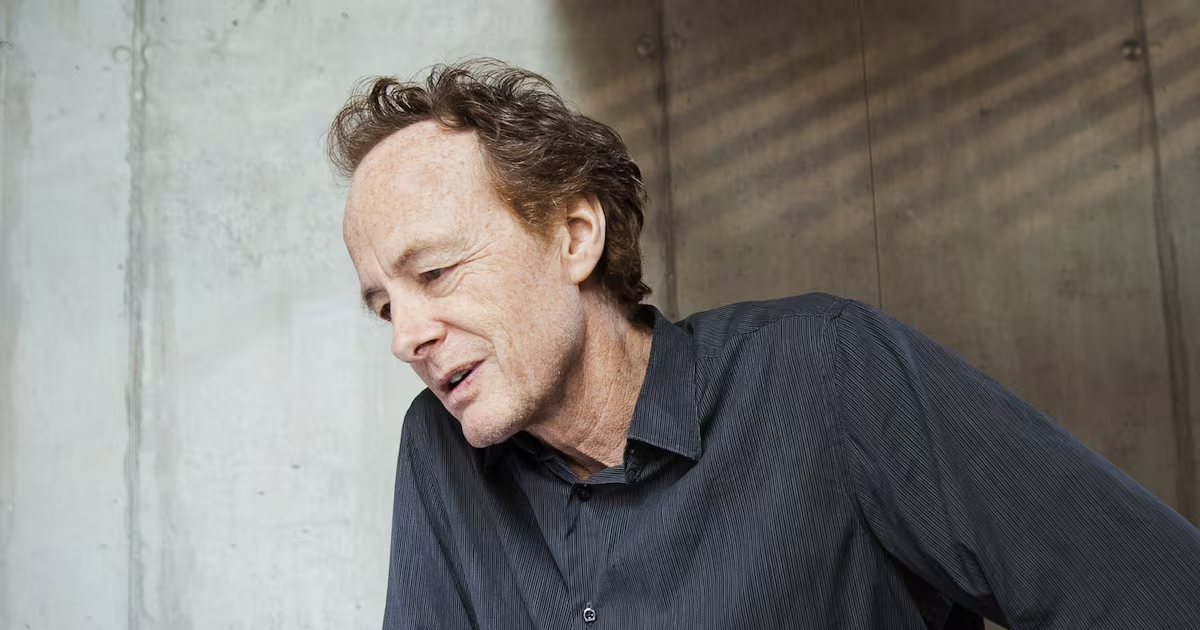
When I meet up online with Beat Furrer, his first concern is the quality of the internet connection. The Swiss-born Austrian composer is up in the mountains, a three-hour drive from Vienna, in his old forester’s lodge in the rugged heights of Gesäuse National Park, in the Austrian state of Styria. This puts him on the very long list of composers who have sought sanctuary from society in order to concentrate on the process of composition – though few will have owned such a substantial, guest-house-like property, set in mix of sloping green meadows, steep forest and towering ice-cropped peaks.Furrer, who turned 71 in December, is more than a composer. A little over 40 years ago, in 1985, he was a founder of the new music ensemble Klangforum Wien (the name translates as Vienna Sound Forum), which by 1993, the year after he stepped down as its artistic director, was already giving more than 60 concerts a year. He has continued to conduct the ensemble and, since 1991, has been professor of composition at the University of Music and Performing Arts in Graz. The motivation behind Klangforum was quite simple. He wanted to listen to and work on music that otherwise wouldn’t have been heard in Vienna. The struggle between conservatives and progressives was intense at the time. He wanted to step away from that and champion music that had somehow fallen between the cracks.Conversation with Furrer is at the far end of predictable. There are long pauses. Ideas start but don’t get completed, and when he speaks again and interrupts the silence, it often seems as if he’s gone in a new direction. My best guess is that the pauses are anything but blank, that the thinking is intense though the full connection may not even be hinted at when he resumes talking. In the moment it’s far less disconcerting than it sounds. But, listening back, there are surprisingly few complete sentences. I watched an interview with him in German, and it showed some of the same characteristics. But the silences in English are more frequent and longer than in his native tongue.Conversation with him reminds me of an image from a 70th-birthday essay by Andreas Karl about literary influences in the composer’s music. “Writing about the various materials and developments in Beat Furrer’s music,” Karl wrote, “is a bit like attempting to map a river delta as it forms. Developmental channels meander, admit tributaries, accumulate layers of sediment, fork out, and flow onward in ever-new ways. Furrer only allows music to leave his hands once it is rich in substance and potential, manifestly inhabited by the possibility of further, different continuations.”I ask Furrer about the spark that brings his music into being. “On the surface,” he says, “of course there is a commission. But there is always something I had in mind, that I wanted to do anyway.” He references Litanei (Litany), his new work for soprano, bass clarinet and string quartet, which will be premiered at Louth Contemporary Music Society’s Coming Together festival this month. The piece sets texts by the Renaissance poet Gaspara Stampa and the 20th-century Austrian poet Ingeborg Bachmann. Of course, composing is deciding; in the end, you have to decide. But I like very much to collect ideas without a concept— Beat FurrerThe original idea, he says, “was to compose a sort of recitativo and aria”; with that idea already in his head, the commission was “a chance for me to go deeper in a certain direction, to use two languages at the same time to explore the voice ... different voices in one person.” The Italian words, he says, “evoke a completely different vocal writing than the German”. And Litanei may well be “somehow on the way to ... maybe, I don’t know yet, to a next opera”.For decades Furrer has been focusing, “always more and more, on the voice and opera, on the idea of theatre and music ... the fact that the voice reveals somehow a physical condition of a person, of the singer. Mostly if you speak to people about opera, they of course think of Italian opera.” He references Pierre Boulez’s provocative response to the stagnation of opera repertoire in the 20th century. In 1967 Boulez said, “The most expensive solution would be to blow the opera houses up. But don’t you think that would also be the most elegant?”“Instead of blowing up opera houses like Boulez,” Furrer says, “I think it’s more interesting to think about new possibilities of … a pure opera. What is opera today? What could it be? The possibilities are still here, and it’s not a genre which is bound to the 19th or the 20th century. It can still be a genre of today. “But how? I think it is important to explore relations between voice, language … or think about how to tell stories on stage. That’s what interests me so much, theatre and music.”I draw Furrer back to the question about spark. “When I start writing, I don’t decide from the first moment about text, about formal things, about material. I’m just searching around a certain space of possibilities, and I try to hold this space open as long as possible. “Of course, composing is deciding; in the end, you have to decide. But I like very much to collect ideas without a concept. Just write down things which come in my mind as sound qualities. “When I’m writing these down they’re already a part of my memory, and then I can start composing. Only then can I choose the concepts, harmonic or melodic decisions.”He recalls encountering Karlheinz Stockhausen. “I remember when he was in Vienna in the 1960s or 1970s. I was young, and he talked about a formula from which he could generate an entire work, this duo for two pianos [Mantra]. “I was sceptical at that time, but today I’m even more sceptical about formulas. There was a time, also a long time ago, when the ‘new simplicity’ in music was being pitched against the complexity. And I was thinking, ‘What’s this? I don’t see the simplicity. Mozart is very complex, but in another way, and Ferneyhough is not necessarily so complex’.” Certainly, the way Furrer talks, the act of composition itself is highly complex. He talks about working with a “constellation” of material. [ Music Current violinist Judith Fliedl: ‘New music means freedom. It means being individual. You can be who you are’Opens in new window ]He sees theatricality, too, in the physicality of instrumental performance, and says that “there are always stories told, but not in a clear, semantic way”. One of the composers he espoused with Klangforum was the American Morton Feldman, whose work often creates a sense of hushed expectation, full of delicate repetitions that aren’t actually repetitions. Feldman, Furrer says, “would never talk about dramaturgy. I did many of his works. There is one in particular, For Samuel Beckett, which I like very much. And there is this long beginning, like organ sounds melting, coming new and repeating.“The work is about 45 or 40 minutes minimum. And after 30 minutes there is a first pause. Just a little one … and for me, when I was doing it, it was always a shock. It’s like a black hole, something which pulls you in, something very strong.”What composers does he listen to? He laughs. “This changes all the time!” He has spent time indulging in Schumann, and “at the moment I’m fascinated again by late Beethoven sonatas. And of course contemporary music, too. I prefer to go to concerts. Somehow I regret being here in the mountains far away from Vienna. I really need to go to concerts. Listening to recordings is not the same.”Louth Contemporary Music Society’s Coming Together festival is on Friday, June 19th, and Saturday, June 20th; as well as Litanei, its Furrer concerts feature Furrer’s Lied; Canti della tenebra; in mia vita da volpe; Lotófagos; and Prophezeiungen For the composer’s 70th birthday Klangforum Wien devoted a section of its website to his work. You can watch a point-of-view video of him walking in the Gesäuse, see him silently composing in his studio, as well as in conversation with members of the ensemble, and listen to a wide selection of his work
‘Somehow I regret being here in the mountains. I really need to go to concerts’
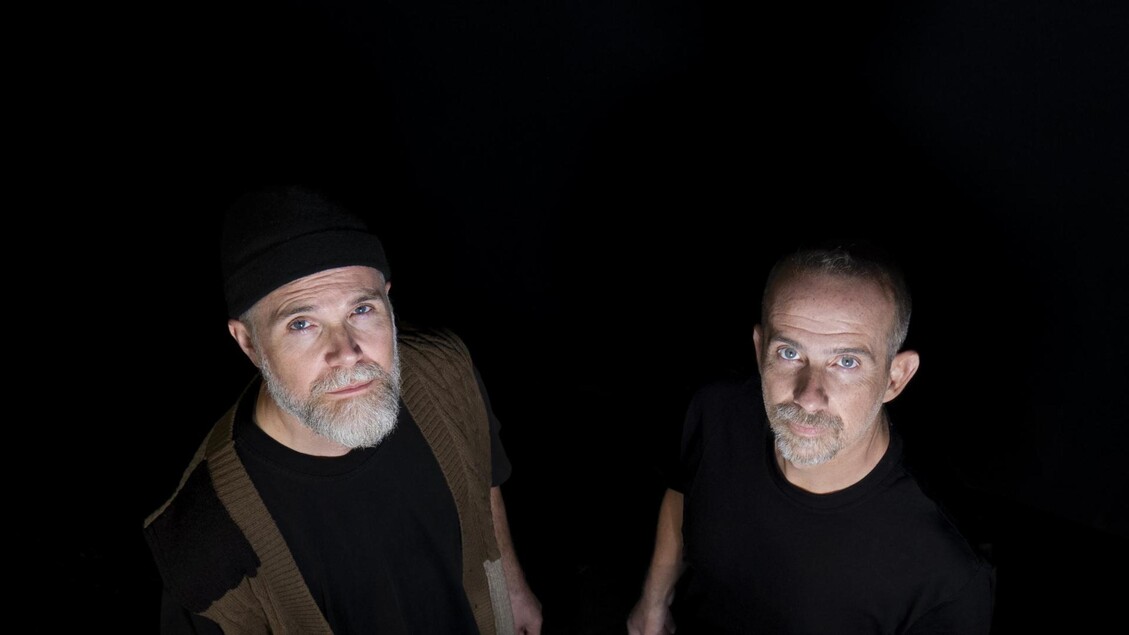
Beat Furrer is among the composers whose work features at Louth Contemporary Music Society’s Coming Together festival
1,382 words~6 min read