Story audio is generated using AI
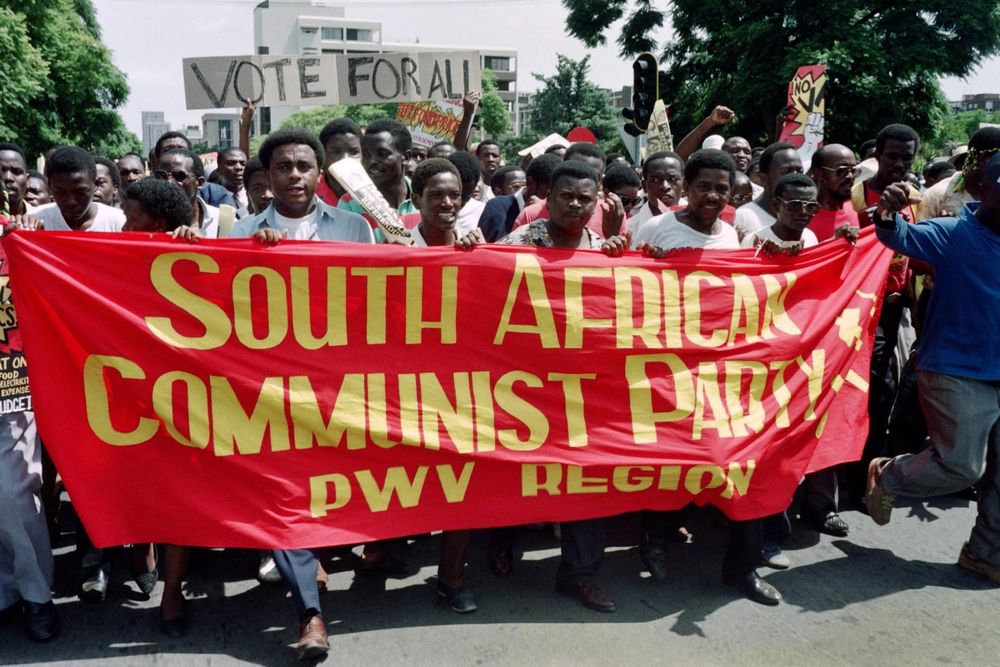
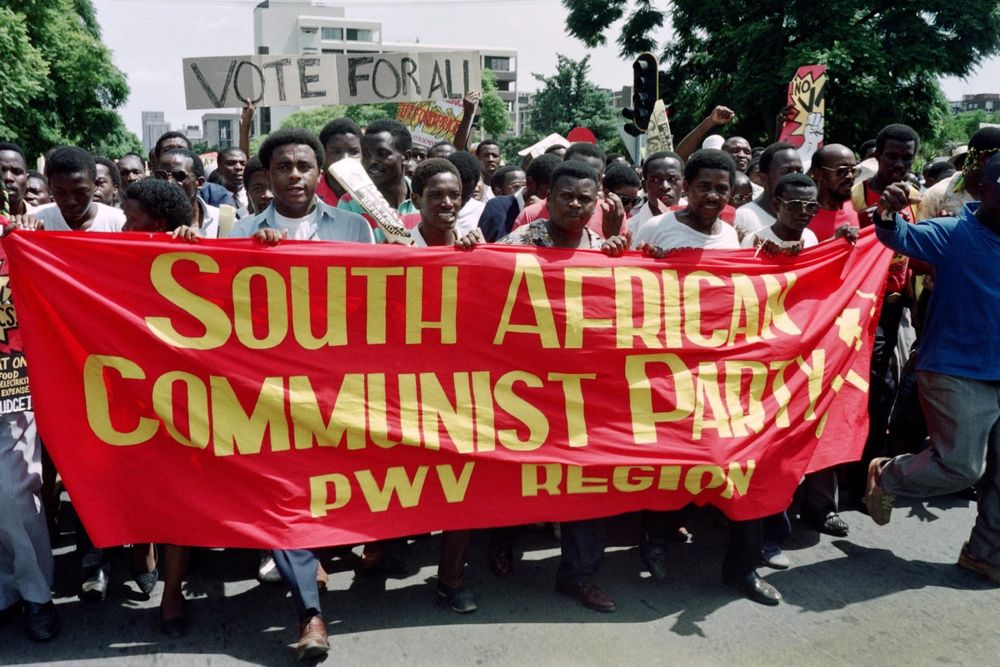
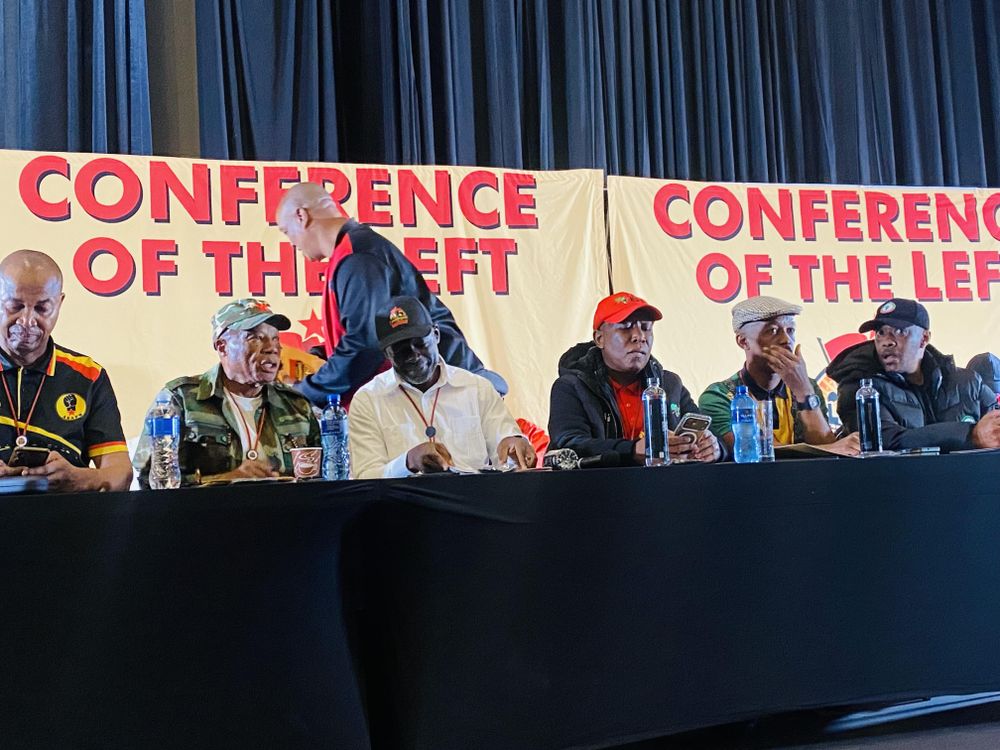
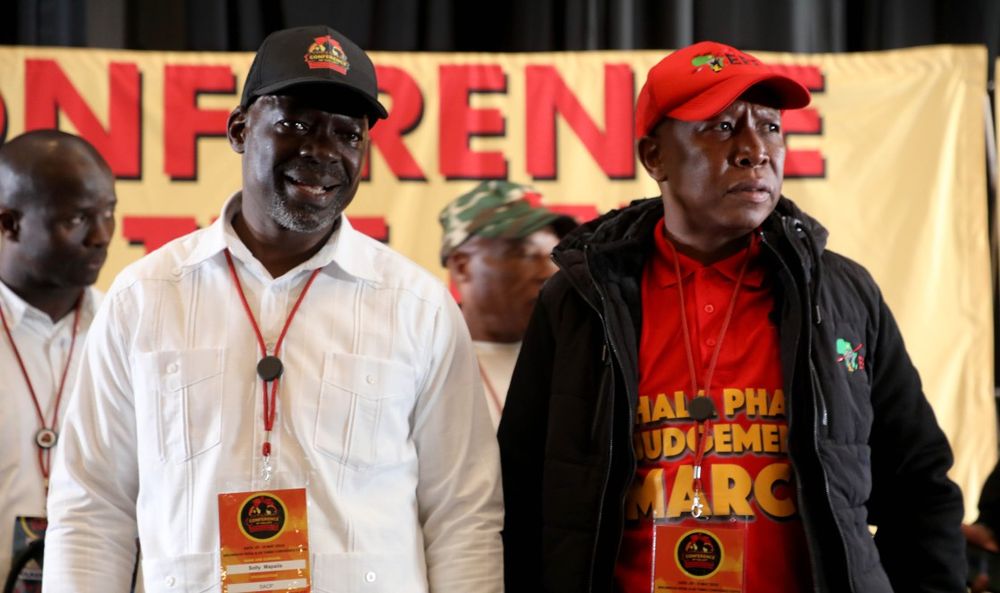
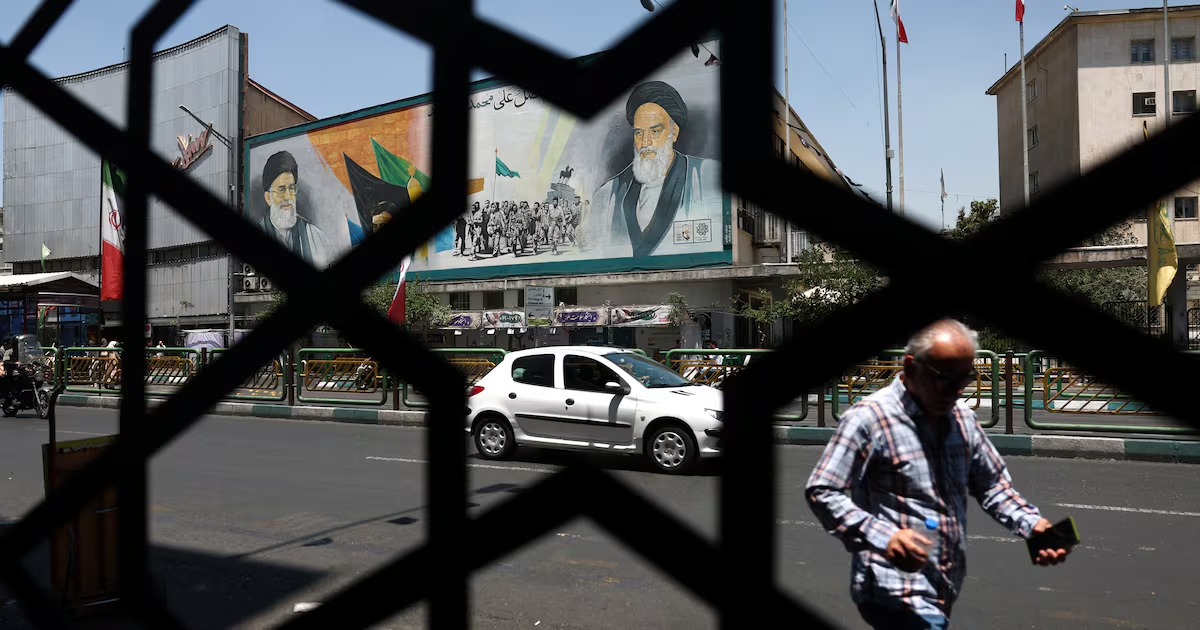
There was something deeply important about the Conference of the Left held in South Africa from May 29 to 31. At a time when millions of South Africans feel politically abandoned, economically trapped and increasingly disillusioned with democratic institutions, any serious attempt to revive progressive politics deserves recognition rather than ridicule. South Africans are exhausted. Communities are collapsing under unemployment, corruption, violent crime, failing municipalities, rising food prices and widening inequality. Young people are graduating into hopelessness, while workers watch transport costs rise faster than wages. In that environment, political spaces that still speak about solidarity, justice, accountability and dignity matter. That is why the conference matters. The significance of the gathering was not simply that it took place. Convened under the theme Building a Left Movement for Working-Class and Popular Power, the conference was an ambitious attempt to rebuild coherence across a fragmented South African left. It brought together political parties, trade unions, community organisations, solidarity movements, student activists and socialist formations seeking to develop a common programme of action and a shared political vision. The organisers argued South Africa’s crises cannot be understood merely as failures of governance or corruption, but as the consequence of deeper structural inequalities embedded within the country’s economic system. Discussions ranged from unemployment, public ownership, industrial policy and land reform to international solidarity, anti-imperialism and the future direction of progressive politics. One of the conference’s most significant objectives was the establishment of a permanent Council of the Left that could co-ordinate campaigns, political education and co-operation between participating organisations long after the conference ended. Whether one agrees with its ideological assumptions or not, it represented a serious effort to move beyond isolated activism and build a more organised political project. Historically, the South African left represented more than ideology. It represented labour activism, political education, anticolonial struggle and intellectual engagement. Solidarity helped sustain the anti-apartheid movement. It built unions, strengthened student activism and connected communities divided by race and class. The Conference of the Left therefore deserves credit for trying to revive serious political debate at a time when politics increasingly feels shallow and performative. South Africa desperately needs spaces where difficult conversations can happen honestly instead of collapsing into slogans and outrage. That ambition is important because the conference explicitly positioned itself as a response to a growing sense of political drift. Its organisers spoke openly about rebuilding working-class organisation, challenging economic inequality and creating a shared strategic vision capable of addressing South Africa’s deepening social and economic crises. Those are legitimate questions that deserve serious engagement. But admiration should not silence criticism. The danger facing sections of the South African left today is not that they care about injustice. The danger is that parts of progressive politics are increasingly becoming emotionally reactive instead of analytically rigorous, especially when discussing the Middle East. Too many conversations still approach the region through outdated Cold War instincts that no longer explain the modern world properly. America is treated as the permanent source of global oppression, while every force opposing Washington is instinctively romanticised as part of a liberation struggle. Complex geopolitical conflicts are reduced to simplistic moral theatre where one side represents pure evil and the other pure resistance. The danger facing sections of the South African left today is not that they care about injustice. The danger is that parts of progressive politics are increasingly becoming emotionally reactive instead of analytically rigorous, especially when discussing the Middle East. The modern Middle East does not work that way. The region is shaped by authoritarian governments, militant organisations, sectarian tensions, proxy warfare, competing regional powers and decades of unresolved trauma. Yet activist discourse often flattens those realities into emotionally satisfying slogans that collapse under serious scrutiny. This matters because the left historically became influential precisely because it took political analysis seriously. Anti-apartheid movements succeeded because they understood institutions, economics, strategy and international politics. Progressive politics became powerful because it embraced complexity rather than running from it. That intellectual discipline is now at risk. Iran is one of the clearest examples. Within many progressive spaces Iran is discussed almost exclusively as a victim of Western aggression. Certainly, Western intervention in the Middle East has caused immense destruction over decades. Iraq remains one of the clearest examples of catastrophic foreign intervention in modern history. But reducing Iran to a powerless anti-imperialist victim ignores the reality that Iran itself has become a major regional power projecting influence across the Middle East. Its influence stretches through Hezbollah in Lebanon, armed militias in Iraq and Syria, the Houthis in Yemen, and its tight relationship with Hamas in Gaza. Iranian-backed groups have shaped conflicts that displaced millions of civilians and destabilised entire societies. Yet many activists who correctly condemn Western intervention often hesitate to confront Iranian regional expansionism with the same moral consistency. Imperialism cannot only matter when it comes from the West. At the same time, there is another contradiction that parts of the left also fail to engage honestly. Israel has increasingly come to be viewed across large sections of the world as an aggressive militarised state closely aligned with Washington. Images of destruction in Gaza, settlement expansion in the West Bank, bombardments, displacement and civilian deaths have fundamentally shaped global perceptions of Israel, particularly among younger generations and within progressive political spaces. Rigorous scrutiny vs emotionFor critics, Israel’s military conduct has crossed beyond conventional warfare into what they describe as state terror. They point to collective punishment, infrastructure destruction, civilian casualties and the overwhelming asymmetry of force between Israel and Palestinians. In many activist spaces Israel is described as a terrorist state because of the scale of destruction associated with its military operations and the suffering experienced by Palestinian civilians. These criticisms should be subjected to rigorous scrutiny rather than accepted or dismissed on emotion alone. Human suffering is real; the political interpretations attached to it are often far more contested. But this is precisely where serious political analysis becomes necessary. Too often, Israel is discussed only as a colonial aggressor or an extension of American imperialism without acknowledging the deeper historical and geopolitical anxieties shaping Israeli society itself. Since 1948 Israel has faced repeated attempts by state and non-state actors to defeat, isolate or destroy it. Its history is not one of fighting distant wars for conquest, but of confronting invasions, terrorism, rocket attacks, hostage-taking and persistent security threats on its borders. Israelis understandably view Hamas, Hezbollah and Iranian-backed militias not as abstract resistance movements but as existential threats whose leaders have repeatedly called for Israel’s destruction. That does not excuse every Israeli action. It does not justify policies many observers see as oppressive or deeply disproportionate. But ignoring the security fears, isolation and historical alienation shaping Israeli politics produces analysis that is emotionally charged yet intellectually incomplete. Likewise, solidarity with Palestinians should never require political blindness. Palestinians deserve dignity, freedom, statehood and security. Civilian suffering in Gaza is morally devastating. But supporting Palestinian humanity does not require pretending Hamas represents all Palestinians, or ignoring the role militant politics have played in repeated cycles of violence. Serious political thought should be capable of holding multiple truths simultaneously. Israel can exercise overwhelming military force while also facing genuine security fears. Palestinians can suffer systemic injustice while Hamas pursues destructive militant strategies. Iran can oppose Western dominance while simultaneously pursuing regional ambitions of its own. The problem is that emotional politics struggles with complexity because complexity disrupts ideological certainty. That is where sections of the South African left risk becoming disconnected from ordinary South Africans themselves. Too many activist discussions about the Middle East have become symbolic performances rather than grounded material analysis. International solidarity matters deeply. South Africans understand solidarity because the world once stood with us against apartheid. But solidarity that becomes detached from material realities risks turning into moral theatre disconnected from working-class life. Wars in the Middle East are not distant ideological spectacles. They directly affect South Africans. When tensions escalate between Iran, Israel and the US, global energy markets react immediately. Oil prices rise. Fuel prices increase. Taxi fares rise. Food becomes more expensive because transportation costs increase. Small businesses struggle with operating costs while inflation deepens. For wealthy societies these pressures are frustrating. For poor South Africans they are devastating. Yet some activist politicians continue to treat the Middle East primarily as a symbolic arena for ideological struggle rather than examining how these conflicts ripple through South African society. There is often more energy devoted to political posturing than to understanding the impact on fuel prices, inflation, food security and the cost of living. More performance than serious analysis. South Africa cannot afford that. The country desperately needs a progressive movement capable of rigorous thought. It needs a left that understands economics, geopolitics, governance, energy markets and institutional decline. It needs political spaces willing to engage difficult realities honestly instead of reducing every conflict into simplistic binaries. The Middle East is no longer shaped solely by American power. Russia, China, Turkey, Iran, Gulf states, Israel and terrorist organisations all influence the region simultaneously. Complexity demands intellectual humility. It forces movements to think harder. It requires acknowledging that global politics rarely offers pure heroes and pure villains. The real question facing the South African left is whether it is capable of evolving without abandoning its moral commitments. Can it remain committed to justice while rejecting ideological tribalism? Can it support Palestinian dignity without romanticising militant politics? Can it criticise Israeli militarism without erasing Israeli insecurity? Can it oppose authoritarianism consistently, whether it comes from Washington, Tehran, Moscow or elsewhere? Those are the questions that matter. The Conference of the Left holds enormous potential because South Africa desperately needs political spaces where democratic debate, labour activism, intellectual engagement and critical analysis can thrive again. But that project cannot succeed if sections of the left remain trapped in outdated geopolitical reflexes while the world changes around them. Real solidarity must remain intellectually honest. It must reject authoritarianism consistently. Most importantly, it must remember politics is not about emotional self-satisfaction. Politics is about understanding reality clearly enough to improve people’s lives. If the South African left can recover that tradition of rigorous thought, it may yet rebuild itself into a force capable of speaking meaningfully to the realities of the 21st century. If it cannot, it risks becoming a movement forever shouting old slogans while ordinary South Africans pay the price of a rapidly changing world they were never properly prepared to understand. • Chauke is a community and student activist at the University of the Witwatersrand, where he served as a Student Representative Council member from 2021 to 2023.