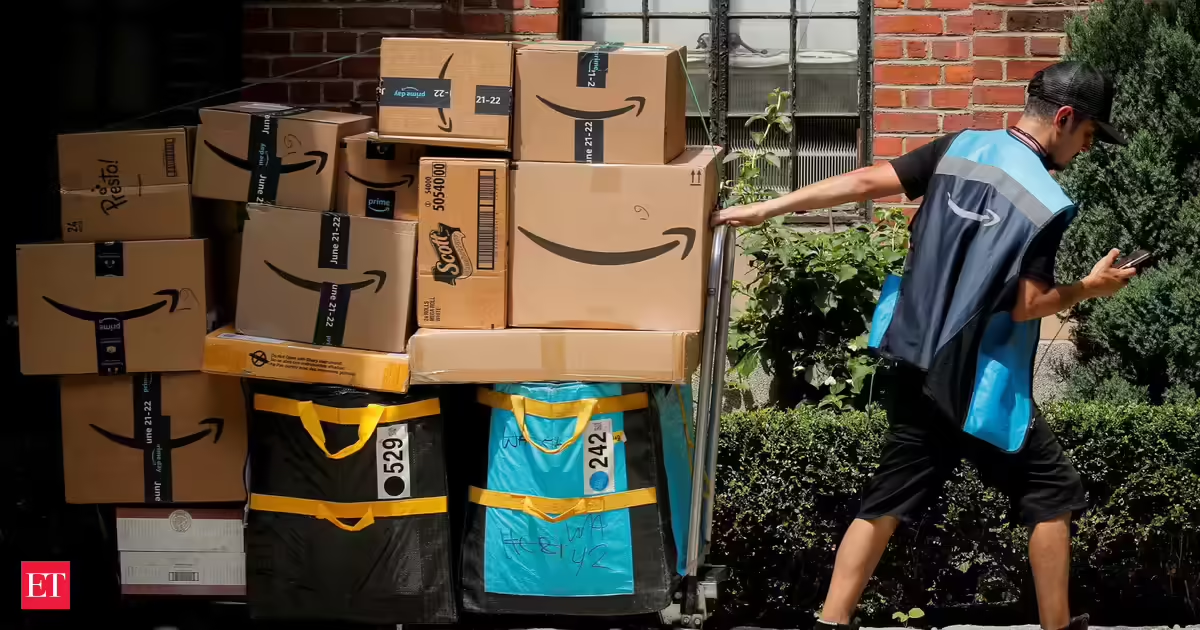
Amazon Prime Day 2026 starting on Tuesday will be a litmus test of U.S. shoppers' spending power, with the earlier-than-usual sales event increasingly centered on perishable groceries, household basics and back-to-school needs rather than carefree splurges. The four-day blitz running June 23 to 26, comes after Amazon shifted it from July, citing a calendar crowded by the FIFA World Cup and the 250th anniversary of U.S. independence. The earlier timing could also capture spending on summer travel, July Fourth stock-ups and back-to-school shopping. What shoppers add to their carts is as important as how much they spend, helping gauge whether recent U.S. consumer resilience is holding or beginning to crack. Squeezed by inflation — up 4.2 per cent in May at its fastest pace in three years — and a surge in gas prices driven by conflict in the Middle East, most lower- and middle-income consumers have eschewed big-ticket items.Amazon has highlighted deals on groceries, household goods, travel and school items, and said fresh food and essentials are becoming a larger part of Prime members' baskets as it expands same-day delivery.Adobe Analytics expects a boost in children's apparel, lunch boxes, backpacks, refrigerators, power tools and vacuum cleaners, with average discounts of 23 per cent on apparel, 23 per cent on electronics and 19 per cent on toys — largely flat from last year.Shoppers will spend more on this Prime Day than on Cyber Monday and Black Friday 2025 combined, Adobe projected.Amazon is also promoting its AI shopping assistant, Alexa for Shopping, as a discovery and deal-tracking tool for Prime Day. The feature offers personalized recommendations based on user behavior, allows shoppers to track price history for up to a year, set alerts, and automate purchases once target drop prices are reached.Bank of America said in a note that the tool will be key "in protecting direct traffic for Amazon, as well as enabling higher conversion rates and driving incremental spend on the platform." The brokerage expects the 96-hour Prime Day event to reach $21.6 billion in goods sold, a 5 per cent increase over 2025.An earlier Prime Day will help Amazon grab seasonal spending on outdoor and travel products, and summer wardrobe, eMarketer analyst Sky Canaves said, adding that shoppers remain highly strategic and wait for these sales to stock up on essentials as well as delayed bigger-ticket purchases.While Amazon's rivals Walmart and Target have shadowed Prime Day for years, the overlap has turned it into a synchronized industry event, intensifying price competition. Walmart's seven-day sale started on Monday, while Target Circle Deal Days align exactly with Prime Day.eMarketer expects Amazon to capture more than 60 per cent of sales over the four days.While shoppers are expected to be more selective, steady retail sales and a stable economy should support a solid Prime Week, though with a greater focus on value, said Bret Kenwell, an analyst at eToro.
Amazon Prime Day 2026: When is Prime Day in U. S? e-Retail giant offers massive deals on groceries, household goods, travel, school items
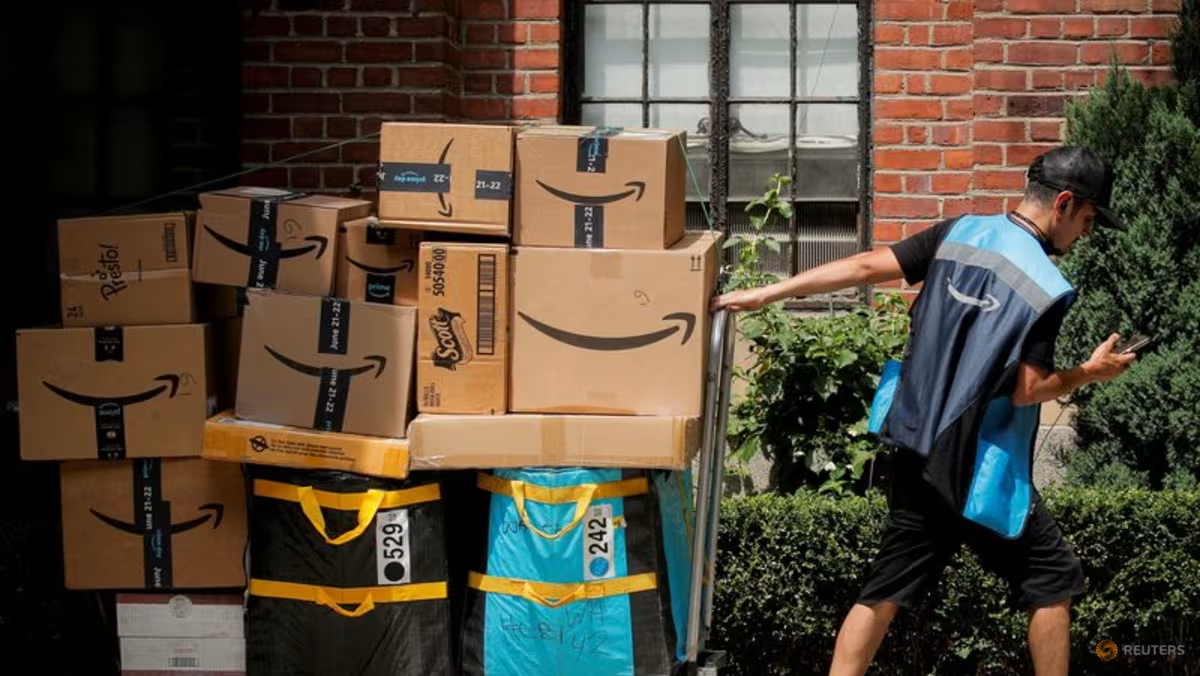
Prime Day 2026 in U. S: Amazon has highlighted deals on groceries, household goods, travel and school items, and said fresh food and essentials are becoming a larger part of Prime members' baskets as it expands same-day delivery.
TL;DRAI
Amazon Prime Day 2026 (June 23-26) targets $21.6B sales but consumers shift to essentials as 4.2% inflation pressures discretionary budgets. Alexa for Shopping AI defends Amazon vs. Walmart/Target; consumer shift to value signals economic stress for enterprise IT budgets.
478 words~2 min read