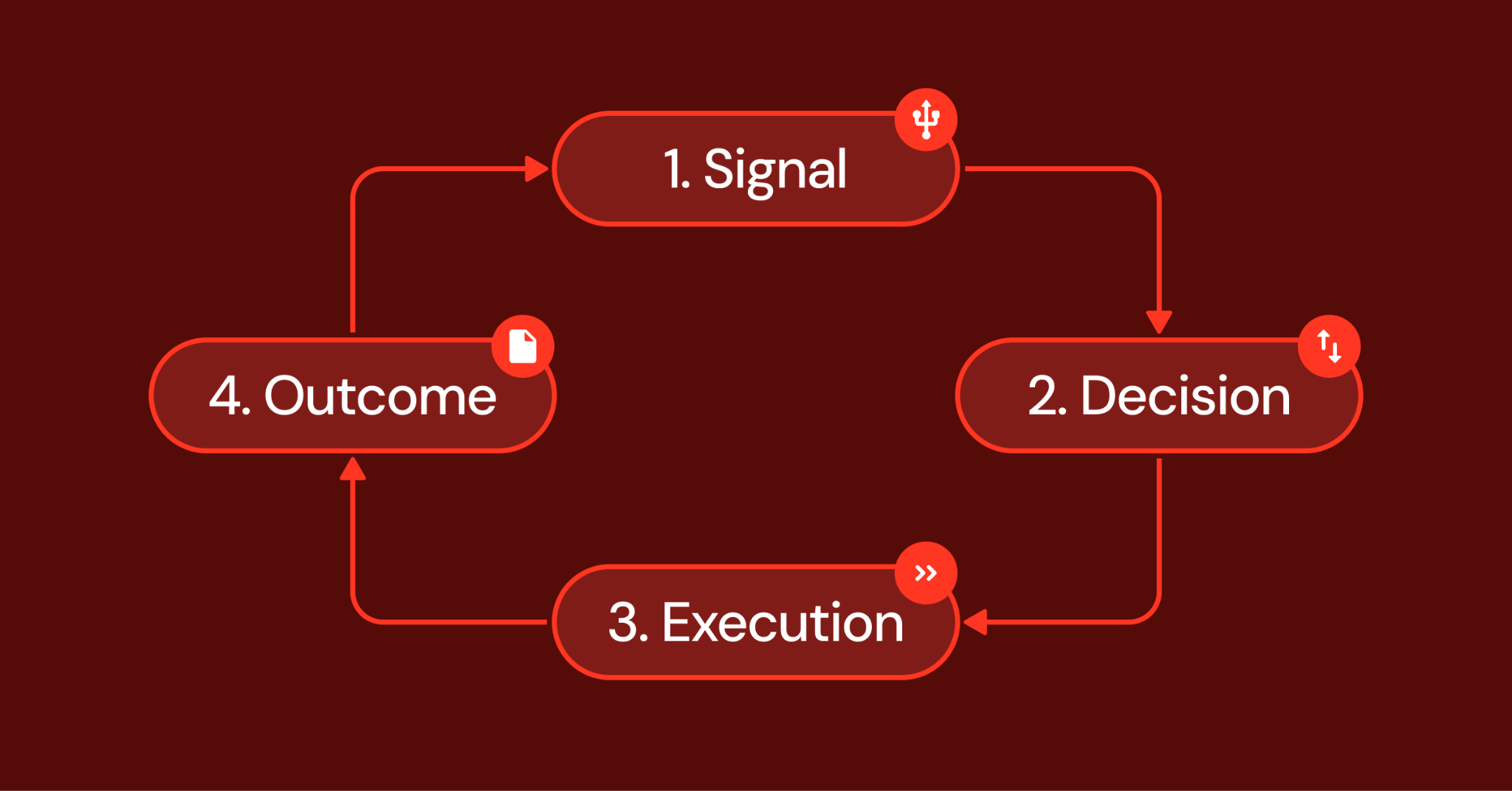
Prashanthi Kolluru is the founder of KloudPortal. Helping global capability centers (GCCs) hire product-ready engineering pods.gettyA decade ago, when cloud engineering was the new norm, enterprises started migrating every piece of data they could find to the cloud. Most enterprises today have invested heavily in business intelligence platforms, data warehouses and visualization tools. Executives can pull up dozens of dashboards that track everything from quarterly revenue and customer churn to supply chain throughput and employee engagement scores.And yet, when it's time to make a critical call—which market to enter next, whether to expand headcount or how to respond to a demand signal—many leadership teams still find themselves in the same position: staring at charts, debating interpretations and waiting for an analyst to explain what the numbers actually mean. This is the dashboard paradox.We've scaled data, but we haven't scaled decision making.What Is The Answer Layer?The answer layer isn't a product you buy—it's an architectural philosophy. It describes the intelligence tier that sits between your data systems and your decision makers, with the sole purpose of converting signals into recommended actions.Where a dashboard tells you that customer acquisition cost rose 18% last quarter, the answer layer tells you that paid acquisition costs have outpaced revenue per customer for three consecutive quarters and that, based on your margin targets, your media mix should be recalibrated before the next budget cycle. It's the same underlying data with an entirely different output. One surfaces a metric; the other drives a meeting.The answer layer is built at the intersection of three capabilities: contextual data integration across systems, encoding of business rules and institutional knowledge, and delivery of outputs in plain language at the point of decision. It doesn't replace your analysts or your BI infrastructure. It amplifies both by ensuring that the output of all that analytical work reaches decision makers in a form they can act on immediately.Real-World Use ExampleAt KloudPortal, we recently worked with a real-estate client to address an operational challenge within their sales organization. The sales teams were making weekly prospecting decisions based on fragmented demand and supply pipeline insights, resulting in delays in identifying high-potential opportunities.To address this, we developed an answer layer that converted raw pipeline data into contextual, real-time recommendations. The implementation significantly reduced manual analysis effort while empowering business users with decision-ready intelligence embedded directly into their workflow.Four Principles For Building Your Answer Layer1. Start with the decision, not the data. Map the 10 most consequential operational decisions, then work backward to identify which data inputs and business rules drive each one. This inversion aligns the analytics investment with real business outcomes rather than with what happens to be measurable.2. Encode the best institutional knowledge. Every enterprise has expertise that can be leveraged—the vice president who knows which signals predict churn or the operations lead who understands the real drivers of delivery delays. Training the answer layer to capture and systematize that knowledge enables it to scale beyond individuals.3. Deliver answers at the point of decision. An insight that requires someone to open a separate tool and interpret a chart still creates friction. But when recommendations surface inside the workflows where decisions are made—in the CRM during a sales call, in the project management system during a sprint review or in an executive briefing before a board meeting—the proximity to the decision moment creates value.4. Treat the system as living. As technology leaders, we need to see which data inputs contribute and where uncertainty exists. Equally, as business conditions change, we need to build feedback loops so models update over time. Organizations that treat their answer layer as a product with a road map and continuously iterate can outperform those that treat it as a one-time implementation.Why Leadership Alignment Determines SuccessBuilding an answer layer isn't just a technology initiative—it's a leadership responsibility. Organizations must align on which business decisions matter most and ensure AI-driven recommendations are transparent, contextual and actionable.Success shouldn't be measured by dashboards delivered or reports generated. The focus must be on improving decision velocity, operational responsiveness and measurable business outcomes.Trust becomes critical when intelligence is embedded into everyday workflows. Business users need clarity on how recommendations are generated and confidence in acting upon them.AI initiatives need to be tied to specific outcomes—reducing response times, improving forecasting accuracy and accelerating customer engagement. That alignment creates accountability, drives adoption and transforms AI from experimentation into a trusted operational advantage across the enterprise.Final ThoughtDashboards will remain essential for monitoring and exploration. But for decisions that shape a company's trajectory, enterprises need more than visibility. They need an answer layer. Every week you delay is a week your competitors may be moving from observation to action while you're still debating what the chart means.Forbes Technology Council is an invitation-only community for world-class CIOs, CTOs and technology executives. Do I qualify?
From Dashboards To Decisions: Why Enterprises Need An Answer Layer
Every week you delay is a week your competitors may be moving from observation to action while you're still debating what the chart means.
802 words~4 min read