Show Caption
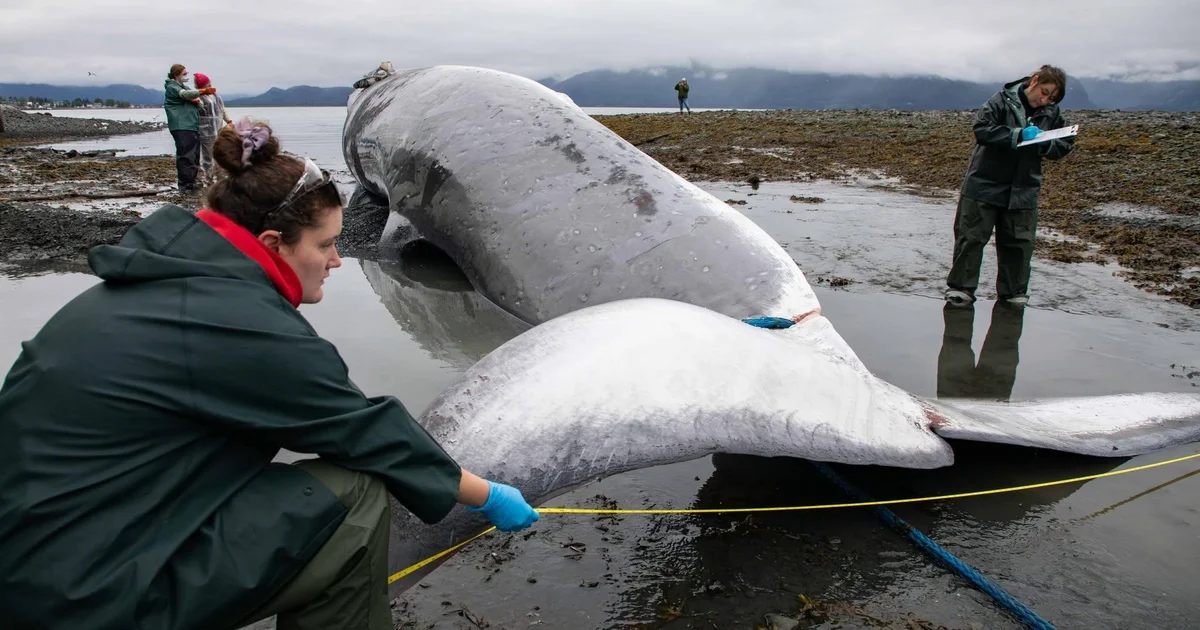
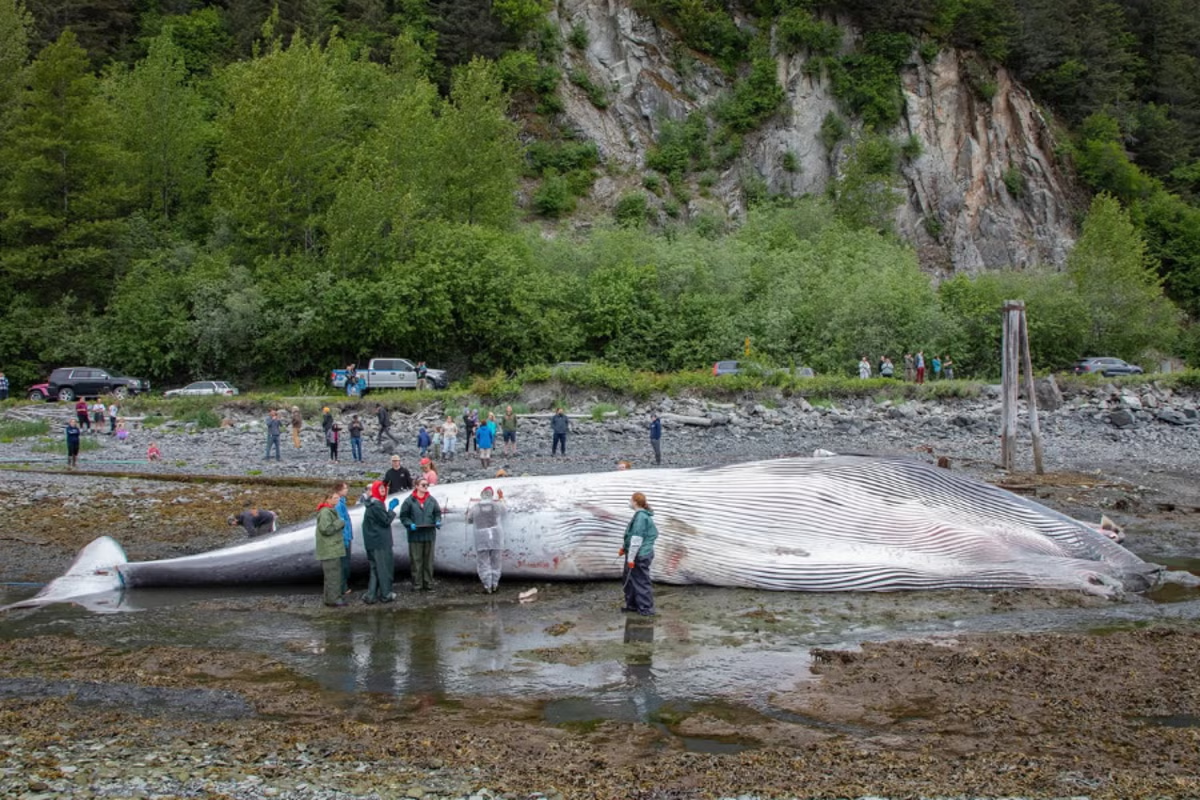
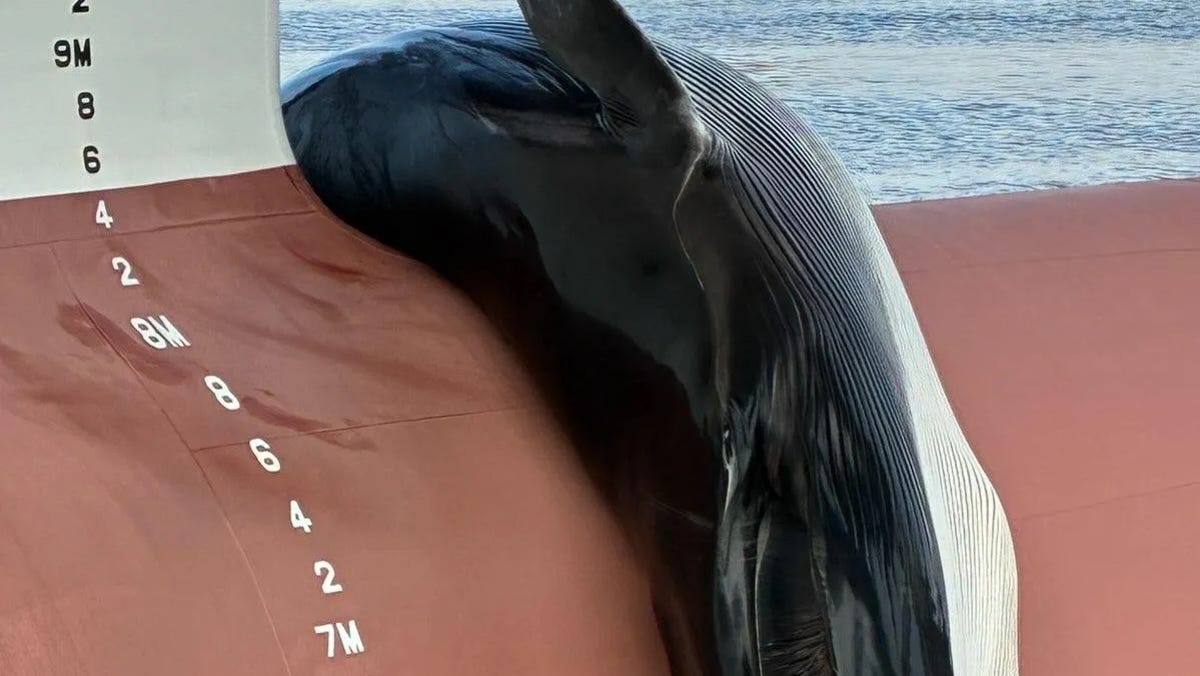
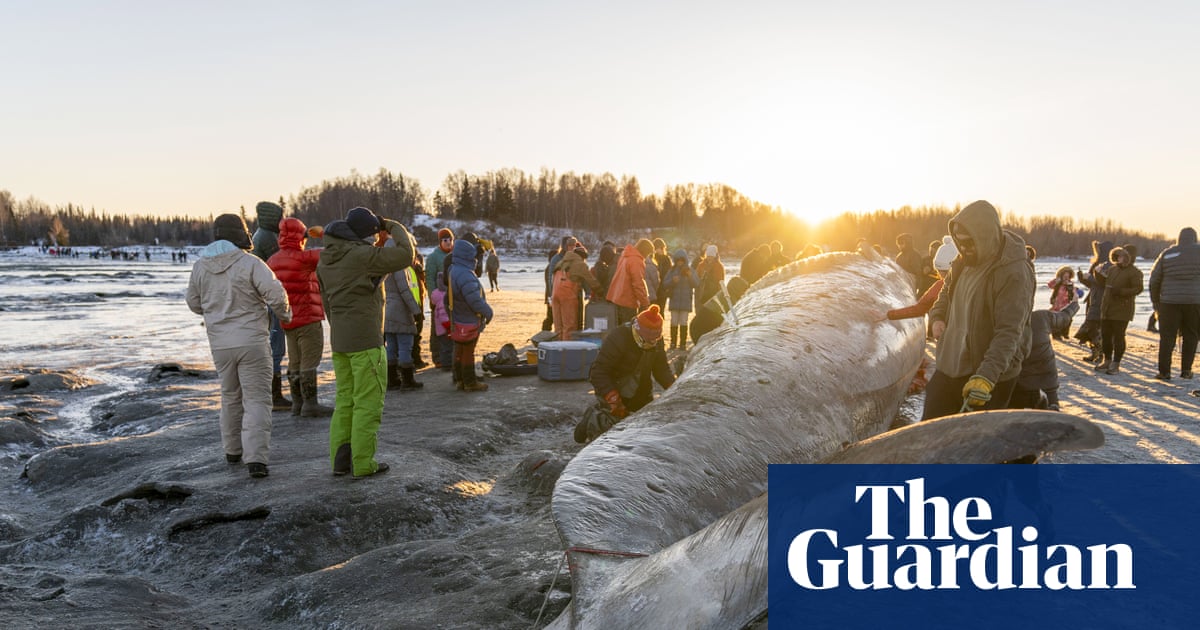
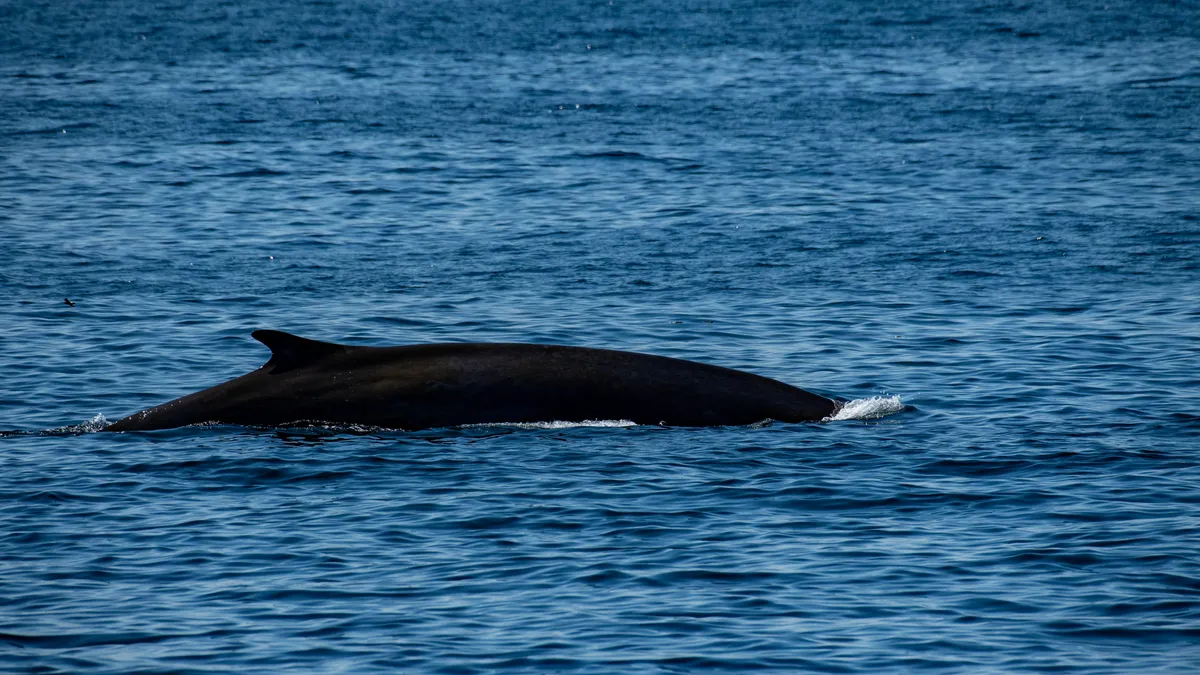
A cruise ship arrived at a dock in Seward, Alaska, with a dead endangered fin whale "on top of the ship’s bulbous bow," the National Marine Fisheries Service said June 21.The ship reached the port on June 19 with a 61-foot female fin whale on its bow, according to NOAA Fisheries Alaska. A local company towed the whale to a nearby beach, where a team prepared for a necropsy – an animal autopsy – to determine how the whale died.“We are working with the Alaska SeaLife Center to perform a necropsy on the 61-foot, adult female fin whale to determine the cause of death,” NOAA Fisheries said in a statement. “Initial findings indicate the whale was pregnant.”The federal agency urged the public to stay away from the necropsy site “for your safety and to allow space for the team to perform the examination and collect samples.” The NOAA Fisheries Office of Law Enforcement is investigating the incident and asked anyone with information to call its 24-hour hotline.Cooper Freeman, Alaska director at the nonprofit Center for Biological Diversity, sharply criticized the circumstances surrounding the whale’s death. He called for a thorough inquiry, adding that broader measures are needed to reduce similar incidents.“It’s heart-wrenching that this endangered pregnant fin whale was likely killed by this monster cruise ship,” Freeman said in a statement to USA TODAY. "This deserves a full investigation, with hard questions asked about how it happened. But the real solution is mandatory speed limits in whale hot spots, which have been shown to dramatically reduce the risk of tragedies like this."USA TODAY has reached out to NOAA Fisheries and the Alaska SeaLife Center for more information.What are fin whales?The second-largest whale species after blue whales, fin whales are classified as an endangered species, according to NOAA. A fully grown fin whale can reach up to 85 feet long and weigh 40 to 80 tons.The massive mammal, which gets its name from the fin on its back, near its tail, is found in oceans across the globe, the NOAA said. Fin whales are typically found in deep, offshore waters in open seas, away from the coast, primarily in temperate to polar latitudes.Like all large whales, the NOAA said fin whales were hunted by commercial whalers and their populations were decimated. Populations have since gradually recovered due to conservation efforts.While whaling is no longer a threat to the species, their existence is still threatened by ship strikes, entanglements in fishing gear, underwater noise and the effects of climate change, according to the NOAA.The species, along with all other marine mammals, is protected under the federal Marine Mammal Protection Act. The law makes it illegal for people to disturb, feed, harass, hunt and capture marine mammals.Latest incident involving dead whaleIn recent years, vessel strikes and fishing gear entanglements have been persistent threats to whales across the world. According to the nonprofit International Marine Mammal Project, about 20,000 whales are killed worldwide by vessel strikes each year."Large whale species such as fin, humpback, gray, and blue whales are most often victims, with collisions concentrated in busy shipping lanes near major ports and along migratory routes," the International Marine Mammal Project said. "On the U.S. West Coast, California’s waters are a hotspot, with ship traffic converging near critical whale feeding and migration areas."From late 2022 to early 2023, USA TODAY reported a series of whale deaths involving more than 20 animals, including critically endangered North Atlantic right whales, humpbacks, pilot whales and orcas. Several of the deaths were attributed to a variety of human activities, such as boat strikes.In 2024, the NOAA reported that multiple North Atlantic right whales had died from injuries consistent with a vessel strike. In July 2025, the California Academy of Sciences and the Marine Mammal Center confirmed that 24 whales, died in the greater San Francisco Bay Area region for the year.Earlier this year, a dead whale was found on the bow of a ship coming to port at a marine terminal in New Jersey. The Marine Mammal Stranding Center initially believed the whale was a fin whale but necropsy later confirmed that it was an endangered sei whale.Timmy, a humpback whale that was stranded several times in the Baltic Sea this year, captured worldwide interest during a controversial rescue effort. Despite recommendations from marine mammal scientists to euthanize the whale, a regional government authorized a privately funded rescue effort. Timmy was released on May 2 and died two weeks later.Contributing: Dinah Voyles Pulver and Saman Shafiq, USA TODAY