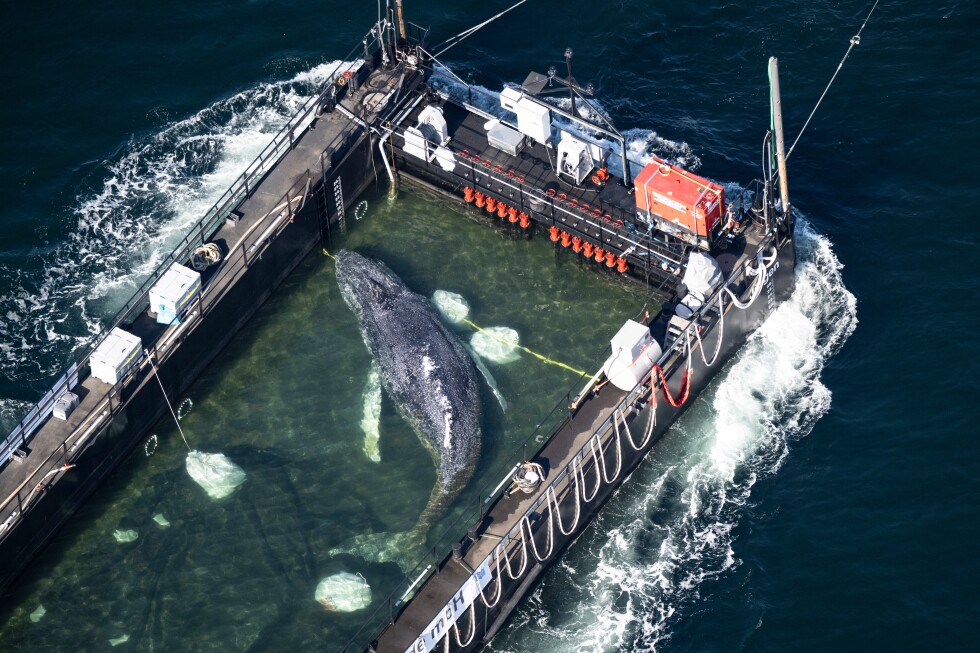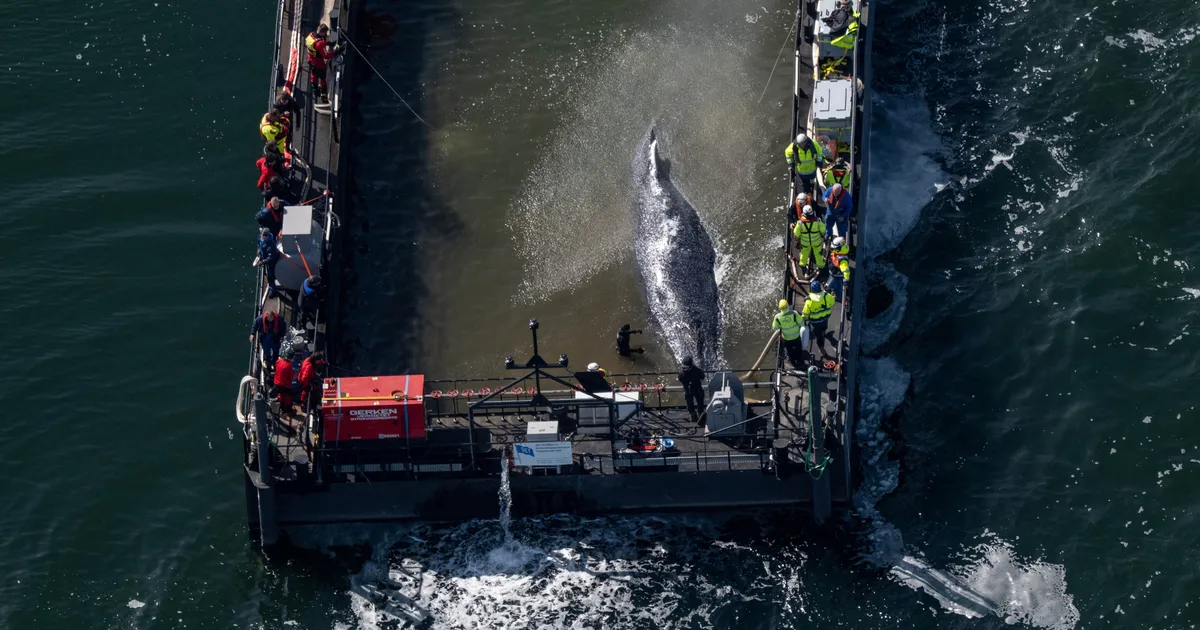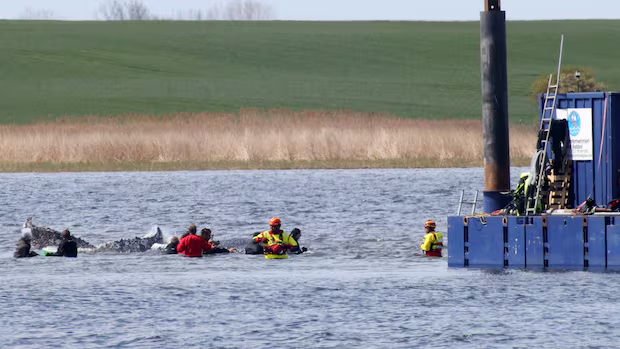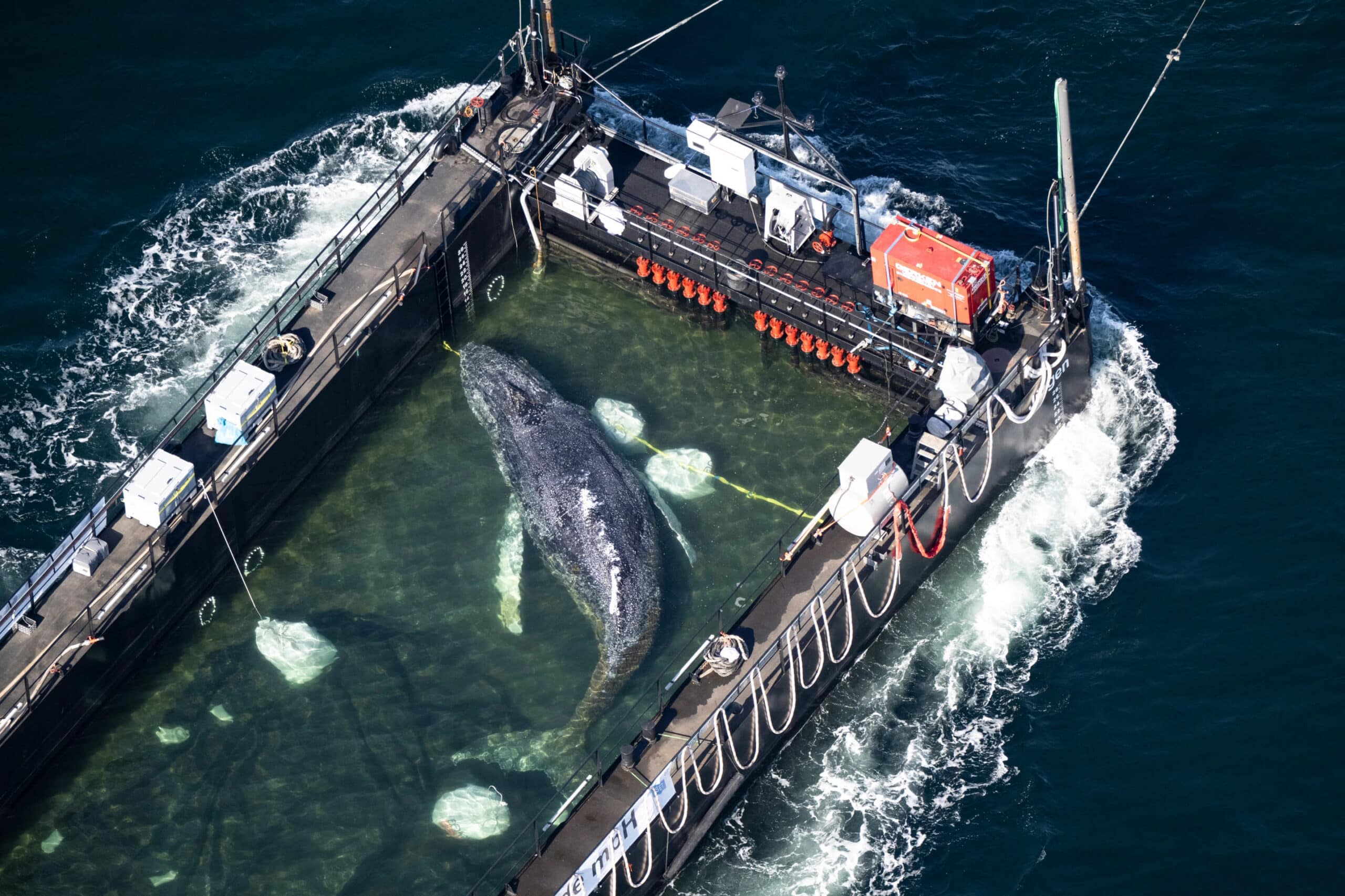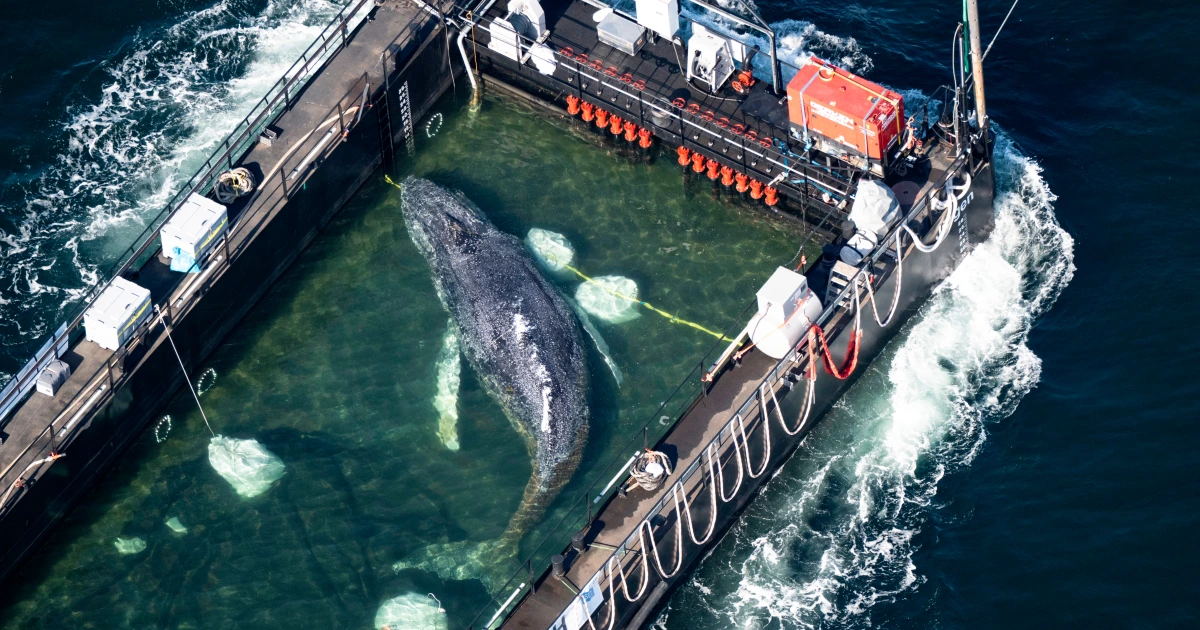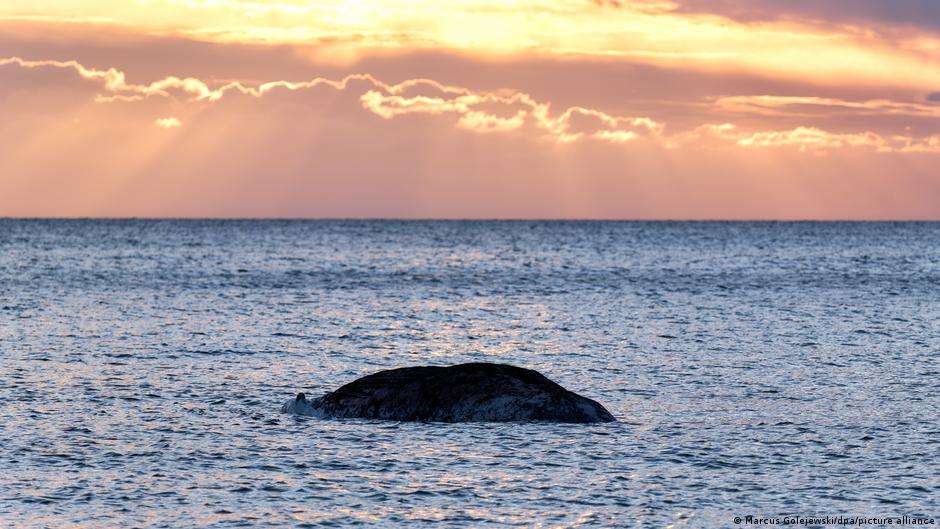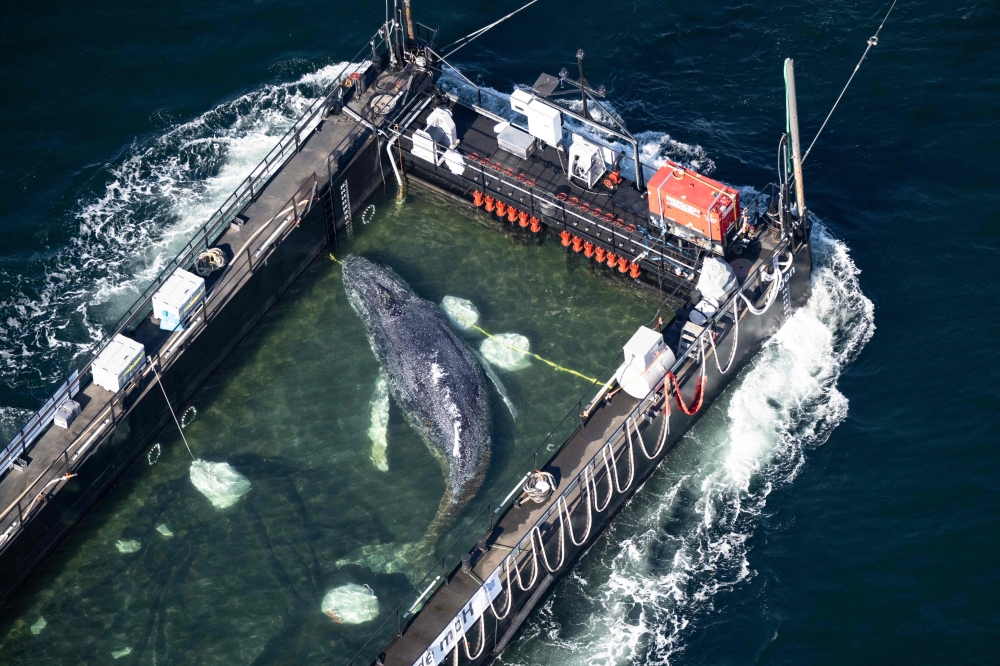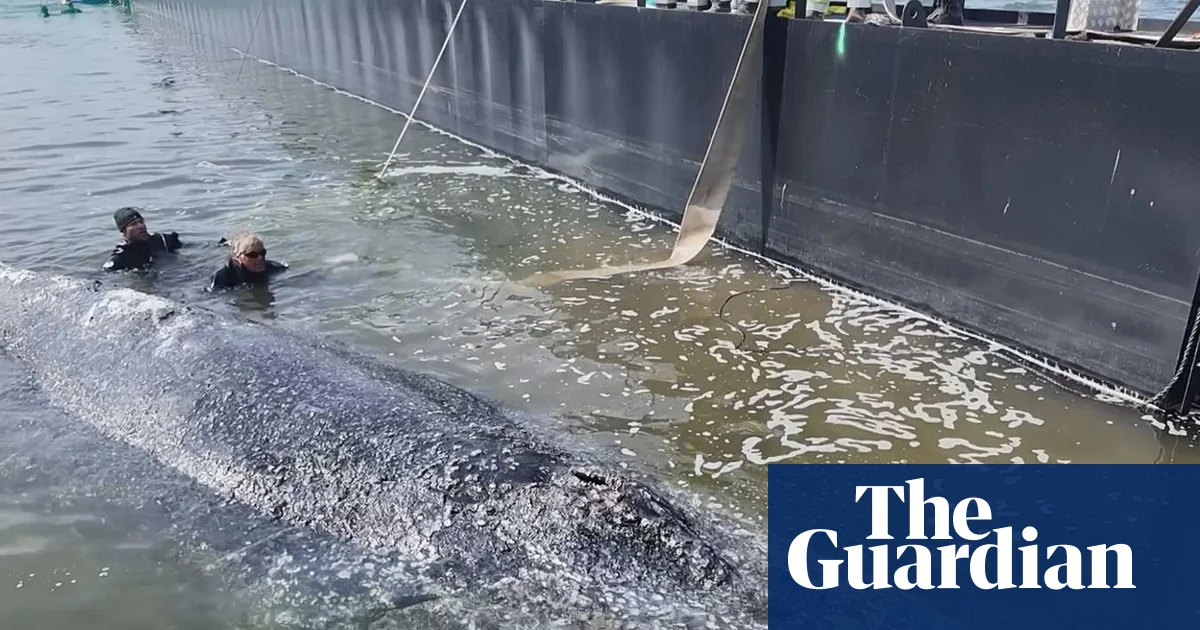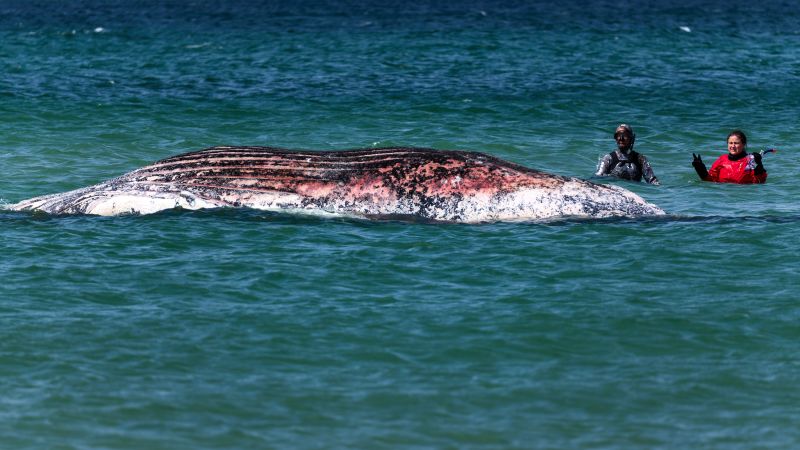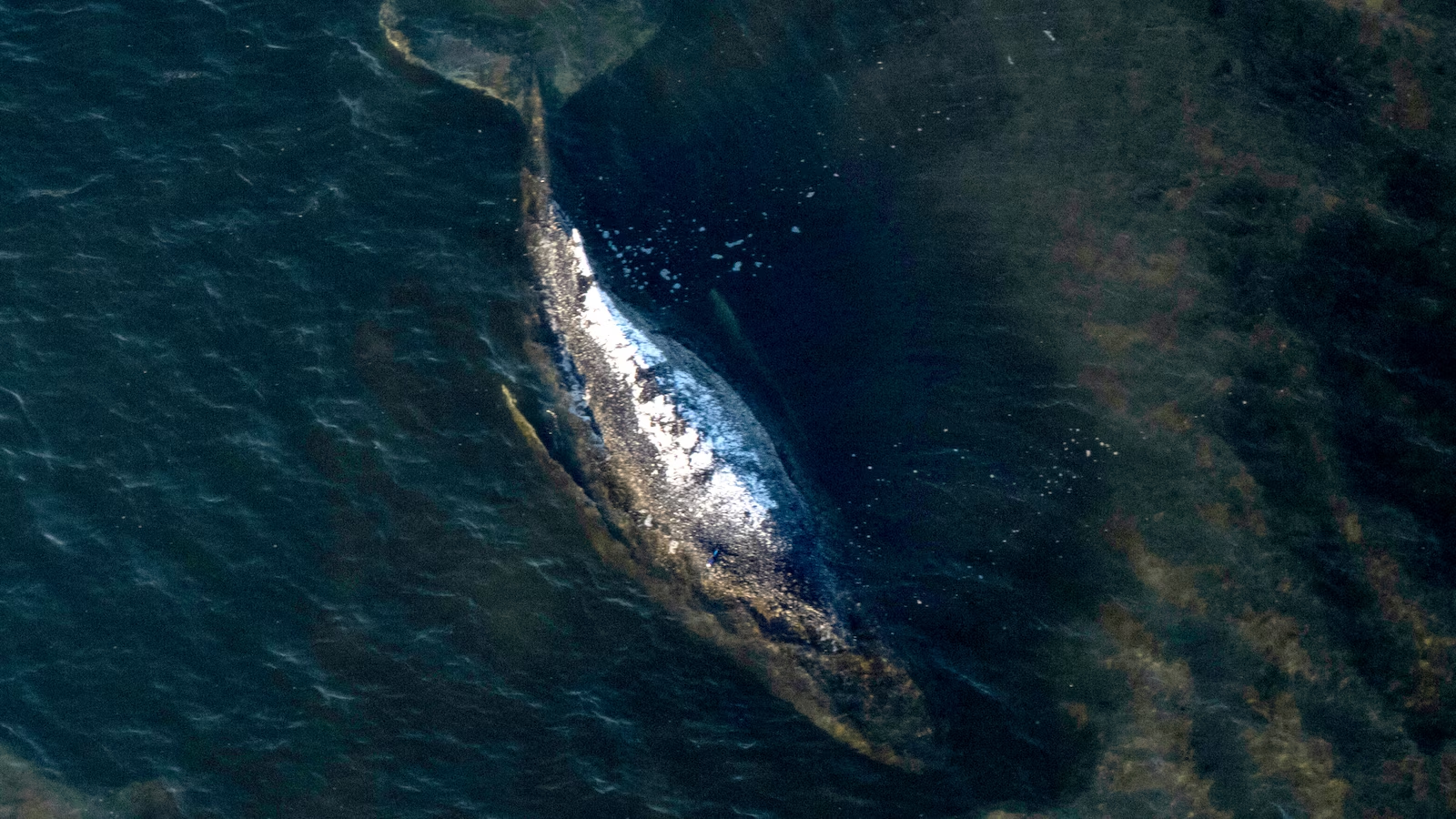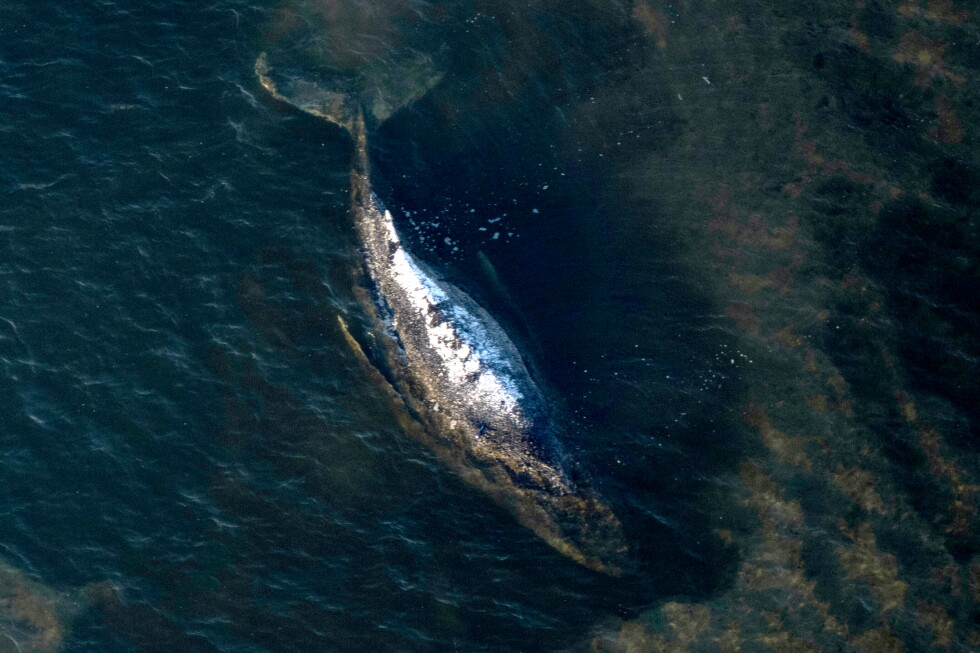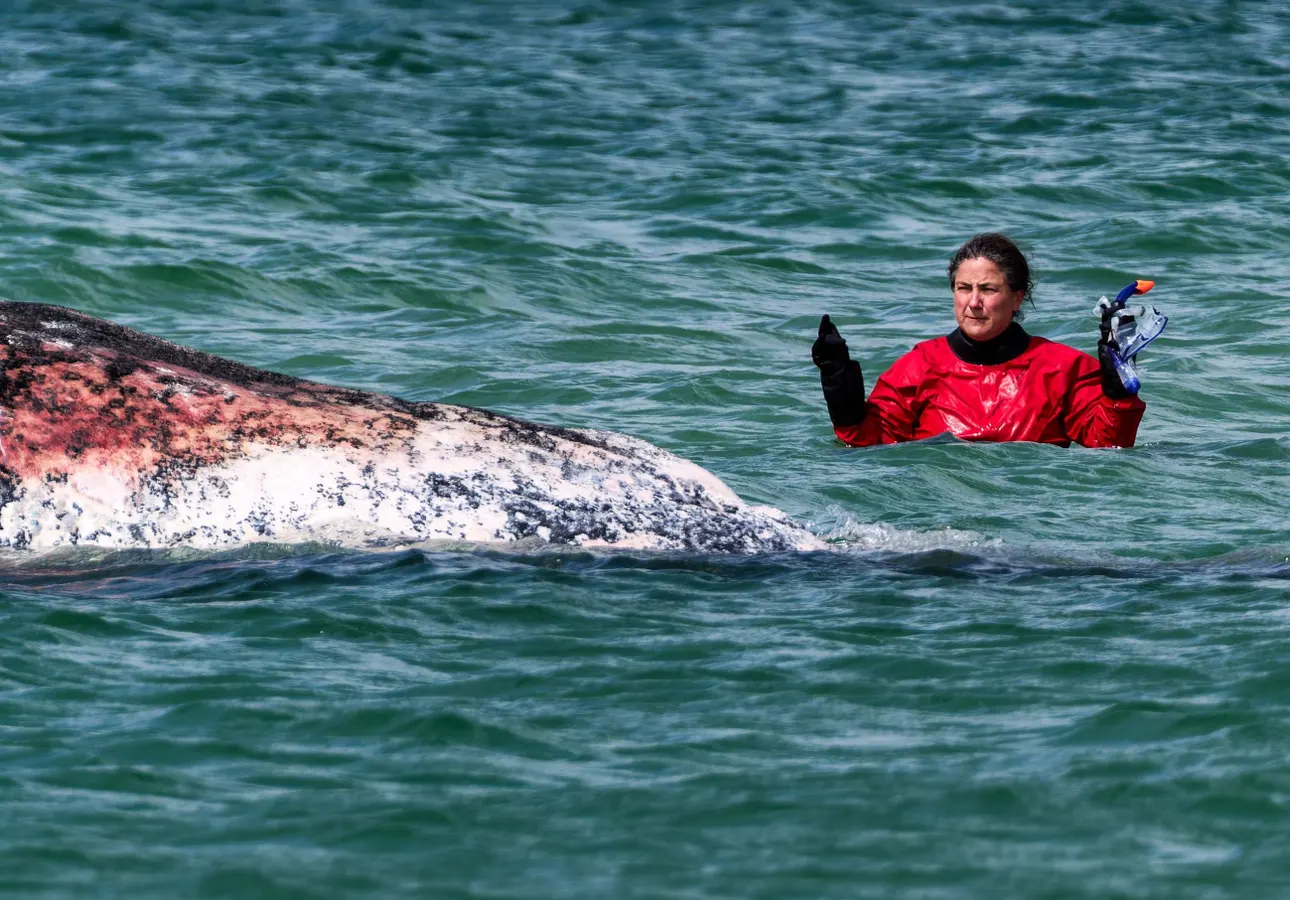
Vet Anne Herrschaft and helpers examine a dead whale lying off the Danish island of Anholt. dpa/picture alliance via Getty ImagesA young humpback whale which had been towed by barge into deeper waters in the North Sea after repeated strandings has been confirmed dead in the Kattegat, a strait between Denmark and Sweden.This comes two weeks after a controversial, privately funded rescue mission, which used a water-filled barge to pull the whale 70 kilometers out to sea more than a month after it first became stranded off the coast of Germany, near Timmendorfer beach, which led to its nickname Timmy.Danish environmental authorities confirmed on Saturday that the dead whale is indeed Timmy because of a tracking device found on the carcass.The humpback whale stranded in the Baltic Sea for almost a month in the barge that took it to the North Sea.dpa/picture alliance via Getty ImagesInitial Rescue Attempts After the whale was first discovered stuck on a sandbank on March 23, rescuers dug channels in an attempt to refloat it. But the whale stranded repeatedly.Veterinarians, marine scientists and stranding experts all called for “palliative care” (keeping the whale wet and comfortable) as the most responsible and humane response. Initially, the government of the state Mecklenburg-Vorpommern agreed.The International Whaling Commission (ICW) strandings expert panel fully supported the “difficult decision taken by the German authorities to halt further active rescue attempts”.It said at the time that the whale had already stranded four times over the course of two weeks and was in a weakened state due to serious entanglement in fishing gear. "Each stranding event has caused serious physical harm, including pressure injuries, breathing difficulties and circulatory stress which further weakens the animal. For a whale of this size and condition, the chances of survival are now negligible, and further continued attempts to refloat would only cause additional suffering."MORE FOR YOUHowever, local German authorities changed their mind following a public outcry and approved the high-profile rescue mission.On May 1, the humpback whale was towed in its barge along the Danish coast.dpa/picture alliance via Getty ImagesAided by round-the-clock news coverage, the mission became a spectacle, while marine scientists continued to advice against it to avoid extending the whale’s suffering.Emotional ResponseOnce the whale was towed out and released from the barge, the ICW’s strandings expert panel acknowledged the logistical and financial effort but stressed a successful rescue would only “become evident if the animal can swim, survive the serious physiological effects of prolonged stranding and transport, return to suitable habitat, resume normal feeding, and regain health”.“The intense public attention on this single animal is understandable,” the panel said. “But it is one of many whales to be compromised by entanglement in fishing gear, the leading cause of large whale mortality worldwide, claiming the lives of many hundreds of animals every year.”Karen Stockin, the research lead at the Cetacean Ecology Research Group at Massey University in New Zealand is a member of the IWC strandings expert panel. She wrote in The Conversation that whale strandings evoke powerful emotional responses and that while the rescue mission may have seemed an act of compassion, her research shows a more difficult truth. "When scientific advice is sidelined in favor of public sentiment, outcomes for the very animals we aim to protect can worsen”.She says now that the whale has died, it would be nothing short of a travesty if no necropsy was conducted. "Timmy was out of habitat, emaciated and showing clear clinical signals of ill health prior to the unprecedented human intervention efforts the world has just witnessed. Lessons need to be learnt from this situation if we are to avoid such extended suffering in the future.”
Humpback Whale Found Dead Two Weeks After Controversial Rescue Mission
Danish authorities confirm a dead humpback whale is the one that had been towed out to sea in a controversial rescue mission after repeated strandings.
610 words~3 min read