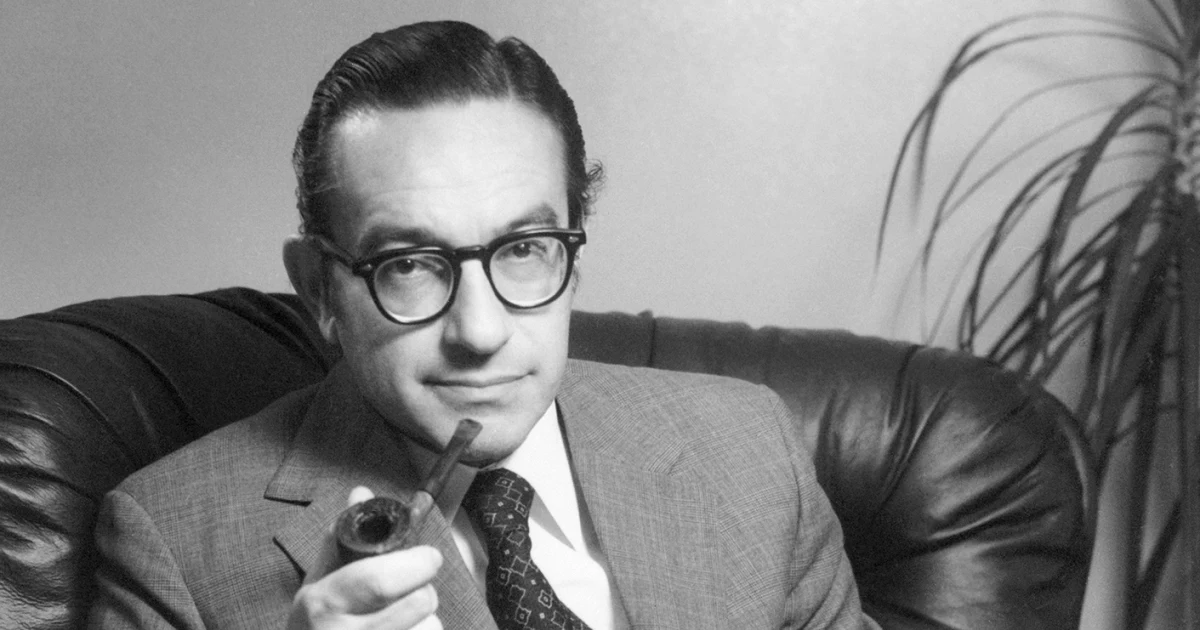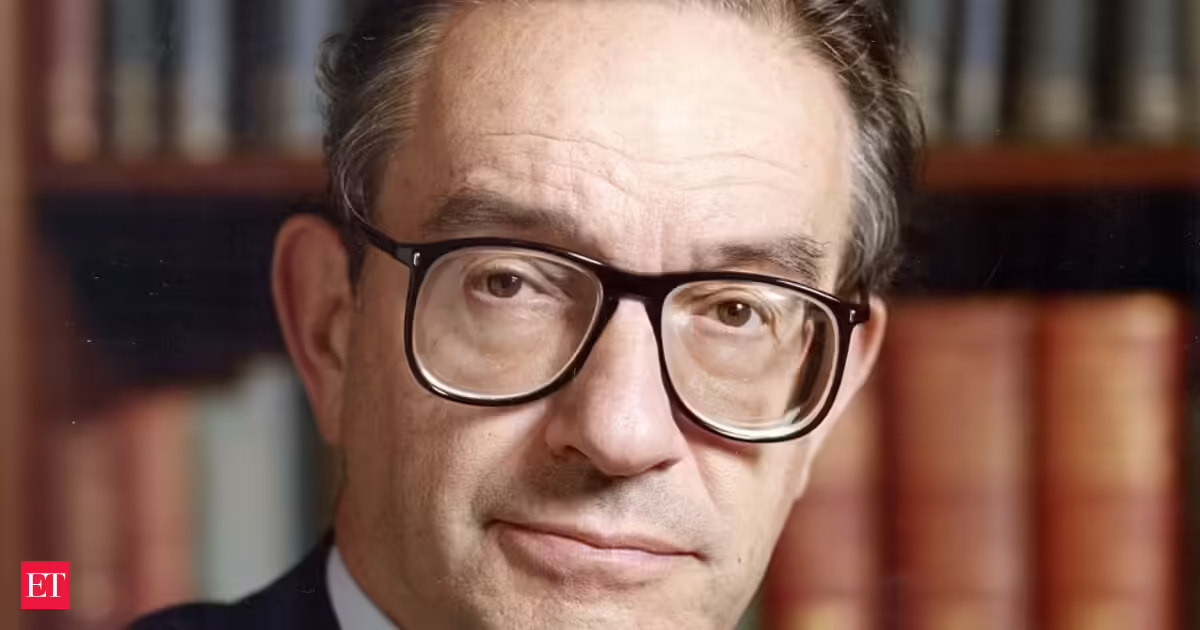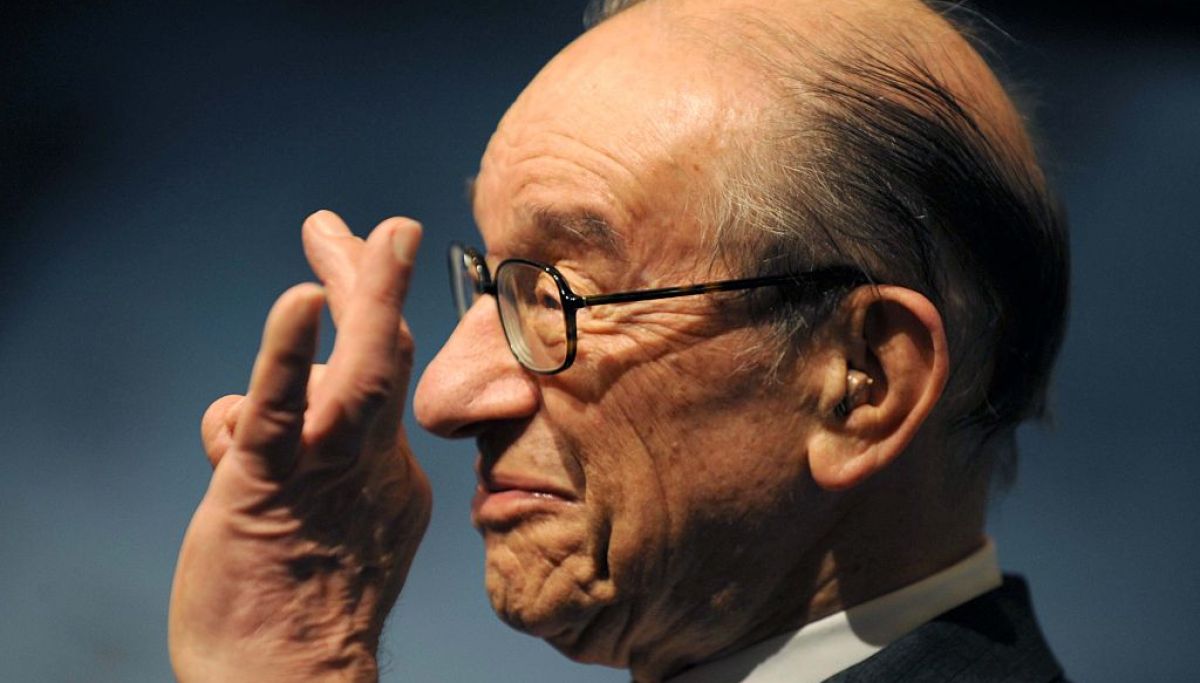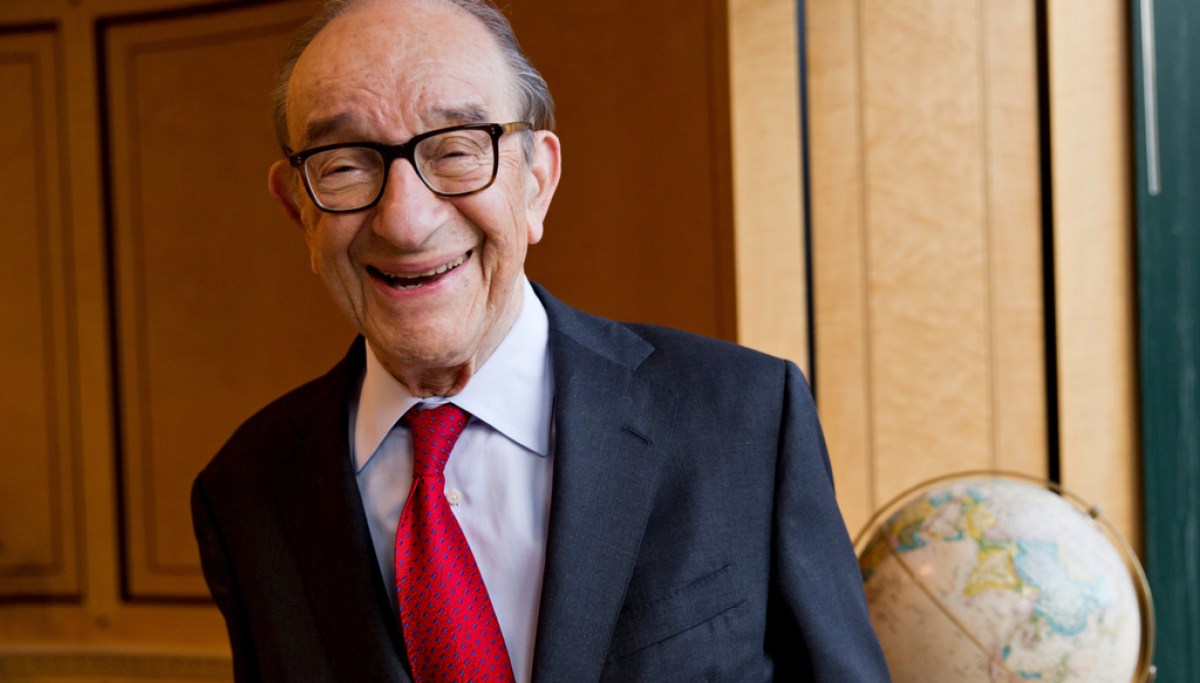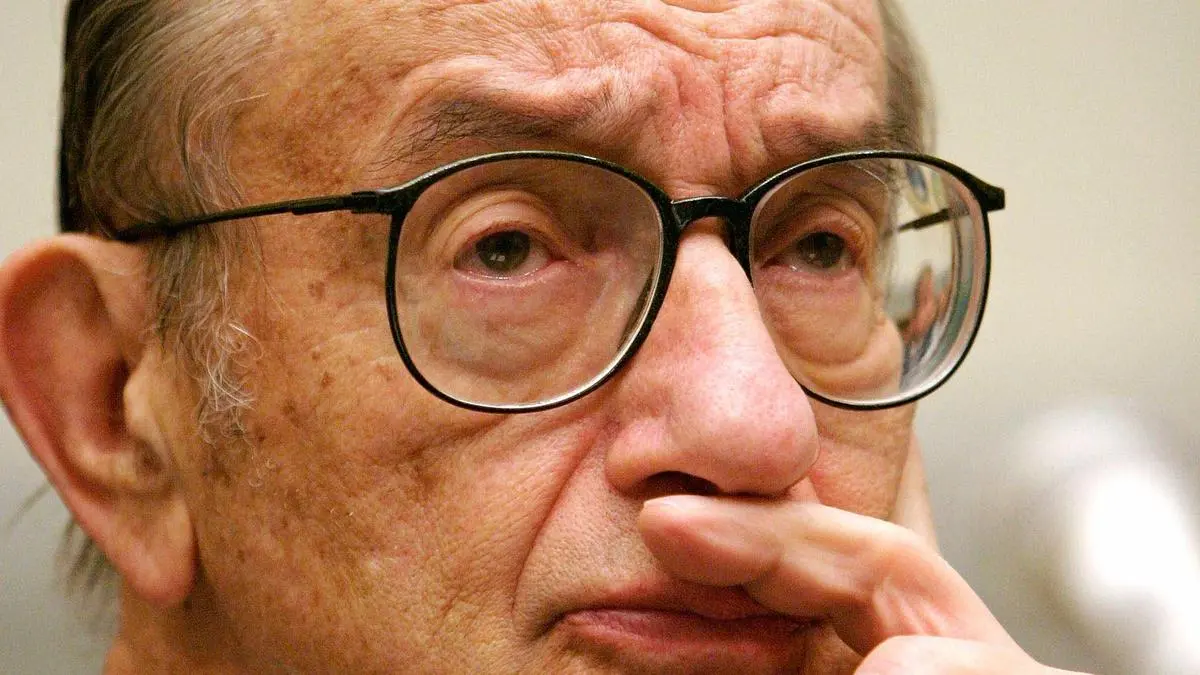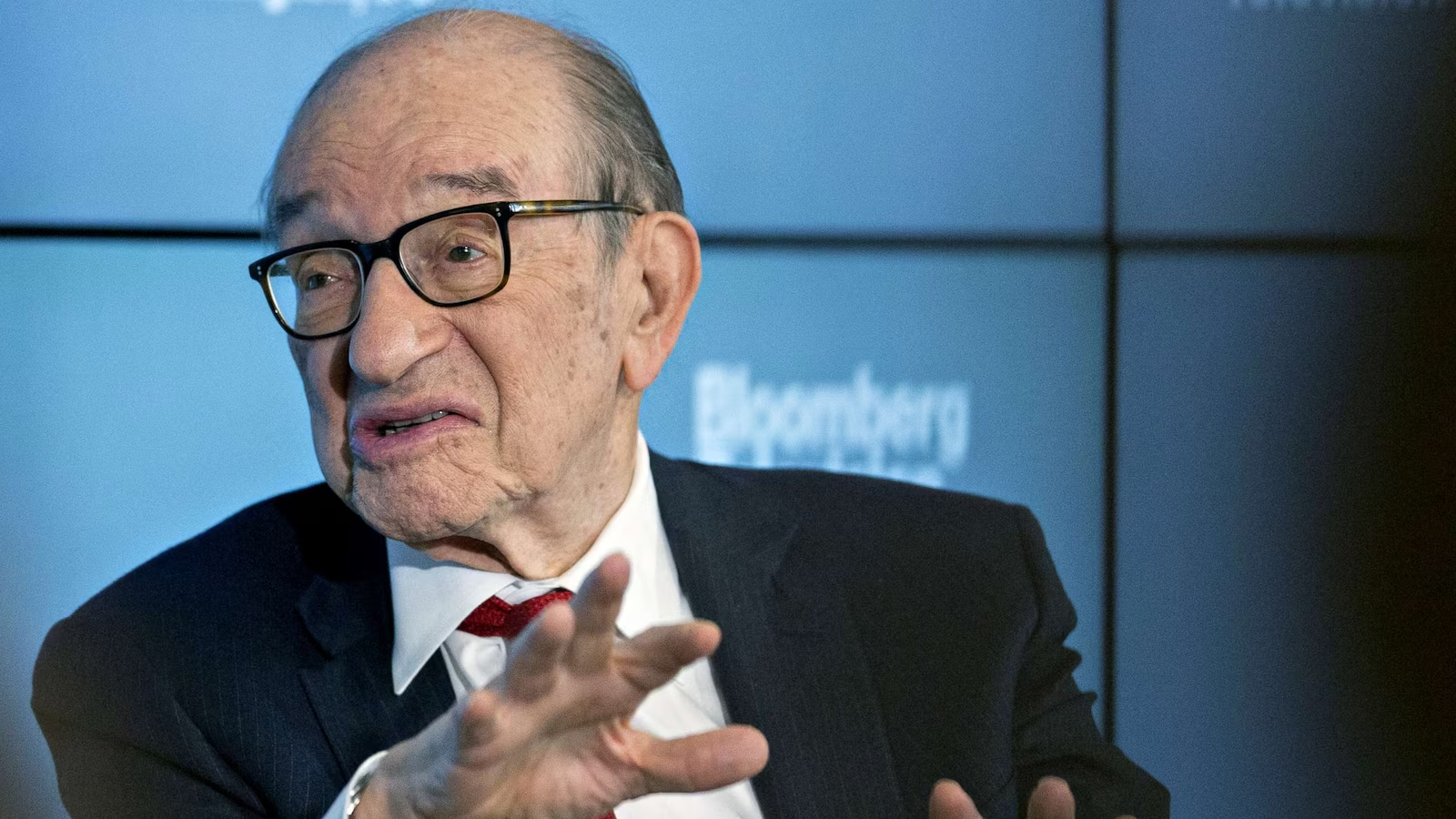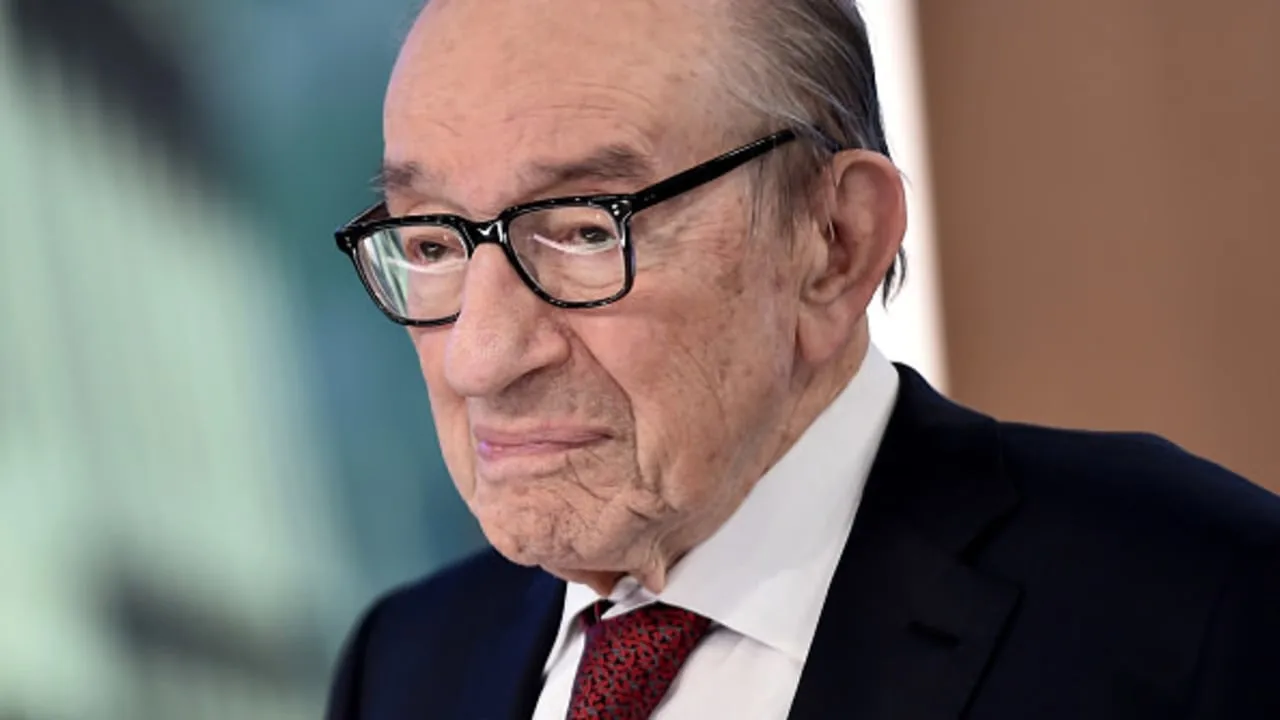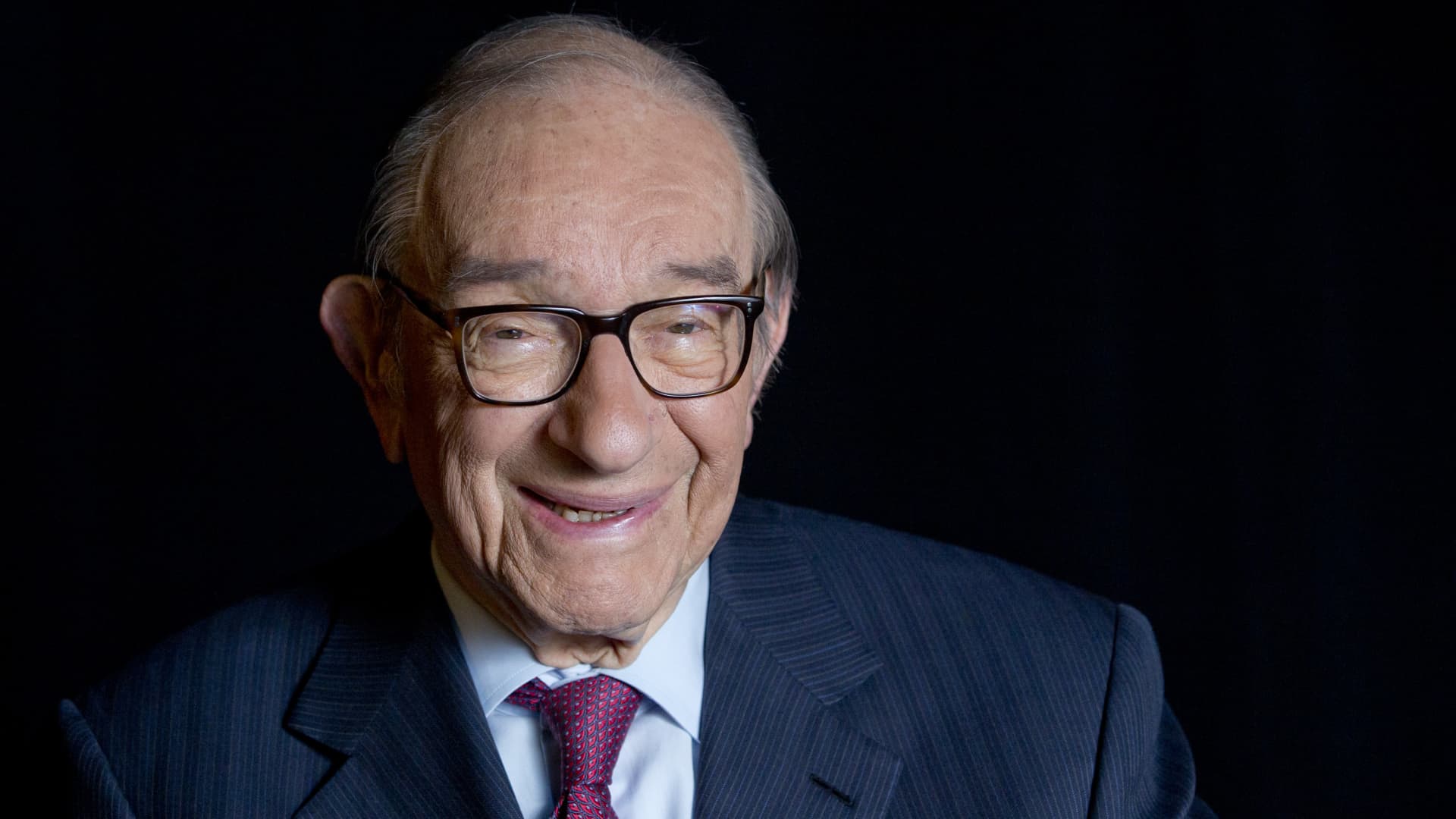
Alan Greenspan, the influential economist who steered the United States' monetary policy during his five terms as chairman of the Federal Reserve under four presidents, died on Monday. He was 100.His death was announced by his wife, Andrea Mitchell, the chief Washington correspondent for NBC News.“Alan passed away at our home this morning at the age of 100 from complications of Parkinson’s disease,” Mitchell said in a statement, according to NBC. “He was a giant of a man who helped shape the U.S. economy for decades under presidents of both parties, but was always honest in acknowledging his mistakes."“To me he was my husband, who shaped my life from our very first date in 1984. He had ‘irrational exuberance’ for baseball, the Washington Commanders, tennis, golf and music, especially jazz,” Mitchell added. “He will be remembered for his brilliance and his kindness. Being his life partner was the joy of my life.”Greenspan served as chairman of the Federal Reserve for over 18 years, from 1987 to 2006, the second-longest term in the central bank's history.During his tenure, Greenspan became one of the most revered people in not only the United States, but around the globe. Steering the U.S. economy through the stock market crash of 1987, the dot-com bubble burst of 2000, the terrorist attacks on Sept. 11, 2001, and the slowdown from 2001 to 2003, the data addict with a sly wit earned a reputation as a flexible, forward-thinking, quick-moving and consensus-building economist.In a USA TODAY poll taken right before he retired in January 2006, 65% of the 1,006 people surveyed said they approved of the job Greenspan did as chairman. He was popular across the board: A majority of Democrats and Republicans, higher-income and lower-income, and college-educated and those who did not go to college approved of the job he did at the Fed.But it wasn’t long before Greenspan’s star dimmed. Some say Greenspan was partly to blame for the U.S. housing bubble, leaving interest rates too low for too long earlier in the decade and for not doing more to rein in the subprime mortgage industry. The steep drop in the housing market and the resulting downfall of the mortgage industry led to a credit crisis that brought the economy into a recession.In October 2008, Greenspan underwent an hours-long public flogging on Capitol Hill from lawmakers who once hung on every word the former Fed chairman had to say. In particular, he was criticized for not doing enough to regulate the mortgage industry as it issued loans that were likely to never be repaid."You had the authority to prevent irresponsible lending and now our whole economy is paying its price," Rep. Henry Waxman, D-Calif., said.Greenspan said he "made a mistake" in assuming that companies, acting in their own self-interest, would not make bad decisions. The crisis was "more than anybody is capable of judging," he said."Those of us who have looked to the self-interest of lending institutions to protect shareholder’s equity – myself especially – are in a state of shocked disbelief," he said.Such criticism was a sharp departure from Greenspan’s popularity as Fed chairman, which he established by building upon the progress of his predecessor in bringing down inflation and – in perhaps his biggest legacy – shepherding the economy through the longest economic expansion in history.The 10-year period of prosperity in large part was a direct result of Greenspan’s recognition that a sharper gain in productivity growth in the 1990s meant the relationship between employment and inflation had eroded. It was an against-the-grain theory that allowed the Fed to keep a looser grip on the economic reigns and to allow the unemployment rate to fall far below the level that previously was considered a trigger for inflation. As a result, workers enjoyed a strong job market and higher standards of living."He not only recognized it but he guided Federal Reserve policy month by month, quarter by quarter that led to that outcome," former Federal Reserve Bank of St. Louis President William Poole says. "That will stay with us for a long, long time."Greenspan, however, said in an interview with USA TODAY in September 2007 that he doesn’t deserve so much credit, arguing he served at an optimum time at the Fed, with falling long-term interest rates and low inflation that had more to do with the expansion of globalization than with Fed policy.The "timing couldn’t have been better," he said ahead of the release of his book, The Age of Turbulence.Skills with numbersAn only child, Greenspan was born in New York City on March 6, 1926, to Herbert Greenspan, a stockbroker, and Rose Goldsmith. His parents divorced when he was four and he was raised by his mom, who worked in retailing, and by relativesFrom an early age, Greenspan loved playing with numbers. His mom used to show off to relatives how he could do addition and multiplication in his head, a likely uncomfortable feat for someone who as a boy was "more inclined to sit in the corner." As an avid baseball fan, he developed his own technique of keeping baseball box scores during the 1936 World Series."To this day, I can recite the lineup of Yankees starting players, complete with their positions and batting averages, for that World Series," Greenspan said in his book, The Age of Turbulence, in 2007.His mother loved to sing and dance, and it was from her he got his love of music.Greenspan learned to play the clarinet as a child and also played flute, saxophone and piano. After giving up his early dreams to become a professional baseball player, he played with famous saxophonist Stan Getz when they were teenagers. After attending the renowned Julliard School of Music in New York, he joined the Henry Jerome swing band and toured the country for a year, at a time when jazz and jitterbug dancing were all the rage.His skill with numbers came in handy as he did tax returns for band members.Realizing he likely would never make it as a big-time musician, and after discovering an interest in economics, Greenspan enrolled at New York University. He received his bachelor’s degree in economics in 1948 and his master’s in 1950. His Ph.D. from NYU didn’t come until later, in 1977, after he had already served as chief White House economist under President Ford.In his first economics jobs, Greenspan made $45 a week as he buried himself in analysis of obscure, industrial data.In 1952, Greenspan married painter Joan Mitchell. They stayed together for less than a year. But she introduced the future Fed chairman to someone who would influence his thinking as an economist – Ayn Rand, author of "Atlas Shrugged" and "The Fountainhead" and a big believer in free-market capitalism.Through Rand, Greenspan made connections who brought the economist into Nixon’s 1968 presidential campaign, serving as a point man on domestic and economic policy. But he declined to join the new administration in 1969 and instead returned to work at the small, but extremely successful, economic consulting firm, Townsend-Greenspan and Co., he had co-founded in 1954 when he was just 28 years old.Greenspan went to Washington as White House chief economist in 1974 after Nixon resigned, a development that Greenspan said in his book brought him "relief."Greenspan also acted as economic adviser to Ronald Reagan during his successful presidential campaign in 1980. Seven years later, Reagan turned to Greenspan to head the U.S. central bank when Paul Volcker, one of the most highly respected Fed chairmen in history, stepped down.His experience in Washington served him well in his new role."He is one of the most effective people within the beltway that I know," former San Francisco Fed President Robert Parry, who served with Greenspan for more than 16 years, said in an interview in Jan. 2004. "I think he has, and I mean this in a very complimentary way, a political sense that most people don’t."Aggressive policymaker Greenspan took office August 11, 1987, and quickly faced the first, of what turned out to be many, challenges during his career at the central bank. On Monday, October 19, 1987, the Dow Jones industrial average plunged 508 points, or 22.6%, after falling for days.Although many economists say the market was overvalued and a decline was inevitable, what triggered the crash is open to debate and the sheer magnitude of the drop still puzzles economists.After canceling a speech in Texas and heading back to Washington, the newly-minted chairman issued a one-sentence statement before the markets opened, assuring the Fed would continue to keep the financial system liquid. Over the next days, the Fed pumped money into the economy at breakneck speed. By Thursday, banks were lowering their prime lending rate. The markets quickly stabilized. And a major downturn in the economy was avoided.The move established Greenspan’s reputation as an aggressive policymaker, a reputation that was reinforced by many Fed actions throughout Greenspan’s time at the helm of the central bank.Greenspan also early on established a reputation as an A-list celebrity in Washington, attending all of the glitzy see-and-be-seen dinners around town as well as political events. The Washington Post often featured pictures of him with Andrea Mitchell, a reporter for NBC 20 years younger, whom he began dating in the 1980s.The Fed chairman obviously did not think ill of reporters, despite the sometimes paparazzi-like coverage he received. He once dated TV reporter Barbara Walters.Mitchell, a divorcee, and Greenspan lived together for 12 years before he proposed at the end of 1996. They married Sunday, April 6, 1997, at a small inn in the Virginia countryside outside of Washington. Supreme Court Justice Ruth Bader Ginsburg performed the ceremony, which was traditionally announced in the New York Times that morning.Greenspan quickly became a household name after taking over the Fed in 1987, and investors hung on his every word for ideas about the future course of interest rate policy.That wasn’t always easy. Famous for veiled, sometimes complex speeches that he often wrote while nursing a bad back in his bathtub, Greenspan in 1987 said he had "learned to mumble with great incoherence." He will long be remembered for setting off a worldwide frenzy after uttering just two words – "irrational exuberance" – about stock prices in 1996.Greenspan’s response to the stock market bubble in the 1990s earned him some criticism from economists who say the Fed chairman could have done more, specifically raise interest rates, to sap strength from the stock market bubble."They could have tried, and we’ll never know whether it would have succeeded," said Robert Dederick, a consultant to Northern Trust, in a Sept. 2002 USA TODAY story.Other criticism came from some in Congress, such as Sen. Jim Bunning, R-Kent., and Senate Majority Leader Harry Reid, D-Nev., who said the Fed chairman got too involved in politics, testifying about a range of issues outside the main jurisdiction of the Fed, such as Social Security, the minimum wage and energy policy.The issue that drew the loudest criticism was Greenspan’s public support for Republican-backed tax cuts in 2001."It may have been a tactical error to endorse Bush’s tax bills even though he quite clearly personally supported them," said William Niskanen, a former member of the Council of Economic Advisers and an author of a book on economic policy during the Reagan administration. "I think it reduced the Democratic support for Greenspan."Greenspan, however, pointed out in his book and in interviews that he advocated tax cuts only if there was a trigger that would take them back if the surpluses were to go away. That part, he lamented, was ignored.A number of successesStill, Greenspan’s successes likely are still what stick out in the minds of most Americans."While there are some negatives in the record, when the score is toted up, he has a legitimate claim to being the greatest central banker who ever lived," Princeton University economists Alan Blinder and Ricardo Reis said in a paper on Greenspan’s legacy in August 2005.The successes:• Productivity recognition. In the late 1990s, Greenspan had a hunch that productivity, or worker output per hour, was picking up, but it wasn’t showing up in data.Productivity is a big boost for business profitability and allows CEOs to hire more workers. In 2000, the unemployment rate dipped to 3.8%, the first time it had fallen below 4% since 1970.The low unemployment rate had made many economists nervous, including some on the Fed. Historically, low unemployment rates have been associated with inflation dangers as workers are able to negotiate for fatter paychecks, leading to higher prices.But Greenspan’s Fed left interest rates much lower than they would have otherwise been. The gamble paid off: The economy had its longest expansion in history from March 1991 to March 2001.• Increased transparency. It may seem ironic, given Greenspan’s penchant for obscure language, but the chairman left a Fed that was far more open than it was when he came.Before his tenure, the Fed would make changes to interest rates without publicly announcing what it was doing or why it was doing it. Analysts made their careers on discerning the Fed’s decisions by studying buying and selling in the bond market.Under Greenspan, Fed officials began to announce their decisions and released statements about their thinking on the economy immediately after their meetings. Those steps gave investors, businesses and consumers insight into the Fed’s thinking. That helps even ordinary consumers wrestling with a decision: If rates are going to go up, a homeowner might want to refinance sooner rather than later.• Lowered inflation. Greenspan’s predecessor, Paul Volcker, has a place in history as the person who broke the back of inflation in the USA. Greenspan held onto Volcker’s playbook and brought inflation so low that at one point in time there were fears of falling prices, or deflation.Greenspan’s success in lowering inflation led to a sharp drop in inflation expectations. That’s key, because if consumers expect prices will rise quickly, there can be panic-buying and businesses have a hard time making plans. Such low inflation gave the public more confidence in the Fed, which helps to keep the economy on an even keel.Non-retirementGreenspan retired from the Fed in January 2006, leaving at the end of his term and becoming the second-longest serving chairman of the Federal Reserve.But he didn’t sit idle. Greenspan immediately founded Washington, D.C.-based Greenspan Associates, an economic consulting firm, and quickly hit the speaker’s circuit. His book, which he mostly wrote in longhand, debuted at No. 1 on USA TODAY’s Best-Selling Books list on Sept. 27, 2007, and spent 15 weeks in the Top 150.As a self-described "introvert," Greenspan said he was uncomfortable writing about his life and had a hard time believing anyone was interested."The biggest problem I had was learning to write in the first person," he told USA TODAY. "I’m always an objective observer, standing off the stage, examining the play going on, but never on the stage. But they wanted me on the stage, which meant writing in the first person, and that was a struggle."Even in retirement, rumors of what he said in private speeches moved financial markets on several occasions, months after he no longer had a vote in interest decisions. Greenspan was criticized for making frequent speeches, for which he reportedly made $100,000 and up, and for publicly discussing the economy at a time when his successor, Ben Bernanke, was trying to establish himself as the nation’s chief economist.All that from a a guy who didn’t intend to be an economist, let alone famous."When I left the Fed I said, I now have the capability of becoming anonymous’," he said. But "I’m an economist, it’s what I love to do, it’s what I’ve been doing since my early 20s. I’ve changed employers, but I’ve never changed what I do every day. And I have no intention in not doing that."
Alan Greenspan, influential economist and Fed chairman, dies at 100
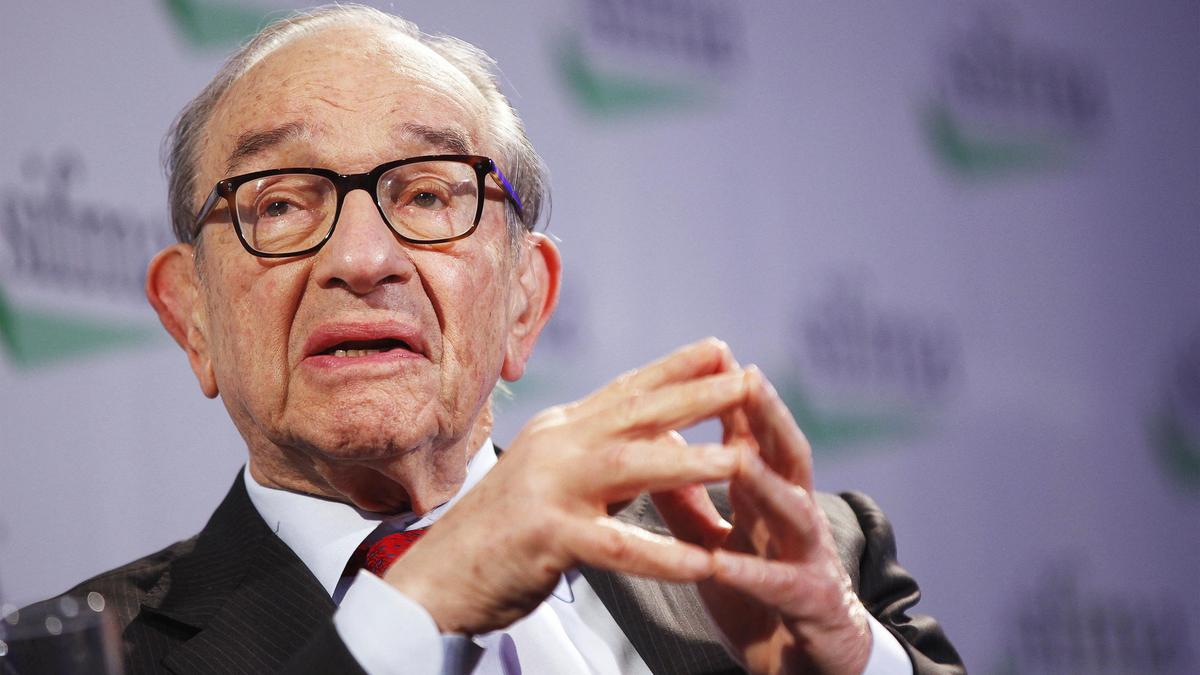
Alan Greenspan steered U.S. monetary policy as the head of the Federal Reserve under four presidents.
TL;DRAI
Alan Greenspan, Fed chairman 1987–2006, died at 100; navigated '87 crash, dot-com bubble, 9/11 crises. Lesson: he bet on market self-regulation in lending and lost in 2008; tech leaders should apply the same caution to AI governance and compliance.
2,633 words~12 min read