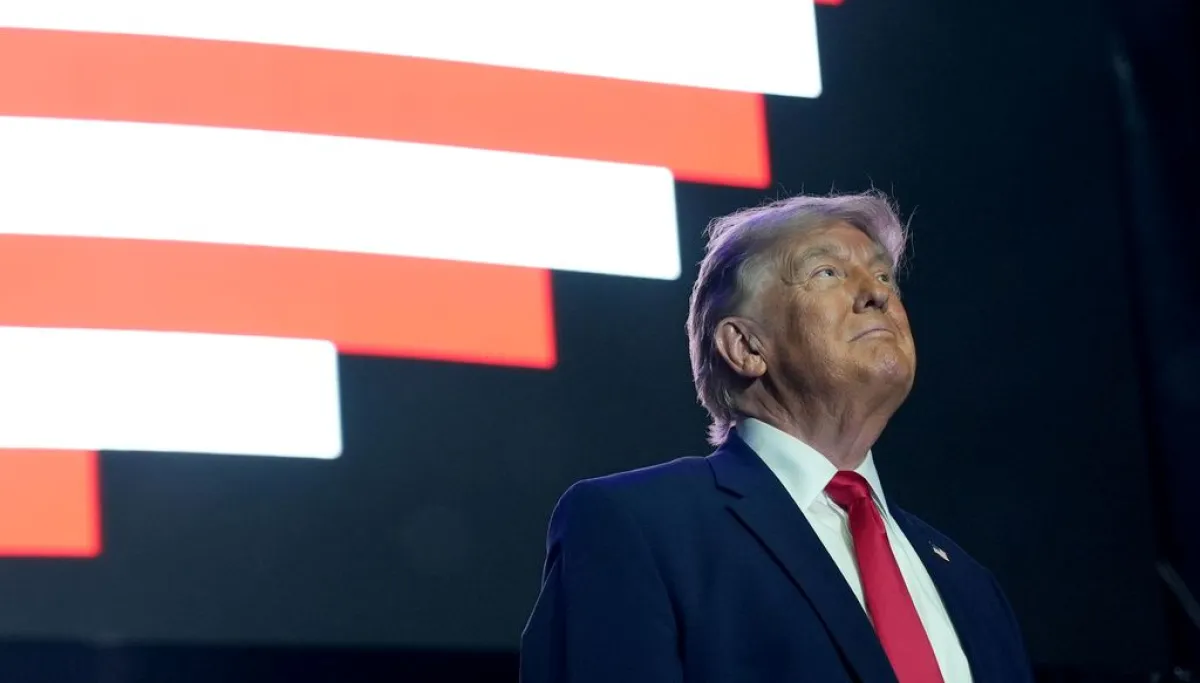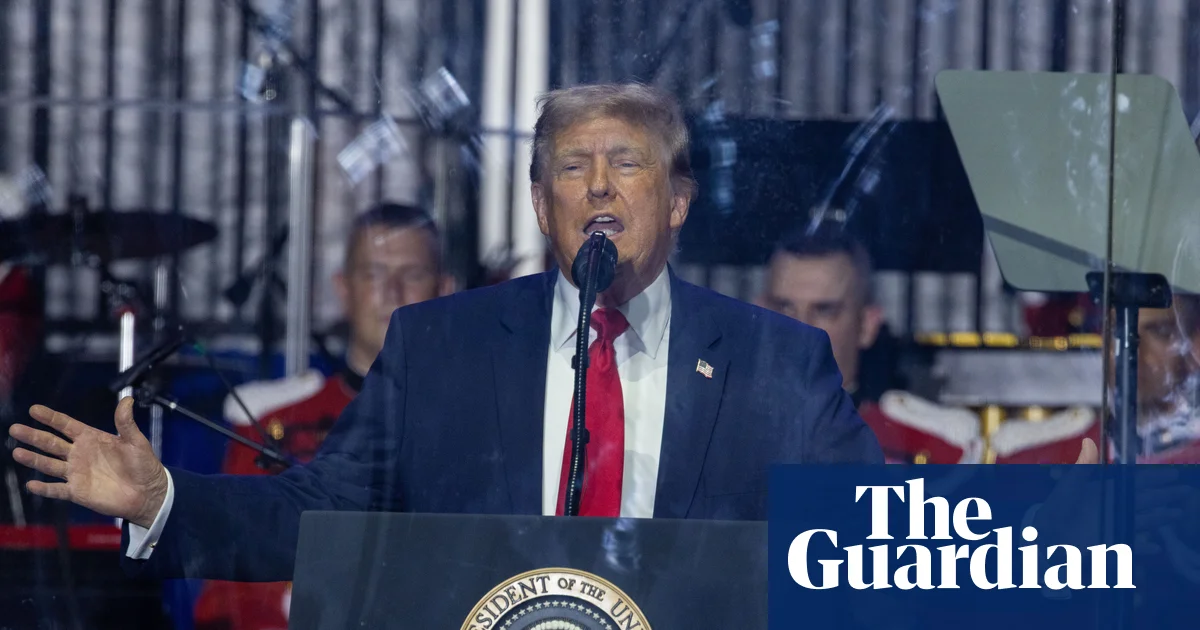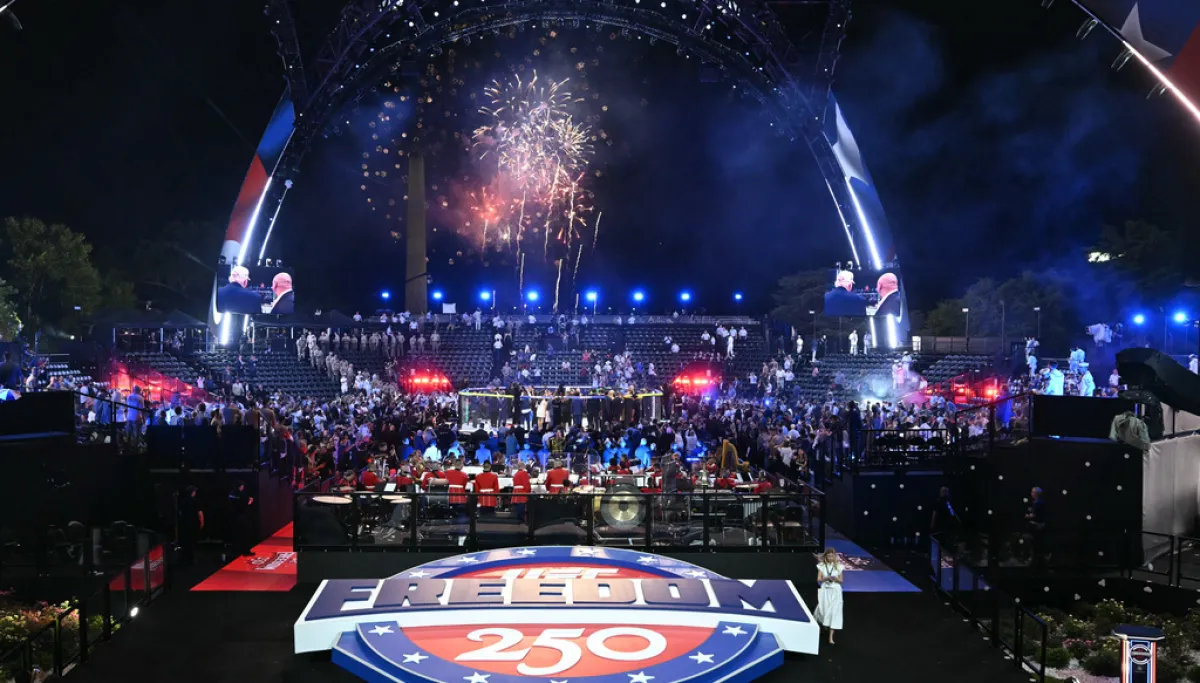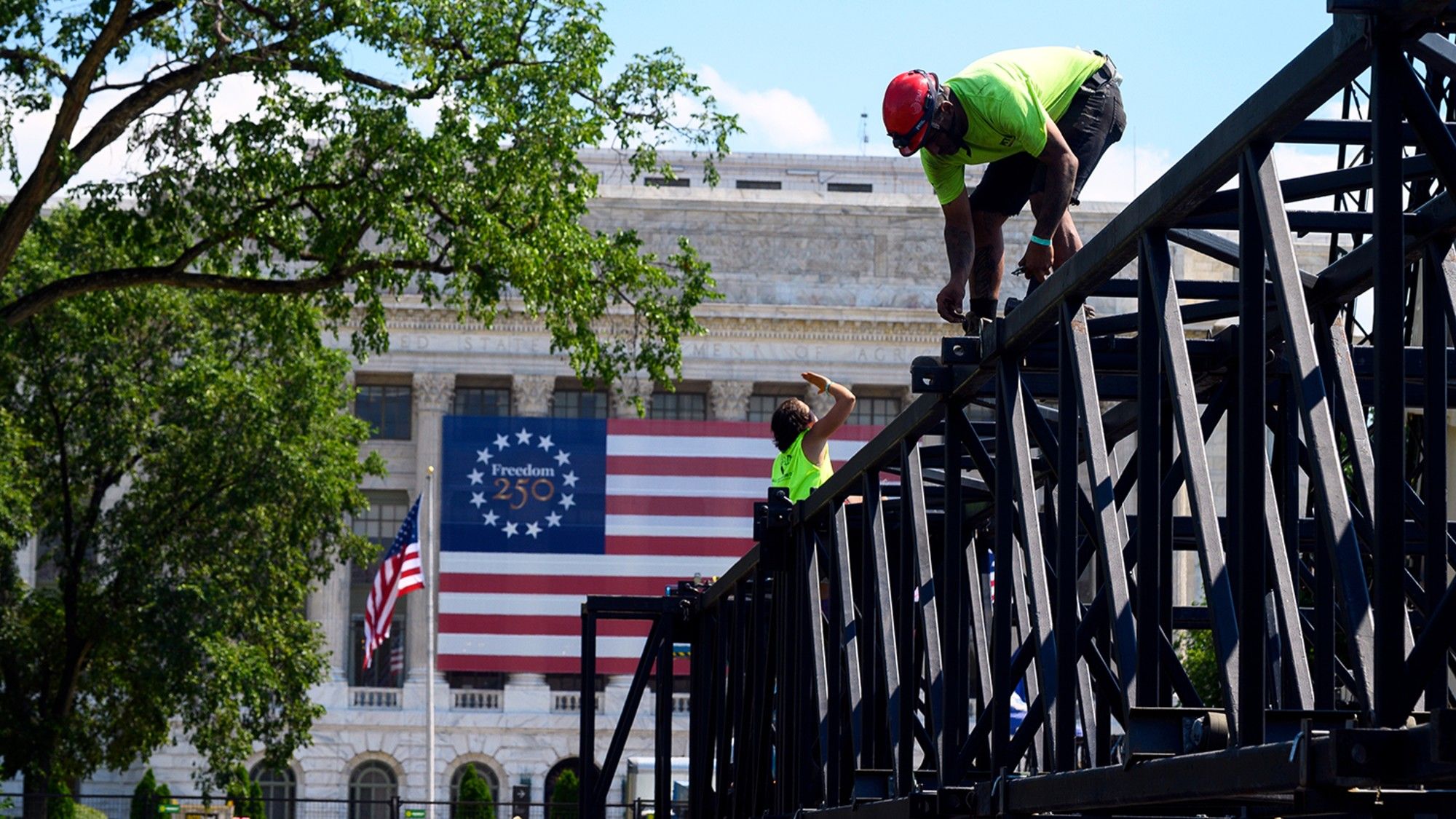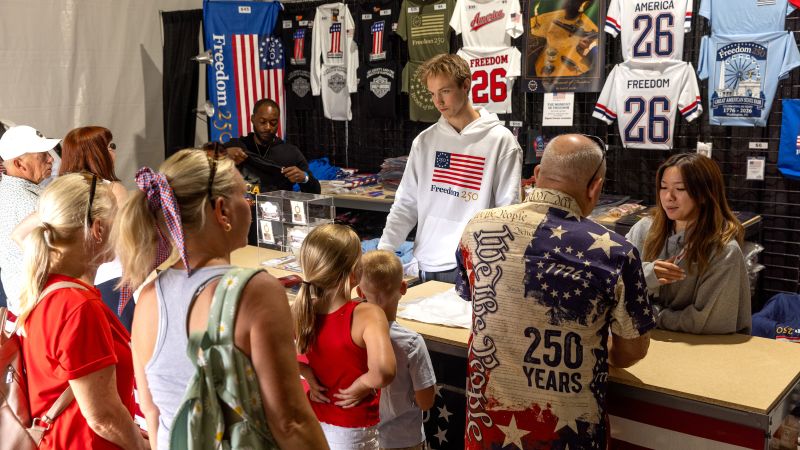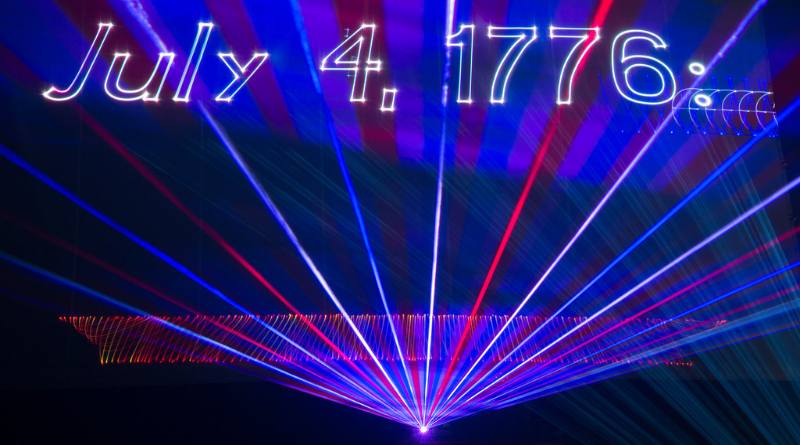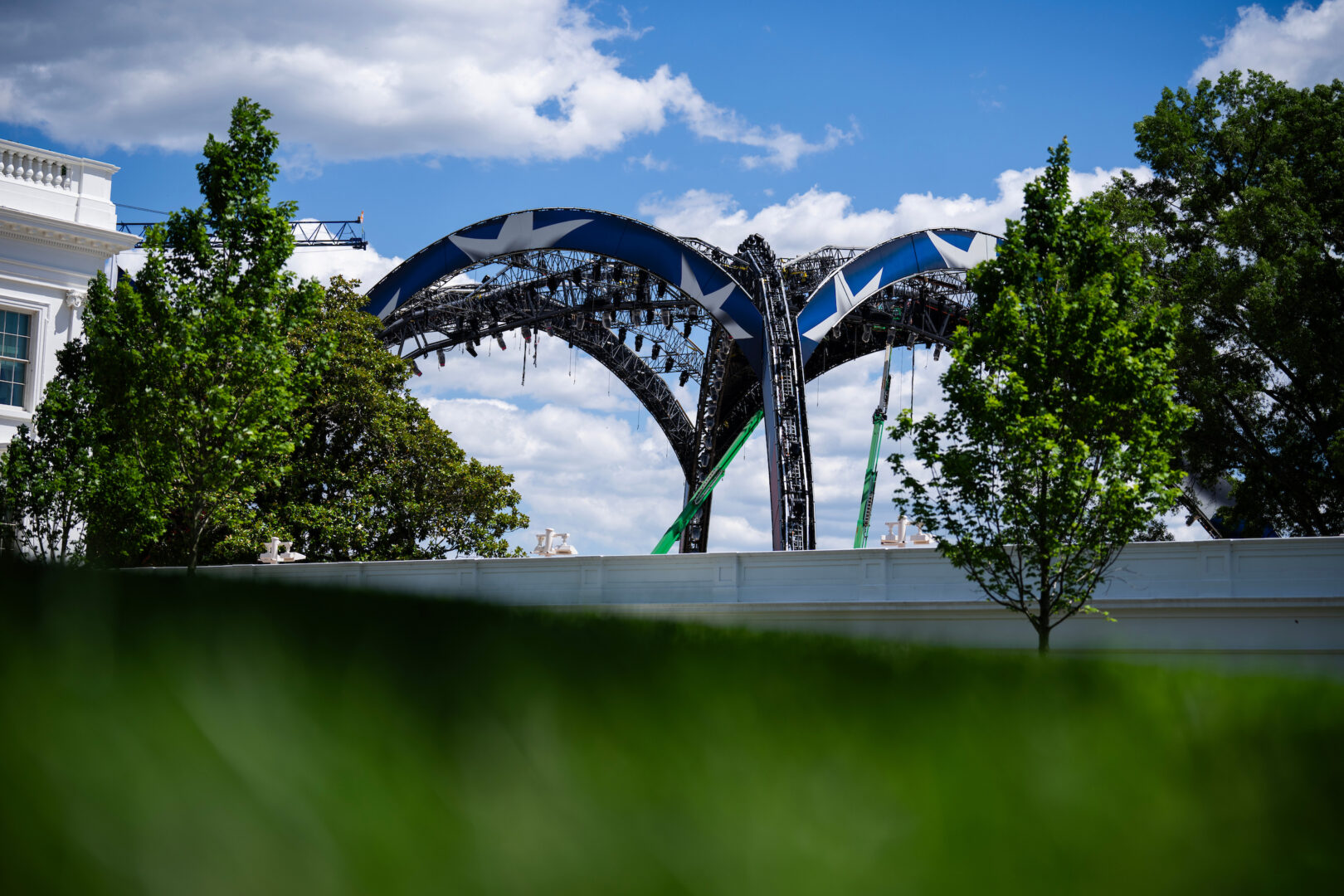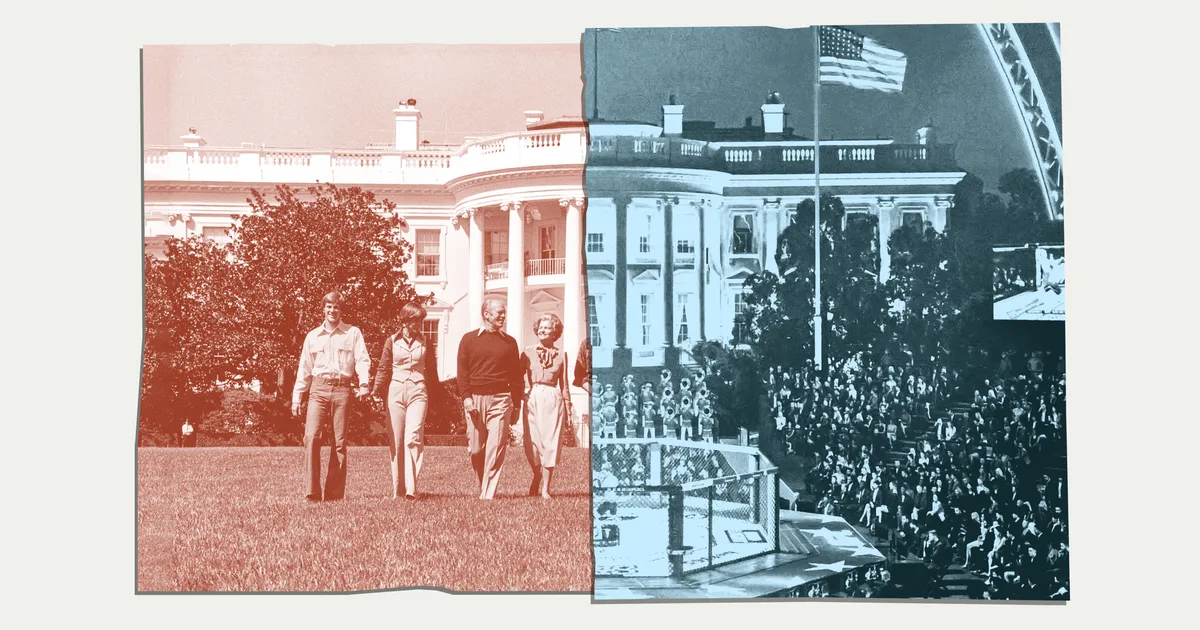
This July 4, the U.S. will mark its semiquincentennial — the mouthful term for the 250th anniversary of the signing of the Declaration of Independence. So far, the birthday festivities have garnered mixed reactions. There was UFC Freedom 250, which brought a giant open-air cage fighting venue to the White House grounds, where 14 fighters squared off before a crowd of 4,300, including birthday boy President Donald Trump and his family. Then there’s the administration’s $13 million overhaul of the Lincoln Memorial Reflecting Pool. The pool was painted an “American flag blue” at Trump’s direction ― a makeover that appears to be peeling less than two weeks after it was completed.Lastly, there’s the upcoming “Great American State Fair,” an event that was originally billed as a concert, before many of the performers originally attached to it (Bret Michaels, Martina McBride, the Commodores) backed out. The kickoff event will now feature remarks from Trump, along with performances by two of his favorites: Lee Greenwood, best known for “God Bless the U.S.A.,” and opera crossover singer Christopher Macchio.“The celebrations that were designed to bring Americans together today seem designed to further tear us apart.- Susan Giuliani, a content creator, reflecting on the celebrations planned for America's 250th birthdayFifty years ago, as America celebrated its bicentennial, the vibes were much different and considerably less partisan: Civic groups and schoolchildren decorated local fire hydrants to resemble Revolutionary War soldiers, minutemen, Betsy Ross and Uncle Sam. Queen Elizabeth showed up. A grand parade of vessels (including 16 tall ships from 14 nations) sailed from the Verrazzano-Narrows Bridge up the Hudson River, drawing 6 million spectators in New York Harbor. And looking to unite the country after the “internal wounds of Watergate,” President Gerald Ford did not make the celebration all about him.To get a sense of what the bicentennial was really like in 1976, we asked authors and HuffPost readers to share their memories. Some reminisced about the celebrations themselves, while others reflected on how those memories shape the way they see America today. Here’s what they told us.These responses have been edited and condensed for clarity.Illustration: HuffPost; Photos: Getty"I would go back to 1976 and the leadership at the time in a heartbeat,' said Jennifer Keith, a graphic designer ‘In 1976, we were full of hope.’“I was 12 years old in the summer of 1976. We were all excited about the Bicentennial. Our neighborhood celebration was epic. I’m pretty sure my mom organized most of it because she always took on that role. The party spanned a few blocks of our suburban neighborhood. First off, there was a parade of all the kids in the neighborhood. All the kids who were in the band played patriotic songs while we marched to a small park at the end of a cul-de-sac. There was a bike decorating contest, and the bikes also rode in the parade. I was dressed as Betsy Ross. My mom signed me up for a class at the Singer Sewing store and I sewed a Betsy Ross-style dress with matching cap specifically for our Bicentennial parade). My little sister was dressed as the American flag and my older brother borrowed one of my mom’s ’70s blouses and dressed as a minuteman, even including a non-working antique rifle. All the kids around participated.I’m disgusted with what’s happening in the U.S. now. The U.S. has changed profoundly in 50 years. In the ’70s and early ’80s, you could thrive on a high school degree. You could buy a house with one income, buy two cars, go on yearly vacations. That slowly dried up and now we are on the brink in every single way. AI threatens all jobs, we have no functioning government and we are about one second away from climate collapse. Women and POC have lost our civil rights. Concentration camps and data centers make life far worse than we could have imagined. Hope is really at a premium right now. I would go back to 1976 and the leadership at the time in a heartbeat.” ― Jennifer Keith, a graphic designer in the Bay AreaPhoto courtesy of Jennifer KeithJennifer Keith's sister Amy, dressed as the American flag, on a bike festooned with ribbons.‘It was patriotic, but not MAGA patriotic.’“I was 12 in 1976 and lived in Oakland. I remember being excited to get the bicentennial penny, dime, nickel, and quarter! Saving them and letting friends know I had gotten a new coin was a big deal; we were poor, so coins were always exciting, but more so then. I recall all the Saturday morning cartoons and sitcoms had specials for the birthday. Our local baseball team ― the Oakland A’s ― celebrated, too. Red, white and blue were seemingly all over everything. It was patriotic, but not MAGA patriotic. It truly felt like a shared birthday among friends and family.At school, I recall spending more time on the making of the nation, and the joint contributions of all peoples. My parents and grandparents were born during Jim Crow and segregation and had marched and protested in the 1950’s and 1960s, including with Dr. Martin Luther King in my grandfather’s case. We had Vietnam veterans in our family, and we had Black Panthers in our family and our churches. We were celebratory because it felt like progress had been made. The Civil Rights Act, the Voting Rights Act, desegregation, women’s liberation (that phrase isn’t used anymore), and the unrest of the 60s had mostly given way to progress. Today, a significant number of our fellow citizens have no hesitation rounding up immigrants or anyone who they think might be an immigrant. We have watched the destruction of the Supreme Court, the tearing down of the Justice Department, the Department of Health and Human Services and the intelligence apparatus. We have allowed white supremacy to fully emerge, the attempted erasure of Black history and so many other atrocities while the majority of the population who holds the most power either cosign the destruction or passively watch it happen. Given that, I hold no special place in my emotions for the nation’s birthday this year. ” ― Myron Clifton, an author, owner of Dear Dean Publishing and a Bay Area residentPhoto courtesy of Myron CliftonMyron Clifton, age 12, on his red, white and blue minibike.‘Water skiers, in a pyramid formation, were streaking past the event.’“I was 15 years old, spending the day down at the River Park in my hometown of Red Bluff, Calif., and they had all sorts of events, capped off by people waterskiing in formation with U.S. flags. A little old lady next to me was looking at it and said, ’Oh, look, how patriotic... Oh my God, they’re naked! Yes, the water skiers, in a pyramid formation, were streaking past the event, with the sheriff’s department boat right behind them. When asked about it, the sheriff stated that they lost the trail when the skiers left the river in a place with tons of blackberry brambles. As stated by the cop, ‘I wouldn’t go through there fully clothed. I am pretty sure they got punished going through there.’” ― Paul Clemmons Scott McPartland via Getty ImagesView of people, gathered in downtown Manhattan, during the bicentennial celebrations, New York, New York, July 4, 1976. They were there to watch a display of the tall ships as they sailed into New York Harbor. (Photo by Walter Leporati/Getty Images)‘I was serving in the U.S. Armed Forces.’“I was stationed at Pearl Harbor on a Fleet Ballistic Missile submarine. Luckily, off-crew rotation. I went to a celebration at Schofield Barracks. This year, I will celebrate locally. Will not participate in any ‘Fake Freedom 250’ events.” ― Steve Baker “In 1976, I was in the Army serving my country in Germany. I celebrated it then as I will now.” ― Bob Shibley Universal History Archive via Getty ImagesTwo women shopping in grocery store under banner reading. "Happy birthday America, there's no place else we'd rather be!" commemorating the US bicentennial.‘Everyone was aware of it all year, it seemed.’“I was a 10-year-old kid growing up in Los Angeles. The Bicentennial was a BIG DEAL then. Way more than the 250th U.S. birthday this year. It was just ‘in the air.’ Everyone was aware of it all year, it seemed. Six Flags Magic Mountain in Valencia even opened the Great American Revolution, the first modern steel roller coaster with a 360-degree loop, in honor. The greatest memory I have of 1976 occurred on my 10th birthday in April. We had been focusing on American history and the bicentennial in my fourth-grade class, and one day when I got home, my father, who rarely gave me presents ― it was usually mom who did it on both of their behalf ― sat me down and said he had a present for me. In honor of the bicentennial, the U.S. government had started printing out $2 bills again that April for the first time in 10 years. On the back of the bills was an engraving of the signing of the Declaration of Independence. Dad gave me 10 two-dollar bills ― 10 bills for 10 years. That was pretty neat. I kept at least one of the two-dollar bills in my wallet for at least 10 years after that. I think I eventually spent them all, desperate for arcade money. I have not been engaged in the goings on for the Sesquicentennial, or whatever it’s called. Some of that is by design. Against the currently charged political backdrop, I prefer to just focus on daily tasks now, like writing my next book, family and friends, and local events. Also, 250 years is not as nice a round number like 200, so there’s also that.” ― Paul Haddad, author of “Inventing Paradise: The Power Brokers Who Created the Dream of Los Angeles”Photo courtesy of Paul HaddadPaul Haddad, at 10 years old in 1976, writing a "book" in his bedroom.‘I felt that being an American was the best thing in the world.’The year America turned 200, I turned 9 years old. When I look back at that time, I remember it with a child’s innocence. There were fireworks, parades, BBQs and the excitement of going down to the beach to watch the boat parade. I was mesmerized by the tall ships and although I did not totally understand why, I felt that being an American was the best thing in the world.Although America was still reeling from the Vietnam War and the resignation of a president, I believe that the bicentennial celebration helped the country start to heal. People came together, and in schools, churches, and towns across America, we shared that pride in the American experiment. There was an optimism for the future and we were one. A sense of belonging that is missing today. As we approach the 250th celebration of America, I feel that America is struggling to regain that sense of shared identity. My innocence has given way to the realities of a divided America. The celebrations then that were designed to bring Americans together today seem designed to further tear us apart. Tall ships have given way to UFC fighting matches and instead of a commemorative quarter minted for the masses, we have a commemorative coin glorifying one man for $12,000. A music celebration for America will now be a rally designed to divide us further. Yet, I still celebrate America today with the heart of that 9-year-old. America is bigger than one man and while we may have lost our way, we will find it again. Will I celebrate? Yes, because the way to heal America is to remember who we are. Hopefully, the 4th of July celebrations will help remind us.” ― Susan Giuliani, a content creator Photo courtesy of Susan GiulianiSusan Giuliani as a child holding an American flag in a bicentennial parade.‘The name Benedict Arnold makes my skin crawl to this day.’“I was about 6 and a half years old and was heading into second grade. We were very excited about the bicentennial, primarily because we were told by our parents and teachers that it was the country’s 200th birthday party — and if little kids understand anything, it’s that birthday parties are a big deal. Of the specific events, I remember a reenactment of Benedict Arnold’s raid on Fort Griswold in Groton, Connecticut. We sat in the grass and watched the redcoats march in formation up to the fort. We cheered the patriots who fought them off, and we booed when the American colonel handed his sword to the British commander in an act of surrender and was promptly stabbed with it. The name ‘Benedict Arnold’ makes my skin crawl to this day.Our grandparents, who had experienced the Depression and WWII were only middle-aged in 1976. My eldest grandparent was 59, the youngest only 46. Many of my great-grandparents were also still alive, and they had either been Americans from the get-go or emigrated from Europe 60 or 70 years earlier. So they were all ‘old-school Americans,’ ‘citizens by choice,’ or the ’Greatest Generation” folks. It’s not hard to see why their love of country and patriotism was on proud display that summer.Given all that happened in 1976, I have been super stoked about the 250th for over a year. An entire generation of little kids were going to see a huge birthday party for the greatest nation on Earth, and that they would carry those memories forever, like my friends and I have done since the bicentennial. And yet … I’m just not sensing the same excitement. Of course, it could be that I’m 50 years older and nothing could ever compare to the summer of ’76 as I’ve remembered it. That’s certainly part of it. But I’m also pretty sure that our country’s post-pandemic malaise and political rancor have taken a real toll on us.As for how America has changed, the biggest negative difference is probably the loss of a sense of community. Back in the 1970s, you knew all your neighbors well. You may not have liked them, but you knew them and interacted with them on a regular basis. Today, we know most of our neighbors’ names and wave to them when they drive by, but that’s about it. At the same time, we’ve also gained so much over the past 50 years. It has been fun — and revealing — to see World Cup visitors post online about their experiences in the US. Many are stunned at the abundance, the natural beauty, the technology and the friendliness toward strangers. It’s a nice reminder that we may be very down on ourselves right now and things could definitely be better, but things are also pretty awesome here. Just answering this question makes me want to attend a semiquincentennial parade!” ― Jonathan Plucker, a professor of education at Johns Hopkins and author of the Everyone Has a Plan Substack David Attie via Getty ImagesSpectators watch Operation Sail, a parade of 16 majestic tall ships from 14 nations to celebrate the United States Bicentennial, near the Statue of Liberty in New York Harbor. Taken on July 4, 1976 in New York City, New York. (Photo by David Attie/Getty Images.)‘Everything seemed to be geared around the bicentennial, so much that we were all tired of it.’“I was 16 years old when July 4 arrived. Everything seemed to be geared around the Bicentennial, so much that we were all tired of it, as teenagers would be. My sister graduated from high school in 1976, and it was dictated by the adviser that their yearbook had to have a red, white, and blue 1776/1976 theme. The students resented it! My family had a cassette tape of the musical 1776, which we played over and over again when we were on a vacation road trip during Summer 1975. We memorized all of the lyrics, and my sisters and I would sing the songs together.Now I’m 66 years old, and all of the things I naively took for granted as a rural teenager about how things are in this country, in terms of freedom and equality, appear to no longer be true. We are ruled by a kleptocratic narcissist, abetted by his political party, while the climate warms and billionaires raid what they can get for their bunkers. I thought I was cynical as a teenager, but I never could have predicted this as the future of the U.S. in 2026. I plan to mark July 4th the same way I’ve been doing for the past decade and more: walking in my neighborhood parade as part of a climate action group. That is what democracy looks like. Not cage fights or auto races polluting our city streets. ” ― Pat ThompsonWally McNamee via Getty ImagesA float in a local bicentennial parade.‘I reveled in everything related to the Bicentennial.’“I was in eighth grade. Out of school, it was cool to regularly wear USA caps and T-shirts. This was in Huntsville, Texas, and some of the classroom vibe was captured in Richard Linklater’s film ‘Dazed and Confused.’ I was a voracious reader of U.S. history books, but at that point, I had not developed enough of a discerning eye to separate the myths that were present in many history books available at my reading level. I was close to a number of Black kids, but I don’t want to characterize their thoughts and it did not occur to me back then that they might be thinking of the bicentennial in a way that was different than myself.I will say there was a bit of a contradiction present in my town as back then, there were more Confederate flags flying or stuck on notebooks or worn on shirts than there are now. Also, being in Texas, there is always the ‘Texas was an independent country’ mentality, but still, the bicentennial broke through. I think I felt these things, though I was unable to verbalize them at the time.As for today, I’m not nearly as excited. I have two daughters in their 20s, and for them, the country is no longer one of potential. Instead, they rightly fear their government has targeted them and now they are citizens of a country that they think can only be endured. With the overturn of Roe and the assault on higher education, two foundations of their identity ― choice and education ― are no longer there or greatly diminished. They are both afraid of being trapped without access to either. They cannot lead the lives they wanted or the lives that my wife and I wished for them. It’s hard to celebrate what was when you know you should also be celebrating what is. Instead, there is a sense of loss, disorientation, and anger about where the country is now. It is hard to celebrate the Declaration of Independence when the current government is so antithetical to the words it contains.So, yes, it is difficult to get excited about July 4, 2026. This is an event that calls for a President who genuinely represents all of America and recognizes that the 250th is larger than themselves. Yet we have the President’s photo leering at us from huge banners hung on DC buildings and vulgarizing numerous landmarks in our Capital. It is intentionally exclusionary, and as always, intentionally divisive.” ― Jim Whittington, a professor of geography in Oregon via Associated PressThe bicentennial Wagon Train crosses the Allegheny River in downtown Pittsburgh, Pa., headed for Valley Forge and the nation's 200th birthday celebration, June 14, 1976.‘This year I’m hoping the rumor that McDonald’s is bringing back the deep-fried apple pie is true.’“In 1976, I watched the Bicentennial minutes, learned about the revolution, saved the bicentennial coins, wore the colors, and went to the big fireworks show and rodeo in my town. This year, I’m hoping the rumor that McDonald’s is bringing back the deep-fried apple pie is true. Trump robbed this nation of its joy.” ― David Berry
America Turned 200 In 1976. People Who Remember It Are Not Impressed With This Year's Birthday Party.
'It was patriotic, but not MAGA patriotic.'
3,334 words~15 min read