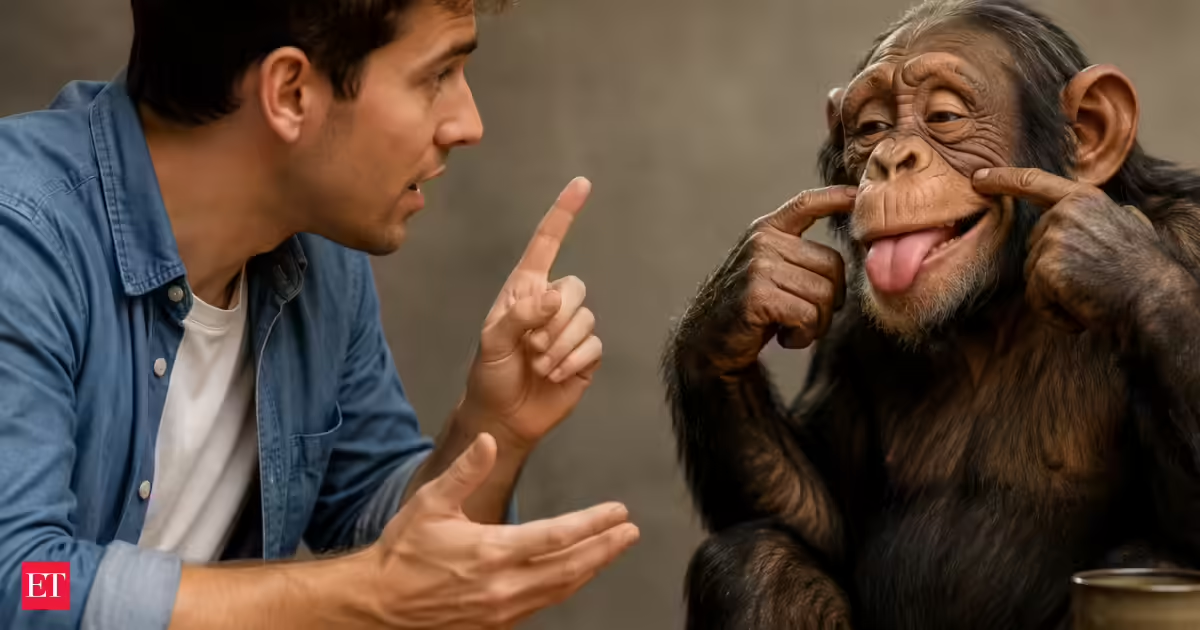
The French language is full of colorful expressions, and one of the most amusing is “On n’apprend pas au vieux singe à faire la grimace.” While it may sound strange when translated word for word, the saying carries a message that is easy to understand.The phraseFrench: On n’apprend pas au vieux singe à faire la grimace.Literal translation: “We don’t teach the old monkey to make a face.”English equivalent: “This old dog knows all the tricks” or “Don’t teach your grandmother to suck eggs.”At its core, the expression means that you should not try to teach someone something they already know very well, especially if they have far more experience than you.What does it mean?The saying is commonly used when a less experienced person tries to explain something obvious to someone who has spent years mastering a skill, profession, or activity.Imagine a young employee attempting to explain basic accounting principles to a veteran accountant with decades of experience. Or a beginner cook giving simple kitchen tips to a professional chef. In such situations, a French speaker might smile and say, “On n’apprend pas au vieux singe à faire la grimace.”The message is clear: experience matters, and those who have been doing something for a long time often do not need instruction on the basics.Why a monkey?The image behind the expression is what makes it memorable. Monkeys are known for making funny faces and expressions. A “vieux singe,” or old monkey, has supposedly spent a lifetime doing exactly that. Trying to teach an old monkey how to make a face would therefore be pointless because it already knows the skill perfectly.The metaphor highlights the value of practical knowledge gained through years of experience. Rather than relying solely on theory, the saying recognizes that expertise is often built through repetition, observation, and time.When can you use it?French speakers may use the expression in both professional and everyday conversations. Some examples include:A junior employee offering basic workplace advice to a senior manager.A novice driver explaining road rules to someone who has been driving for 30 years.A young football fan trying to teach tactics to a retired coach.In each case, the phrase gently reminds people that experience often speaks for itself.A lesson beyond languageBeyond its humorous imagery, the saying contains a broader life lesson. It encourages humility and respect for expertise. While sharing knowledge is valuable, it is also important to recognize when someone already possesses greater experience and understanding.The next time you find yourself explaining something obvious to a seasoned professional, remember the French wisdom: “On n’apprend pas au vieux singe à faire la grimace.” After all, there is little point in teaching an old monkey how to do what it has been doing its entire life.
French saying of the day: “Don’t teach the old monkey to make a face” — What does it really mean?
French wisdom offers a colourful saying, "On napprend pas au vieux singe à faire la grimace," meaning you shouldn't try to teach someone what they already excel at. This expression highlights the value of experience, cautioning against offering basic advice to seasoned professionals. It's a reminder that expertise, honed over years, often needs no instruction, encouraging respect for those who have mastered their craft.
453 words~2 min read