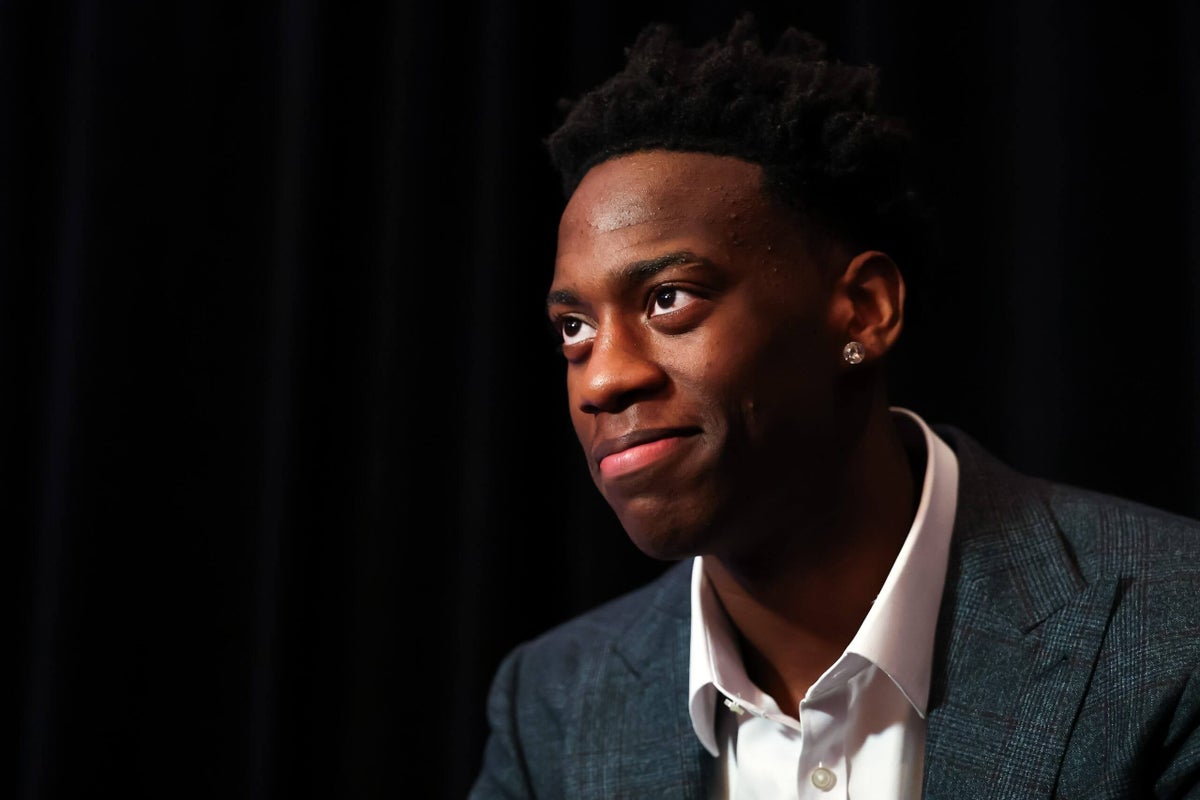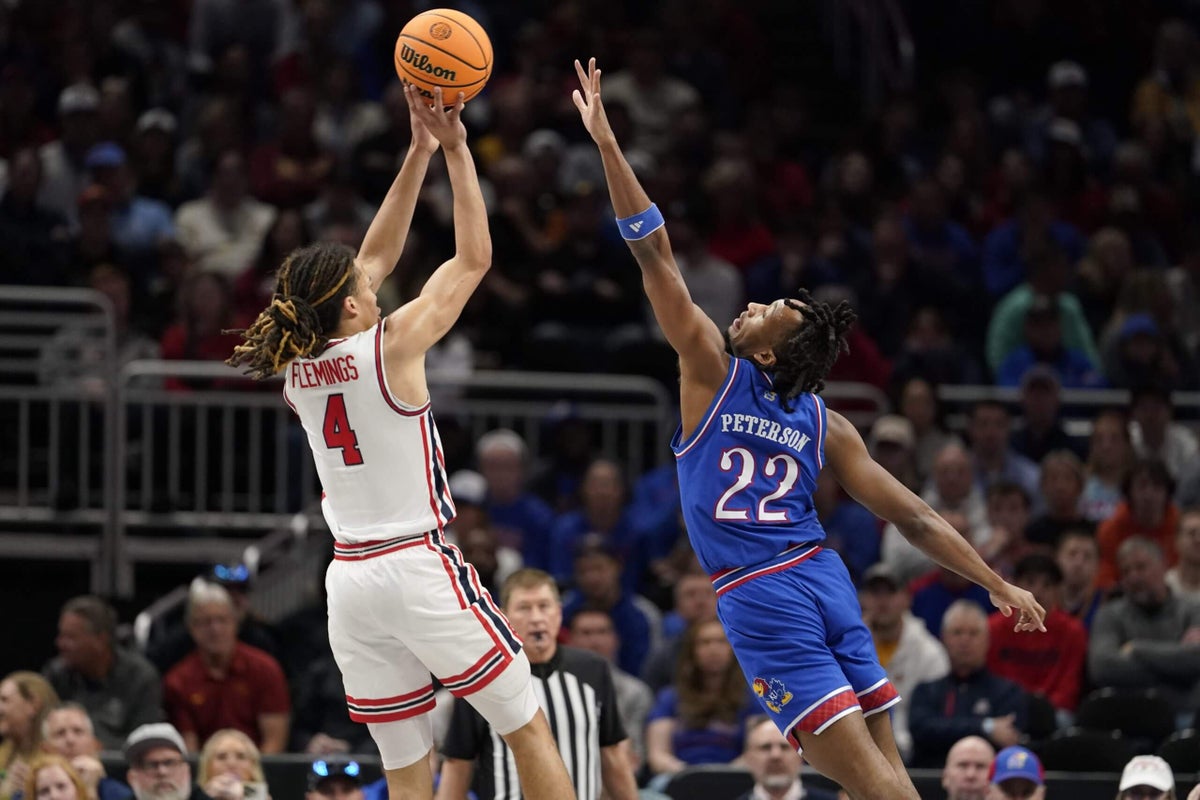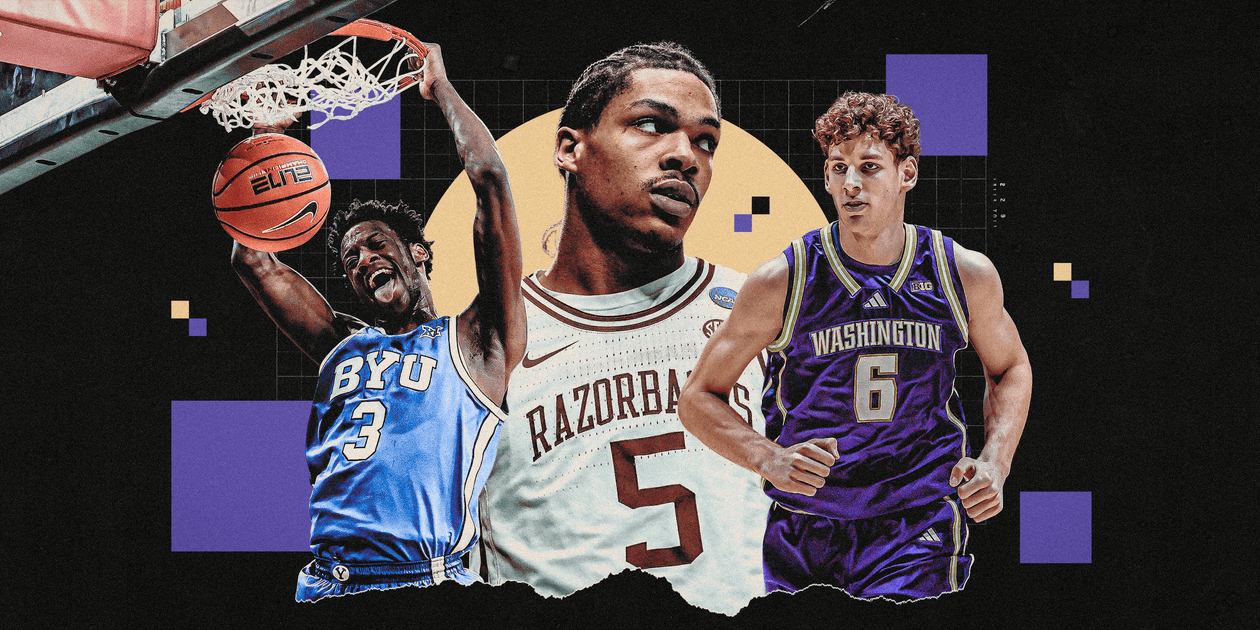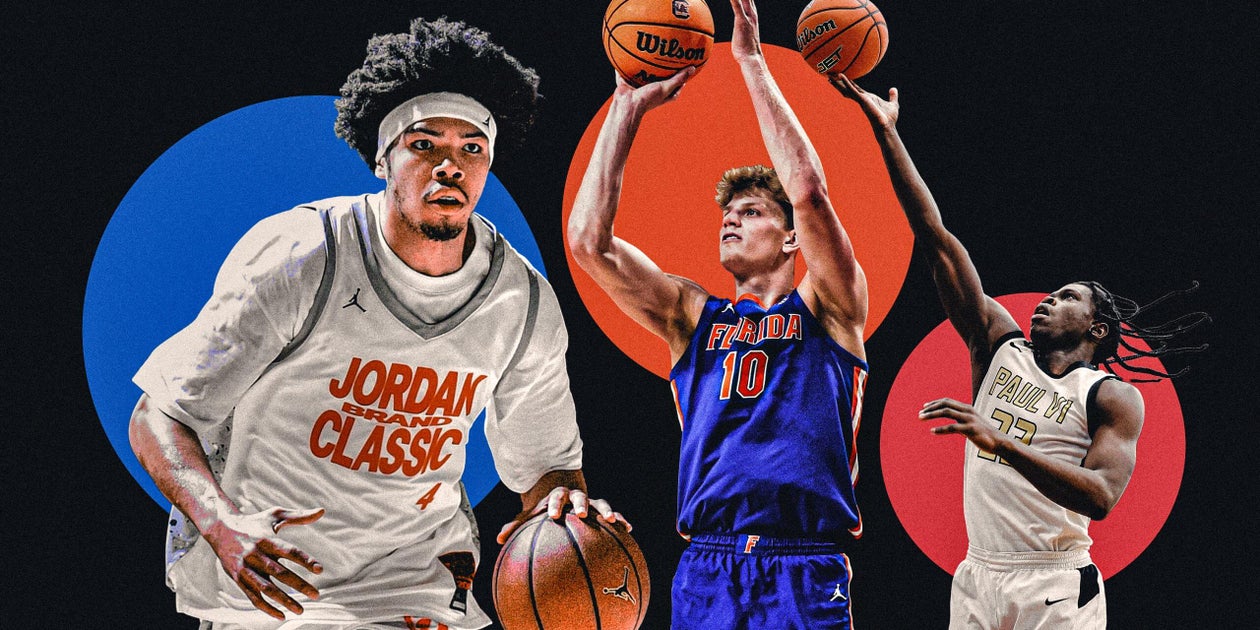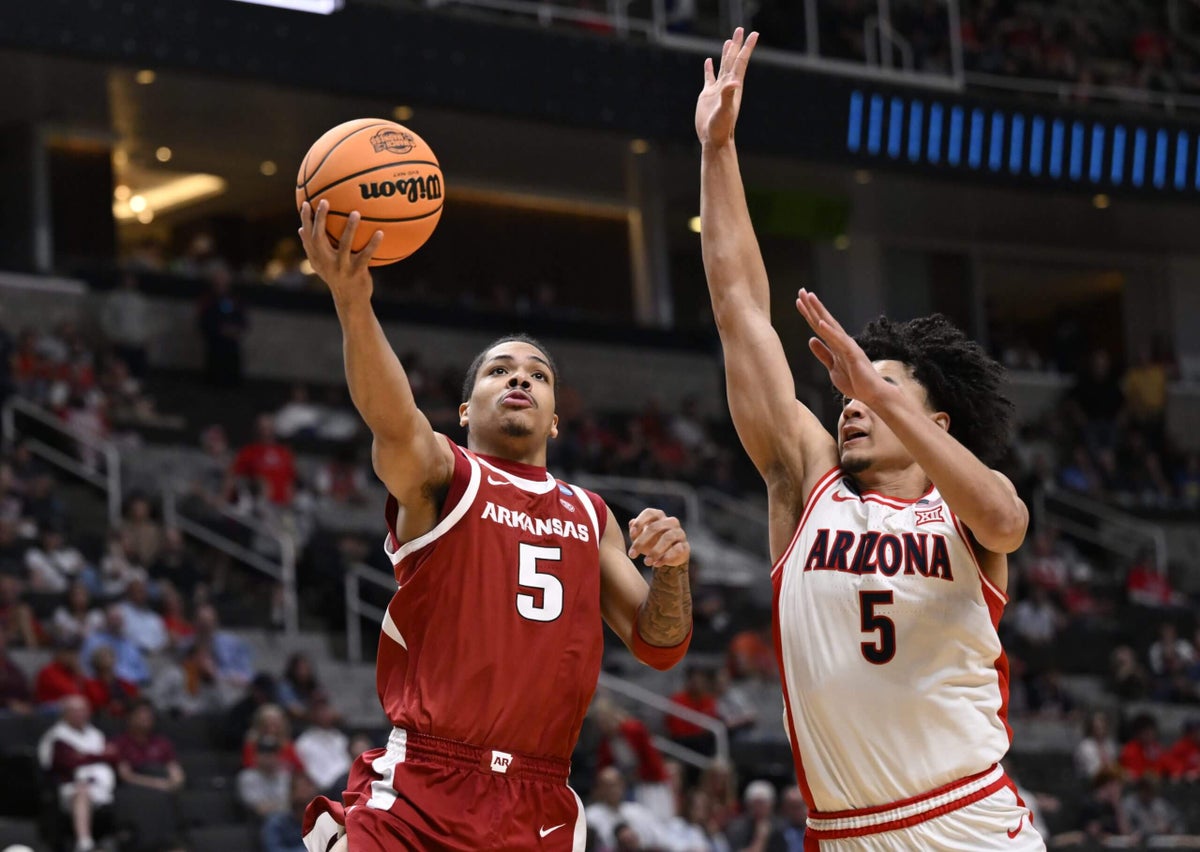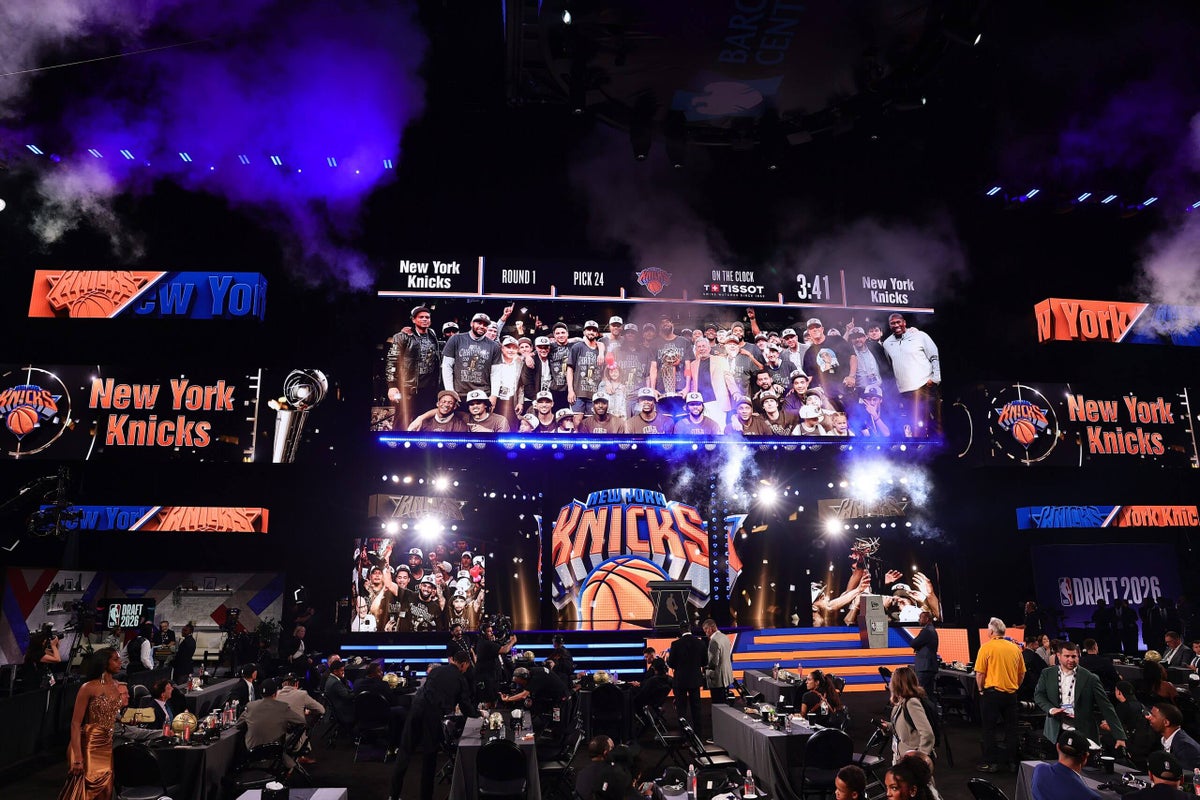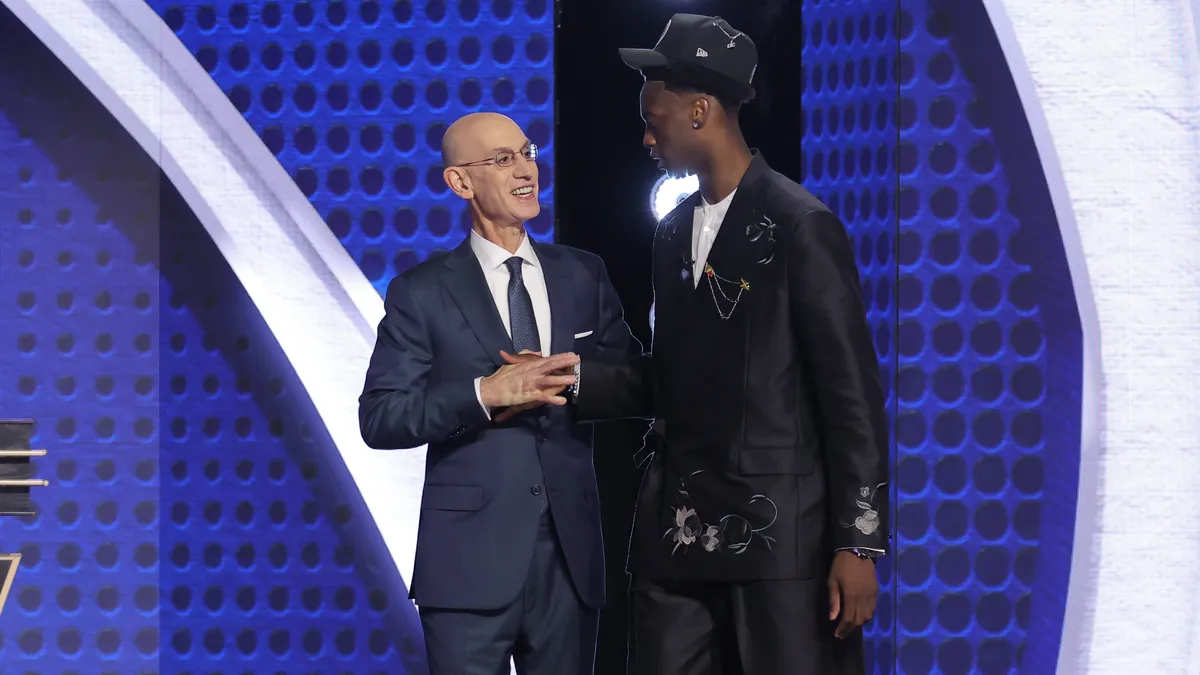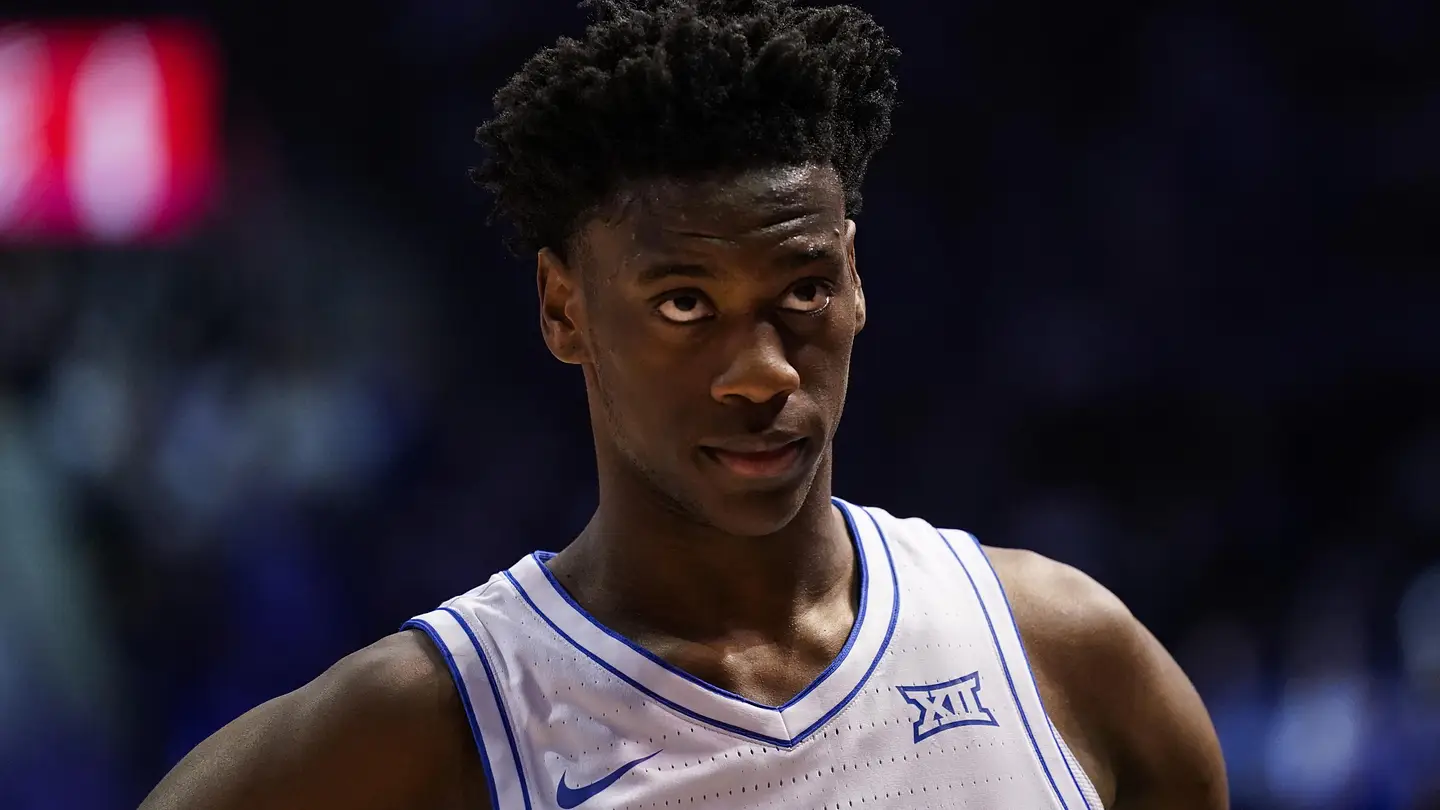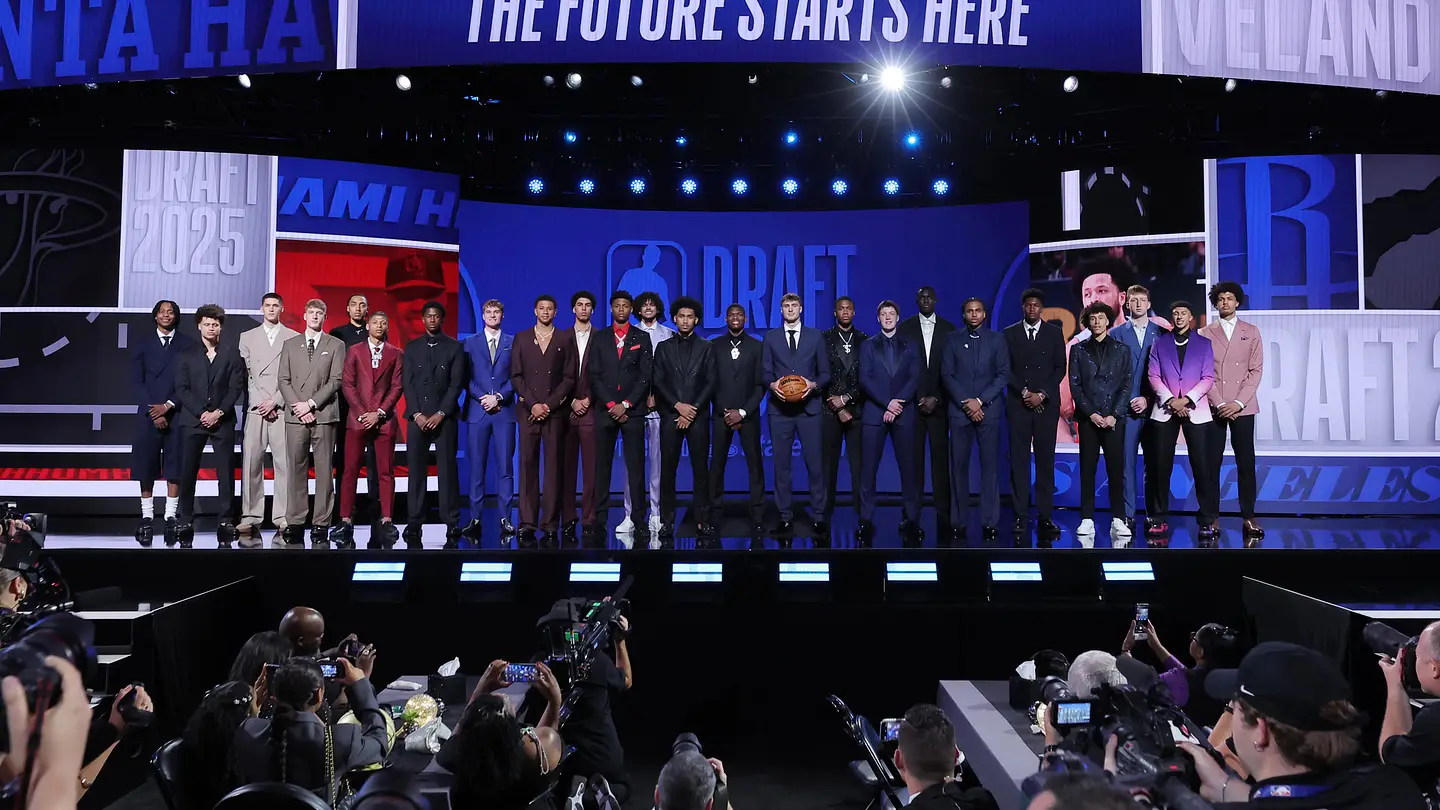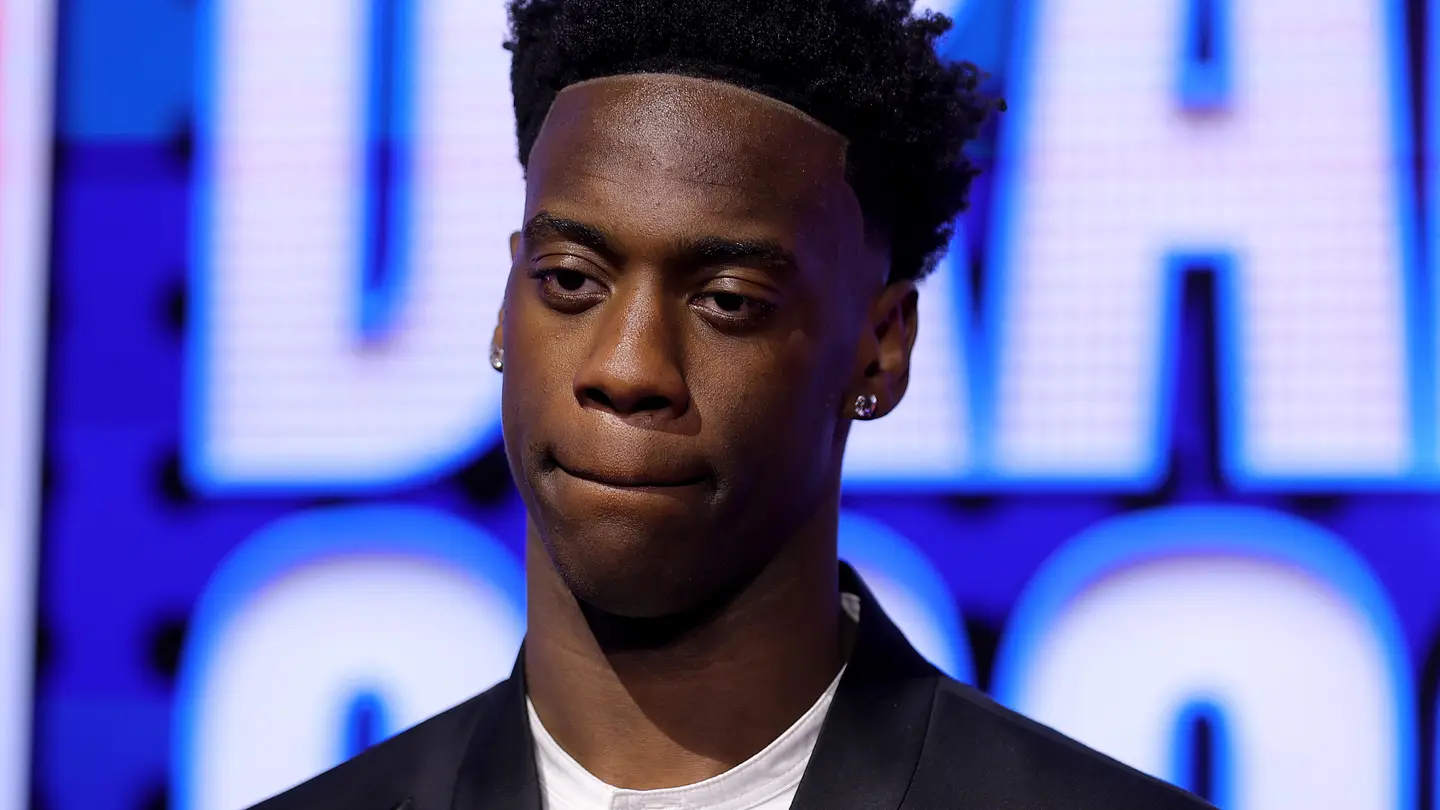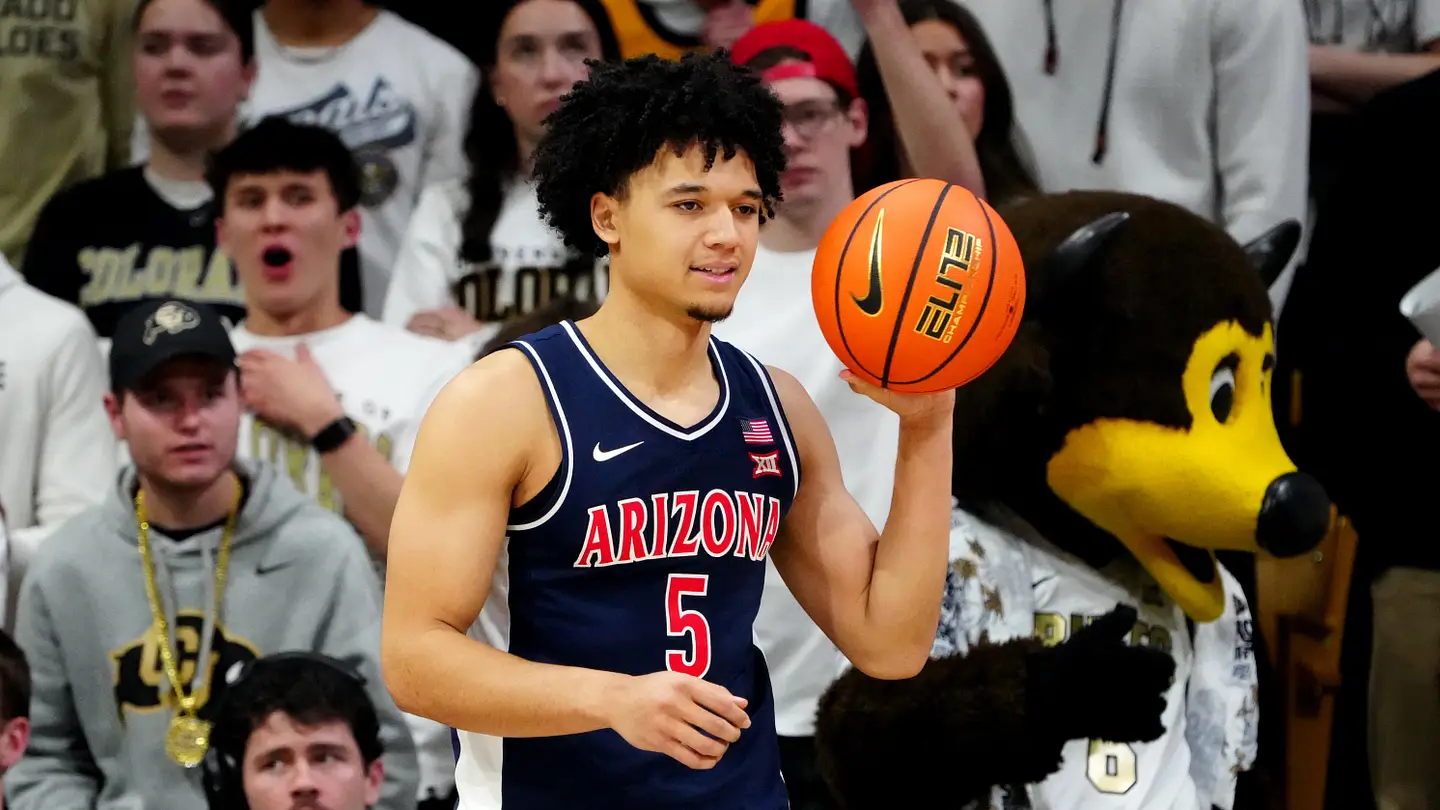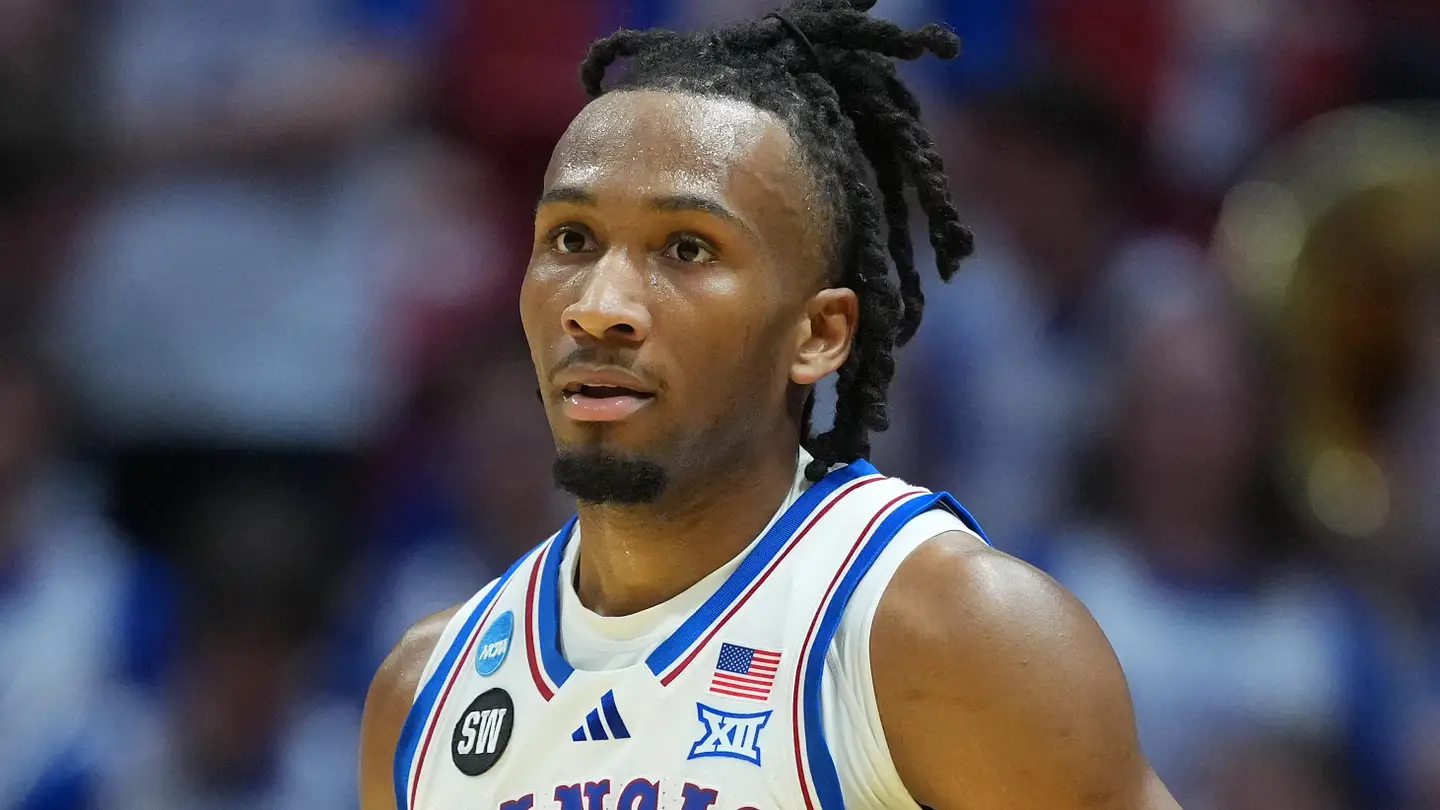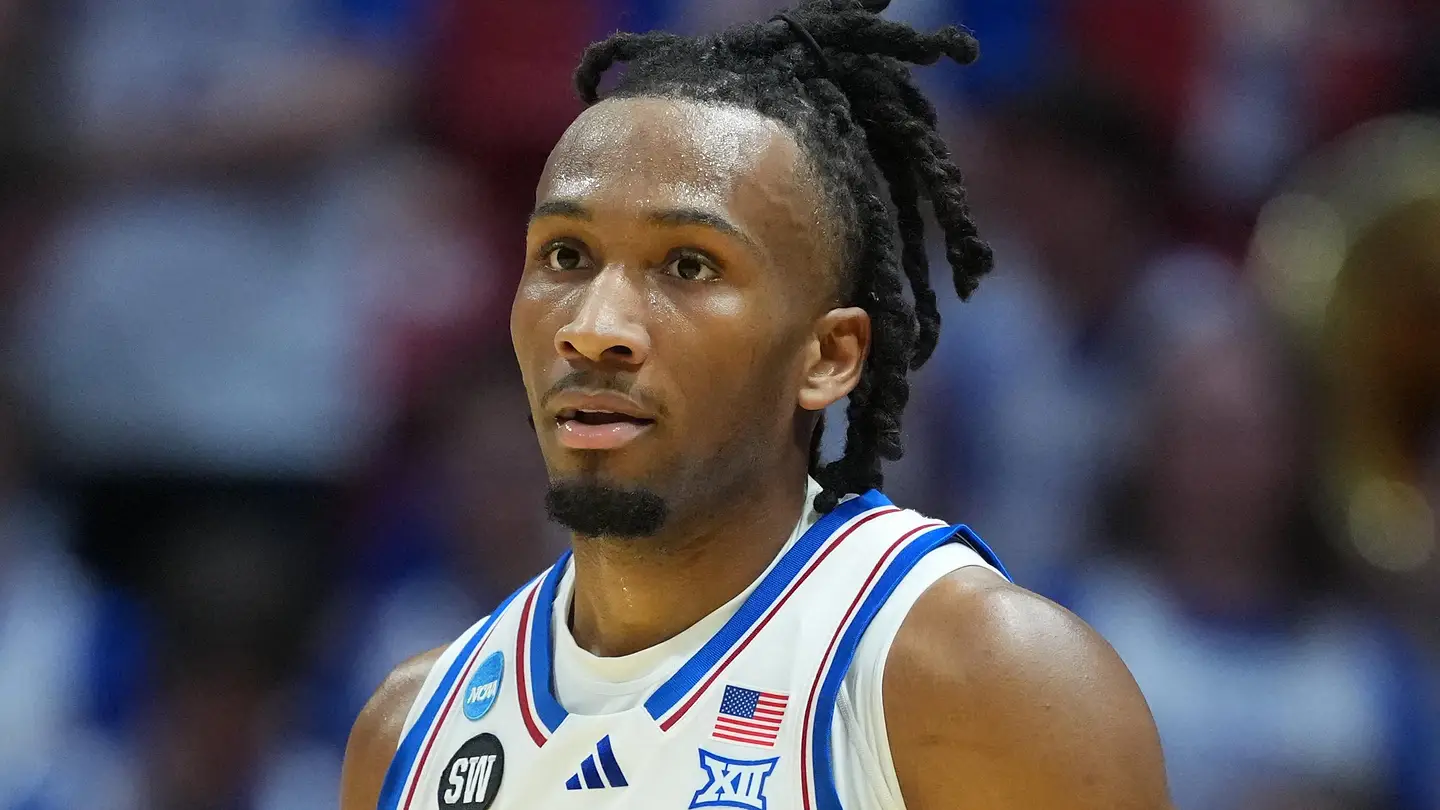
The 2026 NBA Draft kicks off tomorrow, offering a two-day event that’s sure to infuse the league as a whole with talent.There’s as many as three No. 1-level prospects, a deep crop of guards and depth through the twenties and beyond. Here is NBA Draft on SI’s final big board from the cycle:2026 NBA Draft Big BoardTier 1: Superstar UpsideTier 2: Star UpsideTier III: Star Upside (low floor), High-Level Starters (high floor)Tier IV: High-Level Starters (medium floor)Tier V: High-Level Starters (low floor), Impact Role PlayersTier VI: Impact Role Players (medium floor), Quality Starters (low floor)Tier VII: Impact Role Players (low floor)Tier 1: Superstar Upside1. Darryn Peterson, KansasRead the full scouting reportKicking off the board is a prospect ranked No. 1 for many the entirety of the cycle, though the reasons have shifted since he first stepped foot on the floor for Kansas.Darryn Peterson, at 6-foot-6, offers a prototypical modern scoring guard. He’s one of the better shooting and shot-making prospects ever seen, offering an off-ball skillset that would benefit any team and can bend defenses with gravity.Defensively, he’s the best of the top-three both now and projecting out to the future, with the best combination of two-way tools and natural instincts.And we’ve yet to touch on the fact that there’s still so much upside in Peterson’s on-ball game, his ability to return to his athletic peak, pressure the rim more, make decisions and pass. We can understand the questions that Peterson raised with Kansas causing many to drop him to No. 2 or 3, but him thriving so much as an off-ball player while still offering long-term value on-the-ball really impressed enough to keep him first.2. Cameron Boozer, DukeRead the full scouting reportSecond on the board is Duke’s Cameron Boozer, pound-for-pound one of the most complete prospects seen in recent memory.His selling points are simple: he’s the highest-feel player in the class and a proven winner across every single level of basketball. He can score in a variety of ways, is an unreal processor and one of the best natural passers in the class, with a knack for in-between areas such as rebounding and screening. He’s one of the best big shooters to pass through in some time, and has done all of this at just 18.Detractors will point to a lack of a true defensive role and stiffer athleticism, though I myself am never going to put a ceiling on high-feel players.Boozer’s ability to slide into a variety of lineups, limit mistakes and offer versatility lends itself to one of the best floors for a prospect ever seen, with a higher ceiling than many think.3. AJ Dybantsa, BYURead the full scouting reportThe last of the No. 1-level prospects is BYU’s AJ Dybantsa, one of the highest-ceiling scorers I’ve ever covered.Having Dybantsa third is not an indictment on his game — it simply means this is the best trio of players that have ever graced one class. All three have All-NBA upside, and going back as far as five draft classes all three would rank in the top-10 behind only talents like Victor Wembanyama, Cooper Flagg, Cade Cunningham, Evan Mobley and Chet Holmgren.Dybantsa is a fluid, 6-foot-9 wing with premier athletic tools and a sky-high ceiling. He’ll be capable of high-usage and creating his own shot at the rim, especially in the mid-range and from three in a wings league, and he’s also already seen improvement in plenty of other areas.Reasons he slips to third for most include needing the ball in-hand, in addition to a mid-range heavy shot-profile, as well as a lack of defensive output despite his size. Still, Dybantsa is an easy S-tier prospect that should offer a cornerstone for whoever takes him, be it at No. 1, 2 or 3.Tier 2: Star Upside4. Caleb Wilson, North CarolinaRead the full scouting reportNorth Carolina’s Caleb Wilson saw a really terrific season with North Carolina, offering one of the toolsiest and most productive freshman seen with more feel than your average forward.At 6-foot-10 with a 7-foot wingspan, he did his best to crack the top-three, scoring nearly 20 points and dishing out nearly three stocks per game with rebounding, passing and more. He’s long, a connected mover, productive and seemingly motivated to keep getting better, usually a lethal combination.Ultimately, Wilson’s 3-point shooting numbers just didn’t quite help him to crack the top tier. There’s a chance he’ll be fine here, but Peterson and Boozer are elite positionally, and Dybantsa quadruped his volume while shooting 7% better. Even more, Wilson will still need refinement, especially defensively, despite his unbelievable production. Wilson remains a stellar prospect capable of offering an all-star down the line with the right improvement.5. Keaton Wagler, IllinoisRead the full scouting reportKeaton Wagler saw what is probably the singularly most improbable draft rise in the modern era, coming into college basketball on absolutely zero radars and leaving as a bonafide top-five pick for many, myself included.He averaged nearly 18 points, five rebounds and four assists en route to a Final Four appearance for Illinois, having basically forced Brad Underwood’s hand in making him an on-ball force. If Cam Boozer isn’t the highest-feel player in the class it’s likely Wagler, with a weapons-grade jump-shot and the pace and craft reminiscent of some of the league’s best scorers.There are some reasons Wagler might not hit his high-end ceiling, his lack of traditional athleticism being front of mind. He posted no dunks, and isn’t an explosive mover in any direction. Still, his ability to pick his spots, draw fouls, make the right decision nine times out of 10 and general feel feels cause to offer some grace.The league is trending toward the exact versatility that Wagler provides, and with the weight, strength and athleticism he’s already put on in the last calendar year, he’s a player worth betting on, even within the top-five.6. Darius Acuff Jr., ArkansasRead the full scouting reportSixth overall is Arkansas’ guard Darius Acuff Jr., pound-for-pound one of the best players in college basketball last season.There’s some downsides with Acuff: bad and energy-less defense, tougher shot-making, the fact he’s ever-so-slightly undersized for what teams want in a lead guard in the modern NBA. Absolutely none of which offsets just how special an offensive player he is and projects to be in the NBA.Acuff scored 23.5 points on 48-44-81 splits, posting a near-3-to-1 assist-to-turnover ratio. He’s stocky, plays with pace and poise, and has a nice blend that certainly leans on-ball creation but can toggle into off-ball shot-making as well. He was an offensive supernova for Arkansas, functioning as the go-to play-maker down the stretch of every game.A quick descriptor of Acuff’s skillset — tough shot-making guard, lesser defender — would likely make one think he ate up usage with a so-so team. Instead, he led the Razorbacks to the SEC title and Sweet 16, with plenty of big moments to prove it. There are issues with Acuff’s NBA fit, he is not a perfect prospect. But this level of offensive talent should be easy for teams to insulate with two-way role players to cover up for deficiencies.Tier III: Star Upside (low floor), High-Level Starters (high floor)7. Brayden Burries, ArizonaRead the full scouting reportSeventh is Brayden Burries, one of the top risers in the cycle.It’s hard to poke holes in Burries game. He led one of the top teams in the nation in scoring while still taking a back-seat usage-wise to his fellow five-star guards, putting the ball in the hoop with a mix of on and off-ball prowess. He can toggle between strength and speed, with a pro-ready frame that should help him to see success quicker than most.Off-the-ball, he’s a transition threat with a pure 3-point shot, and his handling and ability to operate in the pick-and-roll offers a little more on-ball upside than he’s been tagged with so far.Burries feels like a built-in role player as a scoring guard or wing that can fill it up, but has defensive chops as well with physicality and instincts, with a hint of more if he can develop some keener dribble-moves and passing. He feels ready-made for an NBA role and a long career as a contributor, at minimum.8. Kingston Flemings, HoustonRead the full scouting reportEighth overall is Houston guard Kingston Flemings, who has a really interesting mix of win-now skills and areas that need tons of polish. Overall, he feels worth betting on with his feel for the game alone.Firstly, Flemings is the first Houston guard in some time to command Year 1 reps and take the reins, leading a strong defensive-system in scoring at 16.1 points per game on 48% shooting. Impressive Kelvin Sampson alone checks tons of boxes.Secondly, of this guard run, Flemings has claim to being the best athlete, the best defender with legit point-of-attack upside and instinctual play, the best passer having made the most of a defense-slanted system with a near-3-to-1 ratio, as well as some of the best feel in the way he impacts the game as a whole.Flemings needs to iron-out his offensive process badly. He’s mid-range reliant, with lesser finishing numbers, a lack of foul-drawing and low 3-point volume. But reportedly great work ethic and basketball IQ feel like gap-bridgers that could leave Flemings a star guard, or at minimum a really impactful rotational player.9. Mikel Brown Jr., LouisvilleRead the full scouting reportOutside of the top-four, Louisville guard Mikel Brown Jr. has some of the highest upside in the 2026 class, though more question marks hanging around him than anyone.He played in just 21 games for Louisville, though even in limited time was able to showcase the upside with positional size and good athleticism, high-volume 3-point shooting, efficient at-rim finishing and some eye-popping passing. He’d likely be penciled in as the fifth pick, had there not been a pretty good amount of questionable decision-making, be it errant passing or early shot-clock heaves.Many are torn on Brown right now, still really valuing the scoring skillset he could bring and his combination of skills, but with his lesser moments kind’ve weighing the good down.One won’t be rewarded for having him in the middle here at No. 9, with what feels like a huge gape between his outcomes, but we can’t justify raising or lowering him as things stand.10. Dailyn Swain, TexasRead the full scouting reportTenth overall is the first upperclassman off the board, Texas wing Dailyn Swain, a long-time collegiate contributor turned breakout star for the Longhorns this season.Swain’s a player who sits between genuine star-power and pluggable role-player. His slashing and efficient at-rim finishing should be good in any off-ball capacity, and his rebounding, passing and on-ball defense are all highly projectable at the NBA level. On the ball, he showed off elite creation ability with Texas, getting to his spots at 6-foot-8 with a great handle, slithery athleticism, incredible pace and complete body control.Swain only needs a consistent 3-point shot to lock himself into being a long-time NBA contributor, and big Year 3 improvement in addition to long-time touch indicators make me a little more rosy than most on his shooting outcome.There’s just too much to like with Swain, be it the counting stats and impact for Texas, advanced analytics, eye test and moreTier IV: High-Level Starters (medium floor)11. Yaxel Lendeborg, MichiganRead the full scouting reportKicking off a tier of players that have exceptionally high floors as role players is Michigan’s Yaxel Lendeborg, who saw a rapid ascension through college basketball.Lendeborg’s JUCO and AAC background as a small-ball five and power-driven four combine really well with the fact he adopted wing tendencies at Michigan, helping them to the title in the process. He can score on the ball, off the ball, pass, handle, shoot and defend across multiple positions. He has high feel and premier positional versatility.His age at 24 before his rookie season will be a hang-up for many, but his late-bloom in basketball and continued growth offers some hope that he’ll continue his ascension into his professional career. Additionally, Lendeborg’s ball-skills simply offer him a higher-floor than a lot of other role players in this class, even accounting for age. He should have a long-time career as an NBA contributor.12. Morez Johnson Jr., MichiganRead the full scouting reportAt twelve is Michigan forward Morez Johnson Jr., a crucial piece of the Wolverines’ title run and one of the top defenders in college basketball.After transferring from Illinois, there was no guarantee that Johnson would be able to produce at a high-level for Michigan given the roster construction, but he slid in perfectly to the tune of 13.1 points, 7.3 rebounds, 1.2 assists and 1.1 blocks per game, with his frontcourt teammates canibalizing some production.He’s an athletic but touch-y play-finisher who was sort’ve left to his own devices to make it happen, and it one of the more believable long-term floor-stretchers as well. At 6-foot-10 with a 7-foot-3 wingspan, he’ll be positionally malleable in the frontcourt, with some raw but elite shot-blocking and defense in space.Johnson’s size, motor and production alone feel like a nice trio of bank-ability, and it feels even easier to bet on Johnson when you watch him. 13. Hannes Steinbach, WashingtonRead the full scouting reportWashington’s Hannes Steinbach has been a tough evaluation and a hard prospect to place in this loaded early first-round, though we’ve ultimately landed with him as a lottery selection via his blend of elite trench skills and offensive upside.Steinbach’s rebounding alone has me ready to bank on his ability to see the floor at an NBA level. He led the NCAA in rebounding a just under 12 per game, over four of which were offensive and 7.5 of which were defensive. That’s a possession-winner, not to mention his 18.5 points per game.On offense, Steinbach has some pretty useful skills in terms of rolling, putting the ball back, cutting and getting out in transition, with touch all over. He’s also a somewhat believable spacer with plenty of room to grow.Steinbach also isn’t an elite defensive big — a risky gamble in the modern NBA — but he’s also better than given credit for with legitimate frontcourt size at 6-11 with a 7-2 wingspan, 250 pounds and a steal and block apiece. 14. Aday Mara, MichiganRead the full scouting reportRounding out the lottery is the last of the Michigan trio, center Aday Mara.At 7-foot-3 with a 7-foot-6 wingspan, Mara’s physical tools alone feels like a safe bet as a use-able player in the NBA. With height, length and touch, he should be able to play-finish and block shots, full stop. Then you bake in his coordination and ball skills, namely passing and play-making, and you have a highly intriguing player that could be capable of being a gaudy center anywhere.Some value Mara within the top-10, and plenty have him even higher than that. Though there are still questions with Mara: will he ever space the floor? how real is the 56% free throw number? Will he ever play anything but drop coverage? Will he be able to play long stretches or anywhere near 30 minutes per game?Even if Mara plays 15 minutes per game, he’ll remain elite at a few things. But his lack of high-level versatility leads to a lower rank than the aforementioned role-player bets.Tier V: High-Level Starters (low floor), Impact Role Players15. Nate Ament, TennesseeRead the full scouting reportTennessee wing Nate Ament is about as polarizing as they come in terms of the NBA Draft.Visual drafters will see his combination of size, fluidity, pedigree and impressive flashes of shot-making as a reason to continue betting on him as a top-end talent. The more analytically inclined will point to three-level ineffectiveness and lesser defense than one would want out of a positionally well-sized player.This is yet another prospect that one shouldn’t be luke-warm on, but one can really get to the point where they’re both valuing his ability to get better while offering a big, fluid wing, and agreeing that he simply wasn’t good enough at Tennessee with some really big question marks on his profile. Ament’s outcome is likely to come down to work ethic, landing spot, his long-term role and development in key areas. That’s why we’re ultimately fine to land somewhere in the middle here, believing some of the upside while acknowledging the downside.16. Christian Anderson, Texas TechRead the full scouting reportWe’ll begin another run of guards with Christian Anderson, who has the most fool-proof skills of the bunch with his flamethrower shooting and high-ceiling passing.Anderson put together a solid debut season with the Red Raiders, but improved massively as a sophomore, going for 18.5 points and 7.4 assists per game. He’s slightly undersized at around 6-foot-2, but does have a 6-6 wingspan to make up some ground.He’s not a truly adept pure creator, needing plenty of ball screens to thrive, but is just a ridiculous shooting shot-maker at 42% on 447 attempts, plenty of which came off-the-dribble. He also was one of the more prolific play-makers in the entire class at 244 assists, showing a little bit of everything.It’s hard to imagine upwards of four starting point guards in one class, especially in an NBA that mostly has lead guard shored up. There’s kind’ve a line of demarcation between the lottery tier and this one, and Anderson’s shooting, general off-the-dribble shot-making and high-level passing gives him some of the best off-the-bench chops.17. Ebuka Okorie, StanfordRead the full scouting reportStanford’s Ebuka Okorie was one of the most prolific scorers not just among freshman, but in college basketball in general. He scored a blistering 23.2 points per game on aloes 47-35-83 splits.Okorie stands at about 6-foot-2, but was a combine winner with a nearly 6-foot-8 wingspan, which bridges a few gaps. He has one of the best combinations of athletic tools among guards, with the ability to touch the paint whenever he wants with burst, acceleration, directional change, as well as the body control and leaping ability to see shots through.Okorie was only a so-so finisher, though the volume and ability to at least get downhill offer a lot of upside. A lack of high-end passing feel, truly elite 3-point shooting or the finishing could all keep him from being a starting-caliber guard, though it feels pretty certain he’ll have a place in the NBA via his rim pressure, making him a top-20 pick.18. Bennett Stirtz, IowaRead the full scouting reportBennett Stirtz has solved each level of basketball like a Rubik’s cube, starting out in Division II before moving to the MVC and finally Big Ten, seeing success at each stop, the last of which featured an Elite Eight appearance.He’s a high-feel guard, having scored nearly 20 points in his senior season to go along with 4.4 assists and 1.4 steals. He should be able to toggle between on and off-ball impact, running the pick-and-roll and hunting his shots, while sliding around for smooth triples off-the-ball.Stirtz, too, has a pretty high role player floor in terms of being able to dribble, pass, shoot and limit mistakes as a whole. So-so defense and a lack of elite athleticism could keep him from higher-end success, though a baseline of feel and shooting always feels bankable in a rotation.19. Labaron Philon, AlabamaRead the full scouting reportOne of the draft’s hardest players to place, Alabama’s Labaron Philon couldn’t have done more in his sophomore season.He massively upgraded his scoring both volume and efficiency-wise, importantly shooting drastically better from three on nearly double the attempts. He also improved as a play-maker and didn’t see a massive defense fall-off.There are believable star pathways, but a 180-pound frame and a lack of even average athleticism stand in the way. There’s a chance he can carve through those barriers, but again, the margin for error to become a legitimate, starting caliber lead guard in the NBA feels just a bit too narrow to project.Philon’s scoring and ball-handling will be highly-valuable, and where exactly he lands could be massive for early-career development and reps. Tier VI: Impact Role Players (medium floor), Quality Starters (low floor)20. Zuby Ejiofor, St. John’sRead the full scouting reportSt.John’s Zuby Ejiofor has been one of the best players in college basketball for two full seasons, most recently leading the second-seeded Red Storm in points, rebounds, assists and blocks, a hard thing to do if not highly-versatile.Ejiofor is slightly undersized for a big, but makes up for it with length and motor. He’s one of the hardest-playing players in the class, and is point blank one of the best defenders, with the ability to block shots, nab steals and switch on the perimeter as a big.Offensively, he’s a handful around the rim with finishing ability, a high foul-rate, hub-like passing tendencies and some stretch potential.Ejiofor’s older than plenty of the players in this range, though one should ask themselves “could [insert player] have been as versatile as Zuby Ejiofor even as a senior?” And more often than not the answer is no. Ejiofor has a place in the modern NBA, be it as a 15-minute bench big or even a low-end starter if he continues improving.21. Joshua Jefferson, Iowa StateRead the full scouting reportMuch like Ejiofor, it’s hard to envision anything other than impactful basketball from Iowa State’s Joshua Jefferson.He’s long been an impact player in college, dating back to two seasons with St. Mary’s. He eventually graduated into the go-to role with the Cyclones, getting to show off his higher-end scoring and passing chops.Jefferson is one of the highest-feel players in the class, worth betting on despite lesser athletic tools. He can score in a myriad of ways, has long been an impact defender — see over two steals per game as a junior — and is a truly unbelievable passer at 6-foot-8, with just about everything in his arsenal.Jefferson’s 3-point shot leaves some to be desired — an improvement must if he wants to see heavy NBA minutes — though around 35% is a workable numbers entering his pro career. If you’re a believer in high-feel, you’re a believer in Jefferson. 22. Jayden Quaintance, KentuckyRead the full scouting reportMystery box Jayden Quaintance has landed at No. 22.At just 17, too young even to be draft elligble, Quaintance showed raw upside in 3.7 stocks and high-flying play-finishing ability. He stands at 6-foot-10 with a massive 7-foot-5 wingspan, prototypical forward tools for the modern NBA. His freshman season was derailed by an ACL injury, one that kept him out all but four games of his sophomore season at Kentucky. He’s now entered the ’26 class, with his medicals offering one of the top swings in the class.We really value Quaintance’s upside as an All-Defense defender, able to blocks shots, eat up ground in space and generally wreak havoc. But in this talented class specifically, there’s a few too many question marks, and even the tape we have is fairly raw opposed to real technique or feel. He’s little more than a play-finisher, with the handling not yet developed, and he shot 45% at the line through 28 games, a not-so-green colored flag.That makes him good for a top-25 pick and living with the long-term results. 23. Koa Peat, ArizonaRead the full scouting reportRanked twenty-third is Arizona’s Koa Peat, a power wing-slash-forward standing at about 6-8 with a 6-11 wingspan.Peat has gone a little underrated as a driver of winning impact as a true freshman on an elite team in Arizona. For starters, he is one of the stronger prospects ever evaluated at NBA Draft on SI, a trait fresh on the mind following the NBA’s postseason. He’s positionally powerful, completely routable on the interior with good speed and lateral movement to guard his peers in space.Peat is also pretty good at everything save shooting on the perimeter. While being a 6-foot-8 non-shooter presently is pretty hampering, his impact will blow wide-open with any perimeter development, and that makes him valuable enough for me.24. Henri Veesaar, North CarolinaRead the full scouting reportNorth Carolina’s Henri Veesaar broke out fully in his senior season, averaging 17.0 points, 8.7 rebounds, 2.1 assists and 1.2 blocks per game alongside Caleb Wilson. His frame at 7-foot offers a higher-floor than most bigs, in addition to some nice modern skills.Veesaar is a touchy-finisher on the interior, shot 43% from three on good volume for a big, and is a scrappy, albeit not elite defender. His defensive projection can be a bit spotty, but again a 7-foot frame helps to make up ground.It feels like there’s always going to be a place for 7-foot floor-spacers in the NBA, especially one’s that are highly effective around the rim and offer connective passing. Veesaar feels like a worthy late-first bet on offense alone.25. Meleek Thomas, ArkansasArkansas guard Meleek Thomas was a real surprise this year, coming in as an expectedly good five-star, but still shocking while thriving alongside a ball-dominant guard in Darius Acuff.Thomas was able to go for 15.6 points, 3.8 rebounds, 2.5 assists and 1.5 steals, scoring off and off-the-ball, play-making without turning it over much and showing some defensive instincts. He shot 42% from three on a high volume of threes, and was shockingly good when given on-ball chances in reserve.He isn’t massive positionally, but has an intruiging blend of athleticism. All of that makes for a fine late-first bet on a combo guard-slash-wing who can impact the game at several levels. 26. Cameron Carr, BaylorRead the full scouting reportLower here than most is Baylor’s Cameron Carr, a scoring wing who saw a massively productive season for Baylor.He’s a high-flier and fiery shooter, able to show off immense verticality around the rim with a clean and projectable shooting stroke on the perimeter. He shot 37% from three on over six attempts per game while adding 5.8 rebounds, 2.6 assists and 1.3 blocks per game. His weak-side shot-blocking via athleticism is highly-interesting for a wing.Carr is long with a 7-foot wingspan, but his weight at 190 pounds for a wing is a little concerning, at least without the on-ball juice and craft that a player like Keaton Wagler offers. Carr has an interesting floor and ceiling due to his athletic tools and size, though one could lean a little more toward the latter given the lack of true defensive instincts and NBA-level strength.Tier VII: Impact Role Players (low floor)27. Chris Cenac Jr., HoustonRead the full scouting reportHouston’s Chris Cenac Jr. has a premiere toolkit, standing at 6-foot-11 with a 7-foot-5 wingspan. He didn’t put it to use in an elite way at Houston, but still has a lot of NBA upside. Cenac needs to play with more force, but could be better positioned to play in the spaced-out NBA than he was in the defensive-minded Houston. Additionally, his good athleticism, elite rebounding and wing-like shot-profile all offer some intrigue.Ultimately, there feels like a few more through lines to lesser outcomes than great ones for Cenac, though his tools alone will see him drafted in the first round.28. Allen Graves, Santa ClaraRead the full scouting reportAllen Graves is one of the most unique evaluations in recent memory, a slower-moving big whose supercomputer brain makes up for a lack of explosion.He was a sixth-man in the WCC, earning analytical acclaim with steal and block percentages of 4.1 Counting stats of 12.8 points, 6.5 rebounds and 1.9 steals across 22 minutes per weren’t too shabby either.Graves is just ultra-unique, able to space the floor, use elite hands and more to make a difference. And he could be a great bet on in-between production that wins games.29. Bruce Thornton, Ohio StateOhio State guard Bruce Thornton’s first-round selling point is fairly easy: he’s a strong, bucket-getting with a knack for winning in the margins. Thornton’s just 6-foot, but has a fine wingspan at plus-five and a good blend of athletic tools despite a lack of ups. He’s bulky with a low center of gravity, able to maneuver around the court well. Thornton is just an elite scorer any way you slice it: he averaged 15.9 points per game for his career, topping out at nearly 20 in his senior season. He ranked elite at just about every play-type, and shot a blistering 75% at the rim despite not dunking it once.Other selling points at a 3-to-1 assist to turnover ratio with very few of the latter, as well as an elite five rebounds per game from a smaller guard. Staking one’s claim on Bruce Thornton island is easy to do with even minimal tape and research.30. Karim Lopez, NZ BreakersRead the full scouting reportRounding out the first round is Breaker’ wing-slash-forward Karim Lopez, the top international player for most in this cycle.Lopez’ production across two seasons — the second of which showed across-the-board improvement — is an easy selling point, in addition to his premier size at 6-foot-9 with a 7-foot wingspan. Lopez brings the energy, can score, rebound, pass and projects to improve defensively. His ball-handling is the most intriguing part of his profile, offering a player that could be able to consistently break down the first line of defense depending on matchups.31. Jack Kayil, Berlin32. Tarris Reed Jr., UConn33. Alex Karaban, UConn34. Sergio de Larrea, Valencia35. Isaiah Evans, Duke 36. Richie Saunders, BYU37. Tyler Nickel, Vanderbilt38. Ugonna Onyenso, Virginia39. Ja’Kobi Gillespie, Tennessee40. Otega Oweh, KentuckyAdd us as a preferred source on GoogleFollow
2026 NBA Draft: On SI's Final Top-40 Big Board
The 2026 NBA Draft kicks off tomorrow, offering a two-day event that’s sure to infuse the league as a whole with talent. There’s as many as three No. 1-level pr
4,864 words~22 min read