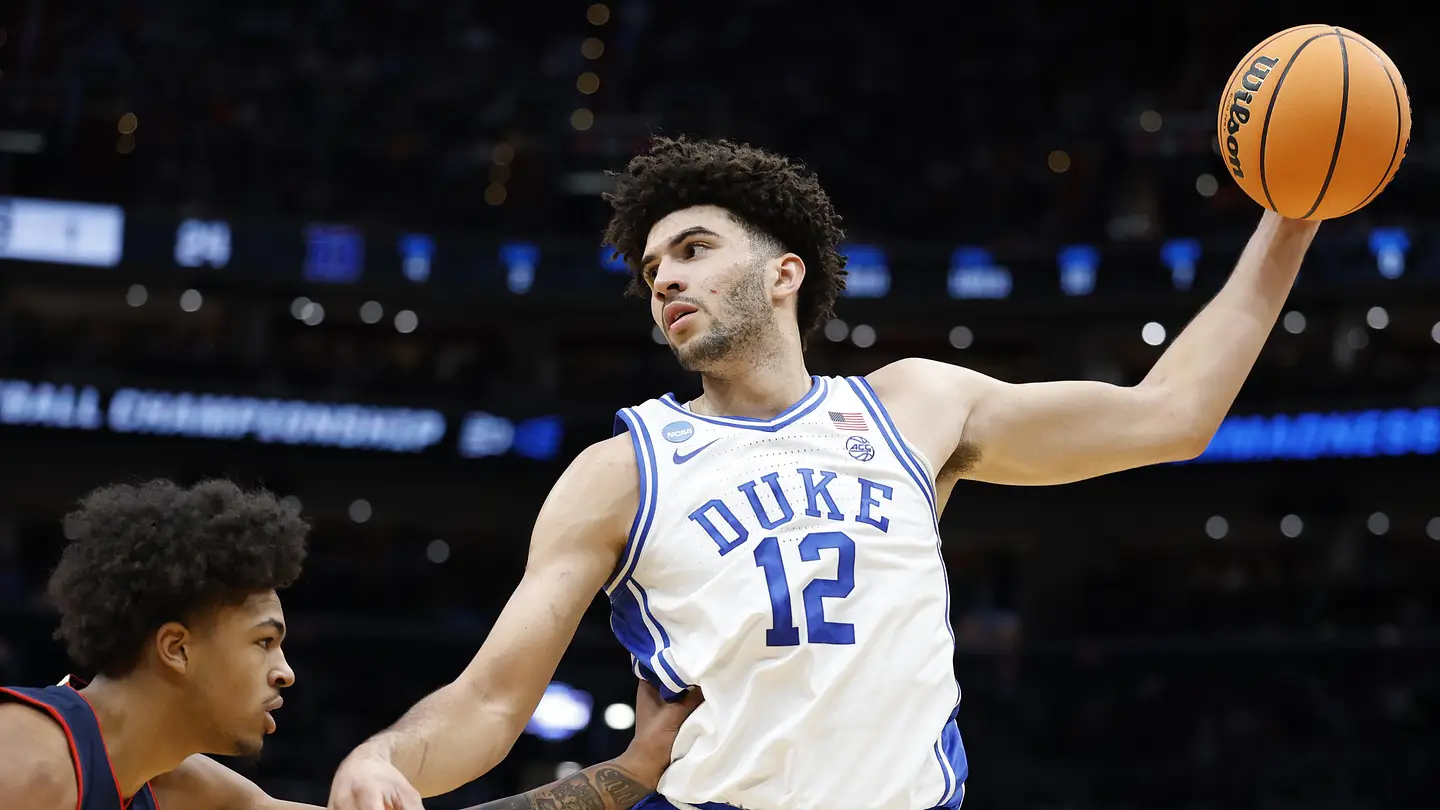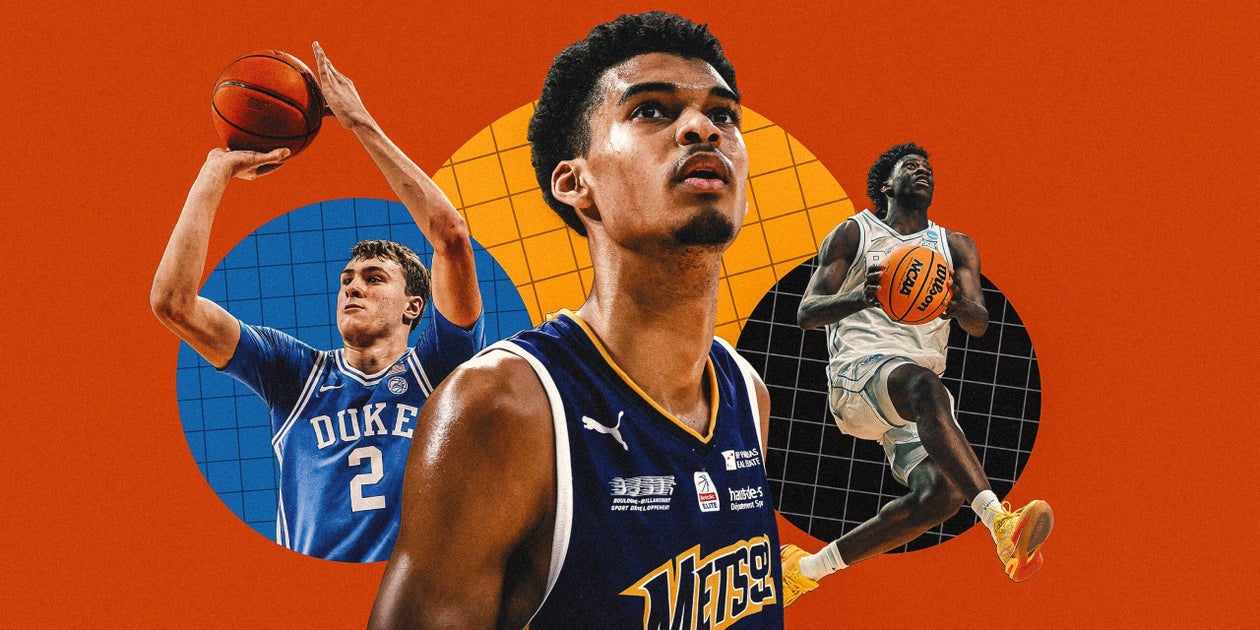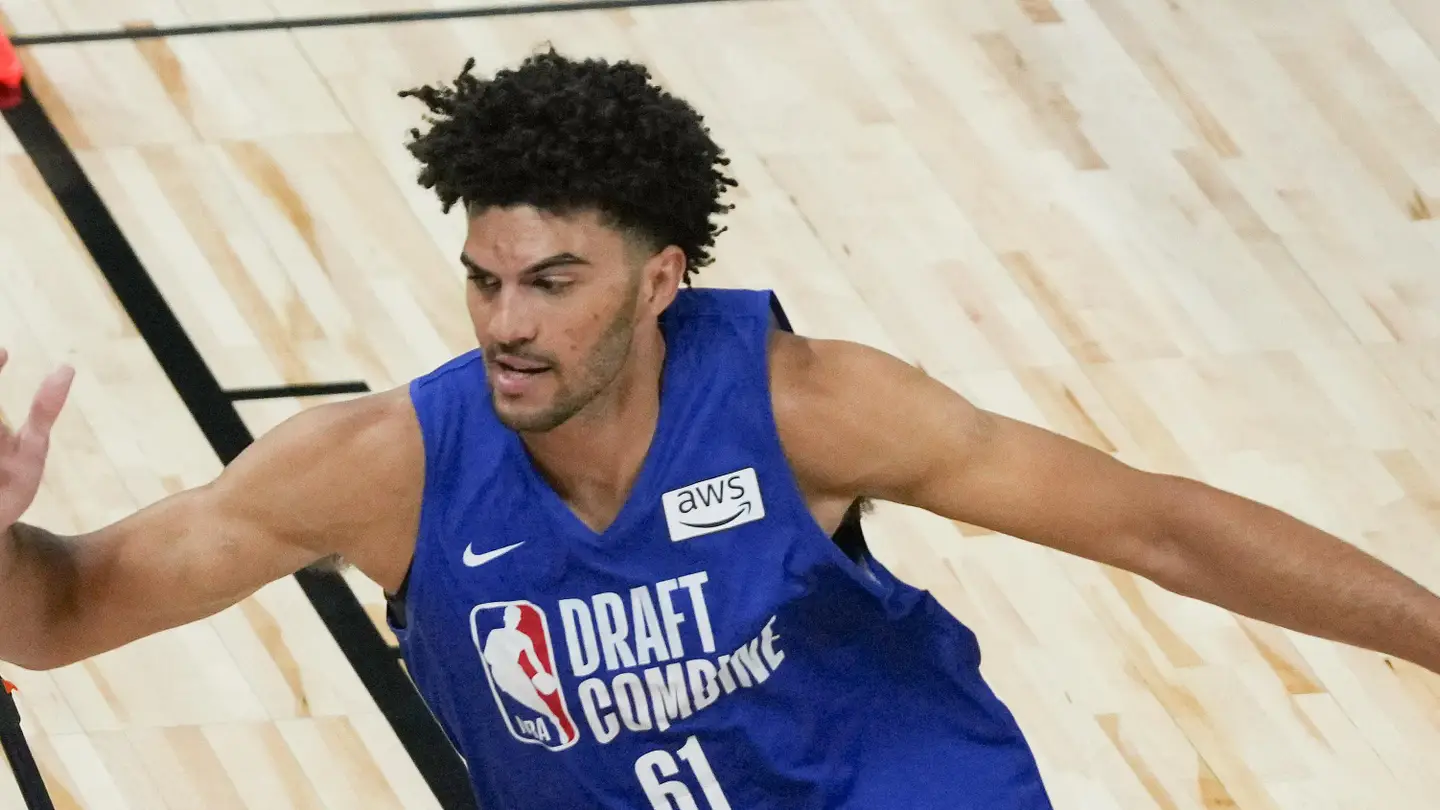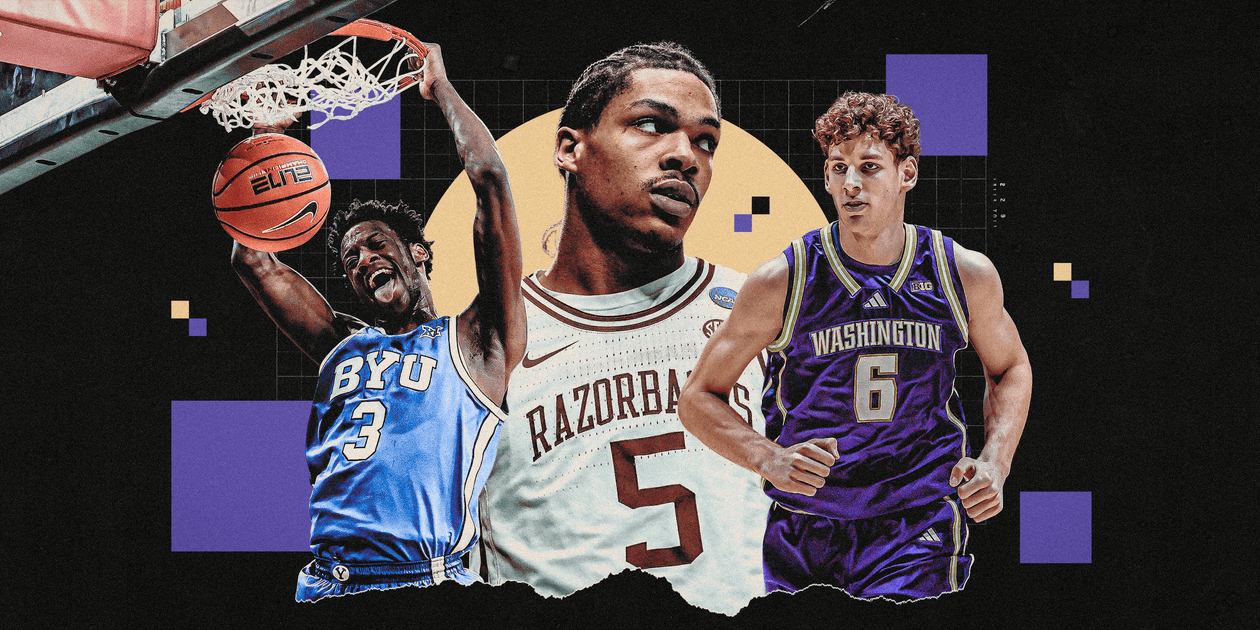
We’re less than a week away from the 2026 NBA Draft, and as I’ve said in the past, while the depth of the group is loaded, there isn’t a singular LeBron James or Victor Wembanyama at the top.In fact, my No. 1 choice deviates from consensus, and four players — BYU’s AJ Dybantsa, Duke’s Cameron Boozer, Kansas’ Darryn Peterson and North Carolina’s Caleb Wilson — can make a credible claim to the top selection. Beyond those four, an almost overwhelming class of point guards, including Illinois’ Keaton Wagler, Houston’s Kingston Flemings and more, makes for a difficult game of splitting hairs.Last month, a couple of days before an NBA Draft Lottery that saw the Washington Wizards finally emerge with the No. 1 pick, I unveiled my top 15 prospects in this year’s class, with Boozer leading the way. You can find much deeper analysis on each prospect here, but as a refresher, here’s a snapshot of that board:Tier 1Tier 2Tier 3Tier 4Tier 5After another month of evaluation, here's how the rest of my board looks, from No. 16 to No. 75, with a late addition to the top-five tiers. (Ages listed are as of draft night; heights are rounded measurements without shoes from May's NBA Draft Combine.)Why Cameron Boozer produces and wins at every levelSam Vecenie16. Allen Graves, forward, 6-8, Santa ClaraDrafting Graves means accepting high outcome variance, but this is the point in the draft where I think that makes sense. I like a lot of the players still on the board, but none of them have the outlier characteristics Graves has. It’s possible that he’s too foul-prone and his game is too weird to find a true spot in the NBA, but he does a lot of things that really translate — passing, rebounding, getting his hands on tons of balls — and blew up analytical models.Playing against mostly minnows in the West Coast Conference as a redshirt freshman, Graves is an unusual case. Scouts would have liked to see more games against elite competition, and ideally, a transfer to a Power 5 league to evaluate him as a possible 2027 lottery pick. He did a lot of damage against the weakest teams on Santa Clara’s schedule, although his 17-point, seven-rebound NCAA Tournament game against Kentucky eased some nerves.Graves is a high-IQ player who averaged 2.5 dimes for every turnover, shot 41.3 percent from 3, had an insane steal rate for a big with seemingly modest mobility (4.9 percent!) and feasted on the offensive boards.That said, haters won’t lack material. He’s the most athletically underwhelming player in my top 30 — not that adept at creating his own shot, not that springy in the paint and without a pure defensive position. His finishes are below the rim, his shot takes eons to load up, and in a weak league, his foul rate was an eye-popping 7.9 per 100 possessions.It’s a bit of a high-risk, high-reward scenario. But Graves' feel and hands may be so elite that they completely negate his being a meh athlete and turn him into a starter anyway. Here’s where I’m comfortable taking the plunge.Tier 617. Morez Johnson Jr., big, 6-9, MichiganI’m a bit surprised to see Washington’s Hannes Steinbach getting more shine than Johnson. I went to the Washington-Michigan game in January, and Johnson owned that matchup. Sure, it was three vs. one in the frontcourt, but Johnson had a monster game on the glass with 16 boards.Of course, one game does not make a prospect, but Johnson’s consistent production in a secondary role bodes well for what he can do as a third big at the NBA level, likely toggling between power forward and center. I’m not over the moon about his shooting form, but he made 78.2 percent from the line and shows promise as somebody who can make 3s from the corner as he develops.Defensively, Johnson's switchability has perhaps been overrated; he’s not prime Bam Adebayo, but he’s decent. That’s sort of the whole thing with Johnson: He doesn’t stand out in one category, but he’s solid across the board and should be playable immediately. It would help if he could be a full-time center, but at 6-9 in socks with an 8-11 standing reach, he may be a little short for that role.Nonetheless, it’s pretty easy to see him fitting in as an Isaiah Stewart-type big, and the right tail outcome offers the upside of turning into an Al Horford-type big who can start at both power forward and center.18. Ebuka Okorie, guard, 6-1, StanfordAs a freshman at Stanford, Okorie averaged as many points per possession as AJ Dybantsa on greater efficiency. He did so with more assists and fewer turnovers, with a higher 3-point percentage and with twice as many steals and a worse supporting cast.Dybantsa is projected as the No. 1 pick, and people are barely talking about Okorie. That’s partly because Okorie wasn’t on the hype list entering the season, partly because he is only 6-1 and partly because he plays an archetype (scoring point guard) that makes people nervous.Offensively, he didn’t have a lot around him, but he also missed some chances to deliver passes and forced up plays at the rim instead; some of his shots were pretty wild. Okorie gets into the paint constantly, but you’d feel more confident about a guard of this size if he played more as a set-up man. Despite questions about his shooting, Okorie hit 35.4 percent from 3 and 83.2 percent from the line; it’s not a strength, but it's not a massive liability.Defensively, he’s small but slides his feet and had a solid steal rate; a 6-7 wingspan helps on this end. In a draft deep with rotation-caliber point guards, I like Okorie a bit better than the next few names on the list.19. Cameron Carr, guard, 6-4, BaylorCarr’s electric performance in his one draft combine game showcased why his game should make more impact at the NBA level than it did at Baylor, as he knocked down multiple deep 3s and flew down the lane for transition dunks. Carr’s 38-inch no-step vertical was the second-best at the combine, and he uses it in-game; his 4.0 percent block rate was phenomenal for a 6-4 guard; a 7-foot wingspan helps.Carr has a thin frame at 184 pounds but still managed to shoot 60.2 percent inside the arc, and his 10.0 percent rebound rate again stands out for a lighter guard.What stands out perhaps less is his feel for the game, with Carr barely posting a positive assist-to-turnover ratio and missing passes at times to shoot jumpers instead. I’ll note that he can really shoot, getting great elevation on his jump shot while making 37.4 percent from 3 and 80.1 percent from the line. However, his handle is pretty rudimentary, and he mostly operates in straight lines. Defensively, Carr could impact the game with surprise blocks, but he needs to be more consistent in between highlights.20. Hannes Steinbach, big, 6-10, WashingtonSteinbach is an elite rebounder with awesome hands and led the Big Ten in both defensive rebound rate and total rebound rate as a freshman. He also runs the floor well and has the outlines of an eventual floor-spacer. He only made 34.0 percent of his 3s, and some of the misses were brutal, but he shot 75.9 percent from the free-throw line. Watching his form before games, it’s a believable stroke that likely only needs reps to become threatening as a pick-and-pop weapon. He’ll also be functional in elbow actions and as a short-roller, with decent feel as a screener and passer.Steinbach, however, raises more questions at the defensive end. He’s not a rim protector but doesn’t have the feet to switch onto guards on the perimeter. He will need to show he can hold up in pick-and-roll coverage against elite guards.That lack of explosion also translates to the offensive end. At 6-10, he doesn’t quite have true center height, and he doesn’t consistently play above the rim. A guy who rebounds like this and has an offensive skill set is going to play in the league, but it’s probably not as a starter.21. Labaron Philon, guard, 6-3, AlabamaPhilon has a lot to recommend him as an offensive player, with as diverse a bag of finishes at the cup as any player in this draft. He also improved dramatically as a shooter, with the jump in percentages backed up by the notably smoother release I saw watching him work pregame.Philon had a solid assist rate but benefited from an open, pro-style Alabama system that lets pick-and-roll guards cook. Despite that environment, he made some bewildering turnovers with bad passes (4.4 miscues per 100 possessions overall) and will have to improve his decision-making.Defensively, Philon is a question mark. He’s undersized and didn’t make up for it with any notable instincts for the ball, and his rebound rate (5.7 percent) was poor even for a point guard. With a thin frame on top of it, he may end up targeted too easily to be a starter.22. Christian Anderson, guard, 6-1, Texas TechAnderson can really shoot (40.0 percent career from 3), and the impressive part is how much elevation he gets when he shoots a jumper off the dribble, allowing him to fling often (12.1 attempts per 100 possessions). He’ll be lethal shooting off screens if defenders go under, and he can make the right reads in pick-and-roll.The issue is whether he has enough size and athletic juice to function as more than a backup. Anderson measured 6-1 in socks at the combine and 180 pounds, and you could feel that when teams pressured him; traps would swallow him up, as he had trouble getting the ball out over size. While he had a strong assist rate and excelled at delivering pocket passes, his limited juice for self-created shots is a concern. In addition to his lack of size, he has limited burst and lacks an overly deceptive handle to show he can beat NBA switches.Defensively, Anderson’s stats were pretty underwhelming, and the tape isn’t very convincing either, but he also played virtually every minute of every game for Texas Tech, so those breathers on defense were likely a natural response.Does Christian Anderson have the size and athleticism to be more than a backup guard? (Matt Pendleton / Imagn Images)23. Isaiah Evans, wing, 6-6, DukeI’m always going to rank knockdown shooters because they always end up playing, and in Evans’ case, he added enough on-ball juice in his sophomore season to offer some optimism about being more than a floor-spacer. Evans is also taller than many players of this ilk, measuring 6-5 1/2 in socks at the combine.The centerpiece of Evans' resume, however, is that he shot 38.0 percent for his career from 3s and 84.9 percent from the line and did it on very high volume (16.4 tries per 100 possessions), which indicates an ability to get open and launch in a variety of ways. Evans also used the threat of his shot to open straight lines to the rim, shooting 56.7 percent on 2s.To stay on the floor, he’ll have to show he can play passable defense, and with a slight 186-pound frame, that might be the biggest roadblock. Evans also had a low steal rate for a wing prospect, although he did manage to swat 25 shots. His rebound rate is a red flag, too, at just 5.4 percent in ACC games, an extremely poor showing for a player of his height. Those shortcomings may leave him in a role as a specialist and cap his ability to start.24. Bennett Stirtz, guard, 6-3, IowaStirtz’s shooting numbers are really solid for a guy who was consistently having to shoot grenades at the end of the clock for one of college basketball’s slowest-paced teams. He has good size for the next level with a 6-6 wingspan, gets to his spots off the dribble and was able to explode up for finishes at the rim. That’s Stirtz’s most impressive stat, making 61.9 percent of his 2s in Big Ten play as a guard.As a shooter, he’s good but not on Christian Anderson’s (above) level. Watching him pregame at the NCAA Tournament, he had a nice stroke with range, but I wouldn’t quite call him a knockdown guy; he’s 37.2 percent from 3 for his career and 82.0 percent from the line.The rest of his profile is solid but unremarkable. Stirtz is on the thin side at 186 pounds but had a solid steal rate and should be able to guard his position. As a distributor, he made the right play more often than not but didn’t stand out. He’ll also be 23 when the season starts, making him long in the tooth relative to other prospects here. In short, he is, like the other guys in this section, a pretty solid bet to play rotation minutes and yet not a great bet to be a long-term starter.Tier 725. Chris Cenac Jr., big, 6-10, HoustonA theoretical big who spent his entire freshman season hanging out in the corner on offense, Cenac’s biggest selling point is a monster rebound rate in his lone season at Houston (18.0 percent), combined with the fact that he shot 62.8 percent on 2s in Big 12 games despite taking a lot of midrange jumpers.Cenac offers glimmers of hope as a floor-spacer, although that looks to be a project: He made 33.3 percent from 3 on fairly light volume and shot 62.1 percent from the line. Of more encouraging note is his ball security, with just 33 turnovers the entire season. Even for bigs in off-ball roles, that’s not common.Defensively, Cenac is big and fairly mobile, with true center size thanks to a 7-5 wingspan. However, he disappoints as a rim protector, sending back just 18 shots in 37 games. Cenac requires a bit more projection than some other players in this class and is unlikely to be game-ready immediately, but he has some real upside as a floor-spacing glass-eater who moves pretty fluidly for his size.26. Henri Veesaar, big, 6-11, North CarolinaWe are now into the group of players who would have been second-rounders in a normal draft, but name, image and likeness (NIL) really thinned out the herd after about the 20th position on the board.Veesaar, who will be the third-ever NBA player from Estonia when he takes the court, is a tempting player; his upside scenario is something like a stretch big with real mobility and skill who could be a huge offensive plus. Getting there requires a bit of squinting.The shooting efficiency stats last season are remarkable — 42.6 percent from 3 and 67.7 percent inside the arc. That 2-point mark is notable because it wasn’t all dunks and layups; he can finish with touch and moves well off the ball into floaters and short jumpers. He’s a good passer for his size, too, and should be effective as a roller.However, Veesaar's career 65.4 percent free-throw mark doesn’t really back up the idea that he’s a knockdown shooter, and watching him work before games offered more caution. He’s a capable shooter at this point, but work remains.Veesaar will need to deliver offensively because of his defensive concerns. He measured 6-11 with a 9-3 standing reach, but he has a high base and lacks bulk, which makes it easy for opposing bigs to push him around. His shot blocking and rebounding totals were pretty modest, and he can be slow to change ends. He also ran out of gas in the Tar Heels' NCAA Tournament game against VCU, although that’s less of an issue if he’s a bench player.27. Meleek Thomas, guard, 6-3, ArkansasThomas has the possibility of being an Anfernee Simons-type scoring guard, but he seems caught in between positions. At 6-3 and 186 pounds with a 6-7 wingspan, he’s undersized for shooting guard but doesn’t display the type of distribution skills that would lend to playing the point.Thomas minimizes turnovers by shooting before anything bad has a chance to happen. I’m only sort of joking. His minuscule 6.7 percent turnover rate was impressive for a high-usage guard, but he also averaged over five field goal attempts for every assist.Ultimately, I tend to believe in him as a bench weapon because he can shoot. Thomas hit 84.3 percent from the line and 41.6 percent from 3 in his lone season at Arkansas, offsetting forgettable and occasionally head-slapping work inside the arc (44.9 percent on 2s with a low free-throw rate in SEC play). He can shoot with range, off the bounce and on the run and elevates enough to get it away over a contest.Defensively, Thomas at least had a high steal rate, and at 19 on draft night, his age offers some upside that his body will fill out and perhaps even grow a bit more. Overall, though, he was a mess on that end. You’re drafting him to get buckets.28. Jayden Quaintance, big, 6-9, KentuckyThe first question with Quaintance is whether he’ll ever be healthy, and the second is whether he’ll ever be enough of a threat on offense.Let’s start with the good news: Quaintance is 6-9 with a 7-5 wingspan and posted a 9.8 percent block rate as a 17-year-old freshman at Arizona State in 2024-25. He also sports an 11.1 percent career offensive rebound rate and shows the ability to move his feet and stay with guards on switches. He’s not as big as New York’s Mitchell Robinson, but the parallels are there.Speaking of which … Quaintance is a 45.2 percent career foul shooter. Yikes. He’s big enough to finish plays around the basket, but he doesn’t explode off the floor and rip off the rim either. Away from the rim, he’s of limited value because he can’t shoot, although he had a solid assist rate for a big man and has some functional dribbling ability.The biggest issue, however, is the state of his knees. Teams will need a deep dive into his medical: knee issues limited him to four games at Kentucky this past season after a torn ACL late in his freshman season at Arizona State.Tier 829. Zuby Ejiofor, big, 6-8, St. John'sEjiofor is an interesting player because his offensive role might be somewhere between “limited” and “nonexistent,” and yet, he makes so many winning plays that he could still impact games as a Chuck Hayes-type forward who occasionally masquerades as a center.Ejiofor is stoutly built but only 6-7 1/2 in socks, so asking him to play center at the next level will be a challenge. That’s particularly notable on the defensive boards, where his 15.0 percent defensive rebound rate in conference games isn’t going to cut it. He does, however, have great instincts for blocking shots despite not being a bouncy athlete and led the Big East in rejections as a senior.Offensively, Ejiofor emerged as a playmaker for others in 2025-26, with an impressive 6.7 assists per 100 possessions. I’m always a sucker for bigger players who can pass, and I think Ejiofor’s widebody screens and distribution will make him a great fit operating out of the elbows.Ejiofor is a 70.9 percent career foul shooter and only made 31 3s in four college seasons, but watching him before games, I don’t think his shot is broken; getting him to the point where he makes one-third from distance doesn’t seem daunting.His biggest skill, however, is that he plays so hard, chasing offensive boards and loose balls and fighting on every play on defense. He’s a role player, but he knows it.30. Ja’Kobi Gillespie, guard, 6-0, TennesseeAt no point in the last 12 months did I consider the possibility that Gillespie would end up in the top 30 on my board. Then NIL got its mitts on most of the candidates I had in the 20s and 30s, Gillespie showed out in the draft combine scrimmages and, well, do you have someone better to put here? I think he has a solid chance of being a better version of Chucky Atkins, as a smaller, shot-making rotation guard.Gillespie can shoot from deep, with high-arcing splashes that he can launch off the dribble. This is where it’s important to understand that volume and foul shooting are more predictive of NBA 3-point shooting than the percentage a player shot in college. While Gillespie only hit 33.8 percent from 3 as a senior, he flung 14.6 attempts per 100 possessions and shot 81.1 percent from the line. Watching him shoot before games, his shooting will not be an issue. What might have been an issue is his measuring 5-11 3/4 in socks at the combine, just barely clawing his way to a 6-0 listing on his trading card.Gillespie knows how to run a team, posting a solid assist rate at Tennessee and showing some knack for finishing in the paint, despite a spacing-constrained system that gave him little room. I would call the passing more “functional” than “dazzling,” but he can get the ball where it needs to go.Defensively, Gillespie’s size is an issue, but he’s a ballhawk with great hands (3.6 percent steal rate) and has a solid base that could help him get under opposing dribblers.31. Baba Miller, forward, 6-11, CincinnatiI’ve been intrigued by Miller since his freshman year at Florida State, and he has an intersection of size, mobility and ballhandling that helps offset his limited scoring chops and shooting ability. He has a chance to make it as a switchable role player who can guard one through four.First, let’s not mince words: Miller's shooting is a problem. He shot 29.0 percent from 3 in his college career and 61.9 percent from the line. The reason you draft Miller is for the other stuff. He has enough handle and passing ability to get others involved and also gets out and scores more effectively in transition. That could benefit him in the NBA’s more open game, as he showed in his solid performance in draft combine scrimmages.Defensively, standing 6-10 1/2 in socks with a 9-3 standing reach, Miller is big enough to take turns as a small-ball center if he adds some strength, and he backed that up by leading the Big 12 in defensive rebound rate despite playing next to another big center. Between that and a 31 1/2 inch standing vertical, he has enough bounce to provide excellent secondary rim protection from the forward spot.Miller has a thin frame and struggles with physicality. This not only impacts him in the paint on defense but also as an offensive player when he tries to finish. Between that and the lack of shooting, he’s far from a sure thing. But his strengths are solid enough that I think he has a decent chance of becoming a back-end rotation player even if the shooting never comes around.
My Top 75 2026 NBA Draft prospects, from Cameron Boozer to Tobe Awaka
From the big four and senior sleepers to stash and two-way options, here's how I see the pros and cons of this draft's top players.
11,357 words~52 min read