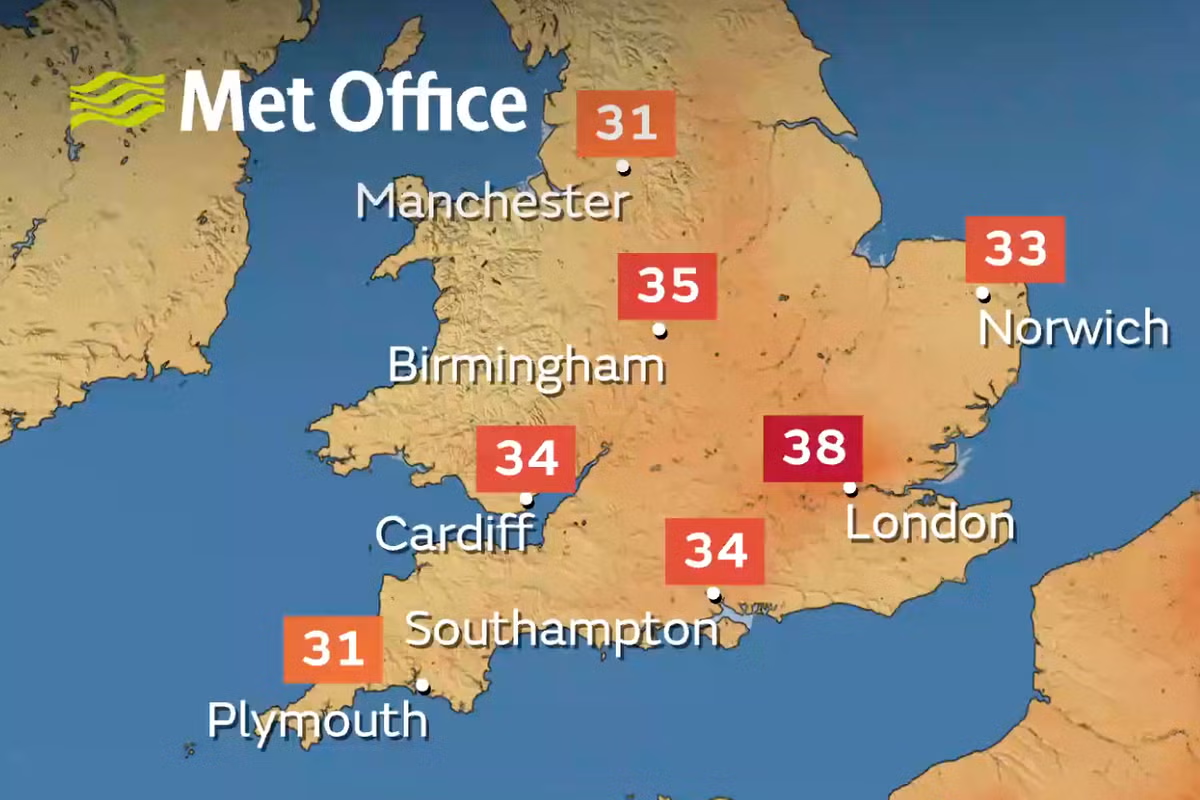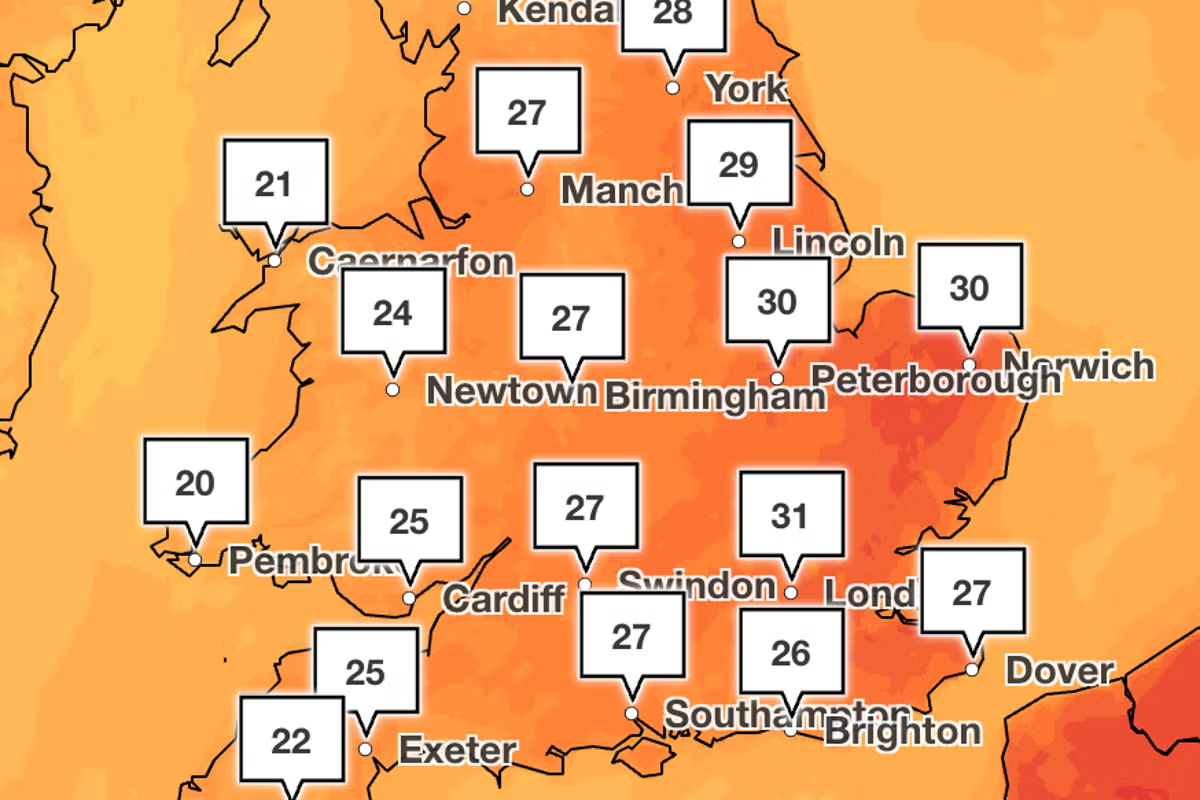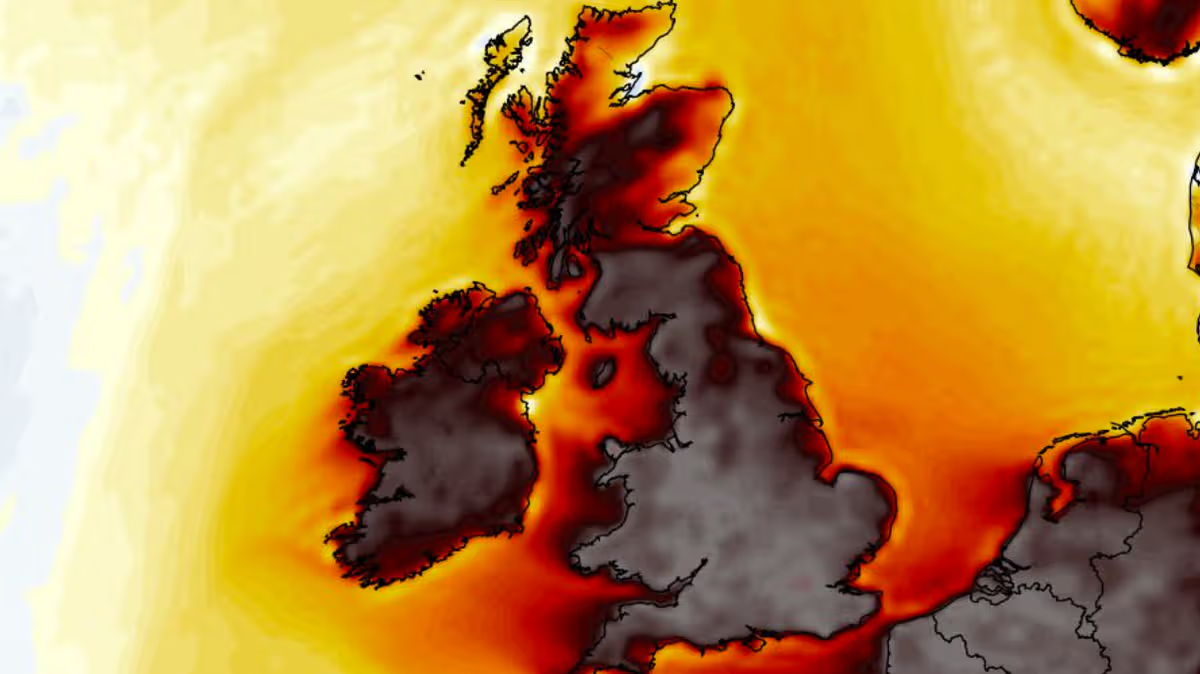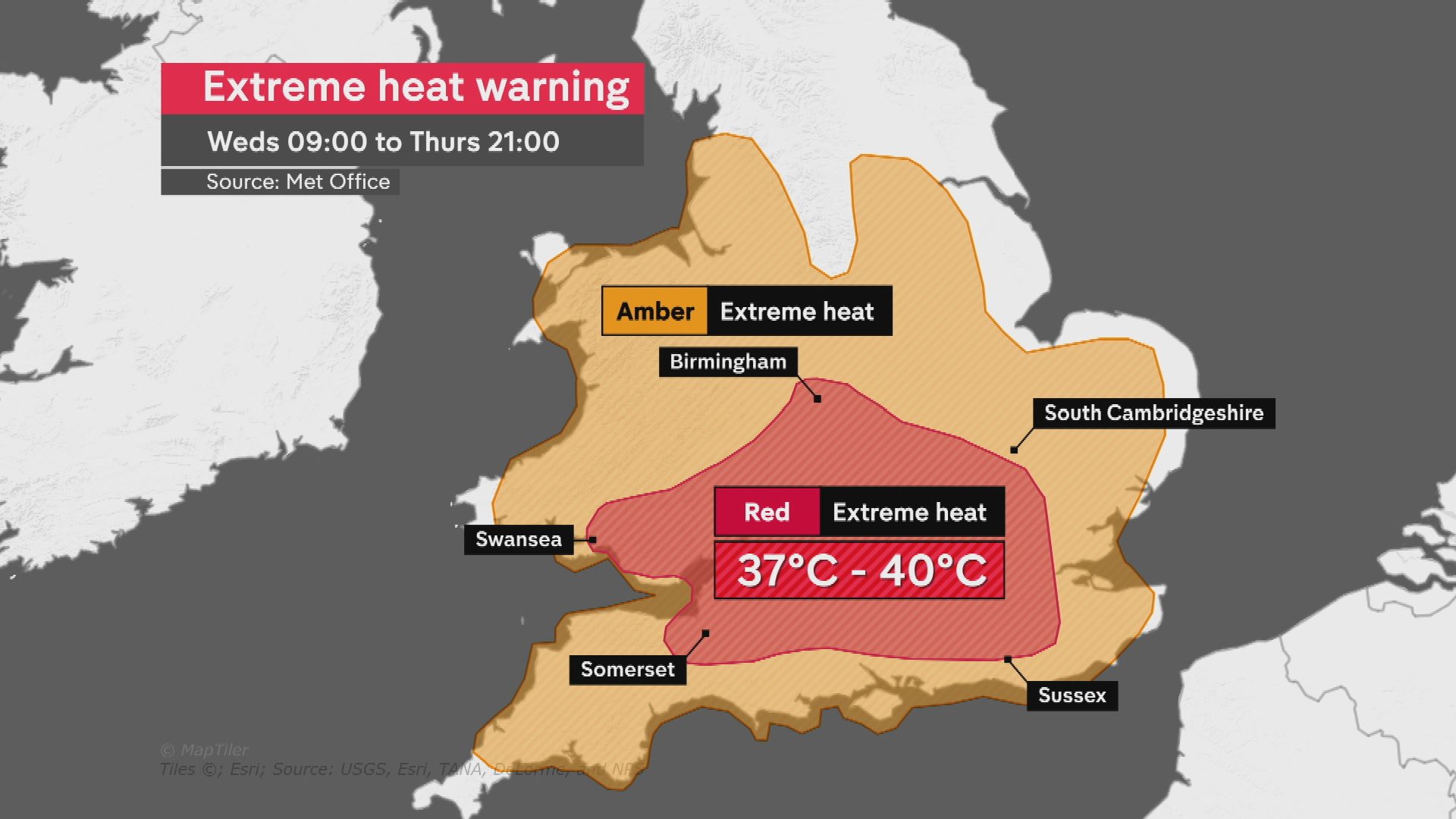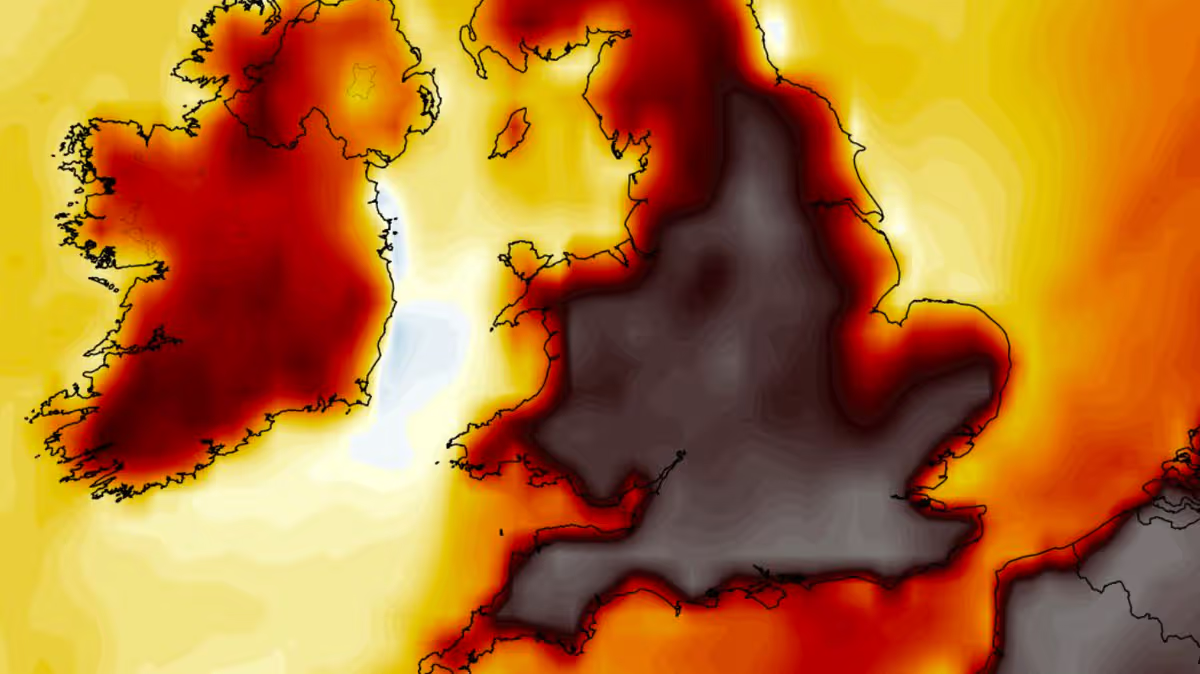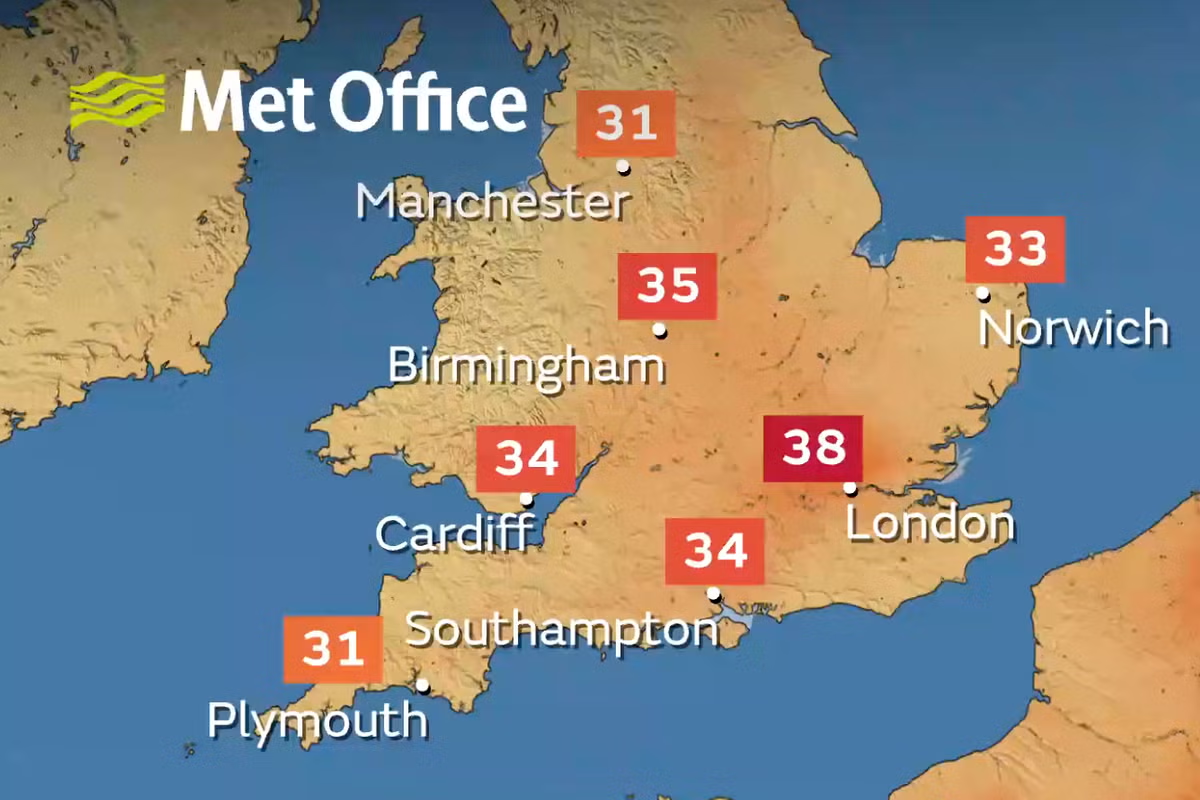
An extreme heat red weather warning has been issued by the Met Office as temperatures could hit a record-breaking 40C this week. The amber warnings cover parts of England and Wales over four days this week, with the first for Monday and Tuesday covering central and southern England, including the Midlands and parts of Wales.The hot spell could lead to delays on the roads and railways, and emergency services are bracing to help those vulnerable to extreme heat. The Met Office has said that there is “growing confidence” that this week may break the record for the hottest June temperature of 35.6C, which was last set in 1976 in Southampton. The weather forecaster said that in this week’s heatwave, parts of England and Wales are likely to see temperatures exceed 37C in the shade and could even see them rise to 40C in some places.The extreme heat, which has been very rare in the UK until now, will be accompanied by high humidity, and very warm and humid nights, which will make it hard for people to recover overnight, the Met Office said.Extreme heat on Monday and Tuesday Very high temperatures and high humidity are expected on Monday and especially Tuesday, reaching the low to mid-30s on Monday and then into the mid-30s on Tuesday. The amber heat alert is in place for the East Midlands, East of England, London and the South East, the South West, Wales and the West Midlands. The UK Health Security Agency has warned that this will lead to a rise in deaths, particularly among those aged 65 and over or with health conditions. There will be increased demand on all health and social care services, and heat will affect people’s ability to go to work.Temperatures will climb on Tuesday (Met Office)Sunny Wednesday with some showers predicted on Thursday A second amber warning has now been issued for Wednesday and Thursday, covering similar areas as well as parts of northwest England, including Greater Manchester, Yorkshire and Cheshire and North Wales.The Met Office predicts that it will be hot in southern and central parts of England and Wales, with strong sunshine at times but becoming increasingly cloudy by Thursday with showers. Temperatures predicted at 7pm on Wednesday evening (Met Office)It will be very warm in northern England also. By Friday there could be periods of rain and showers, especially in the West, and there could be some thundery outbreaks at times, the forecaster said. It comes as Europe has seen sweltering temperatures across the continent where temperatures up to 44C had been forecast. The news has sparked weather warnings, health alerts and concerns for vulnerable people (Met Office)The amber extreme heat warning issued by the Met Office on Sunday was expanded to last from Monday until Thursday.Adverse health effects are “likely” in the wider population, including sunburn or heat exhaustion (dehydration, nausea, fatigue) and other heat-related illnesses, the Met Office warned, adding that “changes in working practices [are] required”. Met Office deputy chief forecaster Tom Crabtree said: “The forecast heatwave is developing into an impactful severe weather event, with record-breaking June temperatures and very high humidity. The combination of heat and humidity will be oppressive and bring impacts across society from public health and infrastructure, to power and water supplies.“As well as very high daytime temperatures, there will be consecutive nights where temperatures do not drop below 20°C, which is called a Tropical Night. This will make it very hard for people to recover from the daytime heat, exacerbating the heat stress impacts.”An amber alert has been issued across the UK (Met Office)Adverse health affects are likely in the wider population (Met Office)“Very intense humidity” is expected, with the Met Office also warning of a possible increase in water safety incidents due to more people being likely to visit coastal areas, lakes and rivers. Samantha Hughes is the National Water Safety Partner at the RNLI. She said: “With warmer weather approaching, it’s important to remember that the water is still cold. Entering it unexpectedly can lead to cold water shock, causing a sudden increase in breathing and heart rate, which may trigger panic.“If you find yourself struggling in the water, remember to Float to Live: tilt your head back so your ears are submerged, relax and control your breathing. You may need to gently use your hands to help you stay afloat, and it’s ok if your legs sink – everyone floats differently.“Where possible, always choose a lifeguarded beach, and swim between the red and yellow flags. In a coastal emergency, remember to call 999 for the coastguard.”There is also an increased chance that some heat-sensitive systems and equipment may fail, leading to power cuts and the loss of other services to some homes and businesses, it added. Delays to road, rail and air travel are also possible, with potential for welfare issues for those who experience prolonged delays. People in the alert area are advised to drink plenty of fluids and to keep out of the sun, and avoid exercising between 11am and 3pm, the Met Office said.Separate amber heat health alerts have been issued by the UK Health Security Agency (UKHSA), which now cover most of England from Monday morning until Friday night. A UKHSA yellow heat alert is also in place for northeast England during the same period.
UK heatwave mapped: Where is going to be hottest as temperatures could hit 40C
Swathes of the UK are to see record-breaking temperatures of up to 40C
885 words~4 min read