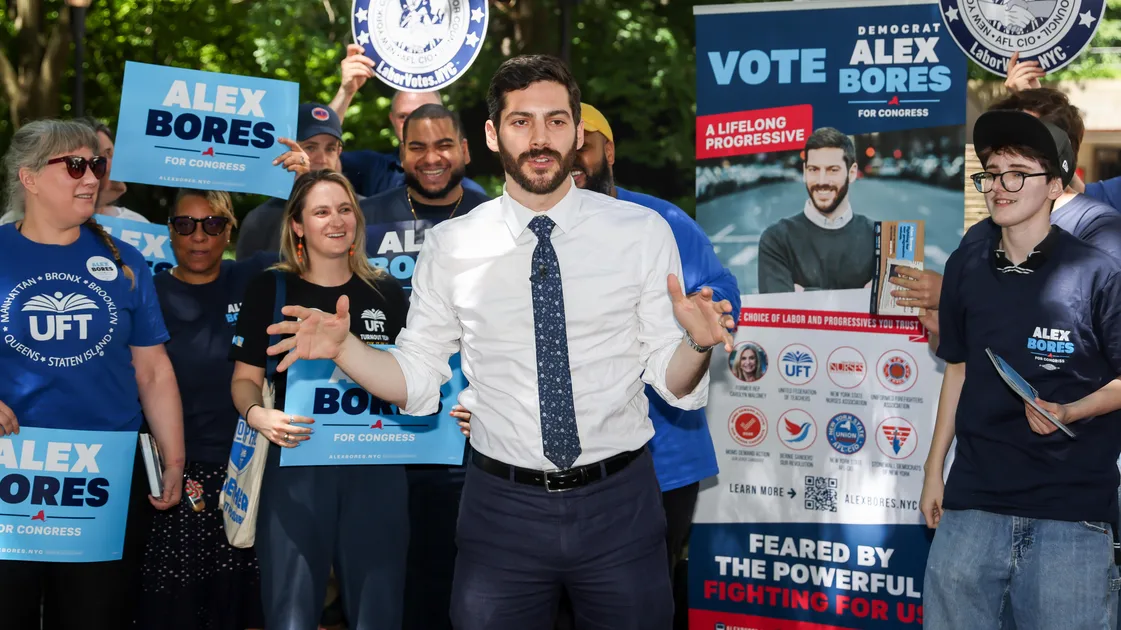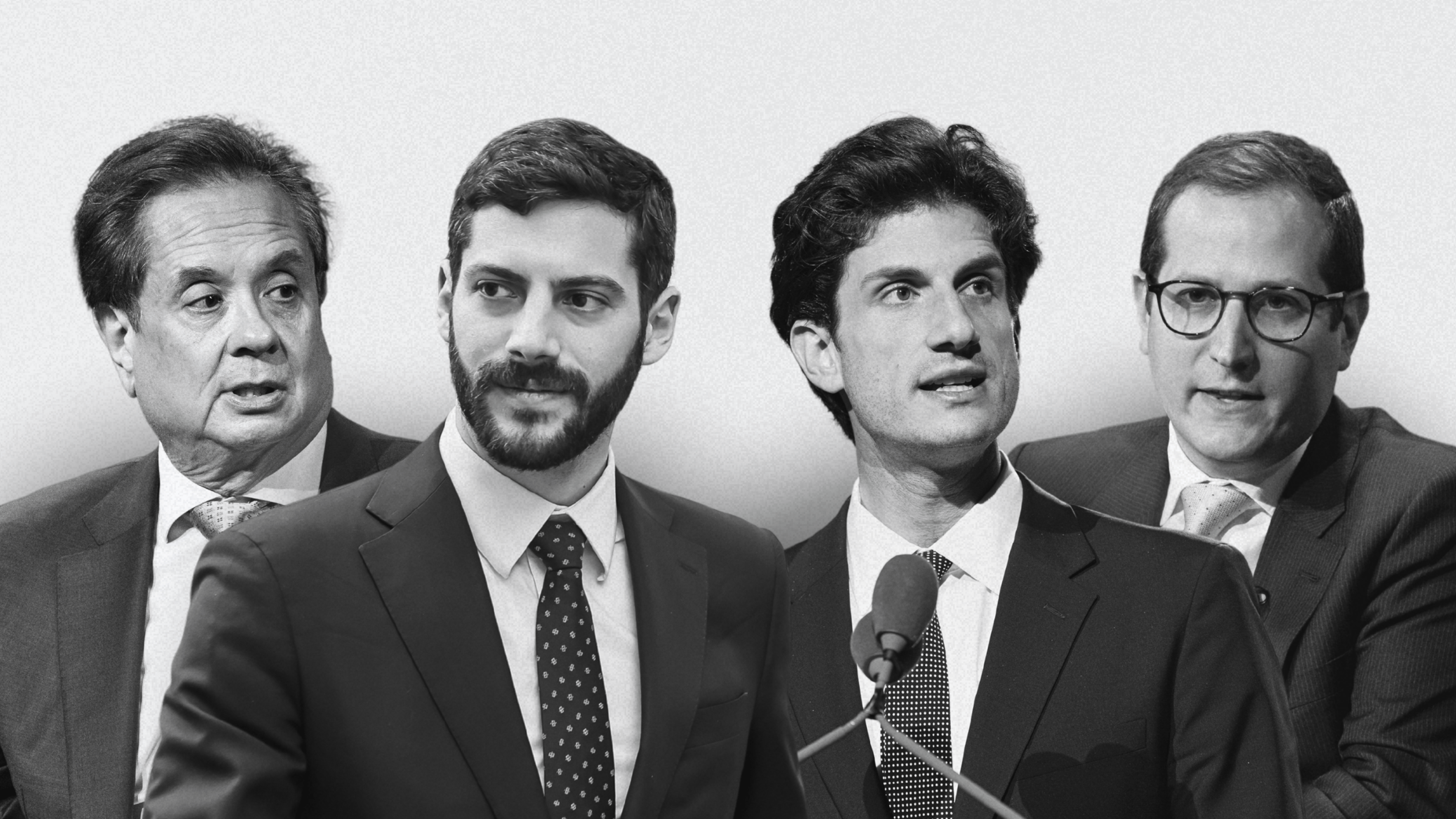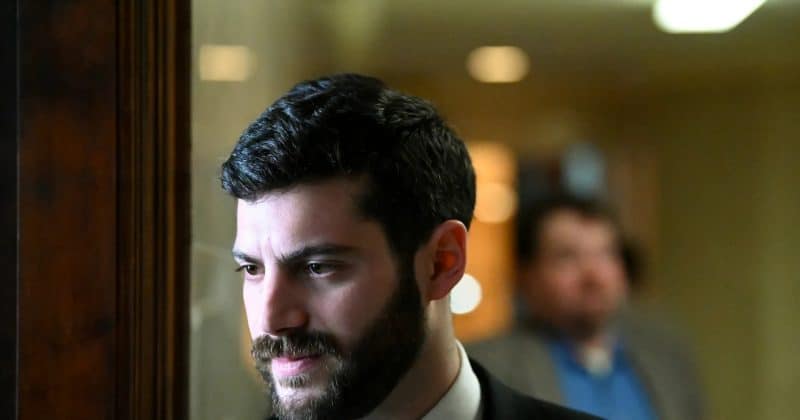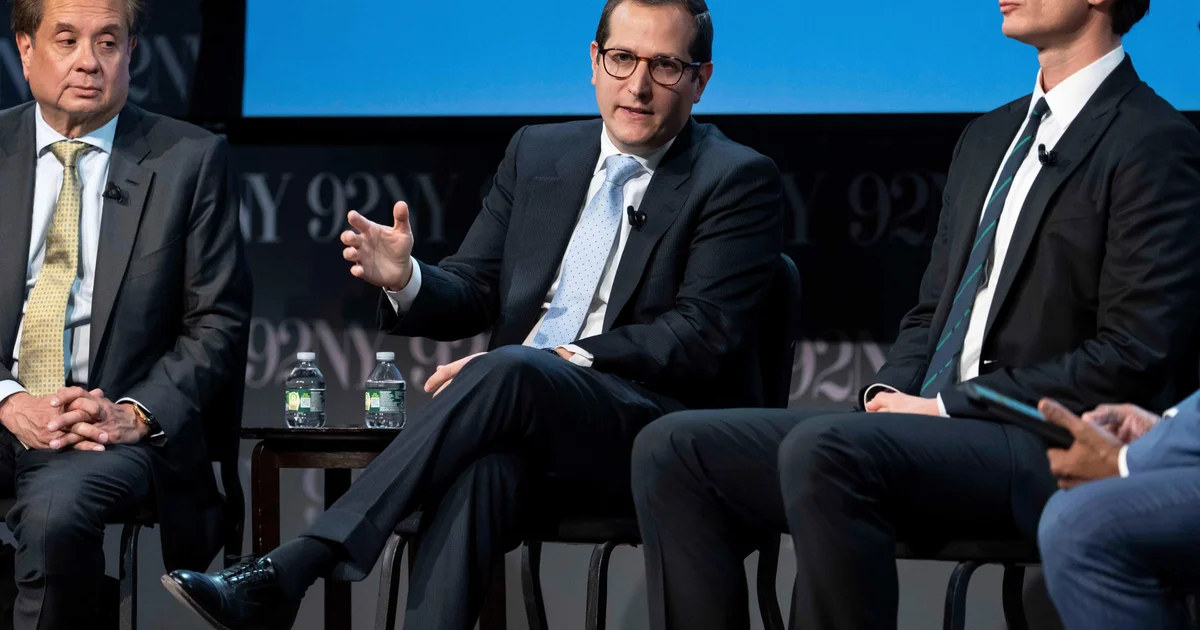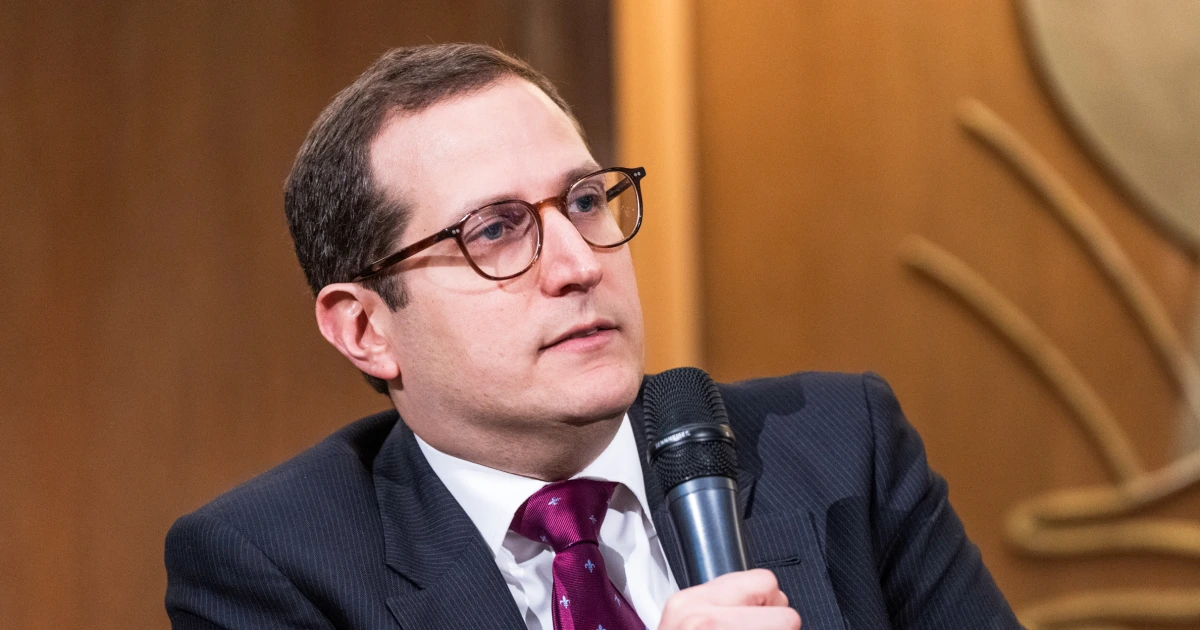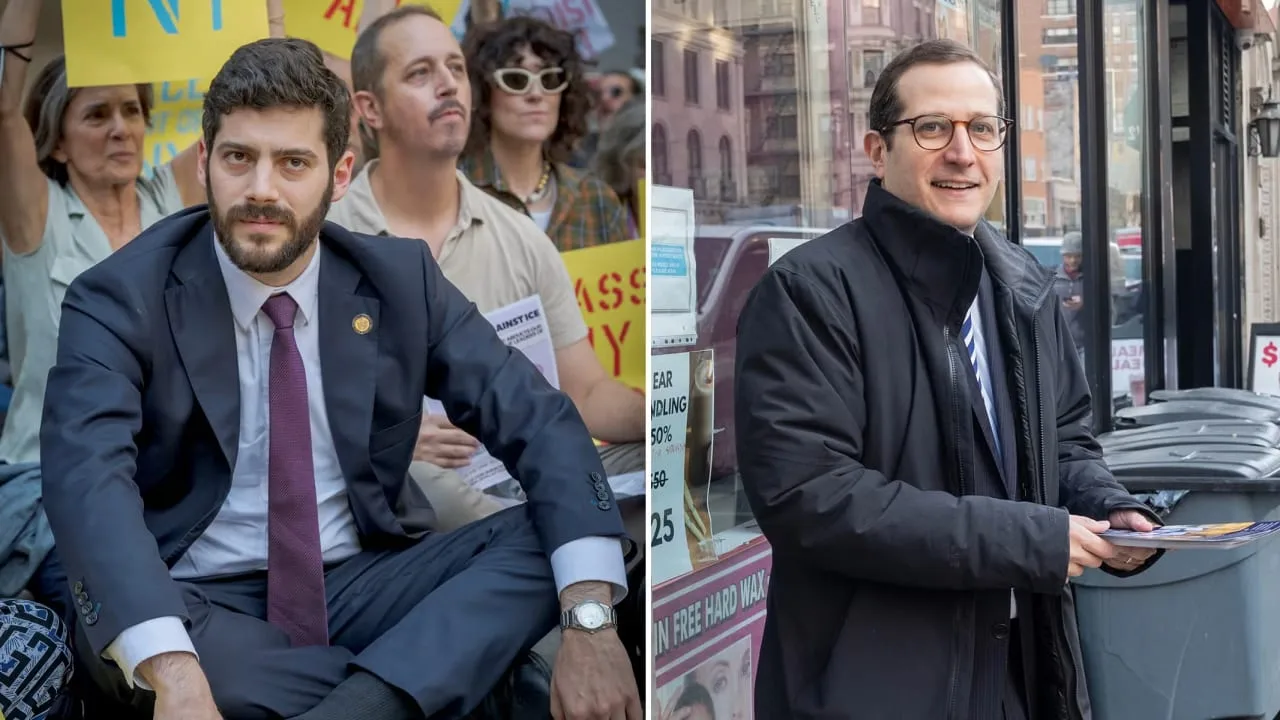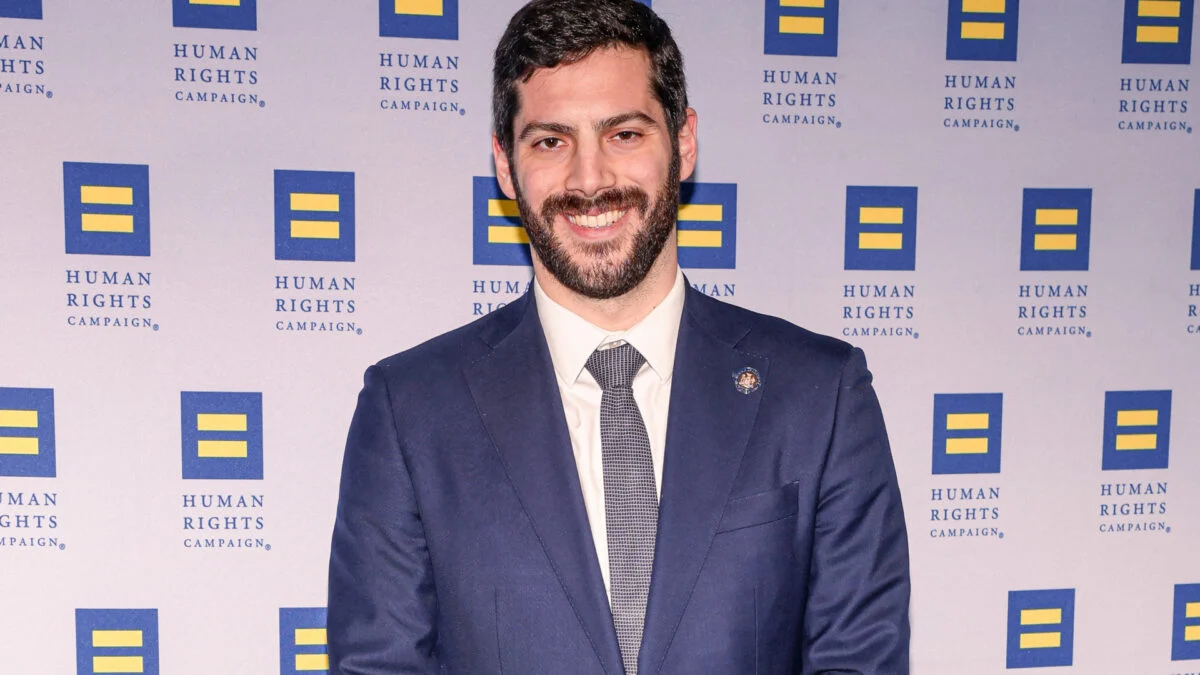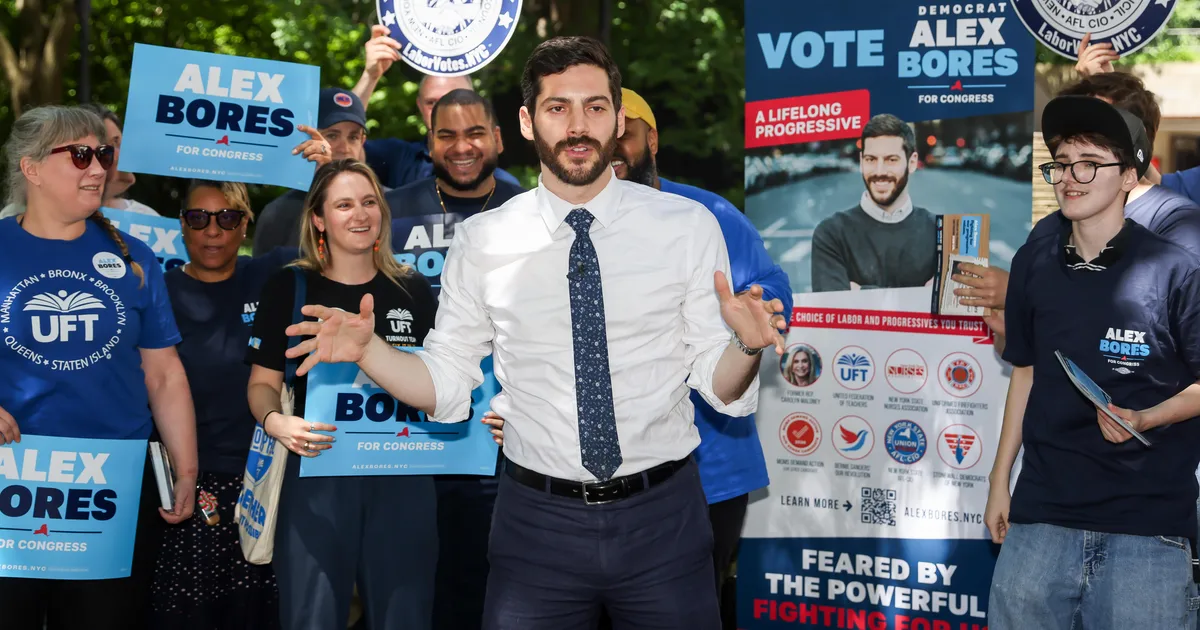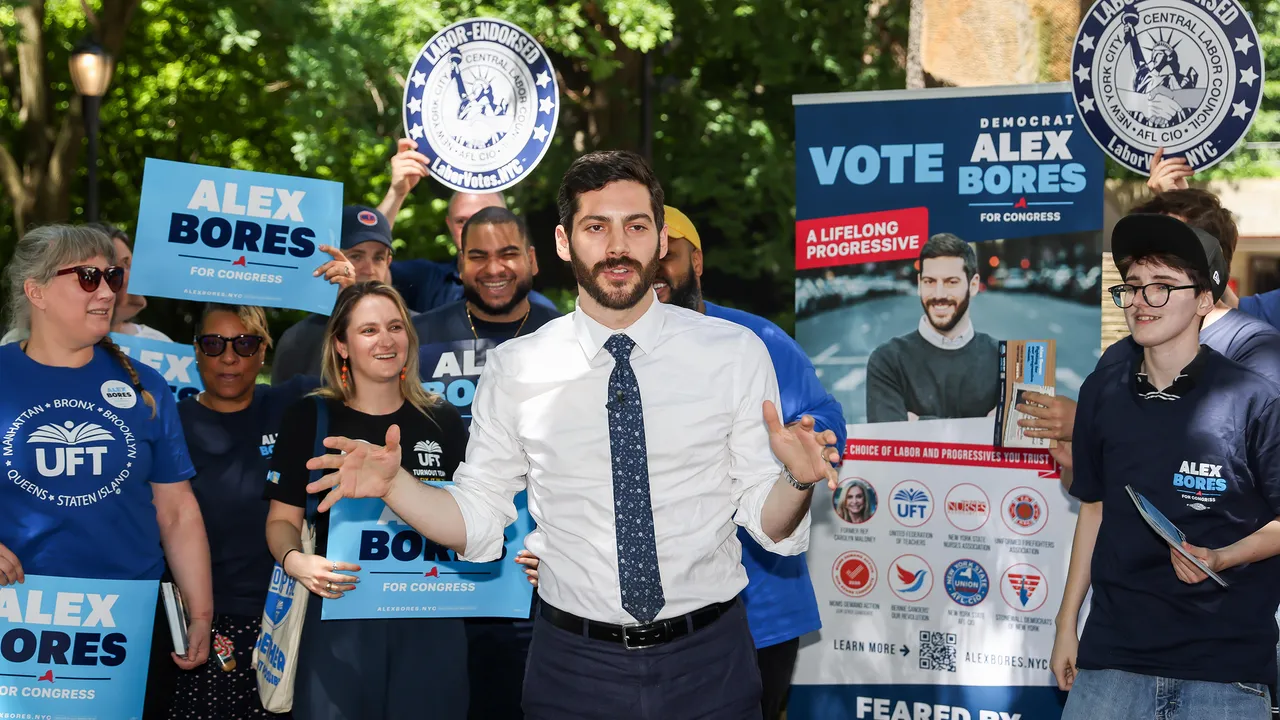
A good seat in Congress can be hard to find, and difficult to get up from. The average district—and there are four hundred and thirty-five of them—is roughly the size of Wales, or New Jersey. New York’s Twelfth District, which spans the Upper East Side, the Upper West Side, midtown, and Chelsea, is one of the richest, smallest, and most solidly Democratic districts in the country. It has the most people with college degrees and is in the ninety-fifth percentile for members of the Silent Generation. After its incumbent, Jerry Nadler, who has been in Congress since 1992, announced his retirement last year, the race to fill his seat has also become one of the most contested.The field is frighteningly full. This year’s Democratic primary can feel like the Tour de France: there’s no front-runner but a hustling peloton of relatively rich athletes in nice surrounds. It includes Micah Lasher, a one-term assemblyman from the West Side, who has been endorsed by Nadler; Alex Bores, a two-term assemblyman from the East Side, who has become the center of an A.I. proxy war; George Conway, a former Republican turned Trump critic; and Jack Schlossberg, the only grandson of President John F. Kennedy, who is best known as a social-media jokester. (Four other candidates are also running as Democrats.)Primaries are notoriously hard to poll, but the Twelfth District is especially scatterbrained. Polls have, variously, shown Schlossberg leading at twenty-two per cent, then trailing at eleven per cent; Lasher at twenty-two and at fourteen. It can feel like a sudoku where the numbers keep changing. The race is at once glitzy, cautious, confusing, spiky, and uninspiring. It is awash with money but a little short on belief.I recently went to a dive bar on the Upper West Side to attend a happy-hour event with Conway, the former Republican. Staffers handed out bright-blue drink tickets as the candidate, wearing a blue business shirt tucked into jeans, walked in with his dog, a corgi named Clyde. Conway is sixty-two and has brought a kind of sniper’s focus to the race: he has vowed to serve only one term, impeach Trump, and then retire. Many attendees shared his focus, and the President’s name floated over the gathering like an intrusive thought. Conway listed some of his legislative concerns—abortion, housing—but added, “We can’t fix all of that until he’s gone.” When asked about the most important issue facing New York City today, he said, “Affordability,” yet this, too, was connected to Trump. “How do you spend a billion dollars on a ballroom?” Conway asked. “It’s insane. We spent all this money to refurbish this 747 he got from Qatar.”“I like his fight,” Millie Cassese, a seventysomething former court reporter, told me. “Micah Lasher knows the area, but, in the current moment, we need a fighter.” A young supporter named Danny loved the fact that Conway is a lawyer: “We have so many legislators. We don’t have enough prosecutors.” Danny, who lives in Brooklyn, was supporting Conway in between volunteering for his local congressman, Dan Goldman, who served as the lead counsel during the first impeachment of Trump. “The way he makes Republican witnesses shit their pants when they sit down in hearings, that’s the kind of people we need in Congress,” he told me, of Goldman. “We don’t have enough fucking psychopaths is basically what I mean.”These days, Conway is best known for his work with the Lincoln Project, an anti-Trump PAC that appeals to moderate Republicans to come to their senses. But he was once a prominent conservative figure—he was offered a Justice Department post during Trump’s first term—and, until 2023, he was married to Kellyanne Conway, who served as Trump’s campaign manager and then as a senior White House counsellor. One might assume that, in a deep-blue district, his Republican past could hinder him, but the happy-hour attendees didn’t seem to mind. “He was the guy who set in motion Bill Clinton’s impeachment,” Lynn told me, positively. “That’s a big freaking deal!” A few supporters spoke as if Conway had a calling to defeat Trump. “I think he’s sort of like Biden,” Larry Kelly, a Conway supporter who described himself as a classic Upper West Side liberal, told me. I pointed out that Biden’s efforts to stop Trump hadn’t been entirely successful. “He got old,” Kelly said. “But he did win. He was there for a reason.”It can feel a little odd that the major candidates in the race to replace Nadler, a thirty-four-year incumbent, are two people with relatively limited political experience, Micah Lasher and Alex Bores, and two people with no real political experience at all, Conway and Jack Schlossberg. (“ ‘Experience’ is just a code word,” Schlossberg told me, suggesting that it’s used against candidates who “didn’t come up through the institution.”)A few days after the happy hour with Conway, I met with Lasher, at Utopia Diner, on the Upper West Side. If there’s an establishment candidate in the race, it’s him: at forty-four years old, he is somehow the elder statesman of the pack. Lasher had just come from his children’s piano recital, where his son had played a Chopin solo; Lasher’s list of endorsements is more like a symphony. He has worked as an aide to Nadler, as the head of state legislative affairs for former mayor Michael Bloomberg, and as a policy director to the governor, Kathy Hochul, all of whom have backed him. “Micah has worked for everyone,” Jasmine Gripper, the state director of the Working Families Party, told me. “Bloomberg, I would have assumed, would have been for Alex Bores,” she added, because they were both from the East Side, “but Micah worked in the Bloomberg administration.”At the start of May, Lasher’s campaign launched something they called “Micah Mayhem.” “Mayhem” was a metaphor. Lasher’s argument for himself is fairly nerdy. When I asked him what set him apart from the jostling field, he said, “I have figured out a way to stymie Trump legislatively.” Lasher seems to be betting on a combination of projected competence and overwhelming, overlapping endorsement. (The filmmaker Benny Safdie and his wife, Ava, an education advocate, are voting for Lasher, partly because he has been endorsed by their local councilwoman, Gale Brewer.) “It’s a very informed, educated electorate,” Lasher told me.But, at times, Lasher is more taciturn than some of the politicians who have endorsed him. Nadler, for example, has been much more outspoken on Israel’s war in Gaza. Lasher declined to engage when I asked if he wanted to respond to the Conway supporters who said that he wasn’t a fighter. Later, when I asked Lasher if there was an ideological difference between him and his fellow-assemblyman, Bores, he didn’t point out any. (The Working Families Party, a progressive party that has long supported Nadler, considered whether to endorse a candidate, but couldn’t decide and endorsed no one.)On Israel, a lot of candidates have clammed up. Schlossberg is the only candidate of the four to say that he would vote against providing Israel with offensive weapons. (Schlossberg still supports providing defensive weapons to Israel—funding the Iron Dome.) Lasher, Bores, and Conway have said that they will not block sending Israel offensive or defensive weapons. (When I mentioned to Schlossberg that it can be difficult to tell the candidates apart ideologically, he covered his face with both hands and groaned. “We could not be more different,” he said, when it comes to Israel.)One weekend, I met up with Brian Mangan, a former delegate candidate for Bernie Sanders and a member of the Democratic Socialists of America, who lives in the Twelfth District. (I’d first encountered Mangan on X, where he posted under the display name Millennial Dads for Alex Bores, with a profile photo of Danny DeVito from “It’s Always Sunny in Philadelphia.”) Bores—a thirty-five-year-old who worked as a data scientist before he was elected to public office—is best known for being an A.I. regulator. Last year, he introduced the RAISE Act in the State Legislature, which established safety plans for frontier A.I. models. But Mangan made the case that Bores was not only the most legislatively experienced leading candidate but also the most progressive.“It wasn’t Alex’s intention to run on this,” Mangan said, of A.I. (Bores told me, “My plan was to talk about A.I. like five to ten per cent of the time.”) Mangan said that Bores can geek out about other issues, and wished that happened more: “He will actually talk to people about how the tax code is full of loopholes.” Lorelei Crean, a trans-youth activist, told me that he started campaigning for Bores because he had consistently shown up to trans-rights rallies, even before launching his congressional campaign. “There are so many pictures in my camera roll that Apple has identified of us together,” he told me. At one rally, Crean said, Bores “was probably the only straight and cis guy there.”Bores has been endorsed by the majority of labor unions, and also the Bernie Sanders-affiliated group Our Revolution—but he then specifically distanced himself from the group’s position on Palestine, which was to block sending bombs to Israel. Crean, the activist, told me, of Bores’s stance on Israel, “This is a district where it is political suicide to say anything.”A super PAC partly funded by investors in OpenAI has spent more than seven million dollars on attack ads against Bores. Somewhat confusingly, Bores has also received millions from other A.I. companies that are pro-regulation, which has turned a corner of the primary into an A.I. “proxy battle,” as my colleague Gideon Lewis-Kraus recently put it. Untangling the conflict can require an up-to-date internecine map of various Silicon Valley factions. Bores used to work for Palantir, the surveillance company that used A.I. to assist ICE with deportations and provided support to Israel’s air strikes in Gaza. Recently, I asked Bores about his work at Palantir, outside a campaign event at a gastropub on the Upper East Side. He told me, “You have to place yourself in 2014. This was the Obama Administration.” At the time, the C.E.O. of Palantir, Alex Karp, was a Democrat, and Bores worked on projects aimed at improving the Department of Veterans Affairs and the C.D.C. “The pitch was that we were coming to make government effective,” he said.I asked whether this was a little disingenuous. In “The Lord of the Rings,” the palantír is a sinister orb controlled by the forces of evil. Had Bores known what the name meant when he started working there? “Yes—the seeing stones,” he said. I pointed out that the palantír was created by Sauron, the books’ central antagonist. “Well, it falls into the hands of Sauron,” he corrected me. “That’s not how it was originally, so maybe it was foretold in that sense.” (The palantír was indeed initially created by the Elves of Valinor.)Nevertheless, Bores’s past at Palantir has been as persistent as the Nazgûl. At a meet and greet for Bores in Lenox Hill, a woman named Laura Hepler approached him and said that her nineteen-year-old daughter supported his A.I.-regulation stance, but had a few doubts, because, as she put it, “Four years is a long time to work for a company I hate.” Bores told Hepler that he quit Palantir for moral reasons and that the C.E.O. and other tech giants were now campaigning against him. The answer was mildly convincing. “I’m guessing that the gray area was a longer period of time than he talked about,” Hepler told me, later. But it was convincing enough. Her daughter, she said, had been texting with her best friend about the primary, and agonizing over whom to vote for. Her daughter’s friend had texted her recently, “I’m going to throw up in my mouth and vote for Alex Bores.”As I traipsed along the campaign trail, with its strange, attention-sapping swirl of candidates, I found myself thinking often of a typical Schlossberg campaign ad, posted on Instagram, that was just a photo of him surfing topless, through a cresting wave. On X, the journalist Jon Levine had posted it with the caption “The people running to replace Rep. Jerry Nadler have spent YEARS of their lives in community board meetings and this guy is going to just run them all over.” (When I met with Lasher, I showed him the tweet and asked if it was something he related to. He told me, “I’ll leave you to figure that out.”)Schlossberg was the hardest candidate to get a hold of. Perhaps in a nod to the demographics of the district, the candidate, who is thirty-three, has said that he has “the soul of an eighty-five-year-old man, who loves to read and listen to music and hang out with his parents.” In a speech at an assisted-living facility in March, Schlossberg summed up his campaign as being about “past, present, and future.” In the past, he said, people “believed in the federal government, and Congress was competent.” He was the future.His main strength, Schlossberg argues, is not his family but his wit. Before launching his bid for Congress, he made popular social-media videos that were edgy, attention-grabbing, and deeply ironic, with a somewhat himbo persona. (On the way to one campaign event, I looked at my phone to see that Schlossberg had tweeted, with no apparent context, “Men are becoming less physically attractive according to recent studies . . . Do you agree ?”) He has framed this as a form of pro-Democratic political communication, seizing the airwaves from Republicans and Trump. Sara Nelson, the head of the flight attendants’ union, which has endorsed Schlossberg, told me that he had the rare ability to cut through and “connect with people.”Late in the campaign, I spoke with Schlossberg for a few minutes before he kicked off a rally at Terminal 5, a cavernous venue in Hell’s Kitchen. He told me that he was perhaps unique in the ability to distill information with humor. “In a way,” he said, “other people can’t do both of those things.” I asked him, did he mean the other people in the primary? He told me, “In the whole world.” (He later clarified that he was only being “half serious.”)A common criticism of Schlossberg is that he wouldn’t have had a sniff in the race if he weren’t a Kennedy. When I asked Nelson whether she was endorsing Schlossberg because of his family connections, she said, “Not directly, but indirectly. Teddy Kennedy was our union’s biggest champion when he was in the Senate. There’s some consideration there.” (The union was also impressed by Schlossberg’s commitment to accept no money from super PACS.)“We simply know Jack on a deeper level than we might know any other candidate,” Nelson continued. “Maybe that isn’t really fair to the other candidates, but it’s just the reality. We have a longer record to look at.” I pointed out that the “longer record” was not actually his but his uncle’s. “Correct,” Nelson said. Jayson Thompson, a Schlossberg staffer, told me, “In olden times, if I came from a family of metalworkers and I became a metalworker, would we call that nepotism? It’s something he was potentially born to do.”When I asked Schlossberg if he was a nepo baby, he told me, “Like everybody else, I only know the life that I was born into. I figured out a way to use my voice and platform to contribute to the Party.” He also said that it was an advantage. “I show up on Day One being able to deliver for New York 12 in a way that the others can’t: I stick out everywhere I go. I elevate the profile of this district.” In the age of Trump, he said, Democrats are getting drowned out. The other candidates “get completely lost in the shuffle.”A few weeks before Election Day, I was invited by the Schlossberg team to join him as he campaigned at a local park on Roosevelt Island, the easternmost point of the district. It was Roosevelt Island Day—an annual celebration of the island—and around me children screamed and jumped in a bounce house shaped like the Roosevelt Island tram. To my surprise, Conway showed up, walking Clyde; Bores strolled past me in a dark suit. I spoke to Thompson, the Schlossberg staffer, who was wearing a shirt emblazoned with Schlossberg’s campaign slogan, “Believe in Something Again.” (The slogan, Schlossberg has said, is “as dumb as it is true.”)It was blisteringly hot, loud, and, fittingly, carnivalesque. “It’s a primary,” Thompson told me. “There aren’t going to be vast differences in policy; it’s more vibes- and energy-based.” Each candidate seemed to be hitting his relative mark. Lasher was there but I didn’t see him; Schlossberg, a campaign staffer told me eventually, had been held up and wasn’t going to make it. One stall at the festival, run by a local Democratic club, featured an “Impeach-O-Wheel”—a gag pinwheel with the faces of Trump officials who should be impeached. A volunteer at the stall told me that Conway had stood at the table and spun it “twenty to thirty times.” (Bores had spun it once.) Schlossberg told me later, “This race is a microcosm of everything that’s going on in America and around the world in politics.” Approval ratings for the Democratic Party, Thompson told me, are at an all-time low, and at least Schlossberg was shaking it up. “People might call it unserious content,” he said of Schlossberg’s posts. (One day earlier, Schlossberg had tweeted, “As the clear winner of last night’s debate I say this—Congratulations to Dua Lipa and Callum Turner. They seem genuinely in love.”) “You know that’s not focus-grouped,” Thompson said. “You want to take down that wall.” ♦
The NY-12 Primary Is Awash with Money but Short on Belief
New York’s Twelfth Congressional District race—whose candidates include Micah Lasher, Alex Bores, George Conway, and Jack Schlossberg—is at once glitzy, confusing, and uninspiring.
2,947 words~13 min read