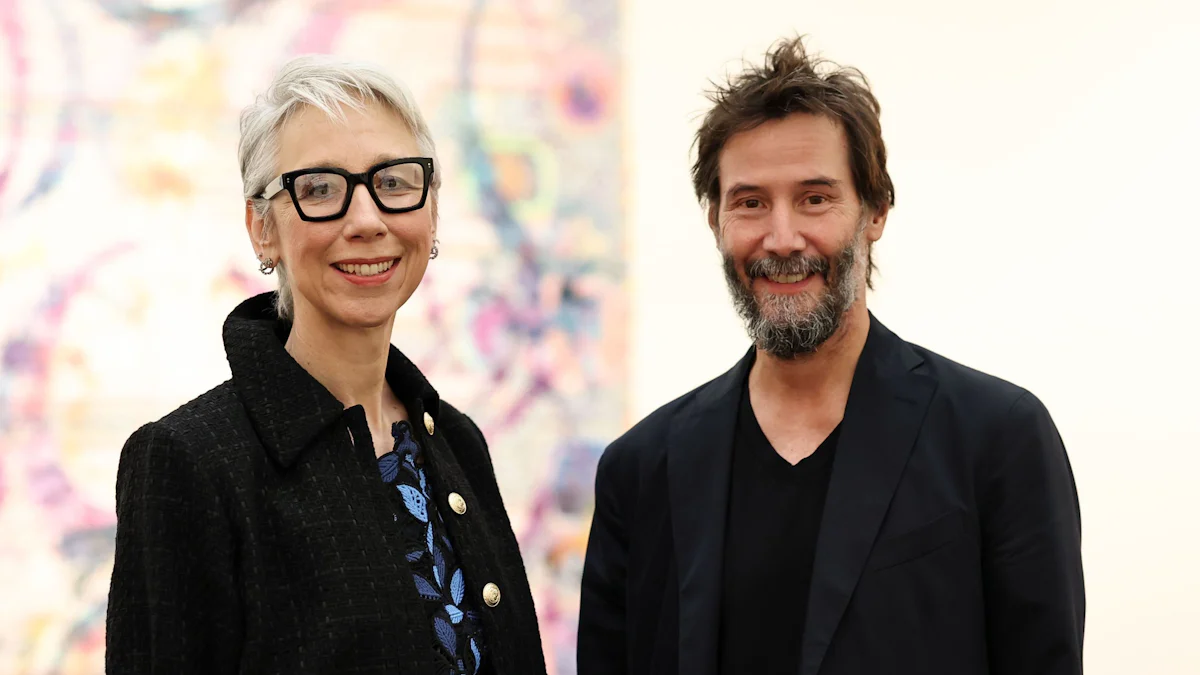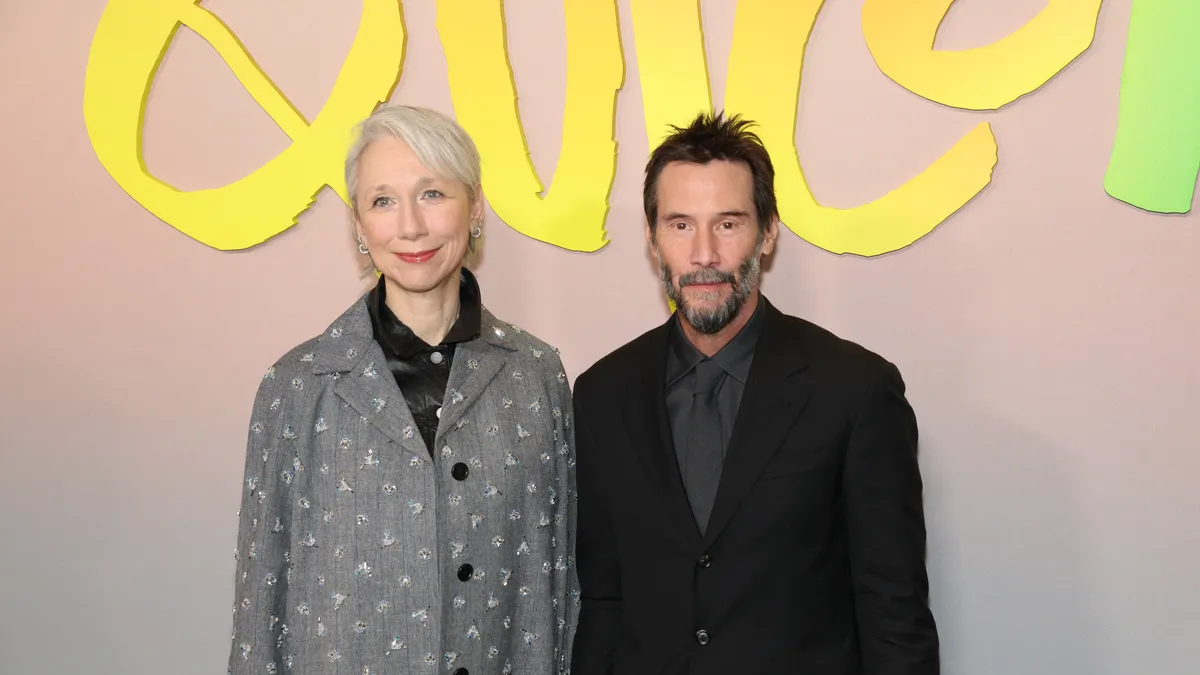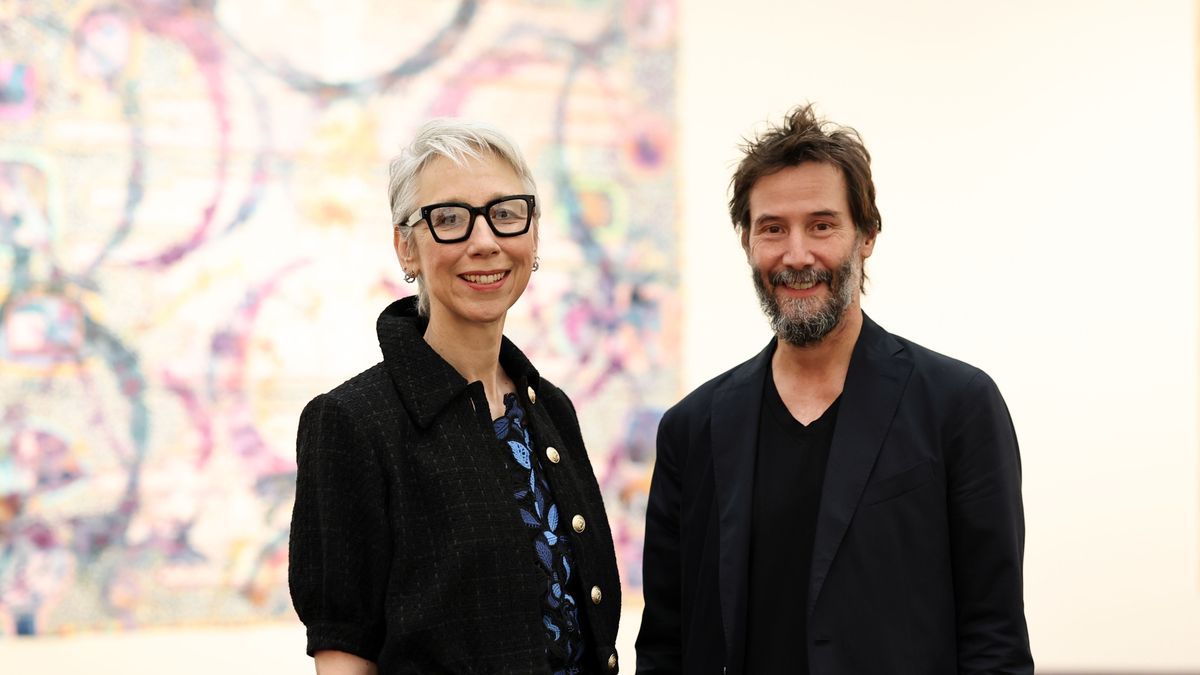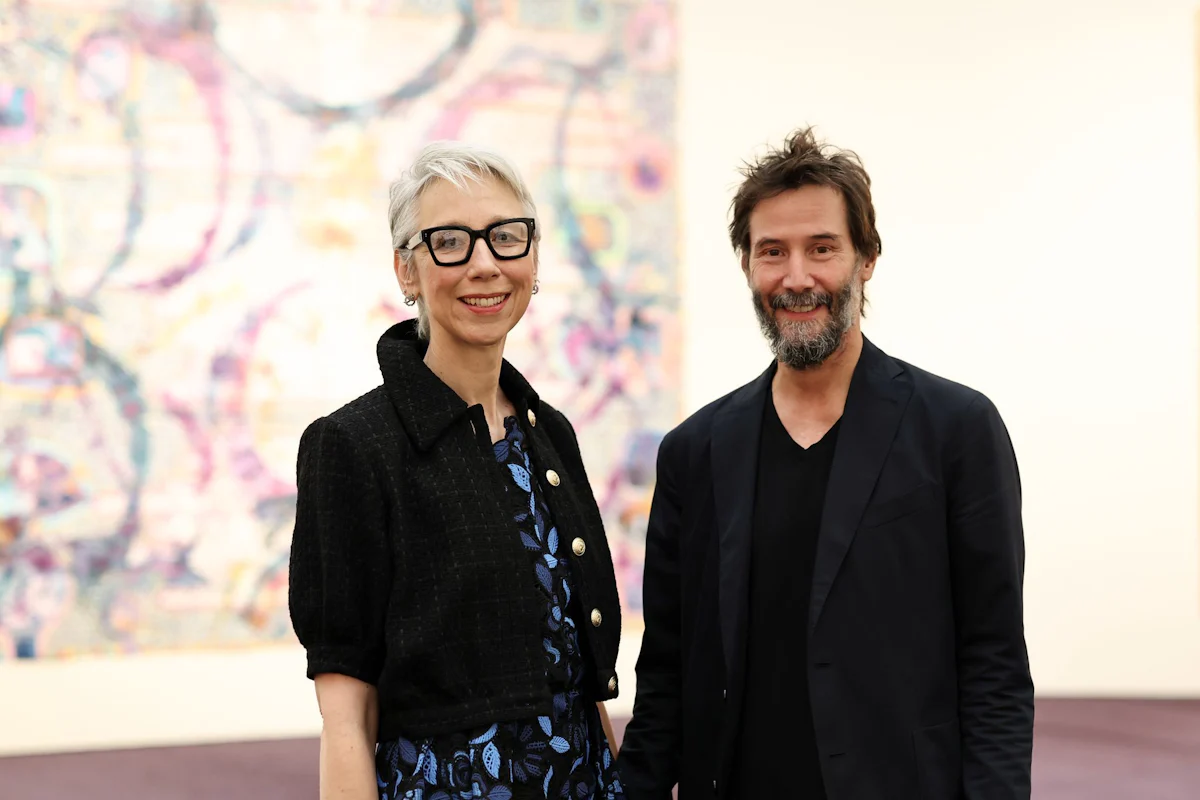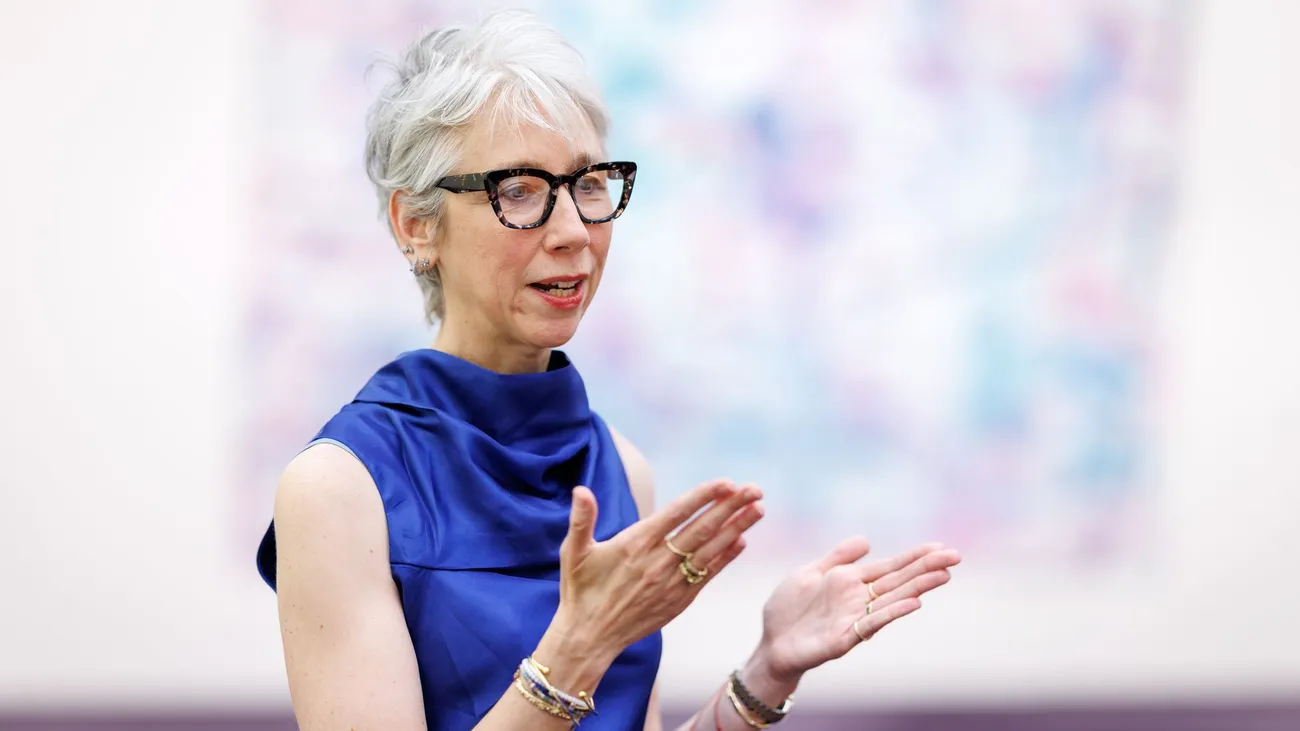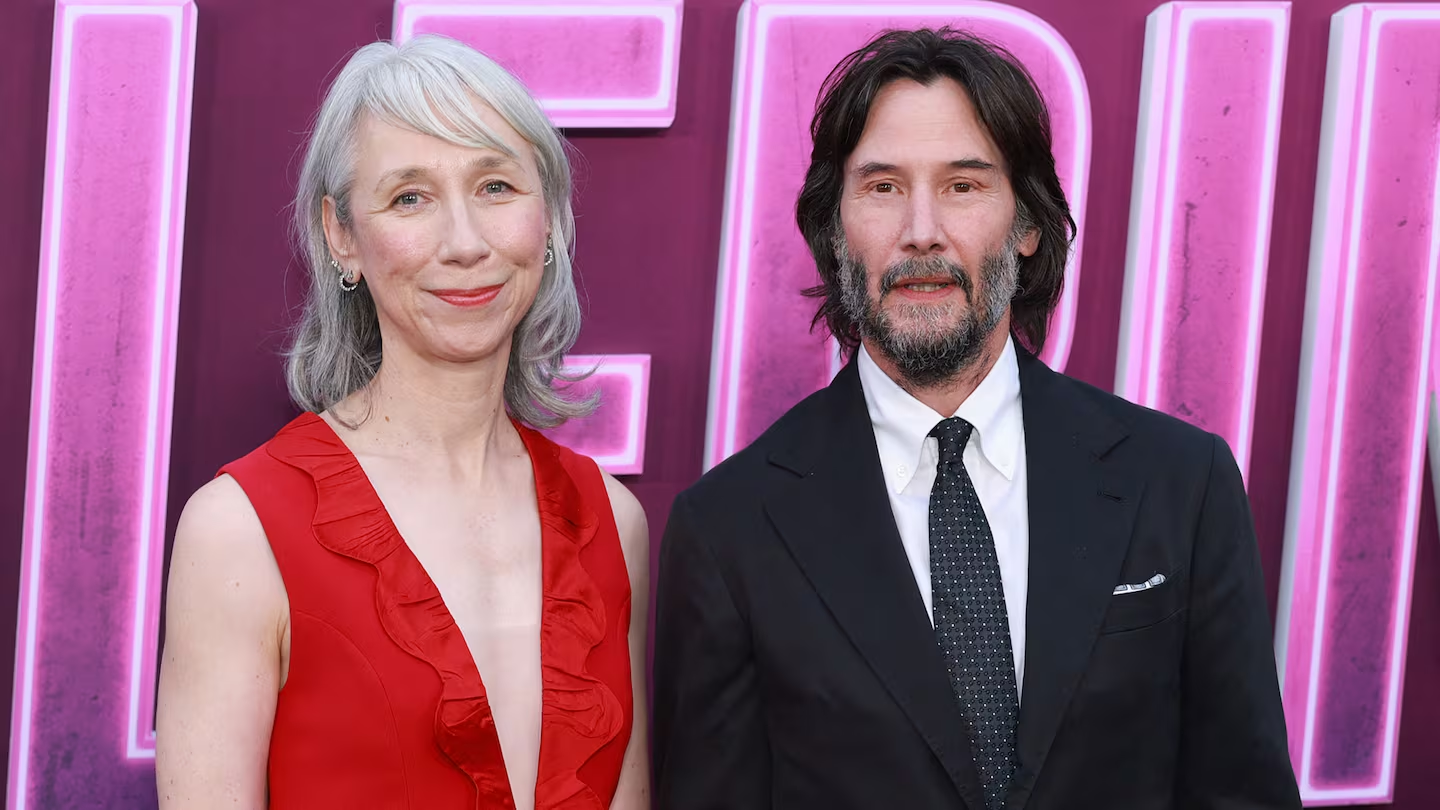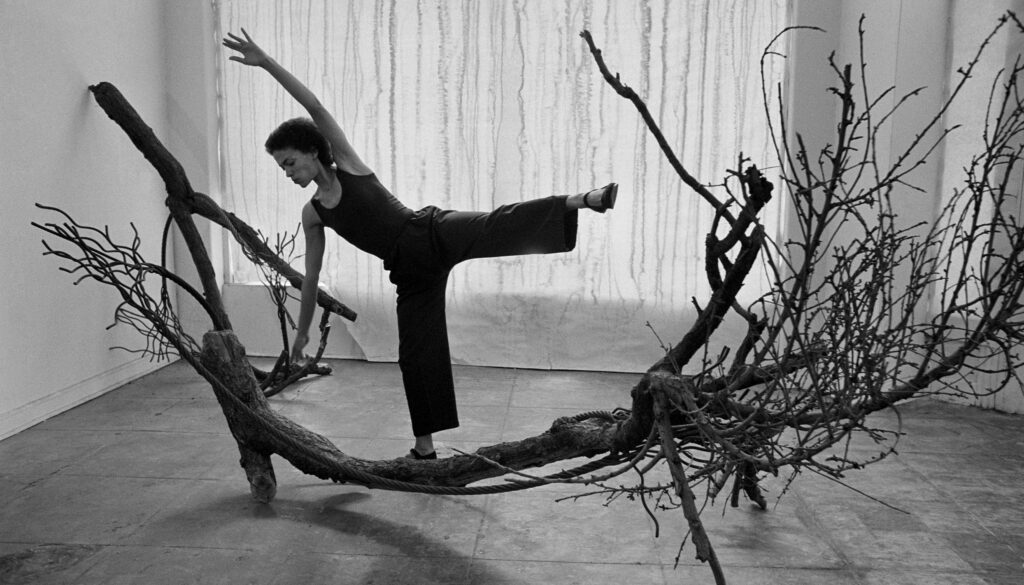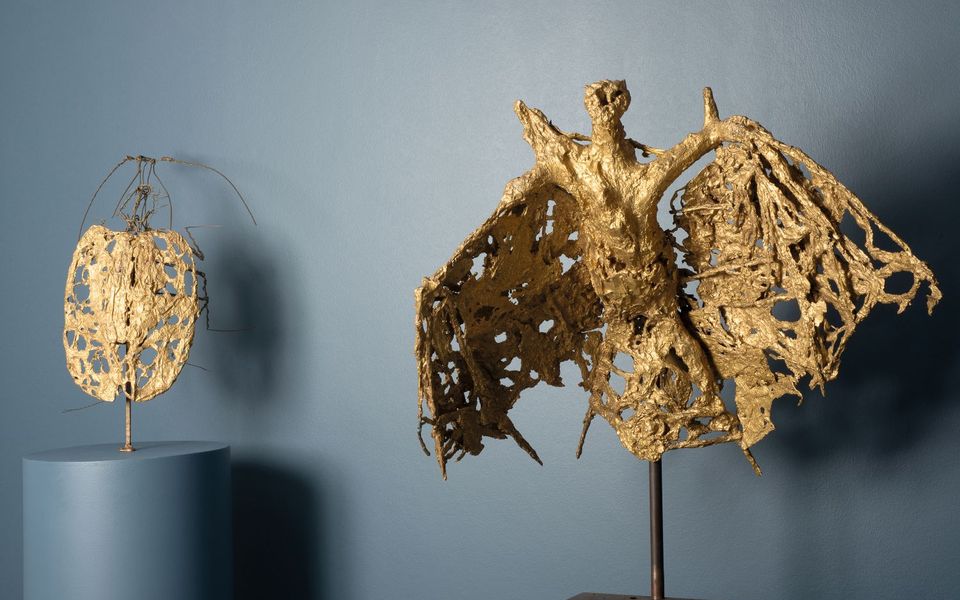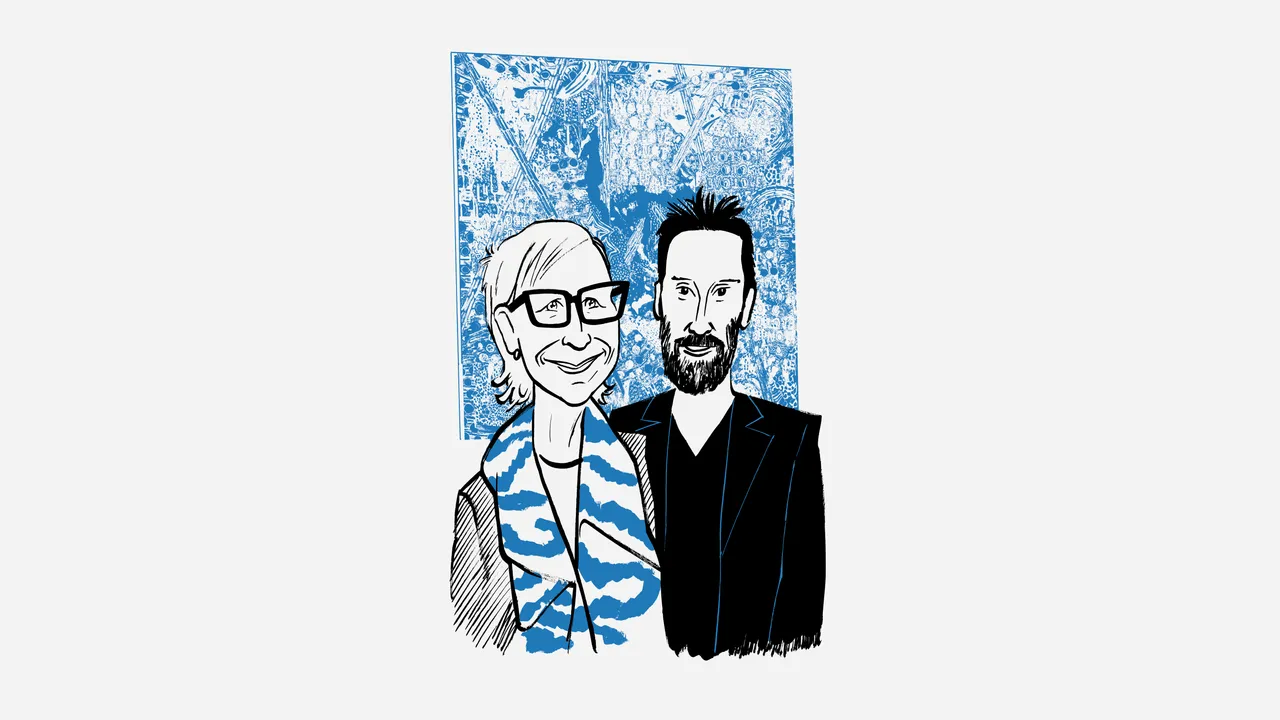
The artist Alexandra Grant flew into Newark on a recent stormy Thursday, checked into a hotel, and zipped over to the Albertz Benda gallery, in Chelsea, just before the opening party for “Antigone 3000 (Anakainōsis),” her new show of paintings. “I woke up in Warsaw this morning,” she said; her upcoming work involves German and Polish writers. Grant, who is fifty-three and tall, lives in Germany, where she has a studio, and in Los Angeles, where she has another studio and an arts-supporting business, along with a publishing company she runs with her partner, Keanu Reeves. (In 2011, as part of an earlier publishing venture, the pair released the whimsically lugubrious “Ode to Happiness,” in which Grant illustrated original Reeves lines like “I draw a hot sorrow bath in my despair room / with a misery candle burning.”) Despite the travel mayhem, Grant appeared to be elegantly at ease: graceful swoop of gray hair; silver booties from Grandezza, a big-shoes boutique in Berlin; draped silk suit in an extraordinary blue hue. What color, exactly? “I would say . . . mermaid teal,” Grant said, looking pleased.Grant worked on the “Antigone” paintings, the gallerist Thorsten Albertz said, “last fall, right across the street, while Keanu was here, on Broadway, playing in ‘Waiting for Godot.’ ” In the gallery, rich, bright colors burst off the canvases, at once joyful and unsettling. Before gallerygoers arrived, Grant walked through the exhibit. She paused in front of the boldly pink “Volcania.” “I don’t know what this says about the fall, but I was really into the orange-pink-blue-purple combo,” she said. “And then this”—she pointed to “Modest Vestment,” nearby—“is green, verdant, coastal. You have the feeling of the spill, the emergency, the accident. I have a pink obsession—I’m a de Kooning person. He always got the perfect amount of pink in every piece.” Each painting “is like a firework, a celebration,” she said. “There’s so much violence, but in the sense of, like, a volcano erupting—the possibility that comes from crisis.”The “Antigone” series originated in 2014. “Like many artists, many people, I was thinking about ‘Antigone’ in relation to Michael Brown’s death,” Grant said. “I fell in love with the idea of this teen-age girl standing up and being so wonderfully ruthless”—defying authority to bury her slain brother. “I thought, What if I started making a body of art just about her?” Grant, who started her career as a sculptor, had used text from Sophocles’ play (“I WAS BORN TO LOVE NOT TO HATE”) before; for these new works, she took rubbings from one of her early sculptures using tombstone wax, photographed the results, then screen-printed the images on canvas using different colored inks. “It was much more free.” The paintings, huge and abstract, feature text, prominent straight lines, and organic-looking circles and splotches, some created with a squeegee: “The rules, the lines, being the rule of law, and the paint mess being like real, juicy life, and her voice.”Grant had worked on the paintings, which she’d brought from Los Angeles, in Chelsea. “This is going to sound super Midwest, but I think of it as making a lasagna—making, assembling, but not cooking,” she said. (Grant grew up in Ohio, Mexico, France, and Spain.) She found New York life “very challenging” but also exciting: Mamdani’s campaign, daily surprises. “The work became about transmutation, this Greek word, anakainōsis, a transformation that brings spirit back.” No one knows how to pronounce it, she added. “We’re all laughing, like, ‘How do you say it?’ ” she said. “Do you think I say things out loud before naming them?”Guests arrived, including Laura Raicovich, Grant’s college friend and a former head of the Queens Museum, who had first introduced the artist to Albertz after admiring the works during their creation (“I call the pink one ‘Alexandra’s Broadway Boogie-Woogie Time,’ ” Raicovich said); the directors Jörg and Anna Winger (“Deutschland 83”); the writers Debbie Millman, Roxane Gay, and Fred Kaplan; the WNYC host Brooke Gladstone; and Grant’s mother, Marcia, in bright pink, who talked about visiting a Boston flutemaker and then said, “Oh, there’s Keanu.” Reeves, with spiky graying hair, entered, wearing a dark suit and a bionic-looking cast on one finger; all evening, he hovered in the background, near Grant. After a couple of jolly hours, a core group piled into a yellow school bus and drove to Avenue C, to the Francis Kite Club, a community-focussed bar for the “creative industries” which Raicovich co-owns. Albertz made a toast to Raicovich and then to Grant, “a one-woman ‘creative industry’—publisher, philanthropist, writer, painter, artist. She has an interesting plus-one who is also in the arts.” Grant also made a toast, enthusing about “living in the real world, with real people, with real wine.” Everybody laughed. “This is how we make culture. This is how we overcome power that makes us feel powerless,” she said. People snapped their fingers, coffeehouse style. “What makes me feel powerful is us being together,” she went on. “People come along at the right time and change your life.” ♦
Alexandra Grant Brings Spirit Back
Walking through her new exhibition, “Antigone 3000,” the artist known to online hordes as Keanu Reeves’s mysterious silver-haired girlfriend reflects on Sophocles and the color pink.
842 words~4 min read