Building a power plant in sub-Saharan Africa takes, on a good day, seven years from board approval to lightbulbs blinking. In some cases, 15 years have been clocked. Transmission lines through difficult terrain, with their substations and wayleave negotiations, typically absorb three to five years. And the unglamorous final stretch of clustering last-mile distribution networks to bring truly untouched communities into the redemptive light of electricity often eats another three to five years of civil works, procurement hold-ups, and the maddening logistics of stringing cable across stubborn ground.
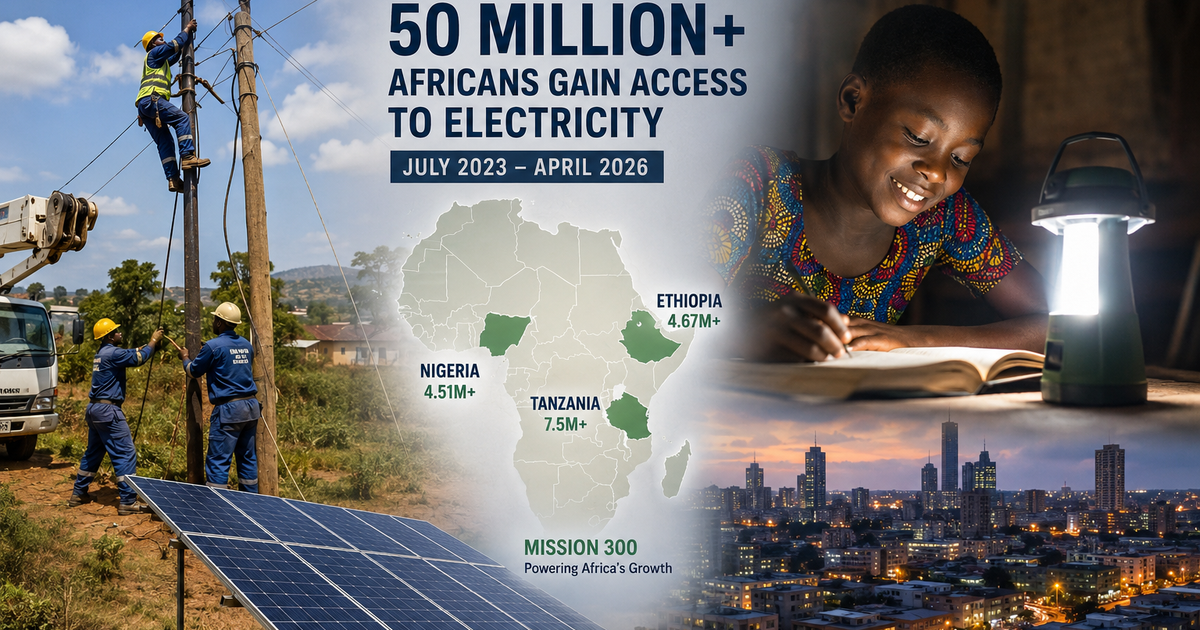
So, when, on 16 June 2026, the World Bank and the African Development Bank announced that their joint Mission 300 initiative had connected over 50 million people to electricity across 40 African countries since its launch in April 2024, more than a few eyebrows were raised. Have those two mega-banks, perchance, discovered some secret spell?
Roughly 1.25 million people per country in barely two years would represent an unprecedented feat of infrastructure delivery on a continent where most energy projects move at the pace of continental drift. It also happens to be exactly one-fifth of the 300 million beneficiaries’ target of Mission 300, delivered right on the dot of the first major progress review. A suspiciously tidy interim report card for a programme that ought still to be deep in the procurement trenches of the most capital-intensive energy-infrastructure drive in recent African history.