Over the past two years, the phrase "AI agent" has turned into marketing noise. But behind it sits a very concrete and practical idea: not just a chatbot that answers questions, but a software assistant that makes its own decisions, works with external systems, and carries a task through to completion. In this guide we'll break down what an AI agent is made of, which business problems it actually solves, and how to build one from a practical point of view.
What an AI agent is and how it differs from an ordinary chatbot
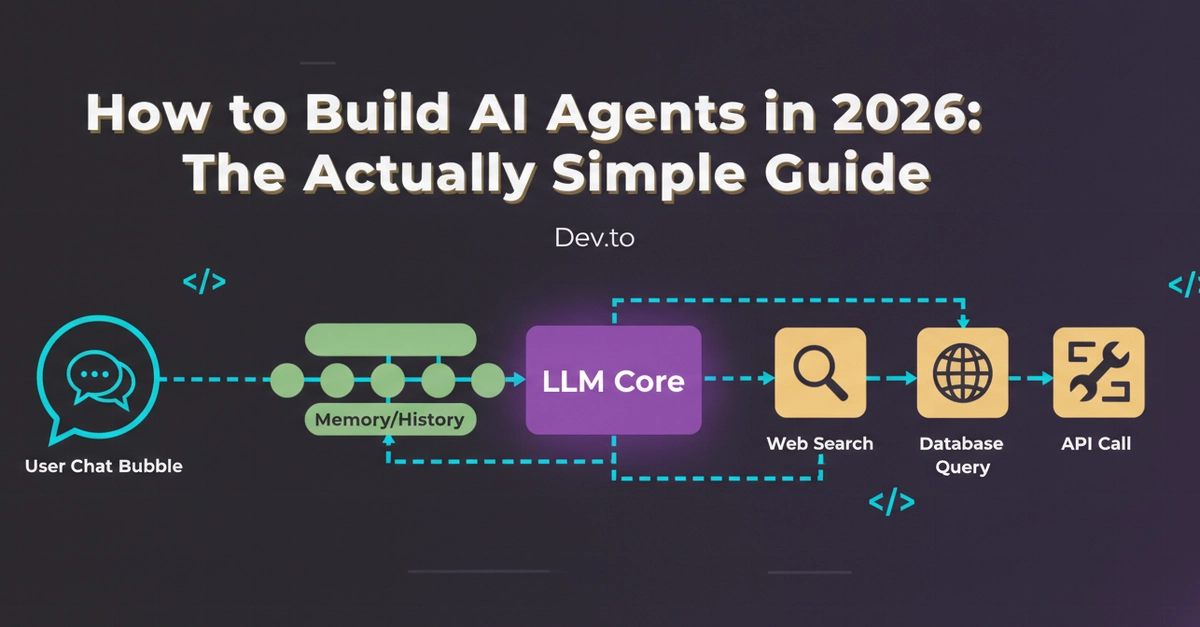
An ordinary chatbot runs on a script: the user types, the bot returns a pre-written answer. An AI agent is different. It is built from four core components:
LLM (language model) — the agent's "brain." GPT, Claude, or another model understands text, reasons, and plans the next step.
Tools — the agent's "hands." These are API calls, database queries, document generation, sending email, and other real actions.