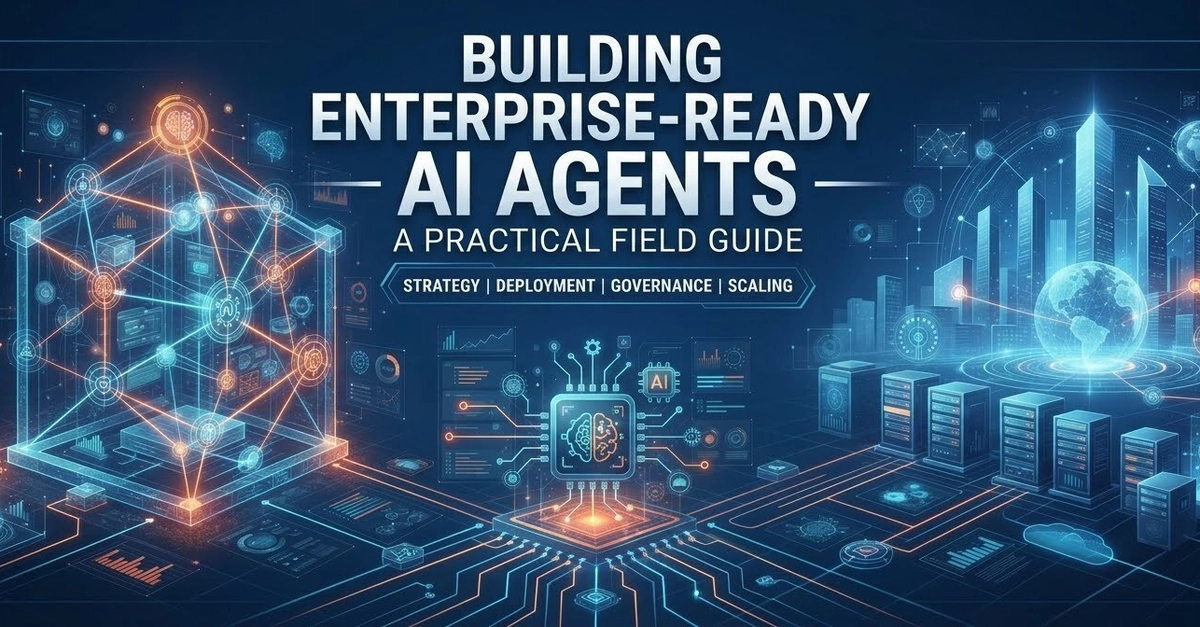
How to design, ship, and operate an AI agent that is reliable, efficient, performant, scalable, and secure enough to serve real companies — from a 5-person startup to a 50,000-person enterprise.
This guide distills hard-won lessons from production agents (Claude Code, OpenHands, SWE-agent, GoClaw, Hermes, nanobot, PicoClaw, ZeroClaw, Multica, Paperclip) and grounds them in current engineering guidance from Anthropic and OpenAI plus the security and compliance standards you'll actually be audited against (OWASP Top 10 for Agentic Applications, NIST AI RMF, the EU AI Act, and 2025–2026 prompt-injection research). It focuses on the parts most articles skip: the enterprise tax — governance, security, compliance, integration, cost control, and the operating model — that separates a demo from a system a CISO will sign off on.
Read Parts 0–2 to decide whether and what to build. Most failed agent projects die here.
Read Parts 3–7 for the architecture and reliability engineering.
Read Parts 8–10 for the enterprise gates: security, compliance, multi-tenancy, observability, cost.