Baidu is building out every layer of the AI stack, from custom silicon to frontier models to cloud infrastructure, positioning itself as one of the few companies globally attempting true vertical integration in artificial intelligence.
The push comes at a peculiar moment. After years of US export restrictions that locked Chinese companies out of the most advanced chips, the door has cracked open again. Nvidia H200 GPUs have been approved for export to roughly ten Chinese firms between January and May 2026. Baidu, ByteDance, and Alibaba are among the recipients.
Building the stack from the ground up
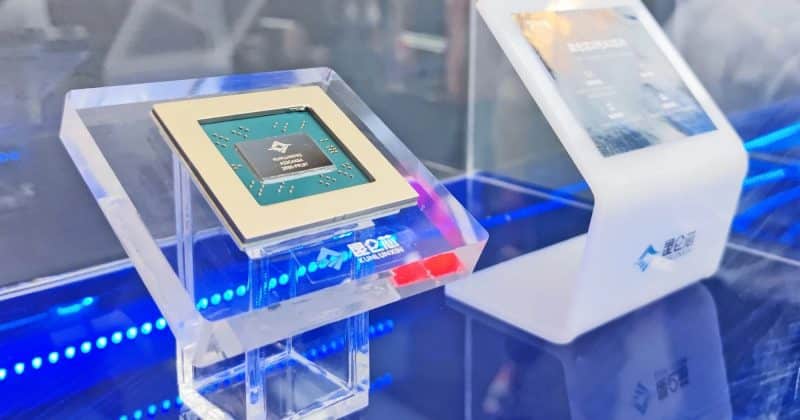
At its Create 2026 conference, Baidu laid out a chip roadmap that reads like a declaration of independence from Western semiconductor suppliers. The company’s Kunlunxin division launched the M100 chip in early 2026, with the M300 scheduled for early 2027. Both are designed to handle training and inference workloads.
The financial trajectory here is striking. Analysts project Baidu’s chip sales could increase sixfold to approximately RMB 8 billion, or roughly $1.1 billion, by 2026. Macquarie has pegged the valuation of the Kunlun chip unit at around $28 billion, and Baidu has floated plans for a potential separate listing for the Kunlunxin business.