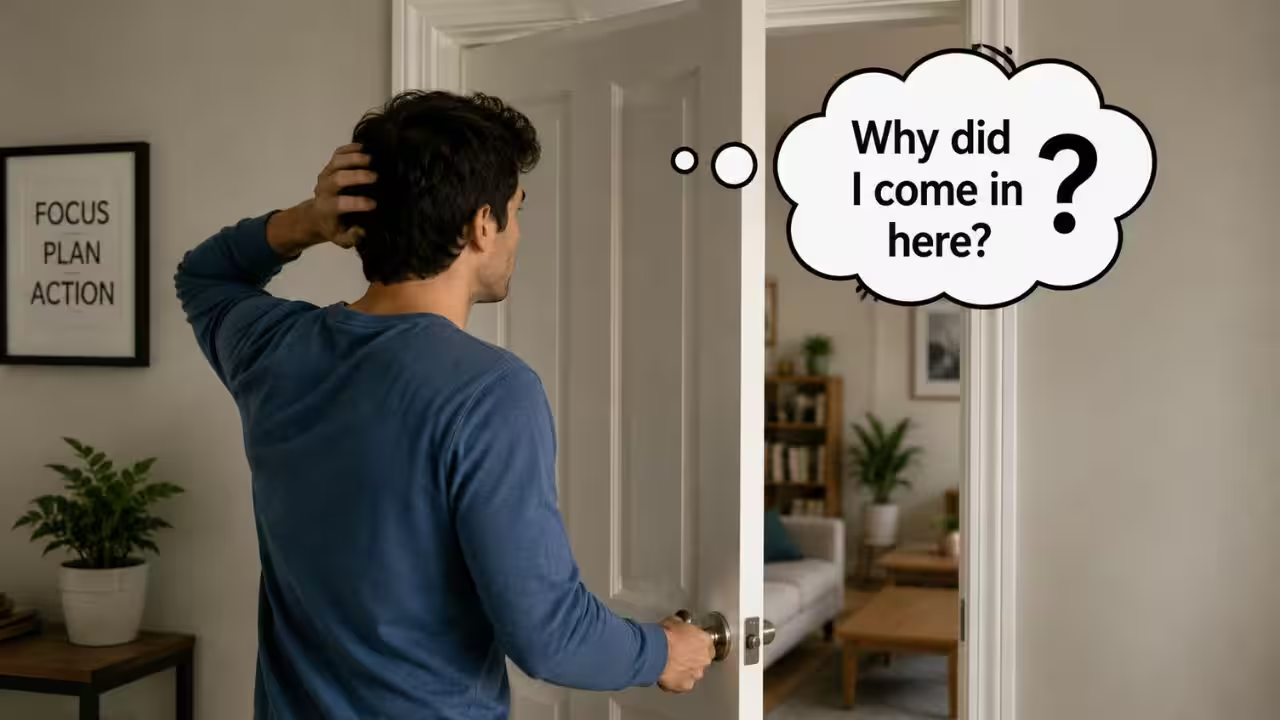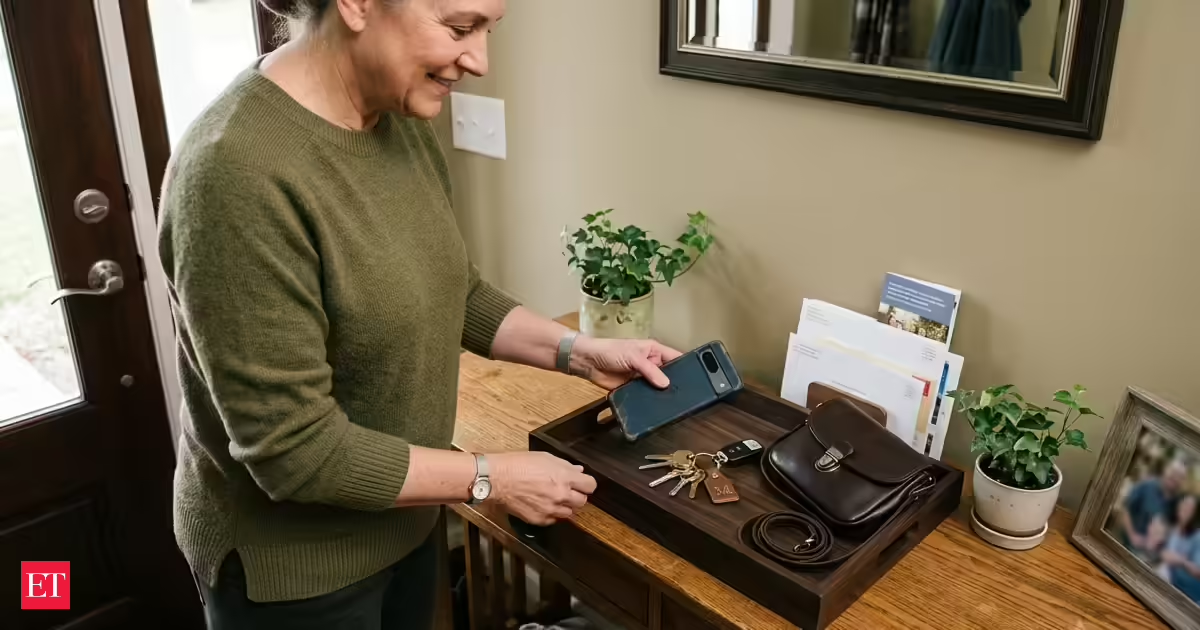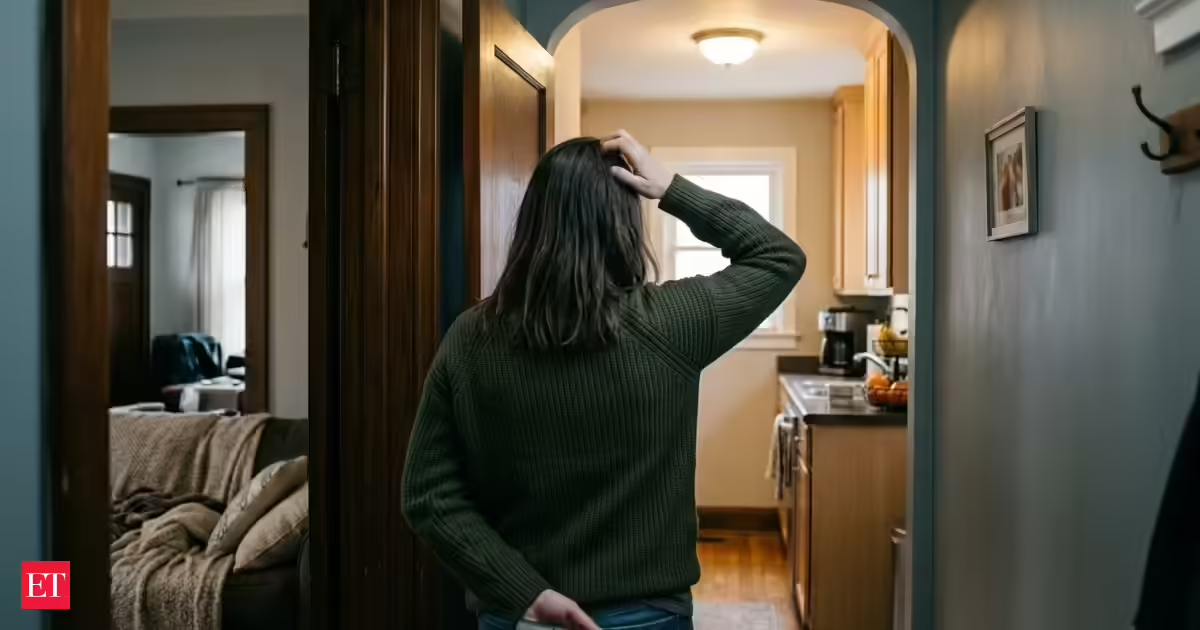
You are sitting on the couch when suddenly you remember something important. Maybe you need your phone charger. Maybe you left your glasses in the bedroom. Maybe you were about to grab a snack from the kitchen.You get up with purpose. You know exactly what you're doing.Then you walk through a doorway. And just like that, the mission is gone.You stand there staring into the room, wondering why you came in. A few seconds later, you're looking around for clues like a detective investigating a crime scene. Sometimes you even pick up another item, carry it back to the original room, and only then remember what you were supposed to do in the first place.If this sounds familiar, you're not forgetful. You're human. And psychologists have a name for this oddly universal experience: the Doorway Effect.Why does your brain seem to hit a reset button?Most people assume these moments happen because they're distracted or getting older. But research suggests something much more interesting is going on.Scientists have found that walking through a doorway can sometimes make it harder to remember what you were thinking about just moments earlier. That's because your brain treats physical boundaries, like doorways, as markers between different events.Think of your day as a movie. Every room is a different scene. The living room is one scene. The kitchen is another. The bedroom is another.When you walk through a doorway, your brain begins organizing information for the next scene and quietly files away details from the previous one.In other words, your brain thinks, "Okay, new location, new event."Unfortunately, that means your original goal can get temporarily buried in the process.The classic "Why am I here?" momentAlmost everyone has experienced this.You carry your phone from room to room while looking for your phone.You open the refrigerator and stare inside as if the answer might magically appear between the milk and leftovers.These moments are so common that they have become a running joke online. Yet psychologists say they're actually linked to how memory naturally works. The brain relies heavily on context. When that context changes, access to certain thoughts can become weaker.That's why many people suddenly remember what they were doing the moment they return to the room they started in. The memory wasn't gone. It was simply waiting for the right cue.Your brain isn't failing, it's organizingThe good news is that these little memory lapses are usually not a sign that something is wrong. In fact, researchers believe the opposite may be true. Your brain processes an enormous amount of information every day. To keep everything from becoming a giant mental mess, it divides experiences into manageable chunks.Imagine trying to remember an entire year's worth of memories as one giant event. It would be chaos. Instead, the brain creates mental folders. Breakfast is one folder. Work is another. A conversation with a friend is another.Doorways help signal when one folder ends and another begins.The system is generally useful. It just occasionally leaves you standing in the hallway wondering what happened to your train of thought.It's not just doorways anymoreHere's the really interesting part. Researchers believe modern life may be creating digital versions of the Doorway Effect.Have you ever opened a new browser tab and forgotten what you wanted to search for? Those are essentially virtual doorways. Every time you switch contexts, your brain has to reorganize information. The more often you jump between tasks, screens and notifications, the easier it becomes to lose track of your original goal.Why it seems to happen more when you're busyNotice how these memory slips often occur when life feels hectic? That's not a coincidence. Research suggests that memory disruptions become more likely when your brain is already juggling multiple things at once.If you're thinking about work, responding to texts, planning dinner and listening to a podcast while walking to another room, your brain has a lot to manage.The doorway isn't necessarily causing the problem by itself. It's more like the final nudge that makes an already overloaded system drop a piece of information.A simple trick that actually worksThe next time you're heading into another room to do something important, try repeating your goal to yourself."I'm getting my charger."Keeping the intention active in your mind can help prevent it from disappearing during the transition.And if you do forget? Don't waste five minutes standing there frustrated. Simply go back to the room where the idea first occurred. Many people are surprised by how often the forgotten thought immediately returns.
Psychology says the reason you carry an object into another room and then stand there confused has a surprising scientific explanation
Ever walk into a room and forget why? It's not forgetfulness, but the 'Doorway Effect.' Psychologists explain our brains treat doorways as scene changes, filing away previous thoughts. This mental reset, common in our busy lives, can even happen with digital transitions. Remembering your goal before moving or returning to the original spot can help retrieve lost thoughts.
745 words~3 min read