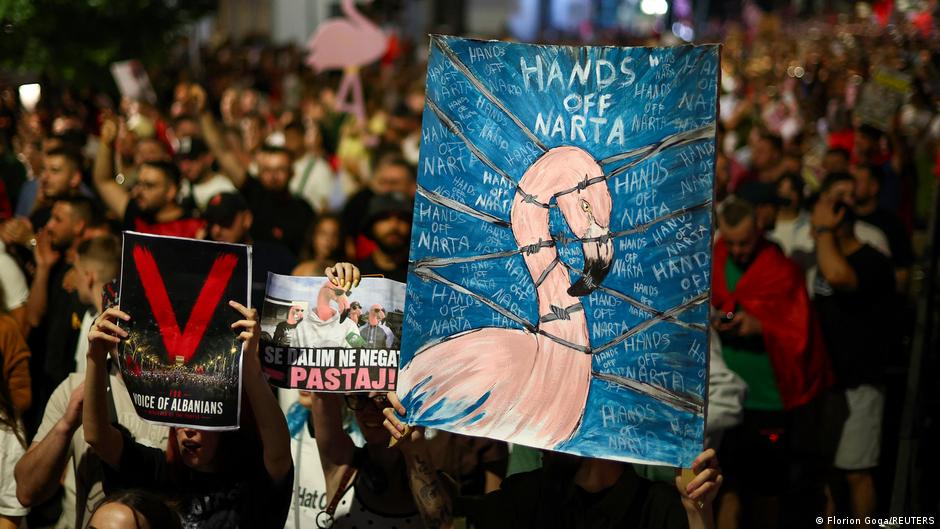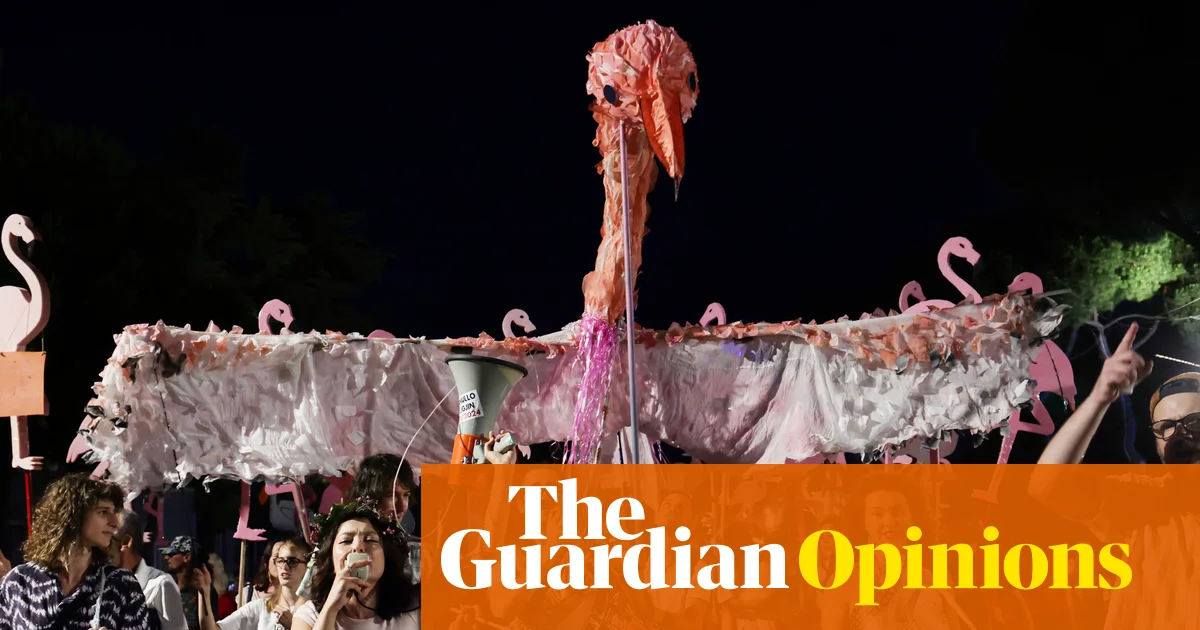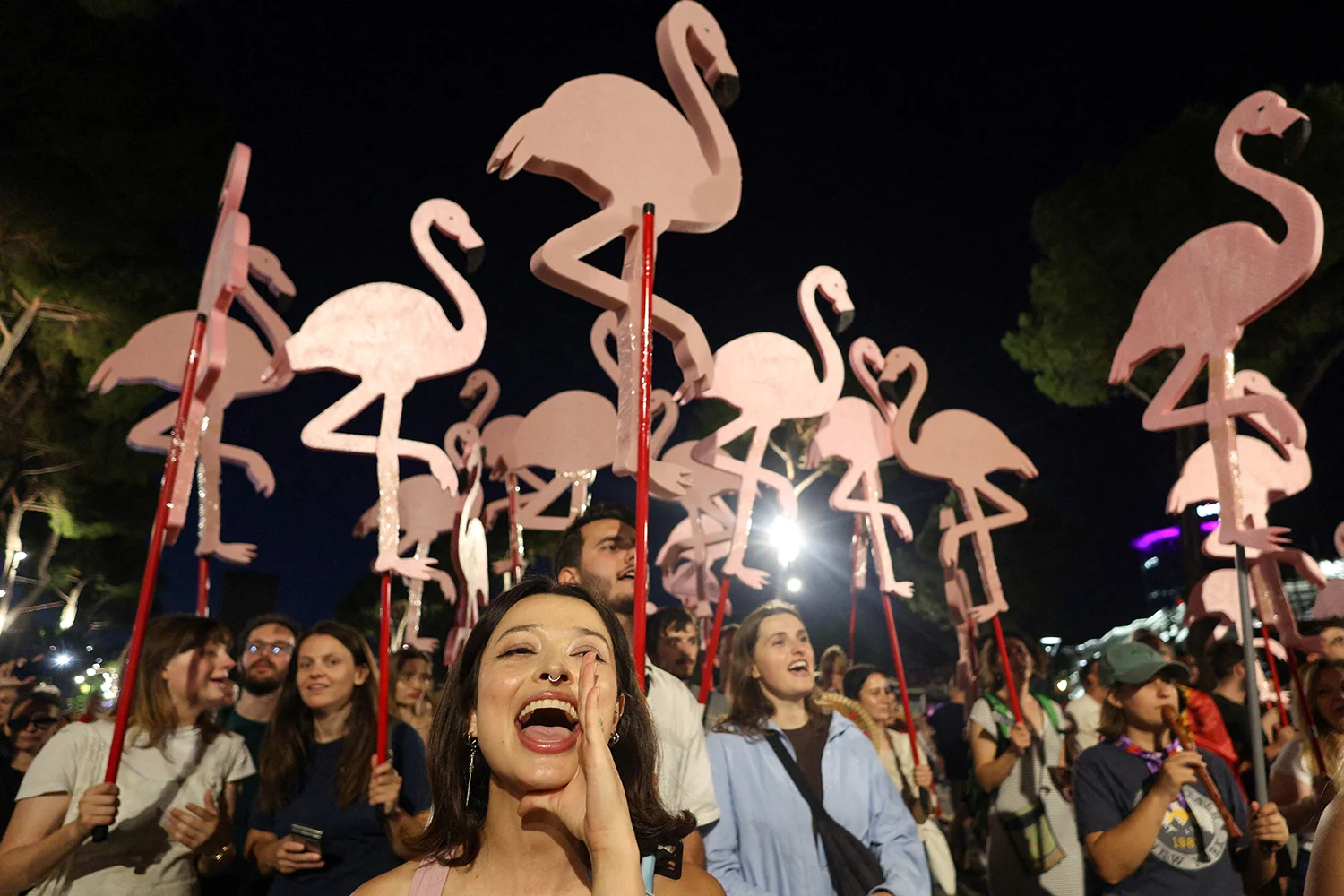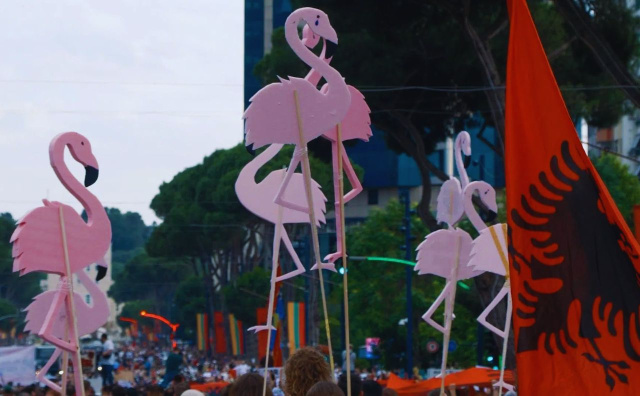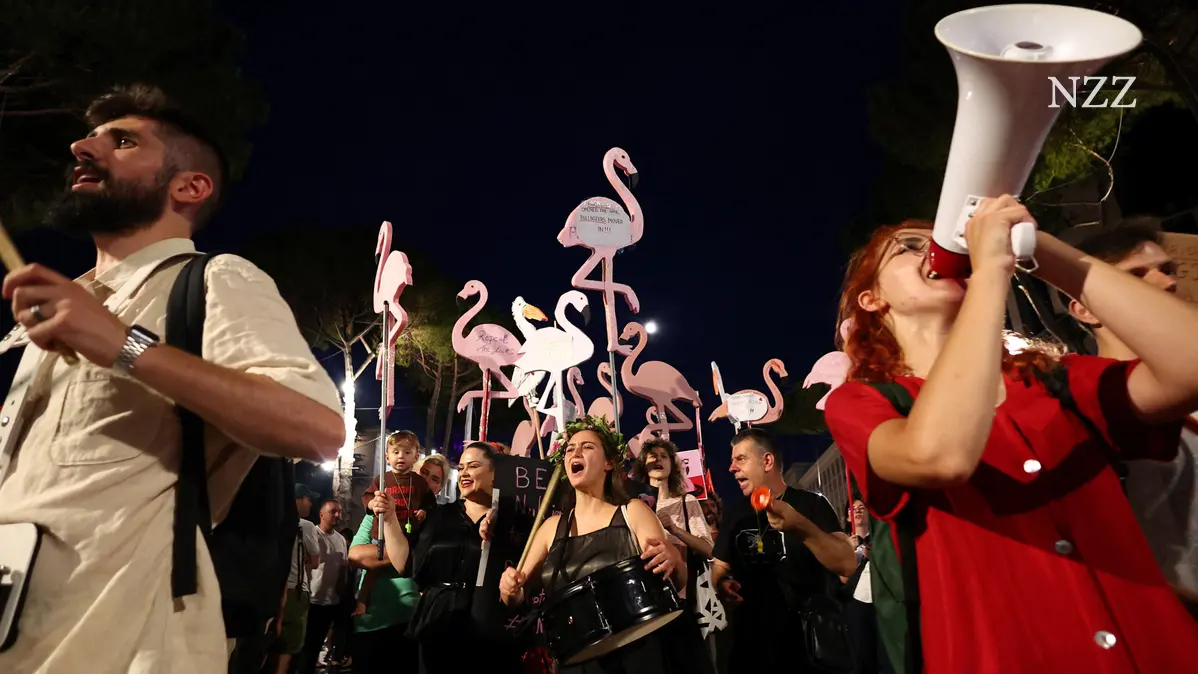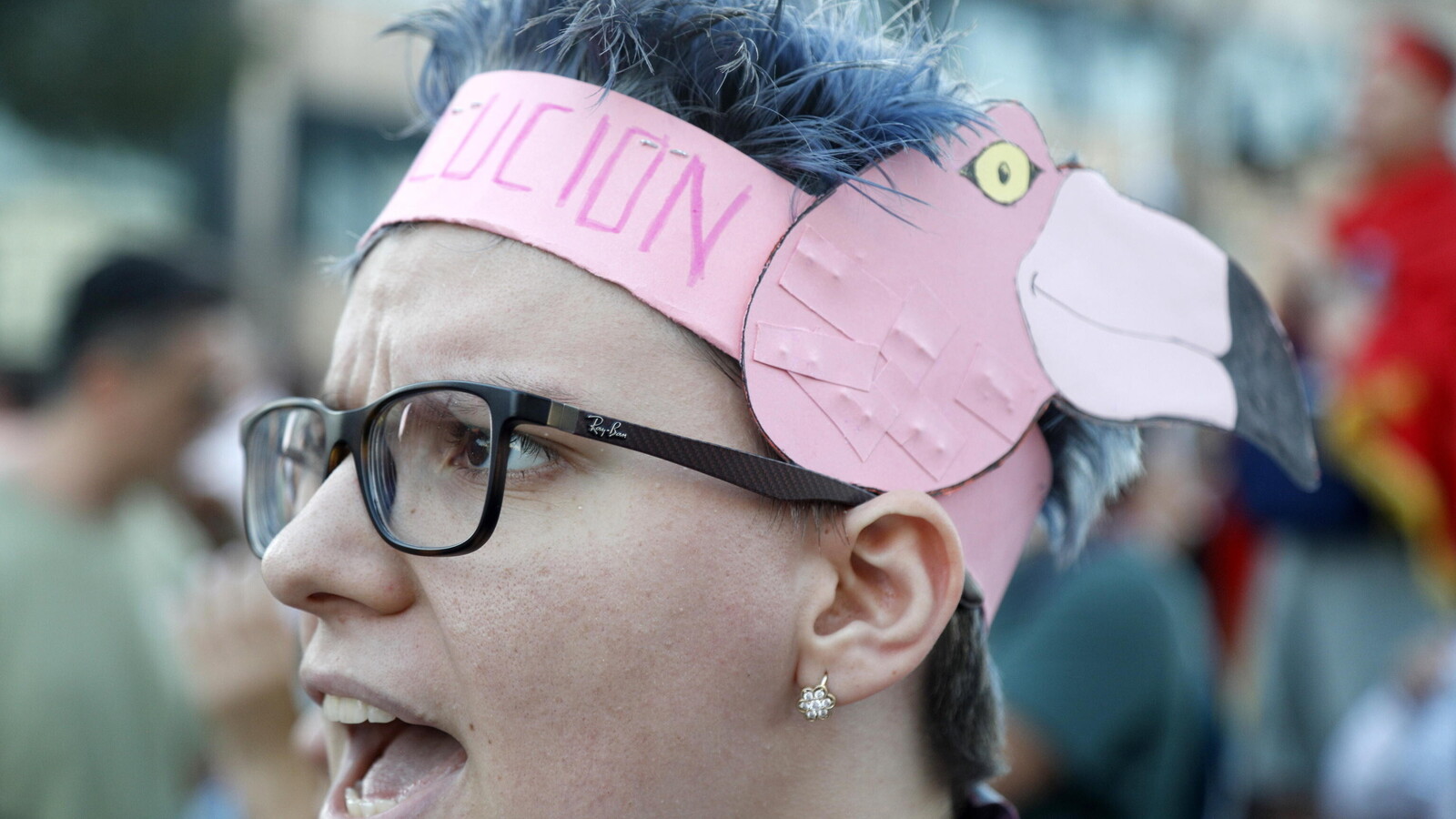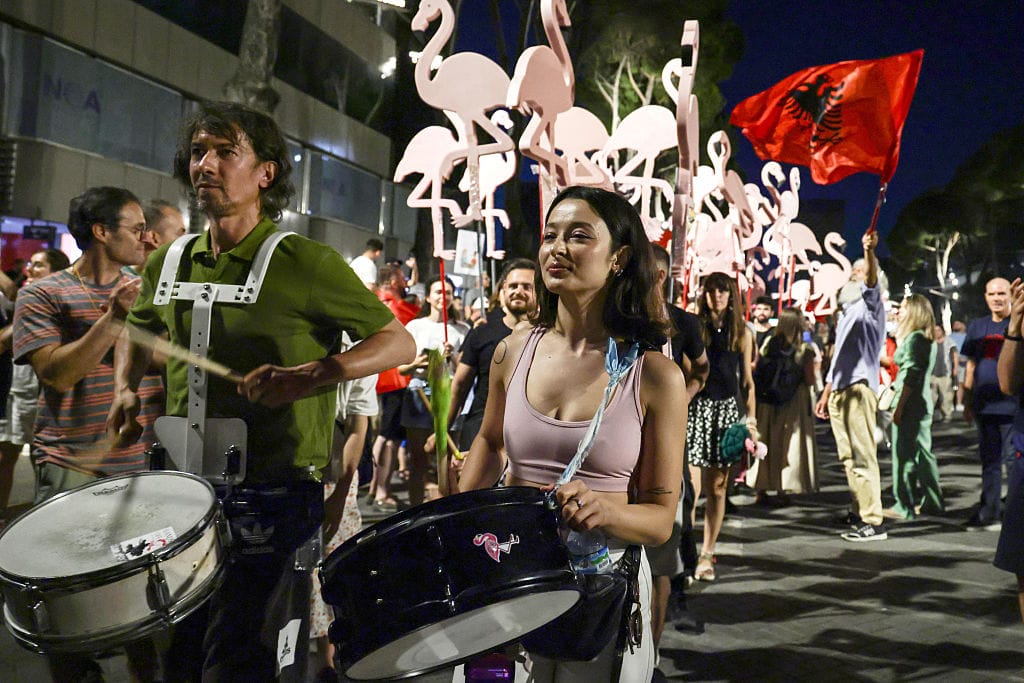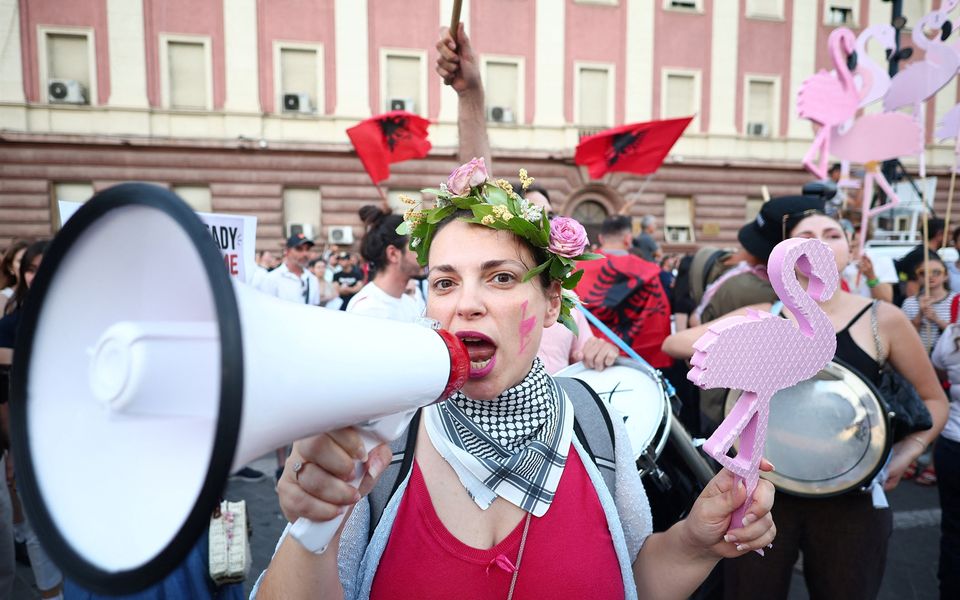
“Albania is not for sale” is the slogan leading the flamingo revolution in Albania. But this global echo has a beginning and has since moved beyond the defence of protected areas. It all started a month ago, with a protest in Zvërnec called by environmental organisations, attended by only dozens of citizens.
Activists had denounced on digital platforms the works carried out in the Narta lagoon as an environmental catastrophe that was destroying a protected area and its biodiversity, without having full information about the project, which was later reported to be linked to Donald Trump's son-in-law, Jared Kushner.
The quiet protest on 16 May, with sparse attendance, was followed by another in Tirana on 26 May near the Ministry of Environment, demanding a halt to the works in one of Albania's most important natural areas.
Environmental organisations raised their voices at the beginning of May when they observed that heavy machinery had intervened in the channel connecting the sea and the lagoon. Meanwhile, the company “Zvërnec South Adriatic Development” has declared that it is working on an international project worth 4 billion euros on privately owned land, legally purchased, to transform Vlora into one of the most preferred destinations for global tourism without harming the environment. Although the construction project is still said to be in preparation, the land was fenced with barbed wire, which also caused the key protest on 30 May, which escalated into violence. The private security guards of the company that will make the investment punched and dragged a protester, Eduard Subashi, a Greek minority member, who claims that the fenced land belongs to him, with documents. In an online video, he expressed concern about the state police's lack of reaction. “How is it possible that in a state, private police throw tear gas at state police?” Subashi asked. The incident led to the suspension from duty of the Vlora police director and the arrest of two people who assaulted the protester. Meanwhile, Interior Minister Besfort Lamallari apologised publicly, and Prime Minister Edi Rama called the act disgusting and unacceptable.