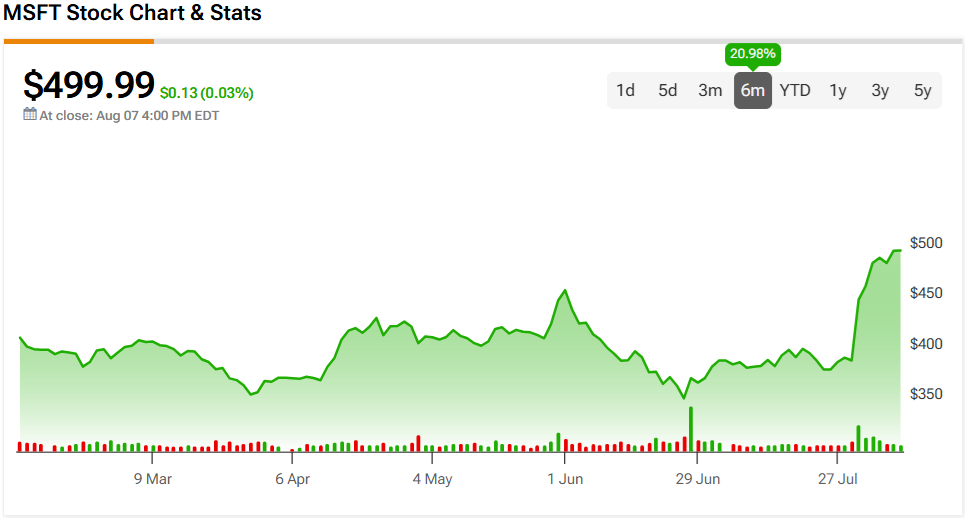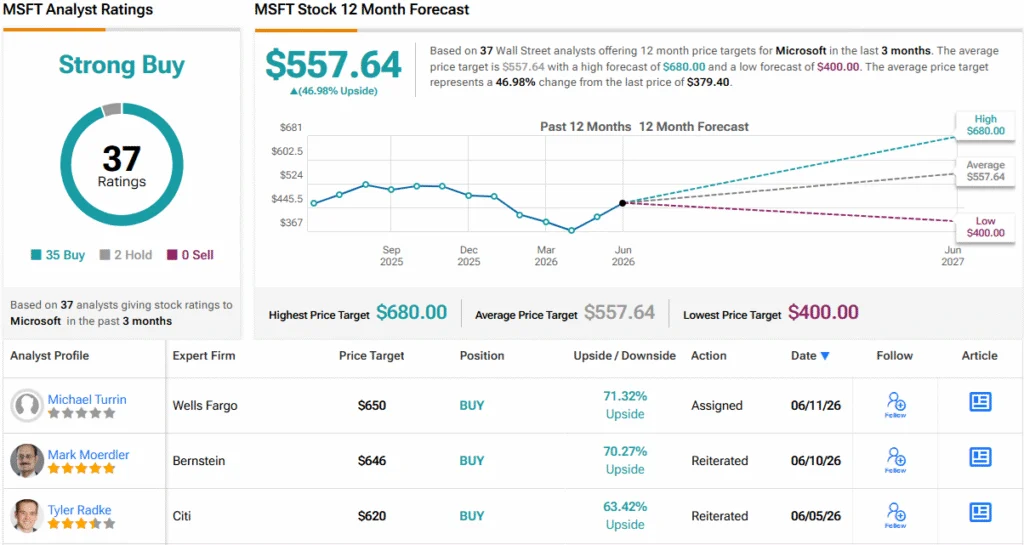
For the bulls, however, that pullback looks more like an opportunity than a warning sign. Microsoft still boasts one of the strongest balance sheets in Big Tech, with a debt-to-equity ratio of just 0.14. The business itself remains in excellent shape, generating $38.4 billion in operating income last quarter, up 20% year-over-year. Meanwhile, demand continues to pile up, with Microsoft Cloud remaining performance obligations surging to $627 billion, nearly double the level seen a year ago.
Given those fundamentals, it is easy to see why many view the recent pullback as a buying opportunity. Investor Paul Franke, however, believes the risks are being underestimated.
“I know most analysts and investors are excited to buy Microsoft in the middle of 2026, after a major dump in the share quote. However, further downside cannot be ruled out,” the 5-star investor states.
Franke points out that the valuation comparison investors should be making for Microsoft is against other SaaS stocks. By that measure, the picture is far less favorable.
For instance, the investor notes that Adobe is trading at 11x normalized earnings. Microsoft, which possesses similar growth prospects, is trading at 23x. Franke lists a number of other SaaS stocks that are trading at lower valuations, such as Salesforce, Check Point, and Intuit.