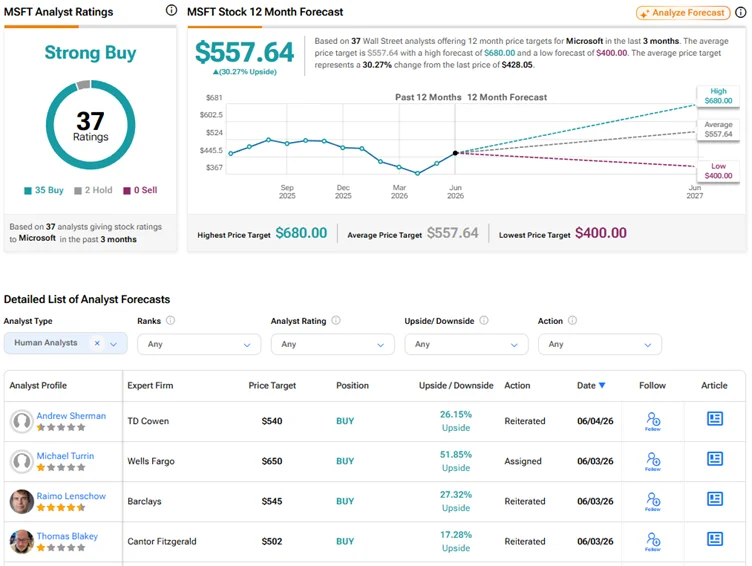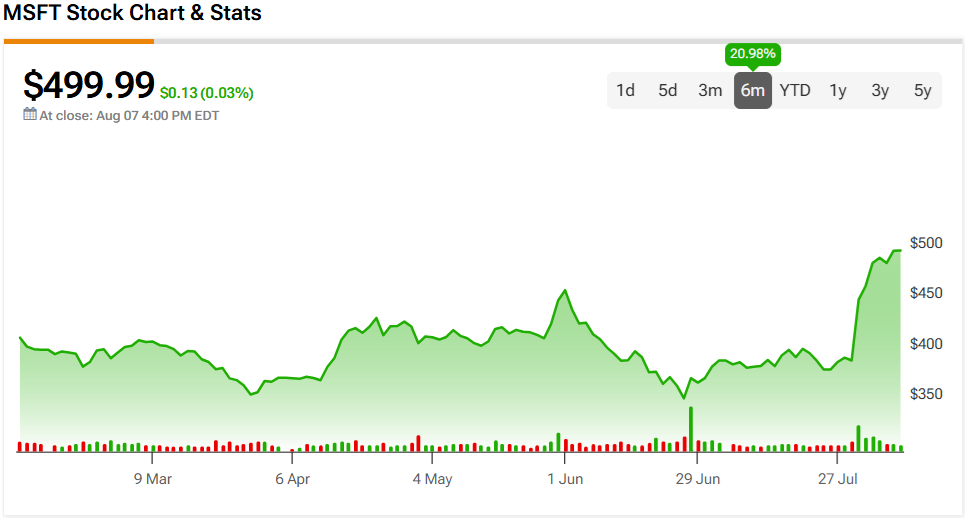
Microsoft’s struggles earlier this year had less to do with weak demand than concerns about the price of its AI expansion. The company has been pouring huge sums into data centers, GPUs, networking equipment, and other infrastructure needed to support Azure and its growing collection of AI products. Those plans left doubts about margins, free cash flow, and how soon Microsoft could generate sufficient revenue from all that additional capacity. Investors wanted evidence that the spending spree would produce attractive returns, and for much of the year, that evidence was not convincing enough.
The latest fiscal Q4 earnings report helped change that perception, with Microsoft delivering results that gave Wall Street a clearer look at the payoff. Azure revenue grew 43% year over year, while management expects growth to accelerate to around 45% during the current quarter. Microsoft Cloud revenue reached $59.3 billion, while Microsoft 365 Copilot surpassed 30 million paid seats.
For 5-star Tigress analyst Ivan Feinseth, the opportunity extends well beyond one strong earnings report and a seven-session rally. He believes Microsoft is “well positioned to deliver durable revenue growth,” with Azure, Copilot, enterprise software, and subscription services giving the company several avenues to benefit as businesses spend more on AI.