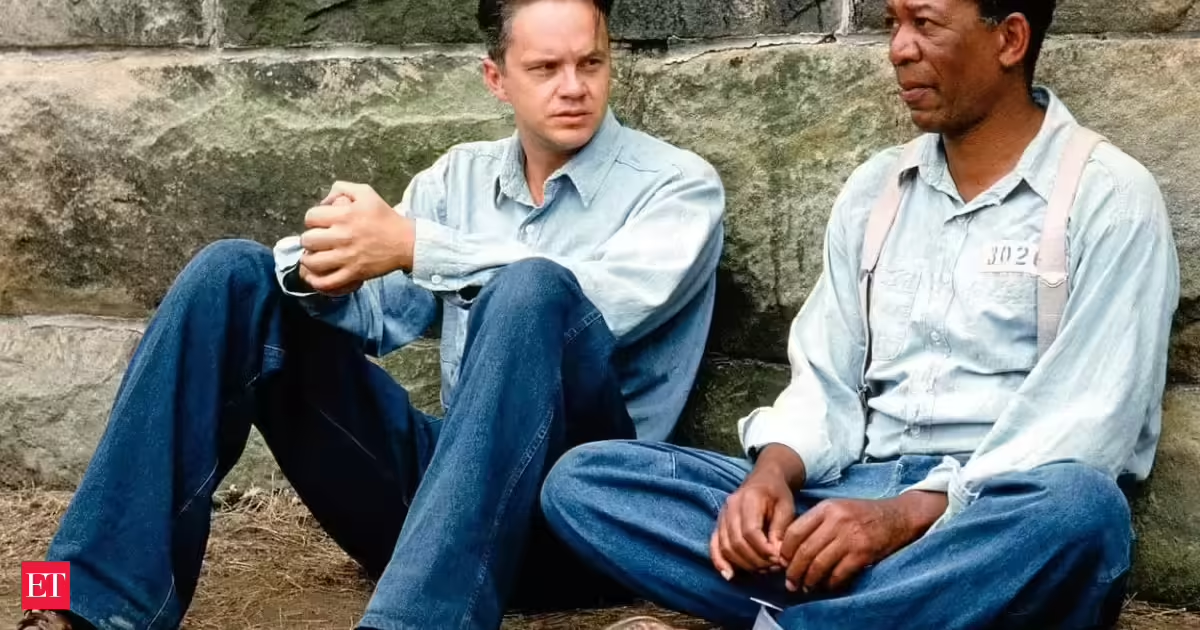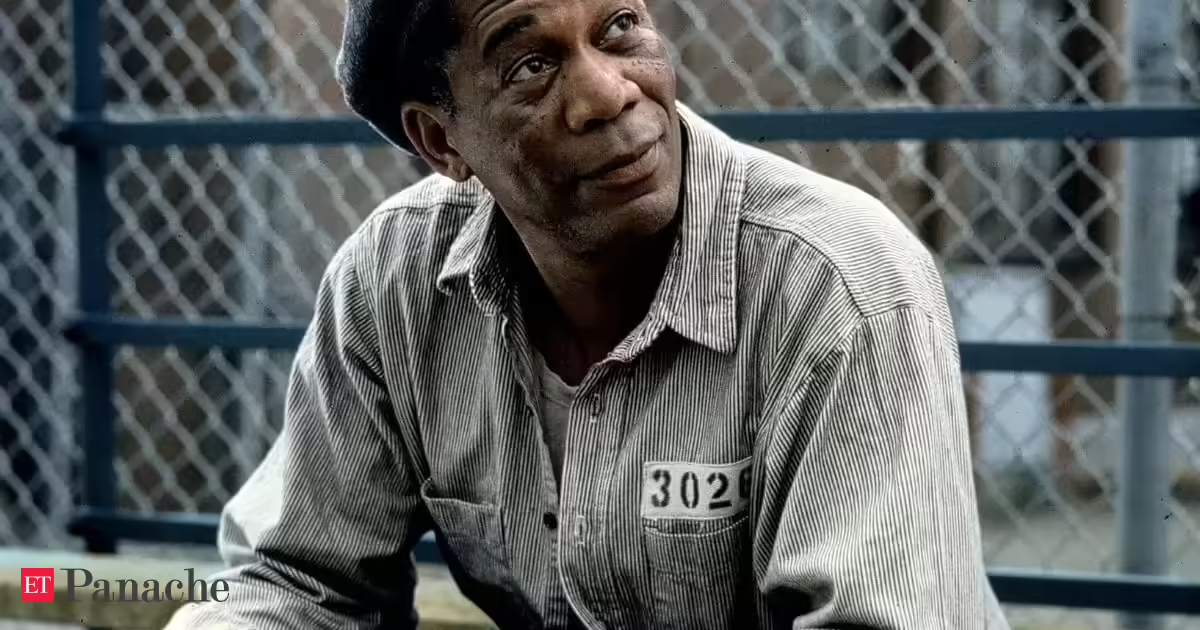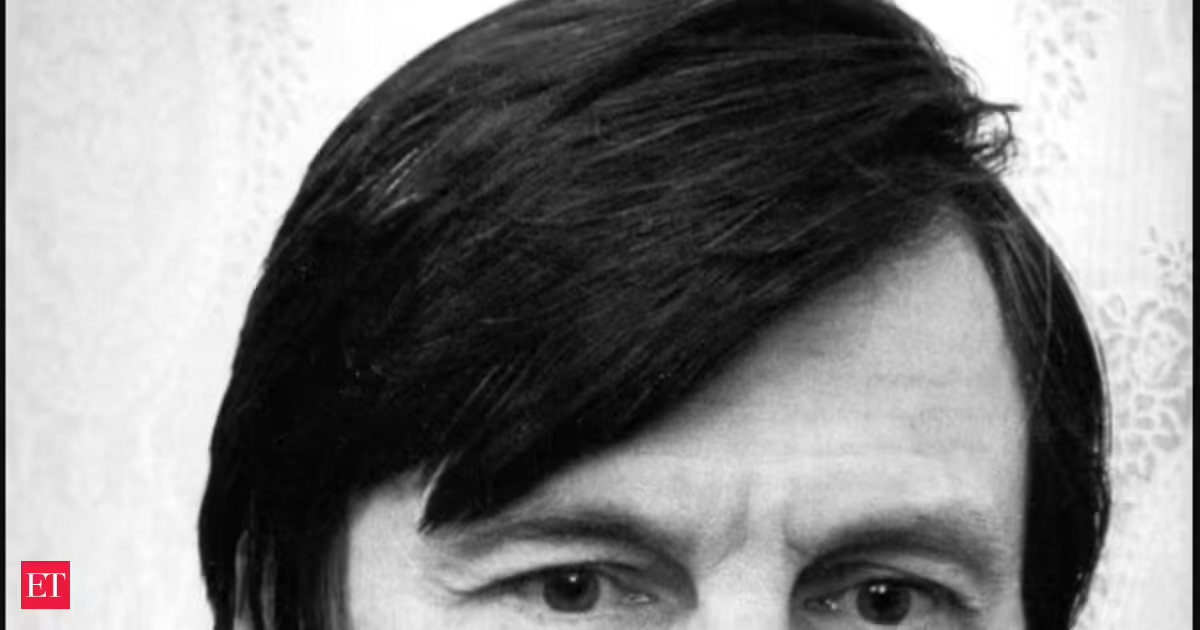
IMDb's highest-rated movie, The Shawshank Redemption, offers viewers an untangled lesson about survival. Andy Dufresne does not overcome years of imprisonment through force, aggression, or stubbornness. Instead, he survives by adapting, staying patient, and finding ways to bend without breaking under crushing circumstances.That idea raises an interesting question in everyday life: Why do some people emerge stronger from setbacks while others crumble when faced with change? Whether it's a failed relationship, a career setback, or a personal disappointment, many of us are taught that strength means being tough and unyielding. Yet the intense lesson behind Andy's journey, and one echoed by legendary Soviet filmmaker Andrei Tarkovsky, is that resilience often comes from flexibility, not rigidity. Sometimes the people who endure are not the hard ones, but those willing to accept, adapt, learn, and keep moving forward when life refuses to go according to plan.Quote of the Day by Andrei Tarkovsky: That memorable reflection on strength, flexibility, and the nature of life comes from Stalker (1979), the acclaimed film directed by Andrei Tarkovsky. The passage echoes a timeless idea found in Taoist thought: what remains flexible continues to grow and adapt, while what becomes rigid risks breaking under pressure.You Might Also Like:What Tarkovsky’s quote is actually suggestingAt first glance, the quote seems to praise weakness and criticize strength. But Tarkovsky is not talking about physical weakness. He is talking about flexibility, openness, and the ability to change.His point is that living things are adaptable. Young trees bend with the wind. Human beings learn, grow, and evolve. In contrast, things that become rigid often stop growing. People who refuse to listen, change, or reconsider their views can become trapped by their own certainty.The quote also speaks to emotional resilience. Many people think strength means hiding emotions or never admitting mistakes. Tarkovsky suggests the opposite. Being able to learn, forgive, adjust, and remain open may be a greater strength than appearing invincible.In daily life, flexibility often helps people recover from failures, navigate relationships, and adapt to changing circumstances. The ability to bend without breaking can be more valuable than stubborn resistance.Andrei Arsenyevich Tarkovsky was born on April 4, 1932, and became one of the most influential filmmakers of the 20th century. The son of noted poet Arseniy Tarkovsky, he initially studied music and Arabic in Moscow before enrolling at the Soviet film school VGIK.His rise to international recognition began with Ivan's Childhood (1962), which won the top prize at the Venice Film Festival. He followed it with Andrei Rublev (1966), a film that faced censorship and was banned by Soviet authorities for two years before earning recognition abroad.Throughout his career, Tarkovsky created films such as Solaris, Mirror, Stalker, Nostalgia, and The Sacrifice. His work was known for its spiritual themes, philosophical depth, long takes, and unconventional storytelling.His journey was not easy. Several of his films faced official resistance, and Stalker had to be completely reshot after the original footage was destroyed in a laboratory accident. Later in life, he left the Soviet Union and settled in Europe. His final film, The Sacrifice (1986), won four prizes at the Cannes Film Festival. He died of lung cancer later that year, leaving behind a body of work that continues to influence filmmakers and thinkers worldwide.Andrei Tarkovsky’s thinking style and philosophy behind the quoteTarkovsky's films often explored questions about faith, memory, time, suffering, and the human spirit. Rather than focusing on action or spectacle, he was interested in inner transformation and the search for meaning.This quote reflects that broader philosophy. He believed that growth comes from openness rather than rigidity. His characters often face uncertainty, loss, and difficult choices. Yet their journeys suggest that wisdom comes not from controlling everything but from accepting life's complexity.For Tarkovsky, flexibility was not weakness. It was a sign of vitality. The willingness to remain curious, compassionate, and receptive was, in his view, part of what makes us truly alive.Why this idea still matters todayModern life often rewards certainty, confidence, and the appearance of strength. Social media encourages people to present perfect versions of themselves. Workplaces can celebrate toughness and relentless ambition.Yet real life is rarely that simple. Careers change unexpectedly. Relationships bring challenges without any invitations. Parents must adapt to their children's needs. Students encounter setbacks. Mental health struggles can affect anyone.Tarkovsky's message offers a reminder that resilience is not about becoming harder. It is about staying flexible enough to learn, grow, and recover. People who can adapt to change often cope better with uncertainty and emerge stronger from difficult experiences.Finally, in short, this quote suggests a path different from others: the ability to remain open, humble, and adaptable may be one of the greatest strengths a person can possess.
Quote of the Day by Soviet film-maker Andrei Tarkovsky: ‘Weakness is a great thing, and strength is nothing; when a man is just born, he is…’ - why being flexible may be stronger than being tough
Quote of the Day by Andrei Tarkovsky: A reflection from Stalker (1979) explores why flexibility may be one of life's greatest strengths. Through poetic imagery and ideas rooted in adaptability, the acclaimed filmmaker suggests that growth comes from remaining open to change, while rigidity can lead to decline.
TL;DRAI
Tarkovsky argued flexibility—not rigidity—is true strength: what adapts grows, what hardens breaks. For tech leaders, organizations staying open to change and continuous learning navigate emerging AI paradigms and technology transitions better than those locked into legacy infrastructure.
780 words~4 min read