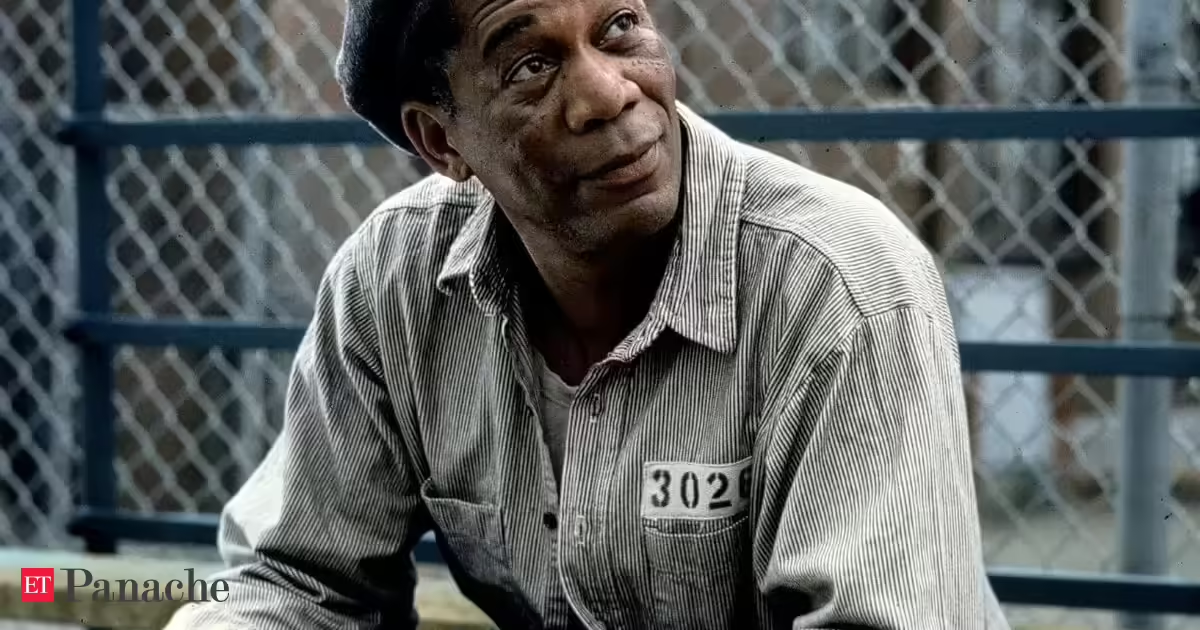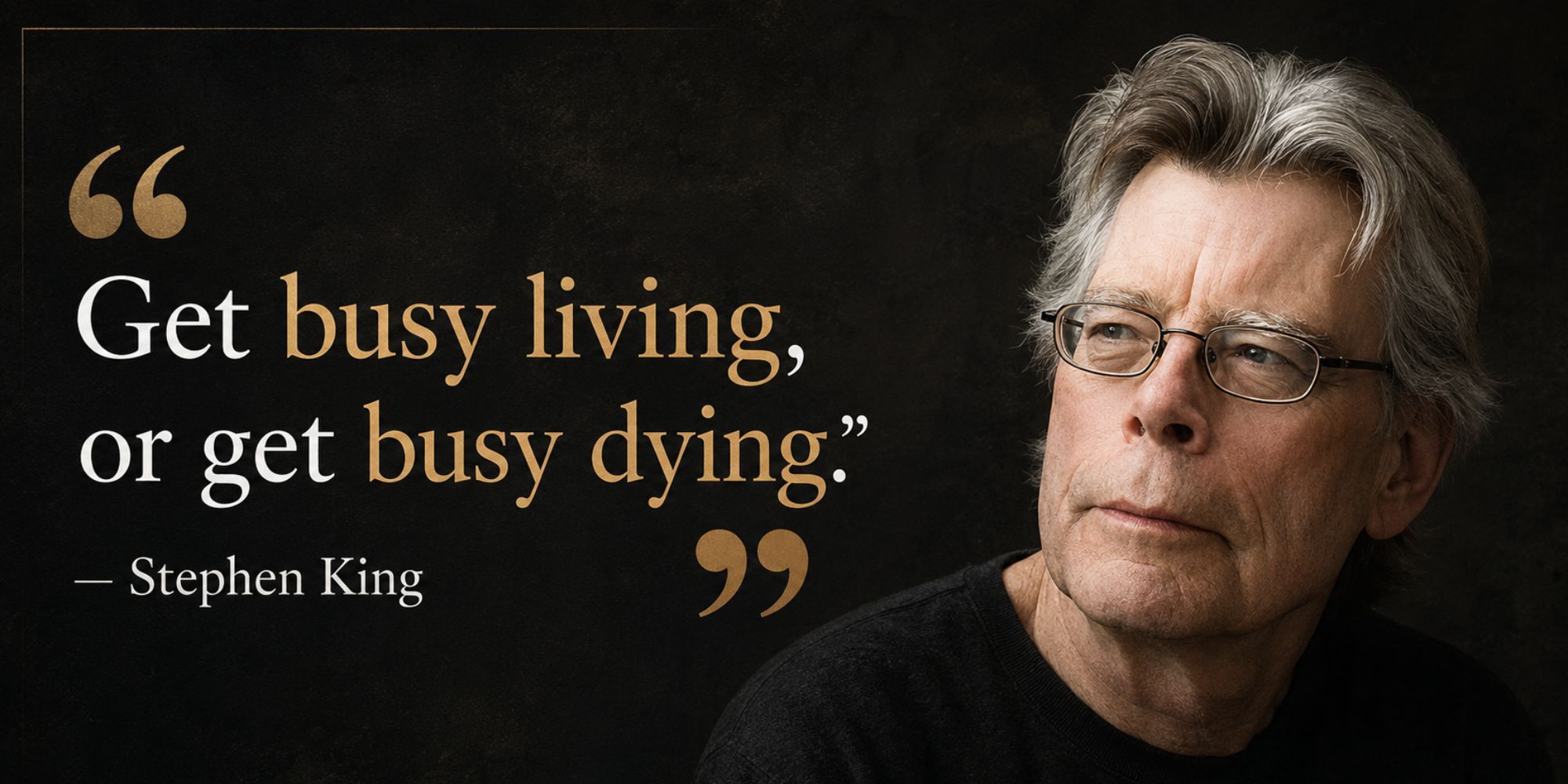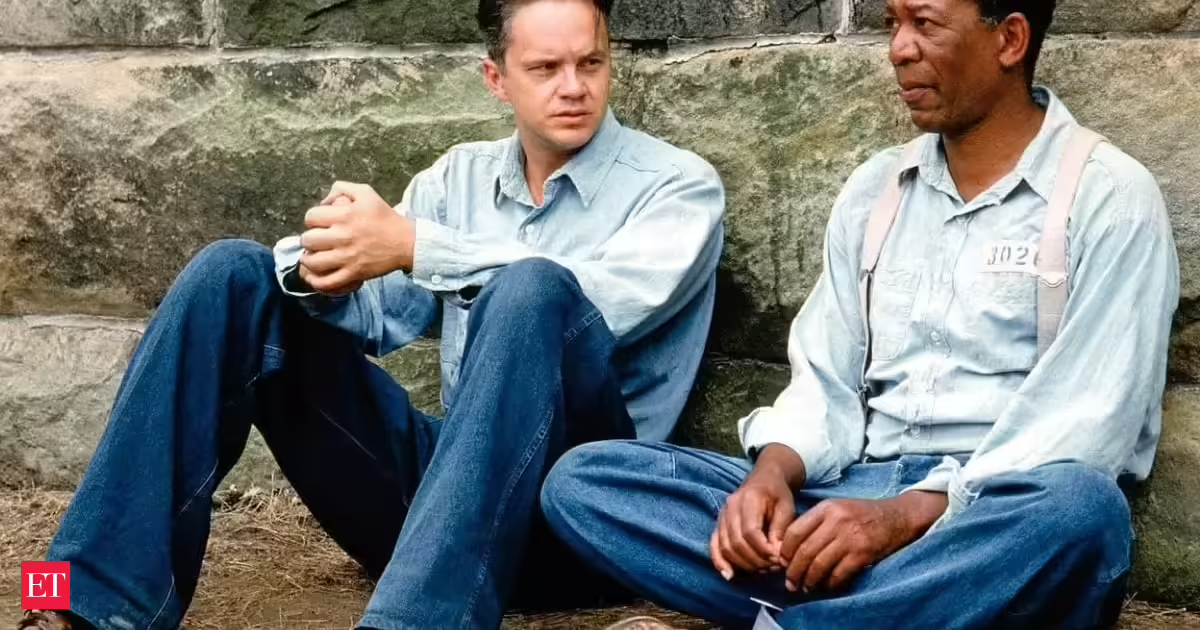
Some movie dialogues capture a character’s emotions. Others transcend the film itself and become enduring life philosophies. Few lines have achieved that status quite like the powerful statement from The Shawshank Redemption (1994). More than three decades after the film’s release, the quote continues to inspire audiences around the world, appearing in motivational speeches, books, social media posts, and discussions about resilience, hope, and personal transformation.Dialogue of the Day“Get busy living, or get busy dying.”– The Shawshank Redemption (1994)The film behind the famous dialogueThe Shawshank Redemption was directed by Frank Darabont and adapted from the novella Rita Hayworth and Shawshank Redemption by Stephen King. Released in 1994, the film stars Tim Robbins as Andy Dufresne, a banker sentenced to life imprisonment for the murders of his wife and her lover, despite maintaining his innocence, and Morgan Freeman as Ellis “Red” Redding, a long-serving inmate who becomes Andy’s closest friend.Although the film was not a major box-office success upon release, it received widespread critical acclaim and earned seven nominations at the 67th Academy Awards, including Best Picture. Over time, it developed a devoted following and is now widely regarded as one of the greatest films ever made. What distinguishes The Shawshank Redemption from many prison dramas is its emphasis on hope, friendship, perseverance, and the human capacity to endure adversity. The moment that made the dialogue unforgettableThe line is spoken by Andy Dufresne during a conversation with Red as Andy reflects on the choices available to every human being, regardless of circumstance.At this stage in the story, Andy has spent years inside Shawshank State Penitentiary. Despite enduring injustice, isolation, and hardship, he continues to believe in the possibility of a better future. His statement is simple but profound: life ultimately requires a decision between embracing hope and surrendering to despair.The dialogue serves as a turning point not only for Andy but also for Red. It challenges the deeply institutionalized prisoner to reconsider his own outlook on life and the possibility of freedom beyond prison walls.What the dialogue meansOn the surface, the quote presents a stark choice. A person can actively pursue life, growth, and opportunity, or passively accept decline and hopelessness.However, the dialogue carries a deeper philosophical message. “Living” in this context is not merely physical survival. It refers to maintaining purpose, curiosity, ambition, and faith even when circumstances seem impossible. Likewise, “dying” represents more than death itself; it symbolizes giving up, losing hope, or allowing fear and resignation to define one's existence.
Movie dialogue of the day: How this ‘The Shawshank Redemption’ line became one of cinema’s most inspiring lines
A powerful line from 'The Shawshank Redemption,' "Get busy living, or get busy dying," continues to resonate decades later. This cinematic gem, starring Tim Robbins and Morgan Freeman, explores themes of hope and resilience against the backdrop of prison life. The quote, delivered by Andy Dufresne, encapsulates the choice between actively pursuing life's purpose or succumbing to despair, offering a profound life philosophy that inspires many.
412 words~2 min read