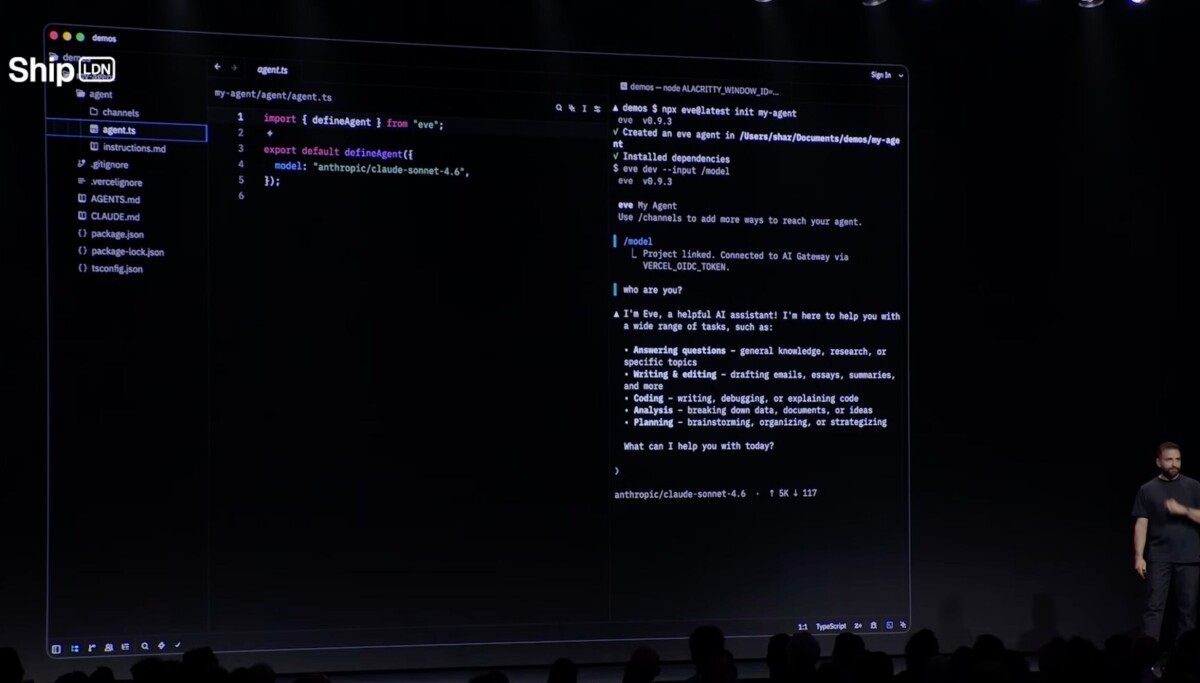
Vercel recently open-sourced Eve, a framework for building durable AI agents. It takes an opinionated, filesystem-first approach: instead of wiring up model loops, tool dispatch, and session persistence yourself, you author a directory of files and Eve handles the rest.
I took it for a spin by building a shopping assistant — an agent that can search a product catalog, check inventory, compare prices, read reviews, and place orders. Here's what I found.
The Core Separation: Agent vs Channel
Eve draws a hard line between what the agent is and how it communicates. The agent is the reasoning core — model, tools, instructions. It doesn't know or care how users reach it. A channel is just comms — it handles inbound transport, auth, message format, and delivery for a specific platform.
This means the same agent can simultaneously serve a browser chat widget, a Slack bot, a CLI, and a custom webhook — without any conditional logic in the agent itself. You add surfaces by adding channel files, not by changing agent code.