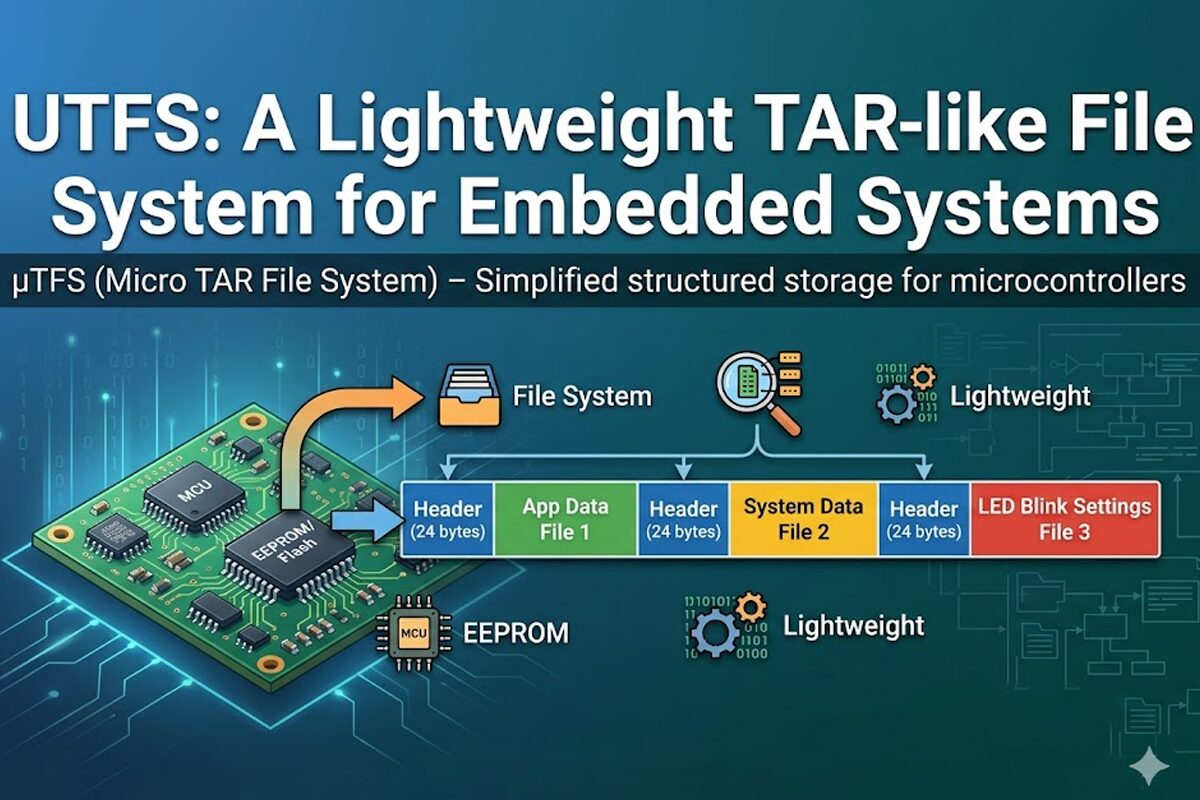
CLI Systems has introduced UTFS (μTFS), a simple, lightweight embedded storage system designed for small MCUs. Unlike traditional file systems like FAT32 or EXT4, or even lighter options like LittleFS and SPIFFS used on boards like the ESP32, UTFS is much simpler. It does not use dynamic memory and avoids complex features like wear leveling, making it easier to use on low-resource devices.Designed for flat, byte-addressable memory like raw EEPROM, CPU flash pages, or external SPI/I²C flash, UTFS allows bare-metal firmware to store named data blobs (“files”) back-to-back. Each file is appended with a fixed 24-byte header containing metadata like identifiers, sizes, and application-defined signatures.UTFS specifications and features
Footprint – Fixed 24-byte header per file; zero heap usage (no malloc)
Format – TAR-inspired sequential layout; forward-compatible so files can be added later without breaking existing memory layouts
Storage Agnostic – Requires porting only two functions to interface with the hardware medium: sys_read and sys_write
Reliability – Uses application-defined signatures (e.g., 0xABCD) to detect corrupt or uninitialized storage upon the initial utfs_load() call