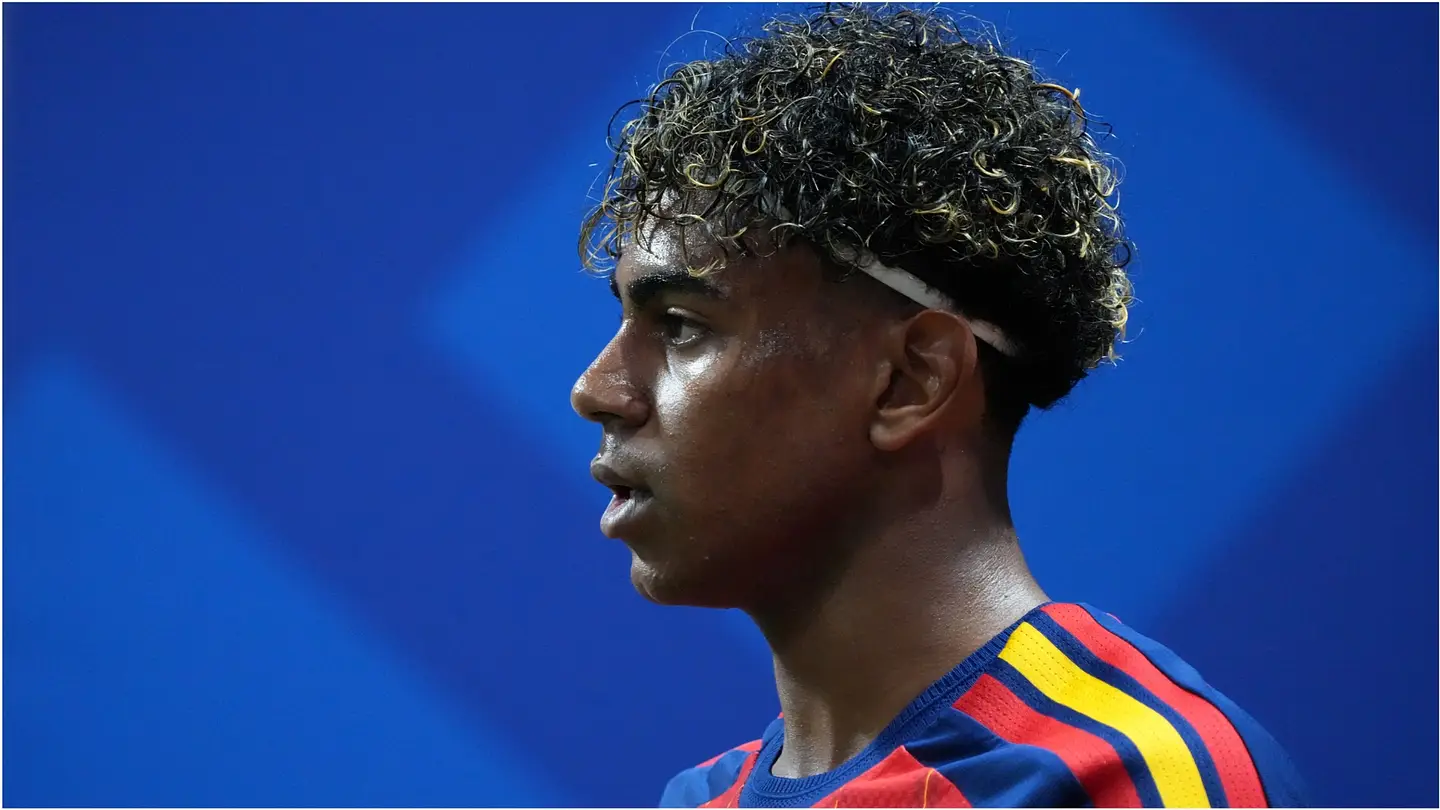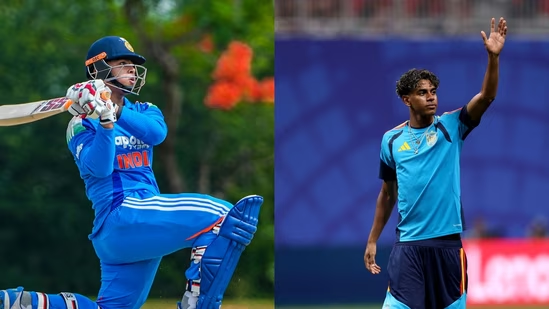
Spain did not enter the Saudi Arabia match in panic, but there was pressure around them. A goalless draw against Cape Verde had made their Group H campaign uncomfortable. For a side expected to control matches, dictate rhythm and turn possession into punishment, the opener had raised an awkward question: could Spain find their attacking edge when the tournament demanded a response?Vaibhav Sooryavanshi for India and Lamine Yamal for Spain. (PTI, AFP)That is why Lamine Yamal’s first start of the World Cup mattered. It was not merely the inclusion of a gifted teenager. It was Spain trusting their youngest attacking weapon to restore sharpness, pace and clarity to a team that had looked blunt in its first outing.Yamal did not need long to answer. His early goal against Saudi Arabia did more than change the scoreline. It changed the mood of the game. Spain, suddenly released from the anxiety of another slow start, began to move with more authority. Saudi Arabia, who would have hoped to frustrate and stretch the contest deep into the match, were forced into a different game far earlier than they would have wanted.By the time Spain had raced into a dominant first-half position, the match had already shifted around the teenager. Yamal was not the only reason Spain won 4-0. Mikel Oyarzabal’s finishing was decisive, and Spain’s control across midfield was too much for Saudi Arabia. But Yamal was the trigger. He gave Spain the first clean cut into the match and allowed the rest of the team to breathe.In cricket, Vaibhav Sooryavanshi had already produced a similar statement.India A were in a final against Sri Lanka A. This was not a loose league game where a young batter could swing freely with little consequence. This was a title match. The performance would not be measured only by talent; it would be measured by timing. And Vaibhav, still only 15, produced the kind of innings that did not just influence the game - it seized it.His 94 off 29 balls was outrageous by any normal standard. The 11-ball fifty made it historic. But the real point was not just the speed of the runs. It was the context in which they came. In a final, with India A needing a platform big enough to intimidate Sri Lanka A, Vaibhav did not build slowly into the contest. He detonated it.Also Read: 3.09 goals per game: FIFA World Cup 2026 fastest to 100 goals in 68 years!The rare teenage trait: making pressure look smallerThat is where the parallel between Vaibhav and Yamal becomes interesting.It is not that one should be equated with the other. Football and cricket judge brilliance differently. Yamal operates through spaces, touches, angles and timing. Vaibhav operates through bat speed, intent, hand-eye coordination and violent scoring pressure. One stretches a backline. The other tears up a bowling plan.But the deeper sporting quality is the same. Both teenagers walked into matches carrying expectation, and both changed the emotional temperature of those matches before pressure could fully settle on their teams.Vaibhav’s innings did that first. A final can often shrink young players. It can make them more cautious, more aware of risk, more conscious of the occasion. Vaibhav went the other way. He made the occasion look smaller than his own intent. Sri Lanka A were not allowed to settle into the rhythm of a final because he turned the first phase of the innings into a storm.Yamal’s goal against Saudi Arabia carried a similar effect for Spain. Before that moment, Spain were still a favourite carrying the shadow of a frustrating opener. After that moment, they became fluent again. The goal did not just make it 1-0. It gave Spain permission to play like Spain.This is what separates ordinary teenage promise from extraordinary teenage temperament. Many young players have talent. Many can produce highlights. But only a few can enter a match with consequence and force everyone else to adjust to them.Vaibhav did that with destruction. Yamal did that with movement and timing.In both cases, the match stopped being only about the opposition’s plan. Sri Lanka A could not quietly build pressure in a final. Saudi Arabia could not simply sit in and wait for Spain to grow frustrated. The teenagers did not react to the game. They made the game react to them.That is the most exciting part of their rise. At such a young age, neither looks like a player merely trying to survive at a higher level. They already carry the instinct of match-shapers. Their talent is visible, but their temperament may be the bigger story.Vaibhav’s innings told Indian cricket that his ceiling is not just about promise, hype or age-group dominance. He has already shown the appetite to leave a mark on a big game. Yamal’s performance told Spain that their attack has a different edge when he starts.Sport loves young prodigies, but it does not always trust them in pressure games. The fear is that attention arrives before maturity, that reputation runs faster than readiness. Vaibhav and Yamal, in their own ways, pushed back against that doubt.One made a final bend to his bat. The other made Spain feel dangerous again.And that is the real parallel. Great young players do not merely announce themselves through numbers. They announce themselves when the match has a pulse, when the stage is louder, when the team needs someone to change the air.Vaibhav Sooryavanshi and Lamine Yamal did not just perform under pressure. They made pressure look like something that belonged to everyone else.
Two prodigies, one ruthless message: Vaibhav Sooryavanshi and Lamine Yamal are not waiting to grow up
Vaibhav Sooryavanshi and Lamine Yamal exemplify young talent that influences critical matches. | Sports News
920 words~4 min read