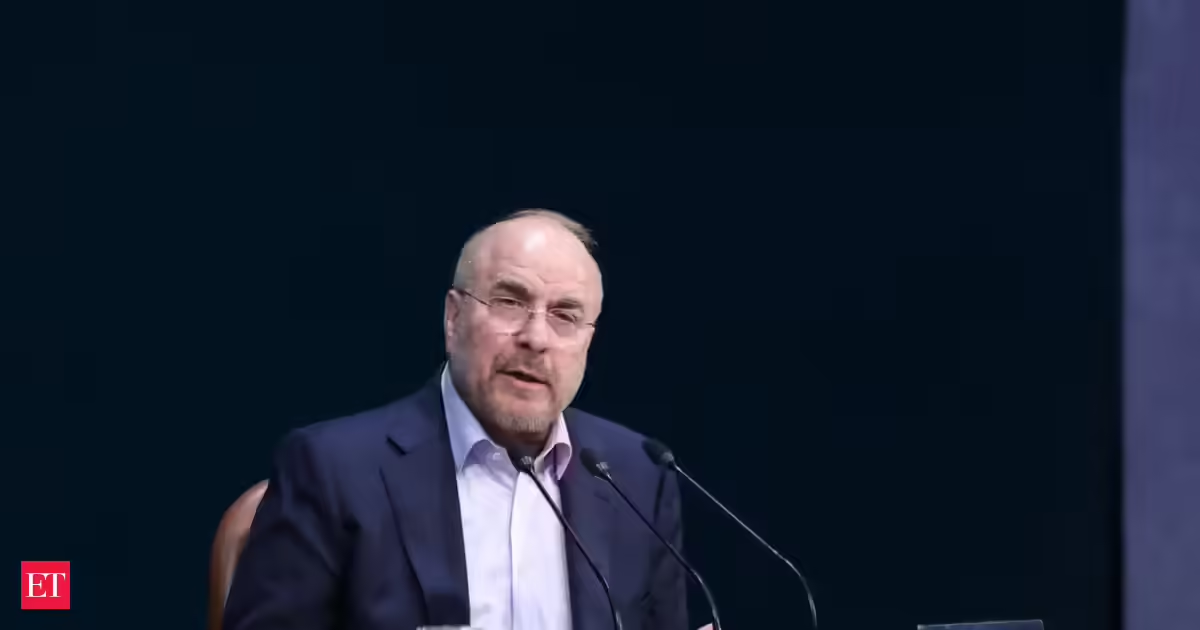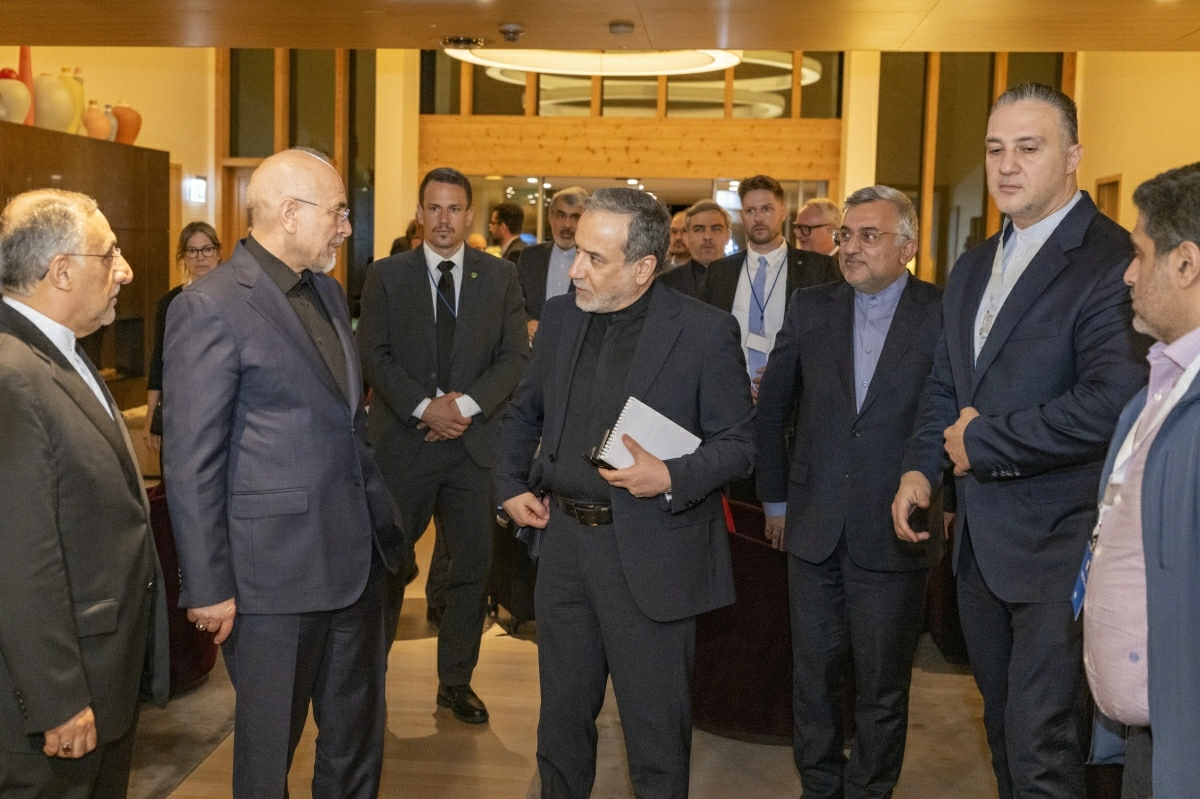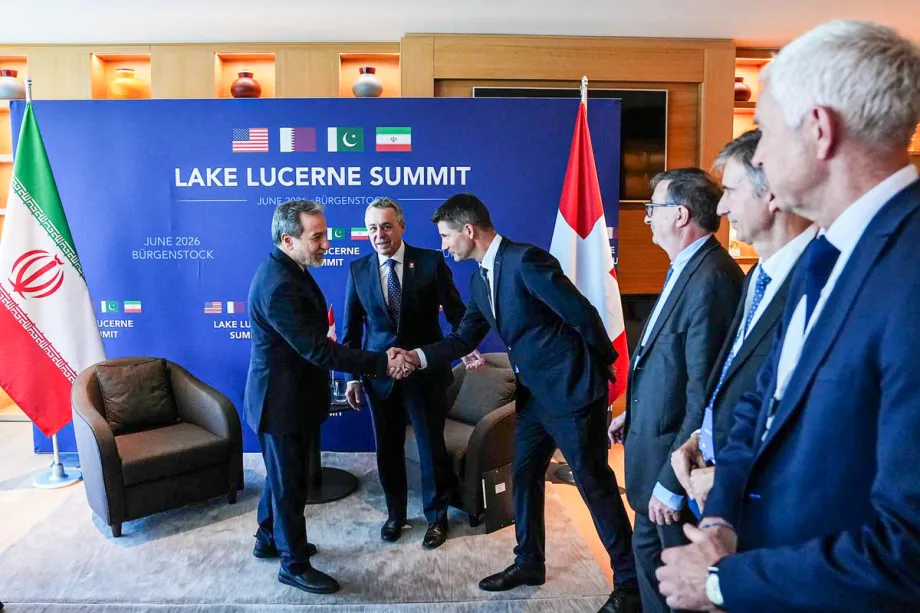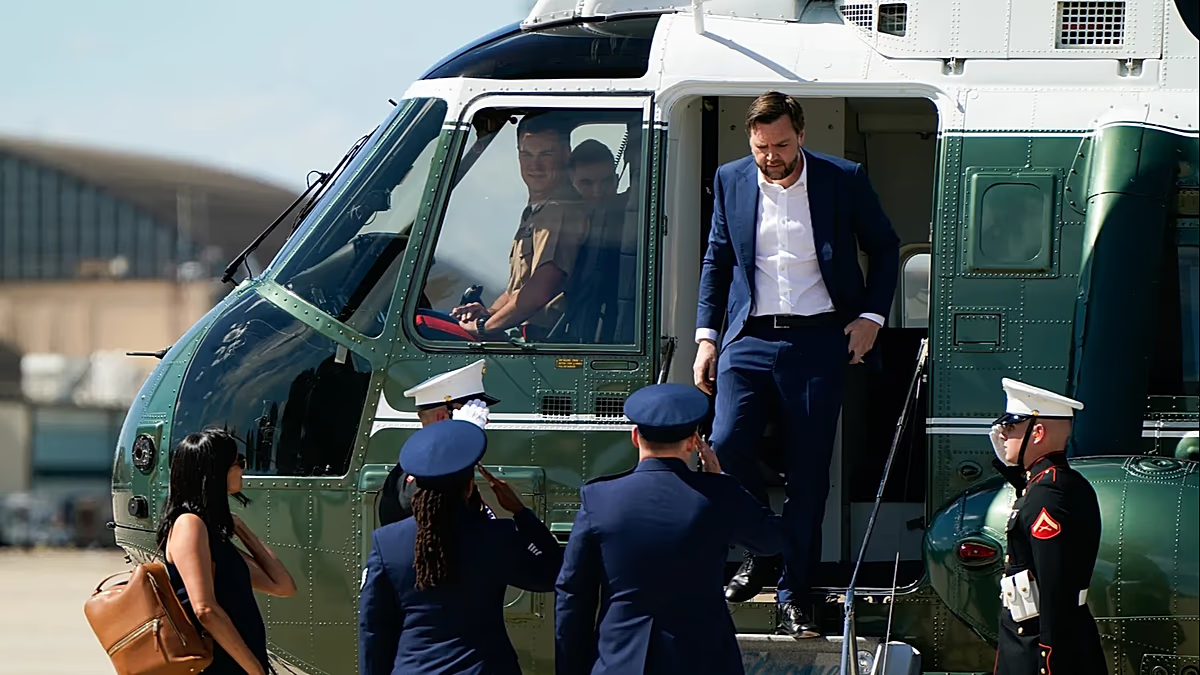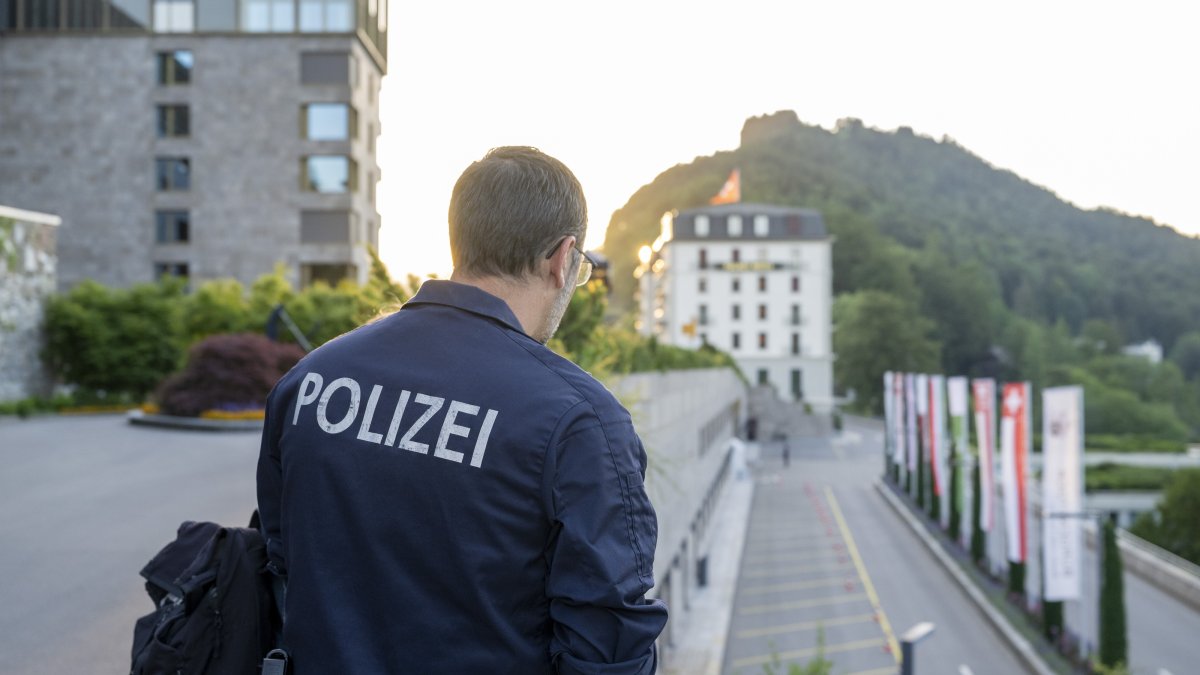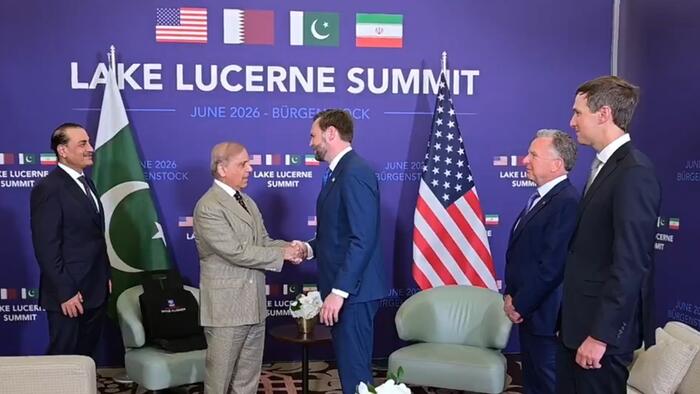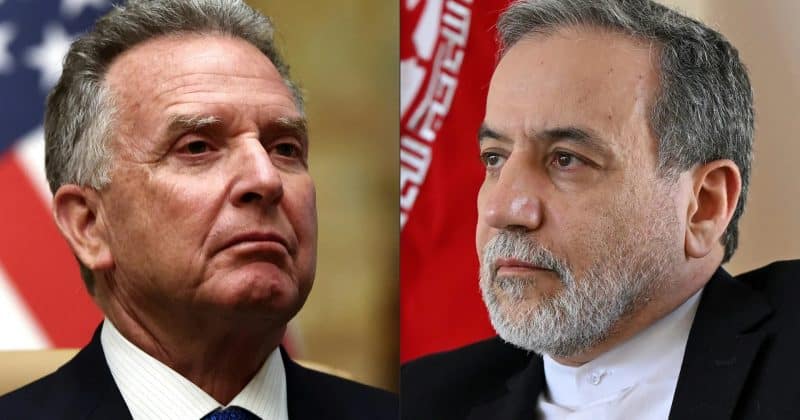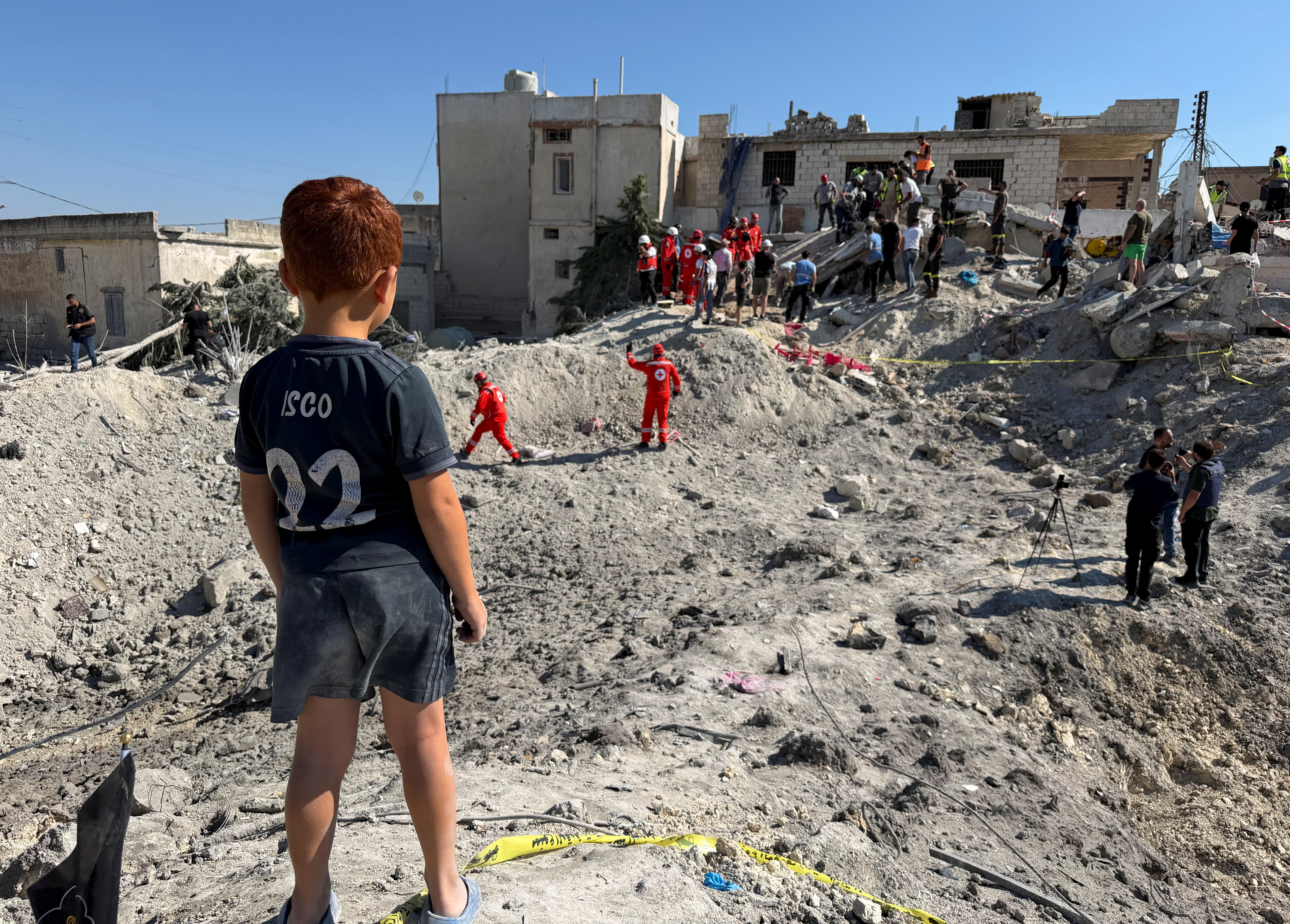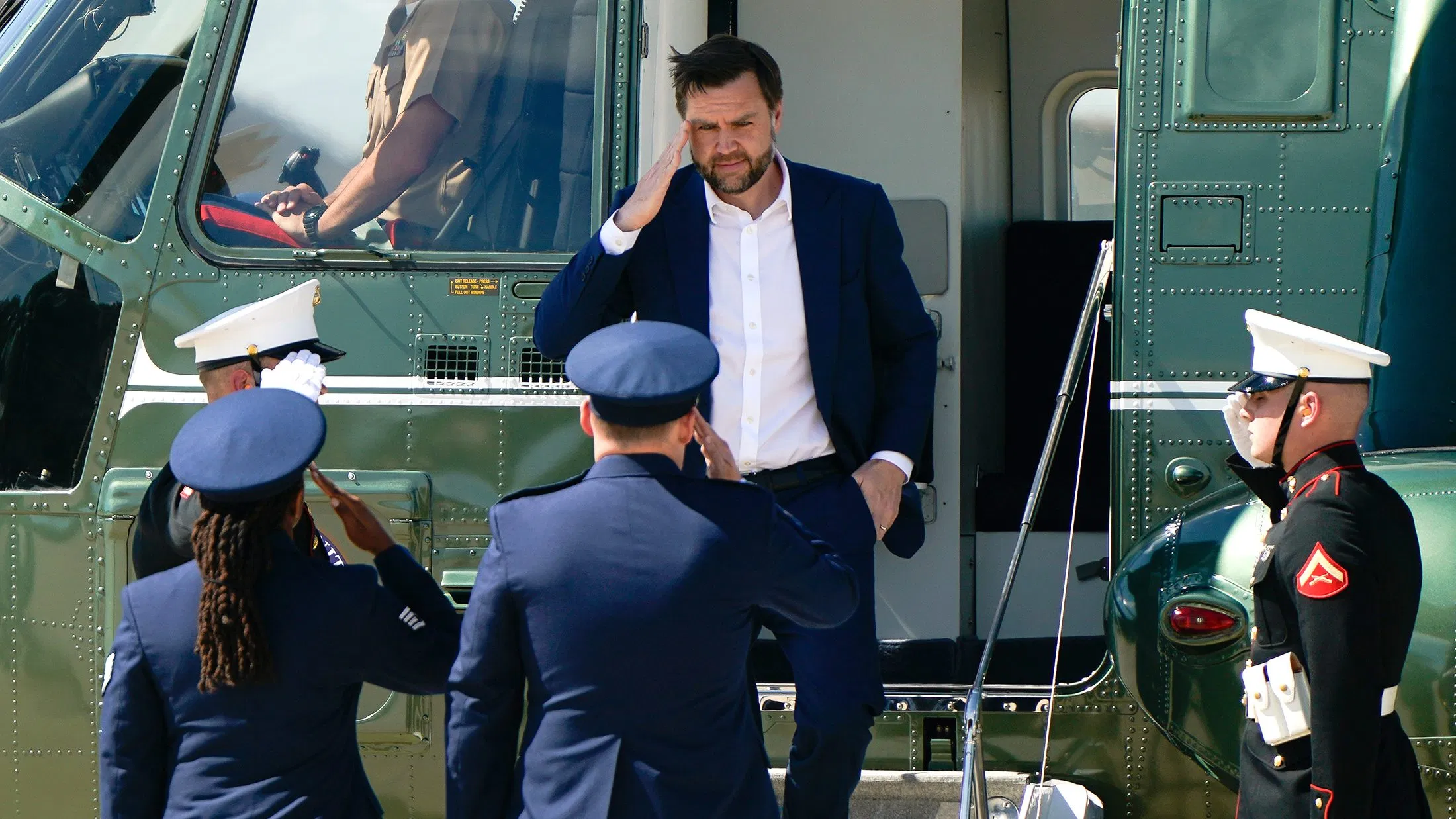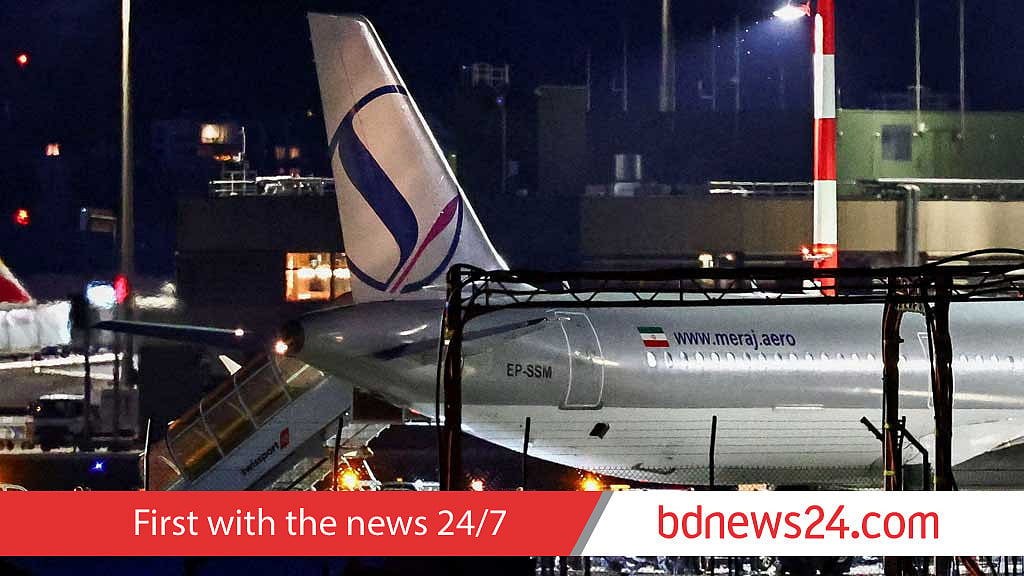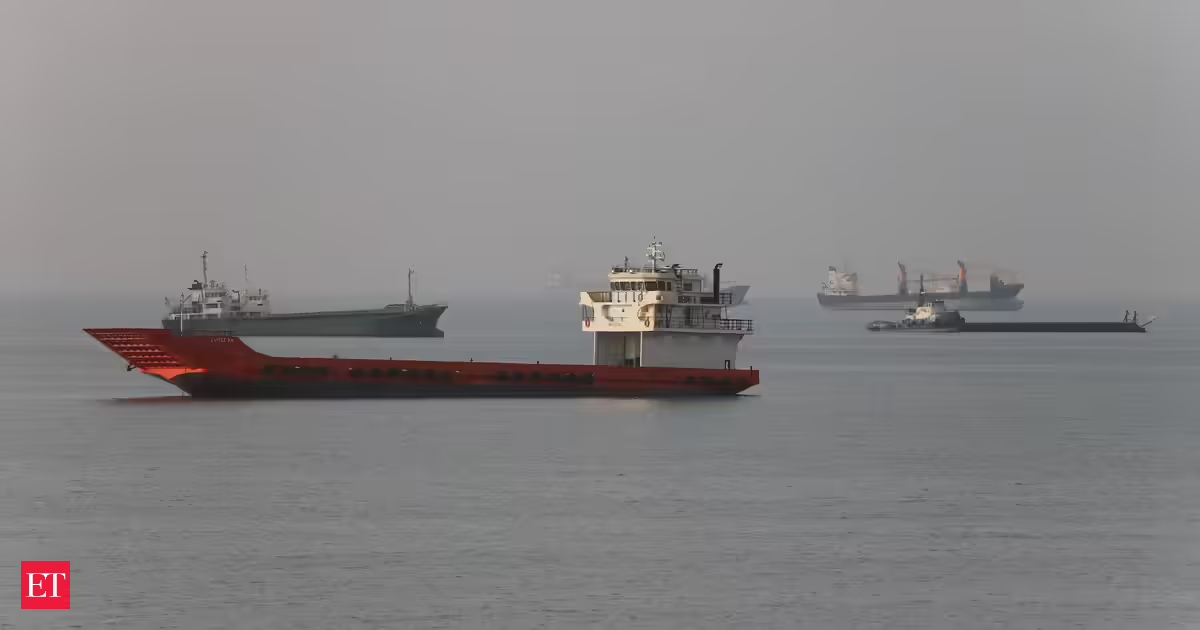
Zurich: The United States and Iran on Sunday began high-level peace talks in Switzerland, with Vice President JD Vance leading the American delegation and Iranian Parliament Speaker Mohammad Bagher Ghalibaf heading Tehran's team.This is the first physical format talks between the USA and Iran since the launch of the February conflict.The negotiations in Burgenstock follow a 14-point memorandum of understanding signed last week, which established a 60-day ceasefire and a framework for technical talks on Iran's nuclear programme.Also read: Iranian negotiators said to still be engaged in talks with US"State of Qatar, in its capacity as mediator, announces the launch of the Lake Lucerne summit proceedings and the first meeting of the high-level committee with the participation of representatives from the United States of America, the Islamic Republic of Iran, and the two mediating states, the State of Qatar and the Islamic Republic of Pakistan, expressing its aspiration that these meetings will lead to the conclusion of a comprehensive and permanent agreement addressing all aspects covered in the memorandum of understanding," the Qatar foreign ministry announced in a statement.Pakistan and Qatar, who played a role in bringing the USA and Iran on the same table, are participating in the talks. Pakistani PM Shehbaz Sharif and Army Chief Field Marshal Asim Munir, who claim to have brokered the talks, are present in Switzerland.US Special Envoy to the Middle East Steve Wikoff and Iranian foreign minister Abbas Araghchi are also part of the negotiations.The US lifted its blockade of Iran on Thursday, allowing oil tankers to resume movement through the Strait of Hormuz including three ships to India. Shipping has begun to recover, but experts warn the Strait is not yet fully operational. India would be keenly watching talks as a fully operational Strait of Hormuz is a necessity for India's energy security.After the US and Iran signed the 14-point memorandum of understanding on the sidelines of the G7 summit, they have a 60-day window to resolve disputes over Iran's nuclear programme, and other thorny issues needed to forge a more durable deal.Iranian state media reported the country's national security council will suspend tolls paid by ships for 60 days, per the deal, but that ships must still request Iran's permission - through a newly-established Persian Gulf Strait Authority, before passing through the Strait of Hormuz, which was once considered an international waterway.The document says the US will work with regional partners to create a fund of "at least $300 billion" for Iran's reconstruction and development. Vance has said Gulf Arab nations would invest that amount.It also claims that the US will unfreeze Iranian funds and assets that amount potentially to tens of billions of dollars. These commitments depend on further negotiations. But the Trump administration plans to issue sanction waivers to allow Iran to immediately sell its oil.IAEA director general Rafael Mariano Grossi said he met Swiss foreign minister Ignazio Cassis in Burgenstock to discuss recent developments regarding Iran, the path ahead and the role of the UN nuclear watchdog.Meanwhile, Israel attacked Lebanon on Saturday, hours after a ceasefire deal took effect. There was and is no restriction on Israeli soldiers to act to eliminate threats in Lebanon, with troops remaining in positions in the security zone, Israeli defence minister Israel Katz said on Sunday.(The reporter is in Switzerland at the invite of the Swiss government)Zurich: The United States and Iran on Sunday began high-level peace talks in Switzerland, with Vice President JD Vance leading the American delegation and Iranian Parliament Speaker Mohammad Bagher Ghalibaf heading Tehran's team.This is the first physical format talks between the USA and Iran since the launch of the February conflict.The negotiations in Burgenstock follow a 14-point memorandum of understanding signed last week, which established a 60-day ceasefire and a framework for technical talks on Iran's nuclear programme."State of Qatar, in its capacity as mediator, announces the launch of the Lake Lucerne summit proceedings and the first meeting of the high-level committee with the participation of representatives from the United States of America, the Islamic Republic of Iran, and the two mediating states, the State of Qatar and the Islamic Republic of Pakistan, expressing its aspiration that these meetings will lead to the conclusion of a comprehensive and permanent agreement addressing all aspects covered in the memorandum of understanding," the Qatar foreign ministry announced in a statement.Pakistan and Qatar, who played a role in bringing the USA and Iran on the same table, are participating in the talks. Pakistani PM Shehbaz Sharif and Army Chief Field Marshal Asim Munir, who claim to have brokered the talks, are present in Switzerland.US Special Envoy to the Middle East Steve Wikoff and Iranian foreign minister Abbas Araghchi are also part of the negotiations.The US lifted its blockade of Iran on Thursday, allowing oil tankers to resume movement through the Strait of Hormuz including three ships to India. Shipping has begun to recover, but experts warn the Strait is not yet fully operational. India would be keenly watching talks as a fully operational Strait of Hormuz is a necessity for India's energy security.After the US and Iran signed the 14-point memorandum of understanding on the sidelines of the G7 summit, they have a 60-day window to resolve disputes over Iran's nuclear programme, and other thorny issues needed to forge a more durable deal.Iranian state media reported the country's national security council will suspend tolls paid by ships for 60 days, per the deal, but that ships must still request Iran's permission - through a newly-established Persian Gulf Strait Authority, before passing through the Strait of Hormuz, which was once considered an international waterway.The document says the US will work with regional partners to create a fund of "at least $300 billion" for Iran's reconstruction and development. Vance has said Gulf Arab nations would invest that amount.Also read: Trump warns Iran: Stop Lebanon proxies or face ‘harder’ US strikesIt also claims that the US will unfreeze Iranian funds and assets that amount potentially to tens of billions of dollars. These commitments depend on further negotiations. But the Trump administration plans to issue sanction waivers to allow Iran to immediately sell its oil.IAEA director general Rafael Mariano Grossi said he met Swiss foreign minister Ignazio Cassis in Burgenstock to discuss recent developments regarding Iran, the path ahead and the role of the UN nuclear watchdog.Meanwhile, Israel attacked Lebanon on Saturday, hours after a ceasefire deal took effect. There was and is no restriction on Israeli soldiers to act to eliminate threats in Lebanon, with troops remaining in positions in the security zone, Israeli defence minister Israel Katz said on Sunday.(The reporter is in Switzerland at the invite of the Swiss government)
Hormuz in focus for India as US-Iran talks kick off in Switzerland
High-level peace talks between the US and Iran have commenced in Switzerland, led by Vice President JD Vance and Parliament Speaker Mohammad Bagher Ghalibaf. Mediated by Qatar and Pakistan, these discussions follow a recent memorandum of understanding that established a 60-day ceasefire and a framework for nuclear program talks.
1,109 words~5 min read