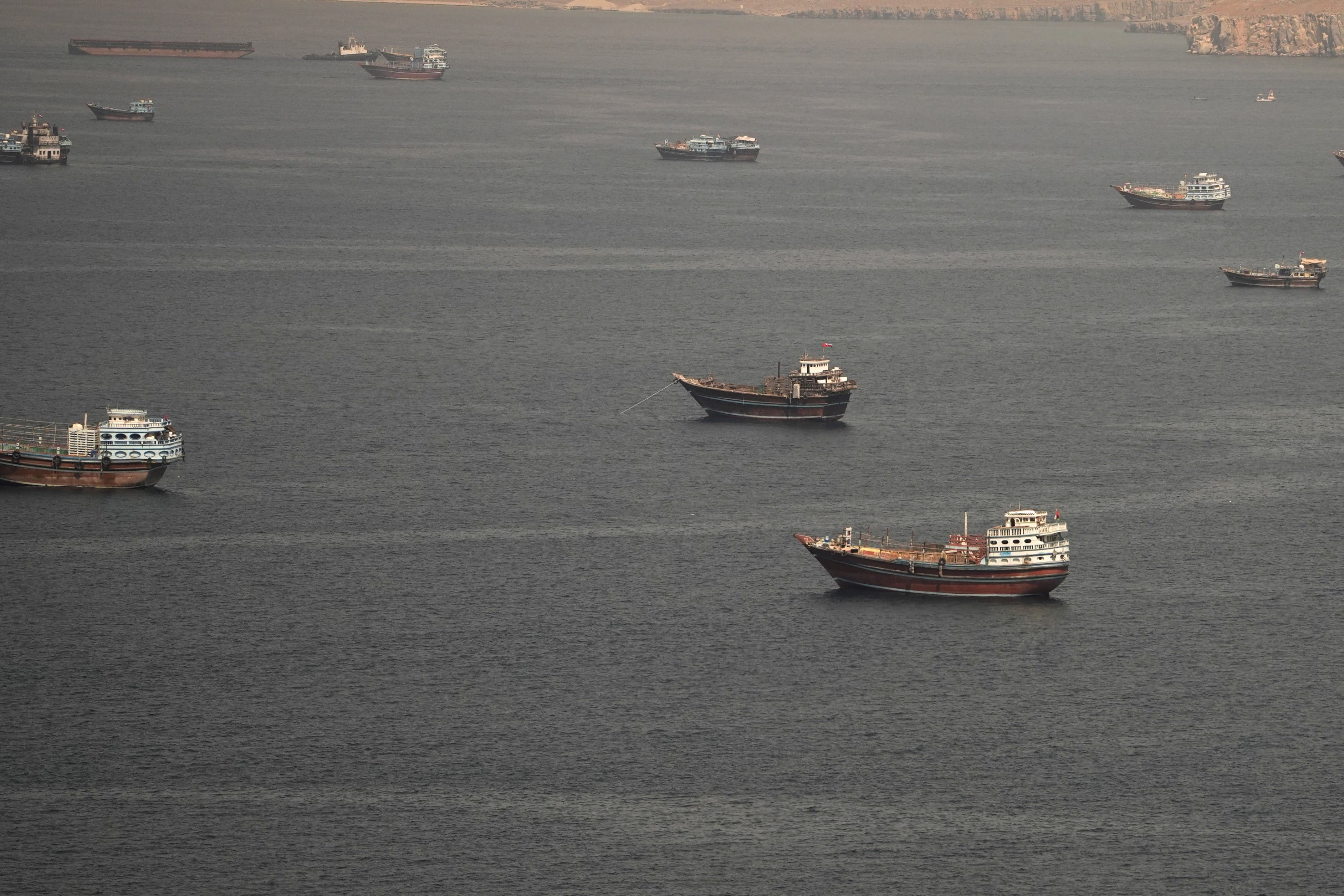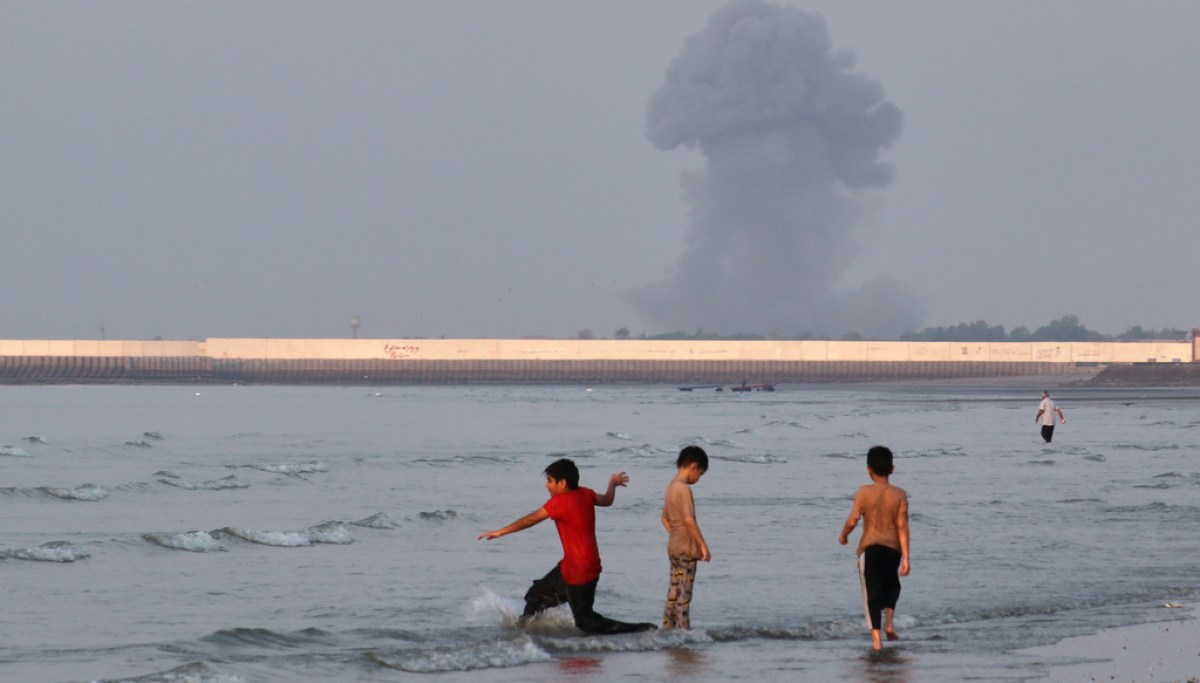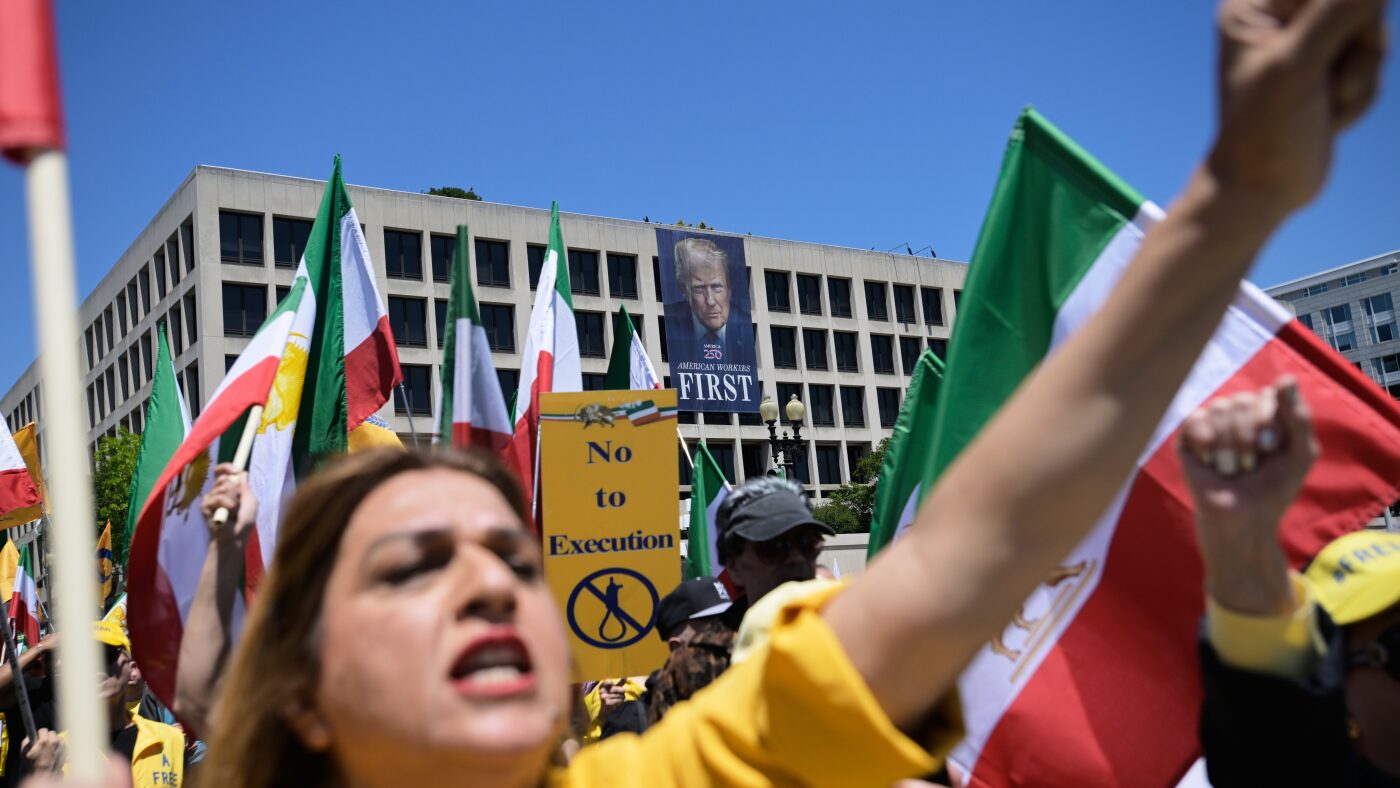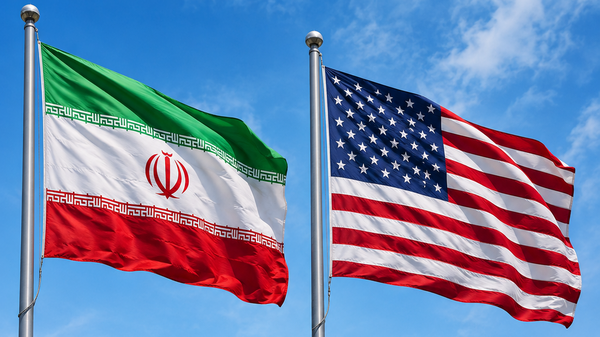
Donald Trump entered the war with Iran under the banner of restoring Pax Americana. He ended up opening the door to what the Islamic Revolutionary Guard Corps sees as Pax Irana: influence over the Strait of Hormuz, financial relief that lifts the economic pressure on the regime, and a Lebanese card used not merely to confront Israel through Lebanon, but to compete with Israel itself for influence with the United States.This did not happen because the Islamic Republic won militarily, nor because the United States suffered a military defeat. It happened because the American president abandoned his most effective leverage before securing the political and strategic gains for which the war was fought.By lifting the maritime blockade as soon as he embraced a floating memorandum of understanding, Trump opted for a personal escape from the predicament he had put himself in, but he failed to provide the United States with an exit strategy from the war he initiated and then stepped back from. He will be held accountable.That mistake will haunt Trump domestically before it haunts him abroad.He has not moved from war to settlement as much as he has moved from a military dilemma to a strategic one. Washington’s governing institutions do not share his confidence in the goodwill of the Islamic Republic. The CIA, the Pentagon, the State Department, influential voices in Congress, Republicans, and even parts of the MAGA movement see the memorandum not as a guarantee but as a gamble. The reason is straightforward: what Iran has gained is immediate and tangible, while what it has promised remains delayed, conditional, and subject to endless maneuvering.Lifting the blockade on Iranian ports is no technical detail. It removes economic pressure from a regime that Washington itself had only months ago spoken of forcing into submission. Releasing funds, paving the way for sanctions relief, and encouraging financial commitments and reconstruction mechanisms do more than revive the Iranian economy. They inject oxygen into the regime itself.The United States has shifted from a policy of coercion to one of financing based on assumptions of good faith. That gives the Islamic Revolutionary Guard Corps a precious opportunity to reorganize and consolidate.Tehran reads the memorandum very differently from Trump. The president wants to claim that he stopped the war, reopened Hormuz, and prevented Iran from obtaining a nuclear weapon. Yet his narrative is far from precise. Iran behaves as though it has secured practical recognition of the regime’s survival and won the right to buy time.Negotiations with the “Great Satan,” once an ideological taboo, have become a tool for preserving power. Iran has not abandoned its doctrine; it has adjusted its methods. It chose diplomacy because diplomacy became a pathway to money, and money became a pathway to preserving the IRGC rather than weakening them.The sixty-day period is unlikely to produce an agreement. It marks the beginning of another war of attrition. Iran excels at buying time, while Trump has little time to spare. Tehran will seek to stretch sixty days into ninety and one hundred and twenty. Not because it wants the memorandum to collapse, but because it wants to exhaust Trump’s nerves, humiliate the United States, and constrain Washington without imposing similar constraints on itself.Washington has already lifted the blockade and facilitated financial flows to the regime before securing firm commitments on enriched uranium, the nuclear program, missiles, drones, proxies, and militias. It has entered negotiations from a weaker position than the one it occupied before the memorandum.Lebanon, the perpetual victim, exposed that flaw before anyone else. Trump dismissed it at one point as a “secondary” issue, only later to suggest that Syrian President Ahmed al-Sharaa could play a role in disarming Hezbollah. This was not a mere slip of the tongue. It revealed a deeper misunderstanding—not only of Syria’s historical relationship with Lebanon, but of Iran’s doctrine itself.Hezbollah is not only and simply an armed extension of the IRGC. Lebanon is a strategic card in Tehran’s hands, used to confront Israel, prevent the emergence of a fully sovereign Lebanese state, and insert Iran into any American-Israeli architecture for the region. More importantly, Tehran believes it can now compete with Israel itself for influence with Donald Trump.Iran does not want Lebanon excluded from US-Iran understandings because the Lebanese card gives it leverage far beyond Lebanon’s size. Hezbollah is used not only to threaten Israel, but also to compete with Israel for access and influence in Washington.Whenever the United States seeks calm on the Lebanese front, progress in Lebanese-Israeli negotiations, or Israeli withdrawal from occupied Lebanese territory, it inevitably finds itself needing Tehran. That is the essence of the Iranian strategy: making itself indispensable to any arrangement in Lebanon and, by extension, to any regional arrangement.Lebanon was therefore never peripheral to the difficulties surrounding implementation of the memorandum. It was one of its keys and will remain so. Israel will not accept any arrangement without guarantees regarding Hezbollah and the IRGC. Nor can the Lebanese state recover its sovereignty while military and security decisions remain in the hands of forces tied to Tehran.If Trump were able to deal with Israel firmly enough to force a full withdrawal from occupied Lebanese territory, that would be a major achievement. But that would require him to be equally capable of forcing the IRGC to remove their hand from Lebanon and stop preventing the Lebanese state from monopolizing arms and disarming Hezbollah. Only then would there be a strategic transformation worthy of genuine hope.Until then, Lebanon remains at the center of the storm, not a “secondary” matter but one of the issues that will determine the success or failure of US-Iran understandings themselves.Hormuz is the other key. JD Vance speaks of free navigation without fees, but official Iranian declarations leave no doubt that Tehran has no intention of relinquishing influence over the strait or abandoning ambitions to dictate its terms. There is a world of difference between reopening navigation and surrendering control.Trump can say that Hormuz has been reopened. He cannot say that Iran has abandoned what it sees as its right to oversee that strategic artery. This is precisely where Pax Americana turns into Pax Irana: when Washington is satisfied with the reopening of the route while Tehran considers the route itself part of its sphere of influence.The Gulf states understand the danger better than anyone. They never wanted a prolonged war, but neither did they seek an outcome that effectively turns Iran into the region’s policeman. Once again, they find themselves paying the price of fluctuating American policies through compensation mechanisms, financial contributions, and the burden of containing Iranian retaliation.This is not stability. It is organized extortion unless accompanied by genuine changes in Iranian behavior.The most dangerous element is that missiles, drones, and proxy networks appear to be absent from the core of the Memorandum of Understanding. That was the fatal flaw of previous agreements with Iran, and it may be repeated today at a much higher cost. The nuclear issue alone is not the problem. The problem is the doctrine that uses nuclear ambitions, missiles, proxies, strategic waterways, and money as instruments of one project.Trump will face difficult questions both internationally and at home. Why was the war launched? Why did he retreat? Why was pressure abandoned before securing results? Why were proxies excluded from the discussion? Why was Lebanon left in the midst of the Iranian-Israeli confrontation? Why does Washington now place its hopes in a regime distrusted by its own security institutions? And why all the secrecy and darkness?These questions will come not only from Democrats but from Republicans who watched the president move from demanding Iran’s surrender to embracing a deal that grants Tehran money, strategic status, and influence over international waterways. Should the sixty days fail, Iran will not be the only party held accountable. Trump himself may face consequences far beyond anything he currently imagines.The IRGC already behaves as though it won the first round. The regime survived. The blockade was lifted. Money became available. Lebanon and Hormuz entered the bazaar of negotiations. The United States, meanwhile, emerged not with a strategy but with a memorandum destined to erode. That is the difference between a deal that ends a war and one that merely postpones the crisis.The shift from Pax Americana to Pax Irana is not a slogan. It is a process. It began when Trump fought in the name of restoring American prestige, only to embrace an arrangement that gives the IRGC the opportunity to entrench the doctrine of the Islamic Republic and reshape its regional role with arrogance, vengeance, and revenge.Unless Washington regains its leverage and links money, sanctions, Hormuz, Lebanon, and proxy forces into one comprehensive framework, this memorandum will not provide an exit from war. It will become the road to a longer deeper crisis, one whose cost Trump will bear at home and whose consequences the region will pay in security, sovereignty, and stability.Read more:Lebanon’s sixty days to choose statehoodThe ‘great settlement’: Trump’s financial heist, Iran’s strategic heistG7 summit: US-Iran deal, Mideast stability and global priorities take center stage
From Pax Americana to Pax Irana: Did Trump do it by accident or by design?
Donald Trump entered the war with Iran under the banner of restoring Pax Americana. He ended up opening the door to what the Islamic Revolutionary Guard
TL;DRAI
Trump ha revocato il blocco all'Iran senza impegni su enriched uranium e missiles, cedendo coercizione prima di assicurare i guadagni strategici promessi. L'IRGC consolida influenza regionale senza vincoli verificabili: instabilità geopolitica che impatta supply chain energy e credibilità USA come garante di sicurezza.
1,506 words~7 min read