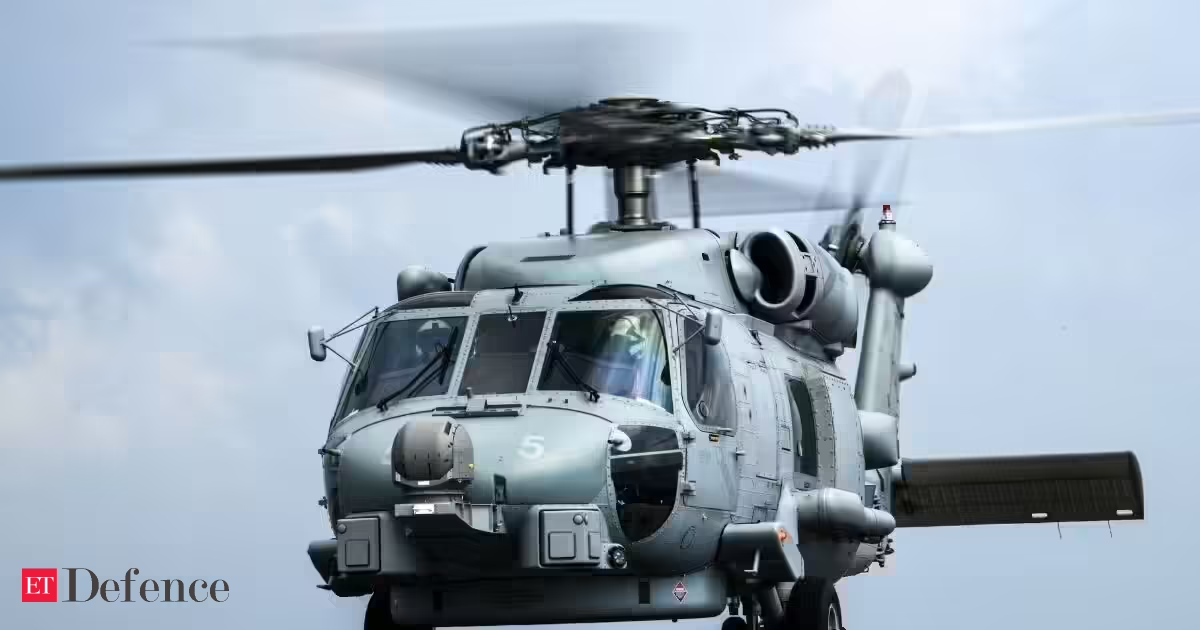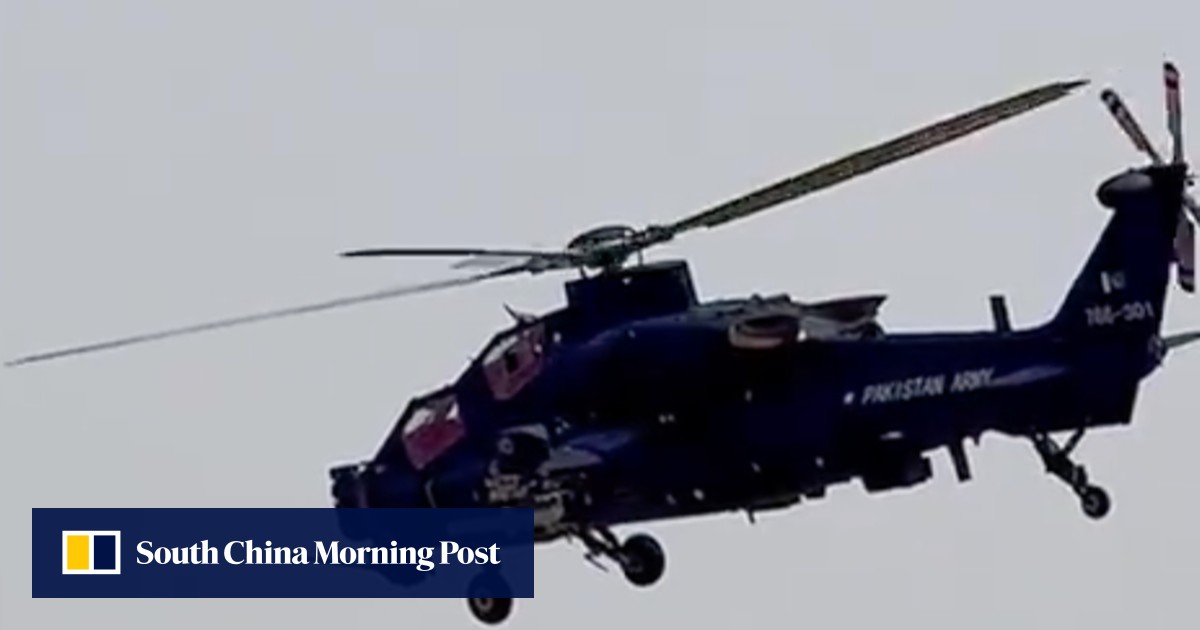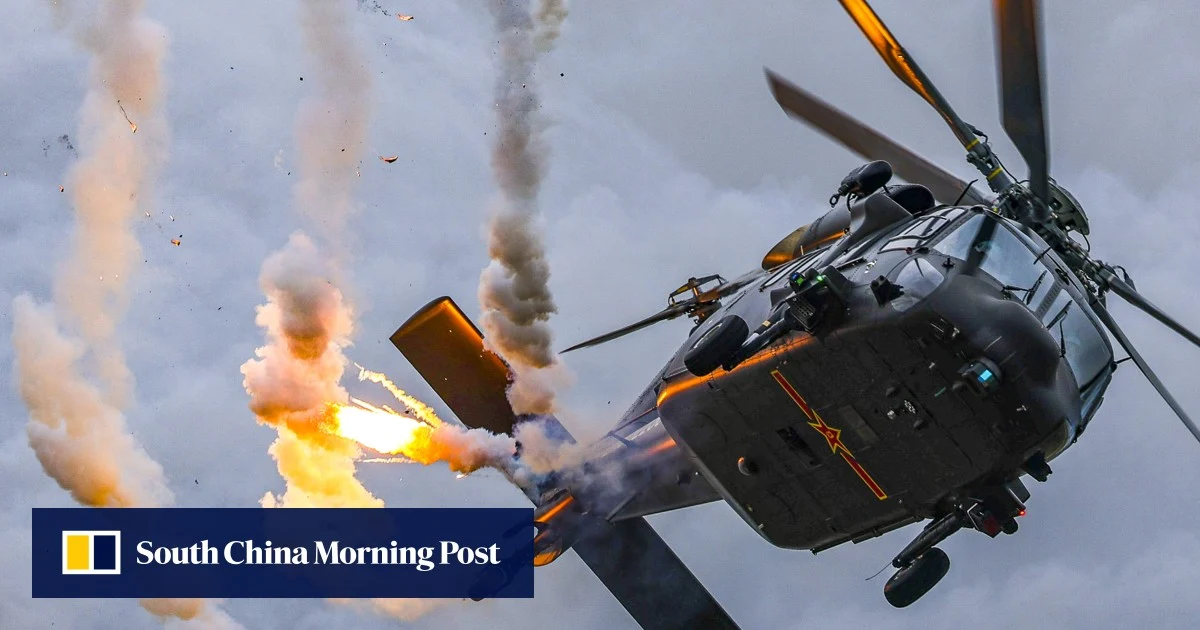
Telling a Harbin Z-20 and a Sikorsky UH-60 “Black Hawk” apart can be challenging – the two helicopters look almost identical and their dimensions are very similar.The striking resemblance underscores China’s decades-long effort to close the technological gap with the United States and Russia in the important aviation sector of helicopters.Yet, there are differences: the Z-20 has five main rotor blades compared with the UH-60’s four, and its cabin features two front windows instead of the American model’s three.The Z-20 is Beijing’s most advanced military helicopter designed for multiple situational uses, including in the Taiwan Strait.PLA kicks off military exercises around TaiwanChina entered the scene late. Until 1984, it lacked high-altitude-capable helicopters. That changed when 24 S-70Cs, the Black Hawk’s civilian variant, were imported at the peak of China-US ties.Over the next three and a half decades, China relied solely on this ageing and shrinking fleet for both military and civilian missions in its vast high-altitude territories.
Red Hawk rising: how the Z-20 helicopter family plugs China’s defence gaps
Modern technology has put the multi-role utility helicopter ahead of the original Black Hawk, making it an anchor of the PLA’s new air era.
TL;DRAI
China's Z-20, a 5-blade military helicopter, closes decades-long technological gap with US/Russia in aviation; designed for Taiwan Strait ops. Indigenous production replaces aging imported S-70C variants, signaling strategic autonomy and capability escalation in regional military balance.
157 words~1 min read