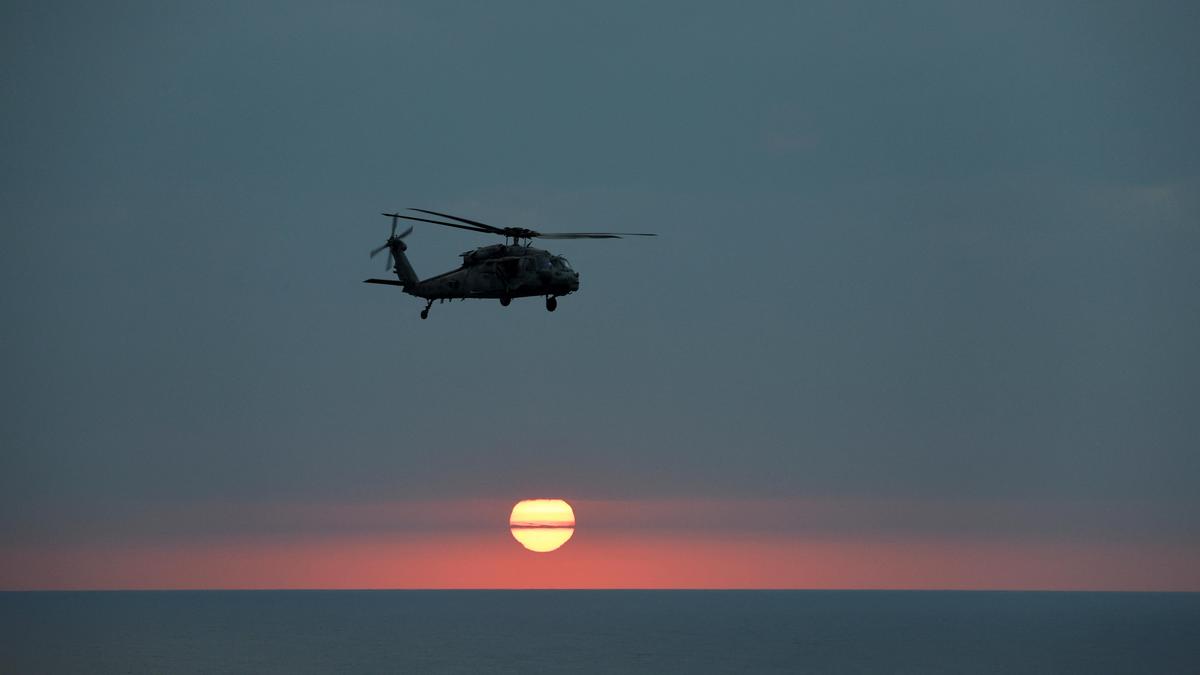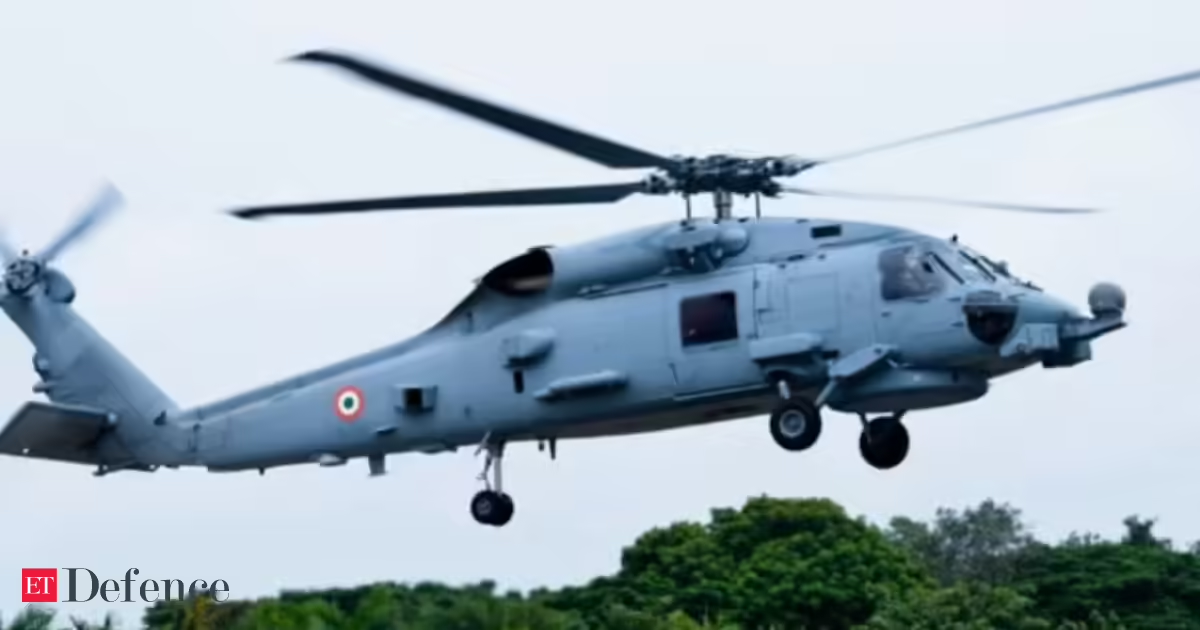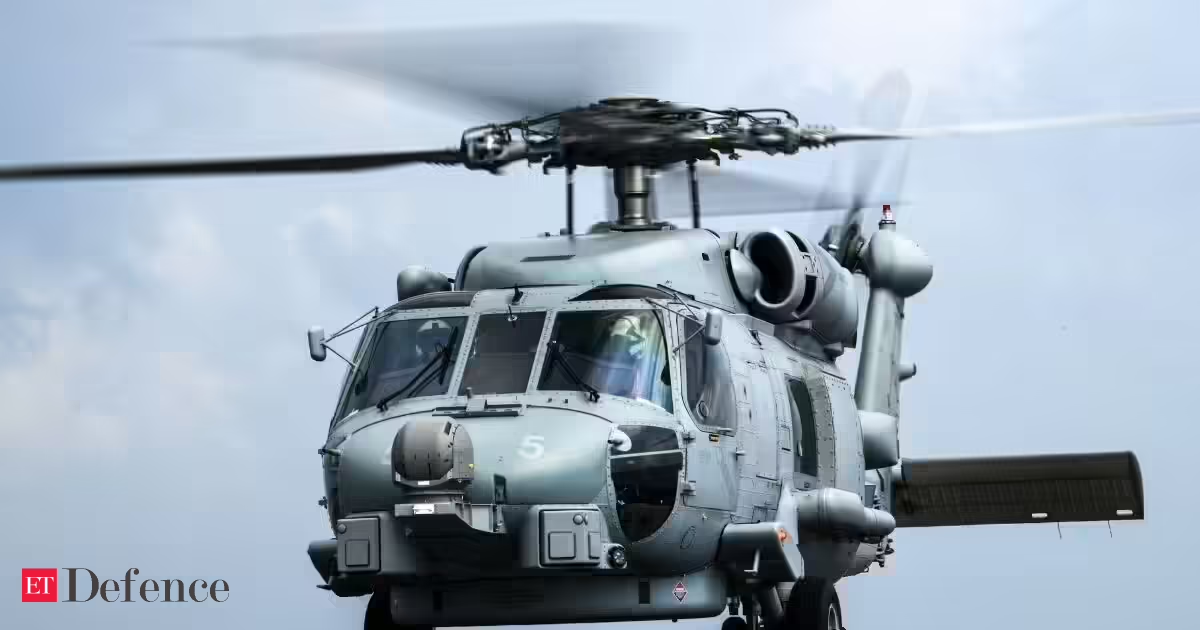
The growing submarine presence of China and Pakistan has intensified the need for India to strengthen its anti-submarine warfare capabilities, with naval helicopters emerging as a critical requirement for securing the country's maritime interests.The undersea domain has become an increasingly contested arena of modern warfare, where submarines equipped with advanced weaponry and stealth capabilities can operate underwater for extended periods. Pakistan has already inducted the first of eight submarines being built by China, while the Chinese navy operates a fleet of more than 60 submarines, according to the Observer Research Foundation.Helicopters central to anti-submarine operationsNaval helicopters serve as the primary anti-submarine assets for surface fleets. Fitted with dipping sonars, sonobuoys, magnetic anomaly detectors and lightweight torpedoes, they significantly enhance a warship's ability to locate, monitor and engage underwater threats.Without sufficient helicopter support, even advanced destroyers and frigates face increased vulnerability from submarines operating beyond the range of onboard detection systems.Indian Navy's MH-60R Seahawk capabilityThe Indian Navy currently operates the MH-60R Seahawk, a multi-mission maritime helicopter developed by Sikorsky and Lockheed Martin and designed for anti-submarine warfare and anti-surface warfare missions. The platform provides combat and logistics support from destroyers, frigates and aircraft carriers.The helicopter is operated by a crew of three to four personnel and is powered by two General Electric T700 series turboshaft engines. It can achieve a maximum speed of 180 knots, has a range of approximately 830 kilometres and a service ceiling of 12,000 feet.The MH-60R is equipped with a multi-mode maritime surveillance radar, Airborne Low-Frequency Dipping Sonar, sonobuoy acoustic sensors, forward-looking infrared systems and advanced electronic warfare equipment. Its integrated mission system combines information from onboard sensors to create a comprehensive picture of surface and underwater activity, enabling crews to detect, track and engage hostile vessels and submarines.Its armament includes Mk 54 and Mk 46 lightweight torpedoes, AGM-114 Hellfire missiles, Advanced Precision Kill Weapon System rockets and crew-served machine guns. The helicopter can carry a payload of up to 2,700 kilograms.Indian Navy's P8I maitime surveillance aircraftP-8I fleet provides long-range surveillanceAlongside its helicopter fleet, the Indian Navy operates 12 P-8I long-range maritime patrol and anti-submarine warfare aircraft. Manufactured by Boeing, the P-8I is a heavily modified variant of the Boeing 737-800 commercial airliner and serves as the Navy's primary fixed-wing submarine hunting platform.The aircraft is designed to conduct long-range maritime surveillance, intelligence gathering, anti-submarine warfare and anti-surface warfare missions across the Indian Ocean Region. Its advanced sensors and extended endurance allow it to monitor vast stretches of ocean and detect potential threats far from India's coastline.The Navy is also expected to place an order for six additional P-8I aircraft at an estimated cost of $3.5 billion, which would further strengthen India's maritime reconnaissance and undersea warfare capabilities.While the P-8I offers wide-area surveillance and long-range submarine tracking, naval helicopters provide persistent ship-based coverage and rapid response capabilities. Together, the two platforms form a layered anti-submarine warfare network.Current fleet strength remains limitedThe Indian Navy has inducted 21 MH-60R Seahawk helicopters from the 24 ordered from the United States. While the acquisition has strengthened anti-submarine warfare capabilities, the current fleet size remains limited for a navy tasked with protecting a vast maritime area extending from the Bab el-Mandab to the Strait of Malacca.Although India's naval modernisation efforts have progressed steadily, helicopter induction has lagged behind the expansion of the surface fleet.Need to accelerate helicopter programmesThe Navy is required to expedite the Naval Multi-Role Helicopter and Naval Utility Helicopter programmes to ensure frontline warships are equipped with dedicated airborne anti-submarine warfare capabilities.The significance of underwater warfare has increased in recent years as modern submarines are capable of disrupting sea lines of communication, threatening aircraft carrier groups and imposing strategic costs while remaining concealed. Recent submarine-related activities in the broader Indian Ocean region have further highlighted the impact underwater threats can have on regional maritime security.Capability gap remains a concernAlthough India has cleared the procurement of additional P-8I aircraft through the Acceptance of Necessity process, new aircraft will take time to enter service. In the meantime, expanding the naval helicopter fleet offers a faster way to strengthen anti-submarine warfare coverage across the fleet.By speeding up helicopter acquisitions, promoting indigenous manufacturing and integrating these platforms across naval formations, India can address one of its most significant operational shortfalls. As submarine fleets continue to expand across the Indo-Pacific, the Navy's ability to control the undersea battlespace will increasingly depend on a combination of advanced warships, maritime patrol aircraft and the helicopters operating from them.
India's submarine hunters: Why the Navy is pushing for more helicopters and P-8I aircraft
India is urgently bolstering its anti-submarine warfare capabilities amidst growing Chinese and Pakistani submarine presence. Naval helicopters, like the MH-60R Seahawk, are crucial for detecting and engaging underwater threats, complementing the P-8I aircraft. While progress is being made, the current helicopter fleet size is limited, necessitating accelerated acquisition and indigenous manufacturing to secure India's vast maritime interests against evolving undersea challenges.
India accelerates MH-60R and P-8I procurement to counter 60+ Chinese and Pakistani submarines threatening Indo-Pacific security. For defense strategy, expanding helicopter ASW faster and cheaper than fixed-wing fleets pragmatically addresses critical undersea warfare gaps.