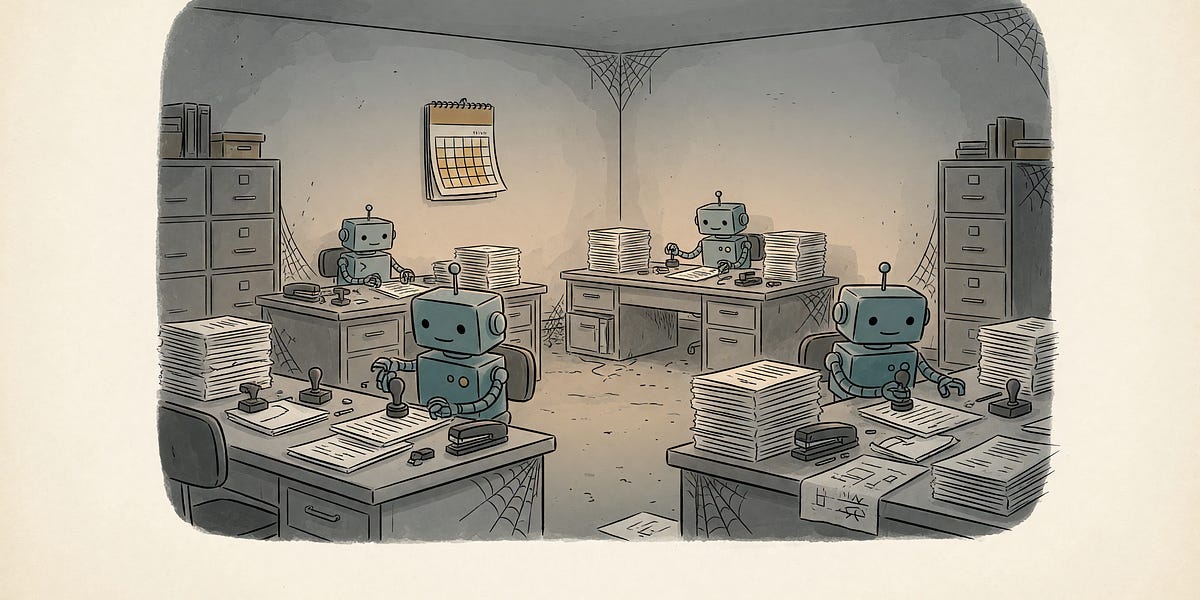
The fastest way to make an AI agent dangerous is to let everybody use it and nobody own it.The moment an agent starts reading real files, drafting real messages, and changing things other people rely on, it stops being a tool you use and becomes work you are responsible for. When nobody owns that work, it does not fail loudly. A support agent keeps answering from a policy that changed last quarter. A planning agent keeps turning noisy tickets into clean-looking priorities. The agent keeps running, the output keeps arriving, and the value drains out while everyone stays busy.That is the haunted house version of a company: rooms full of automated systems still moving long after the reason for them disappeared, leaving drafts, tickets, and recommendations that look like progress and change nothing. No more haunted houses.Every useful agent eventually becomes part of the work, and the work needs one accountable owner. Not a committee, not the AI team by default. One person close enough to know whether the agent is helping, drifting, or just adding polished noise. Knowing exactly when an agent crosses from convenient to consequential is the difference between owning your tools and being run by them without noticing.This briefing covers:The one-sentence ownership test. The rule that tells you exactly when an agent becomes work someone has to own, and who that someone is.How ownership scales. Why the job changes as you move from a personal agent to a shared team agent to a multi-agent pipeline, and where each one tends to break.How ownerless agents fail. The ordinary failure modes that turn a useful agent into confident noise: stale diets, rotted instructions, dead review loops.The Agent Owner’s Card. A one-page artifact that makes an agent visible, the human-readable counterpart to the machine cards agents already hand each other, plus a prompt you point an existing agent at so it drafts the fields it can see and hands the ownership questions back to you to answer and review.Why this is not IT governance. A committee can govern the road. One person still has to own the agent doing the work.Getting this right is less about how many agents you run and more about knowing who owns each one.
Executive Briefing: Your team is running agents nobody owns. The one-page card and two prompts that fix it.
Watch now | I have watched too many agents fail because everyone wanted what they could do and nobody wanted to own them. The next real AI skill? Ownership.
TL;DRAI
Agents without owners deliver outdated outputs while appearing productive, creating hidden compliance risks and wasted effort across teams. Single accountable ownership per agent—with governance and review loops—separates real automation value from confident noise.
370 words~2 min read