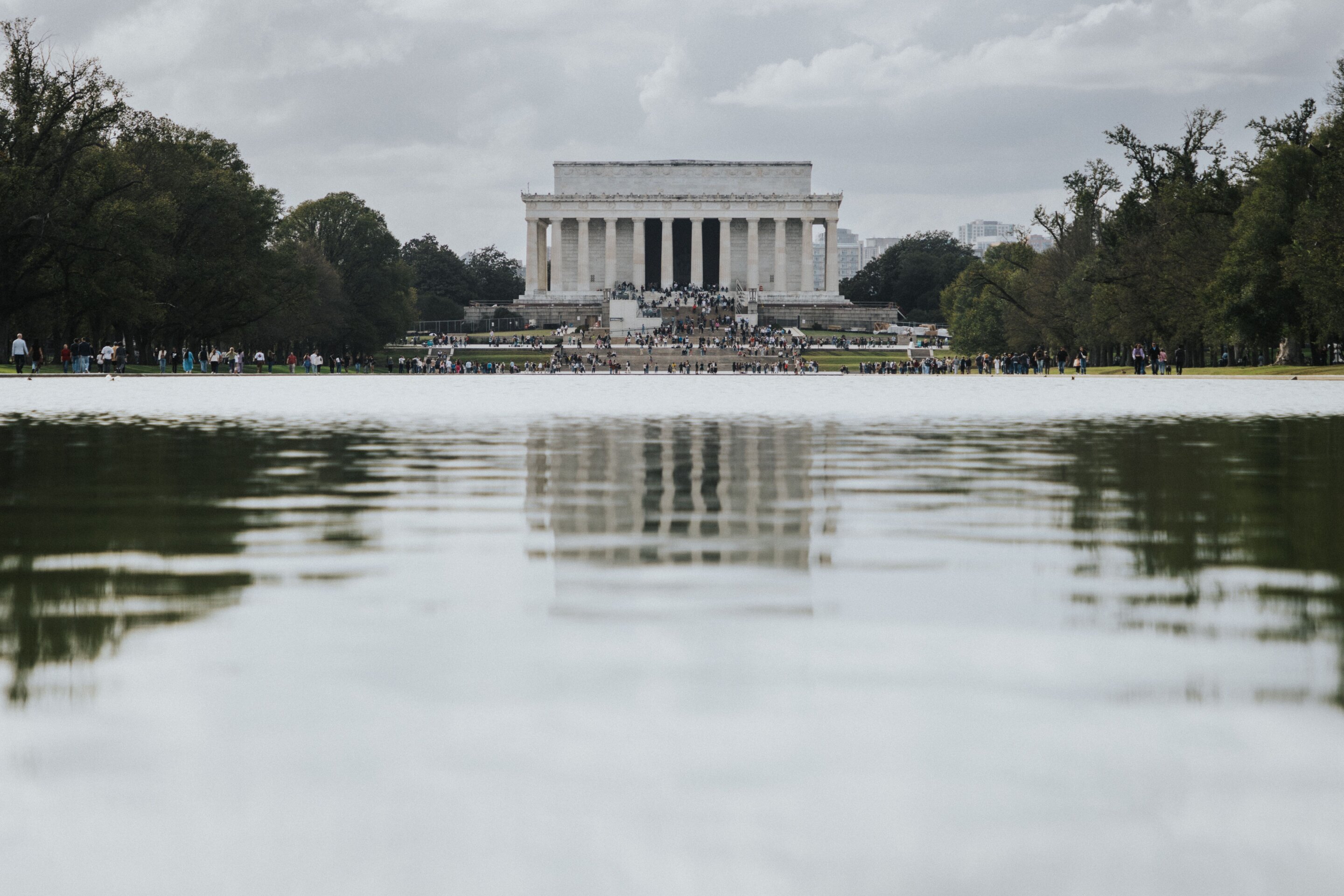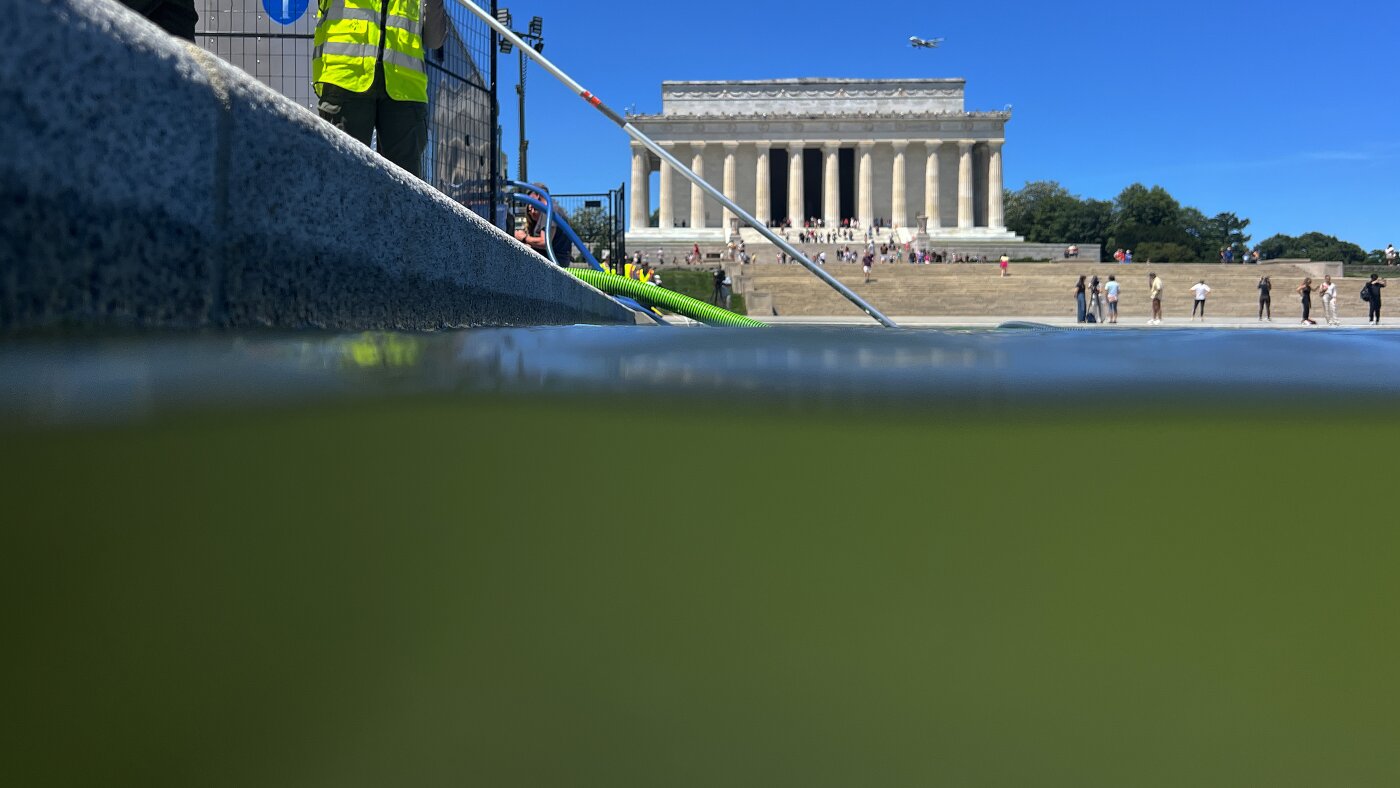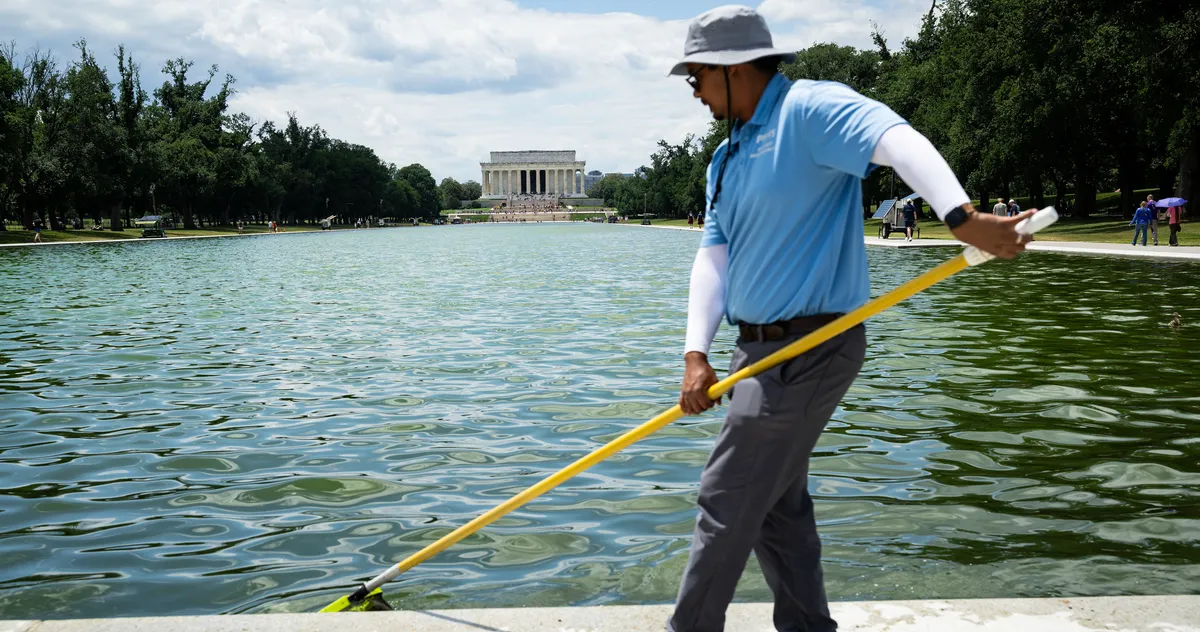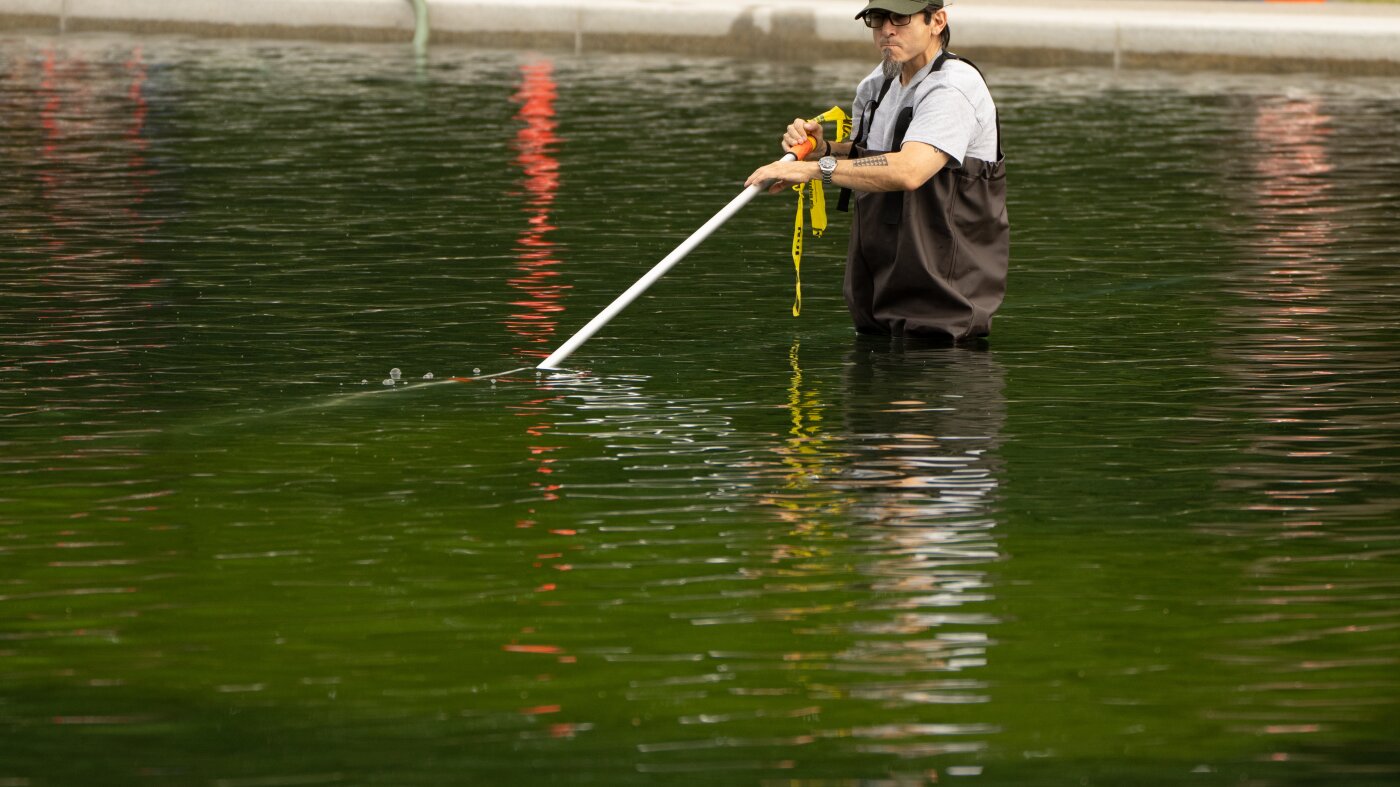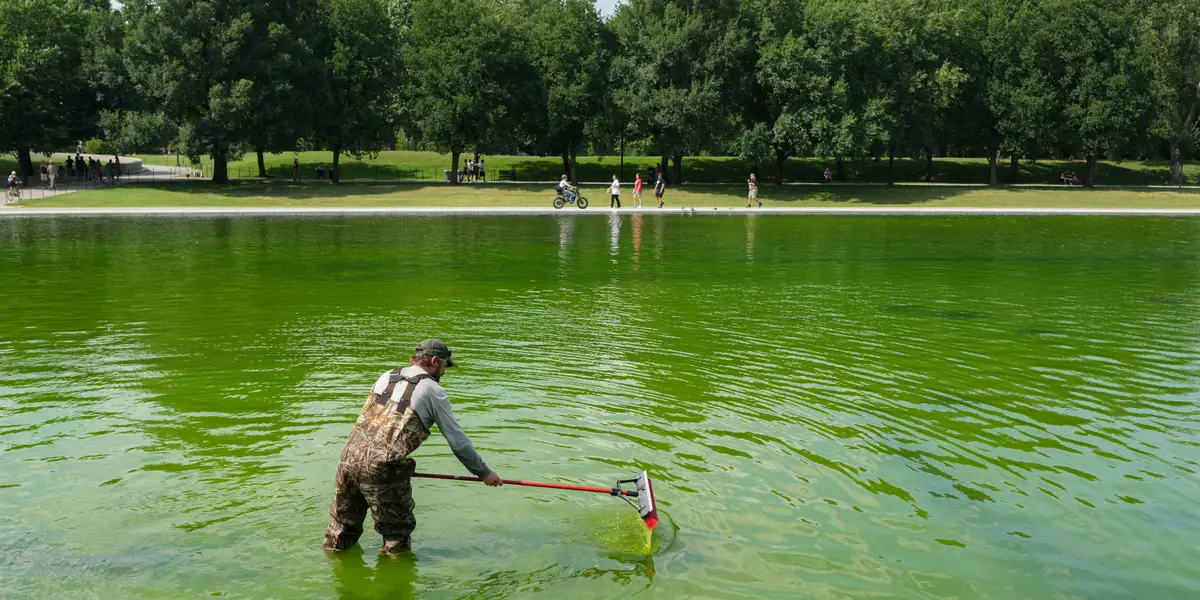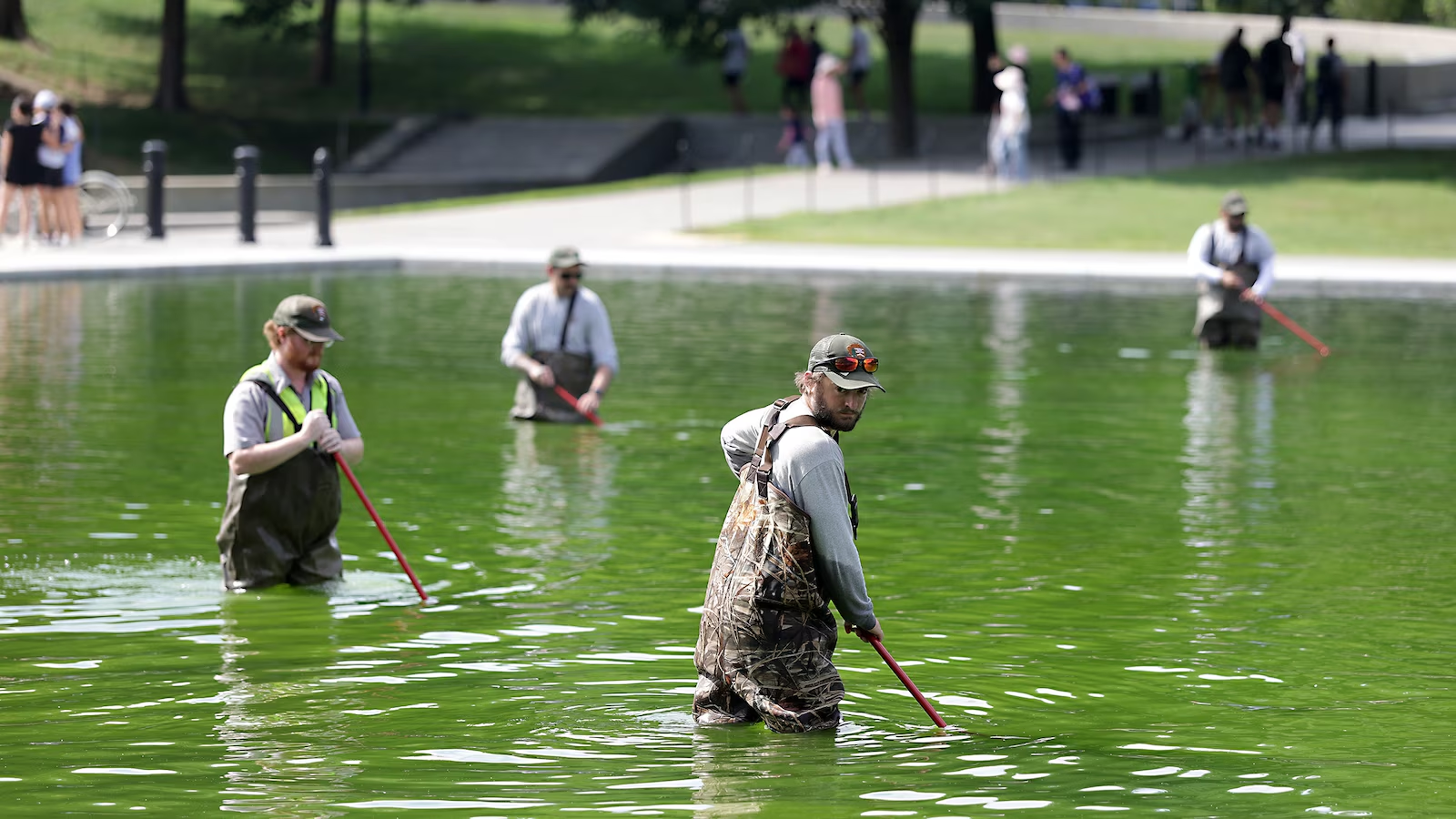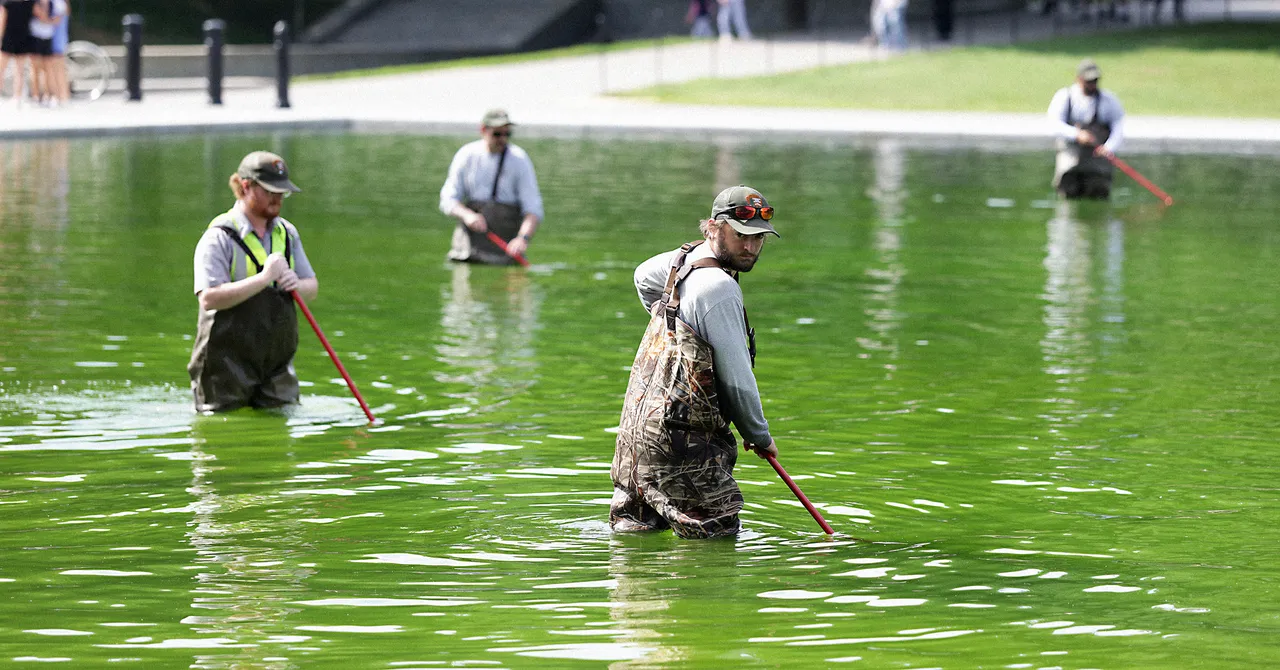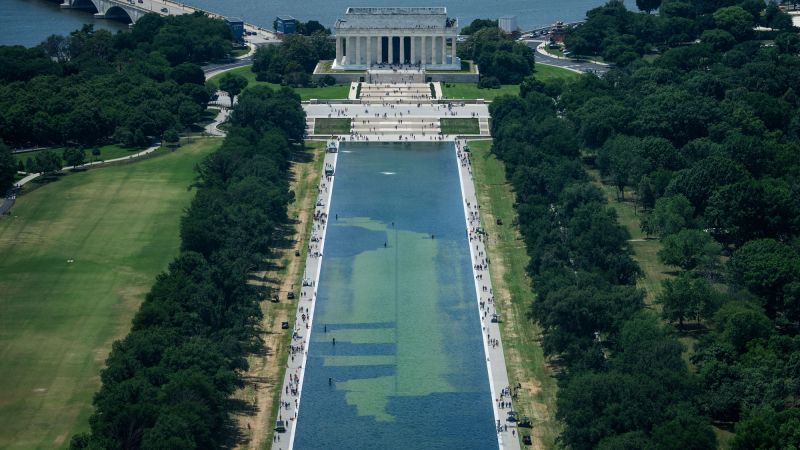
WASHINGTON, DC - JUNE 14: National Park Service employees work to clean up algae in the Lincoln Memorial Reflecting Pool following the completion of recent renovations on June 14, 2026 in Washington, DC. (Photo by Tasos Katopodis/Getty Images)
The Reflecting Pool on the National Mall has been in the news and social media quite a bit in recent weeks because of algae. I will leave all of the political commentary for others. This short essay offers the “science” of how algae forms and how it can help society. This piece was actually inspired by my wife cleaning our cat’s automatic water dispenser, which had been sitting near a window. She noticed green algae stains, and we certainly cannot have our Nova drinking that.
Nova is the writer's cat. Her water dispenser was accumulating algae near this window.
What Is Algae?
“The term ‘algae’ actually encompasses an incredibly large and genetically diverse group of organisms. Genome sequencing has found algae in four different kingdoms: Plantae, Chromista, Protista, and Bacteria,” according to the U.S. Department of Energy website. “Algae can be unicellular or as large as a tree like the giant sea kelp. Algae are typically photosynthetic, meaning they need carbon dioxide and sunlight to grow – just like plants,” the DOE website went on to say. Why is the DOE writing about algae any how? Keep reading, and I will explain later.