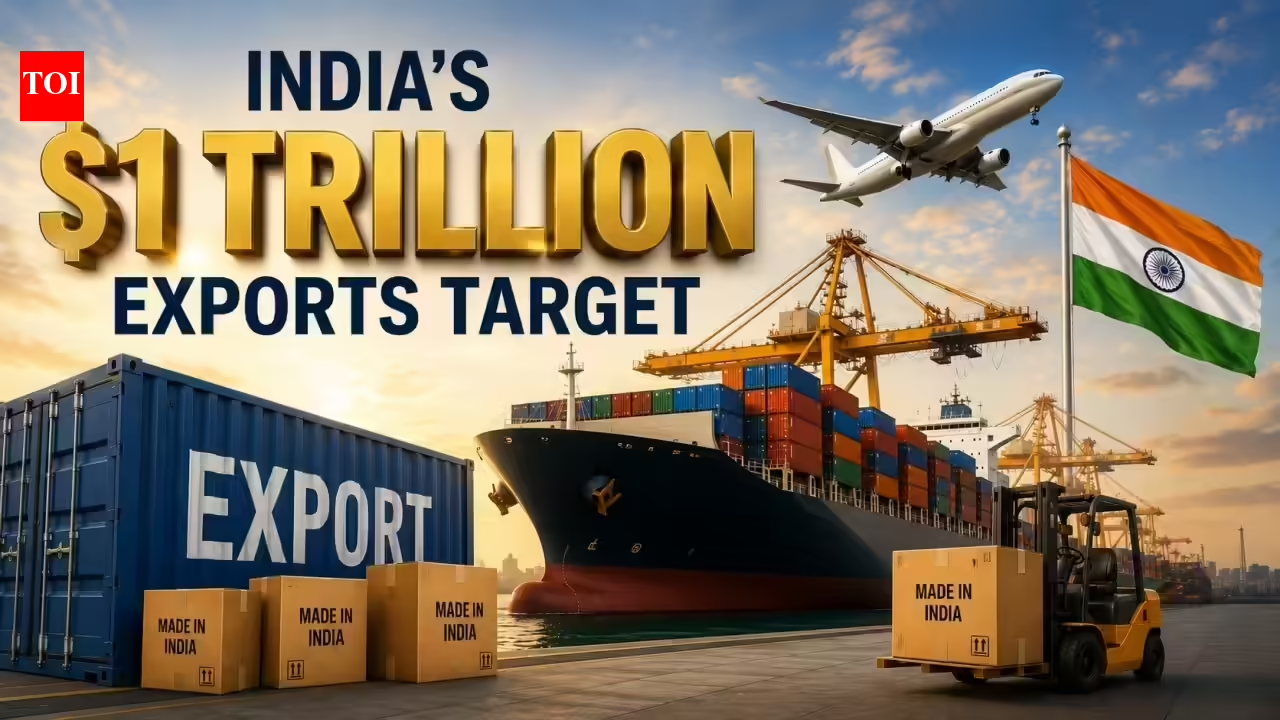
The Department of Commerce is preparing detailed export strategy papers for 20 shortlisted focus markets, identifying product-specific opportunities and challenges as well as market-specific interventions as part of a broader effort to boost India’s merchandise exports to $1 trillion by 2030-31.The Department has sought extensive inputs from exporters, industry associations and export promotion councils on issues ranging from tariff barriers and regulatory requirements to logistics bottlenecks, sustainability norms and payment-related concerns, according to sources.“The exercise is aimed at developing actionable export strategies for each market, with recommendations tailored to specific sectors and products where India has the potential to expand its market share,” a source tracking the matter told businessline.At the same time, the Department is working on measures to help services exports reach the $1 trillion mark by 2030-31 for a combined goods and services exports of $2 trillion.The 20 priority export markets identified by the government include the US, Brazil, the UK, Germany, France, Italy, the Netherlands, Russia, the UAE, Saudi Arabia, South Africa, China, Japan, South Korea, Australia, Singapore, Indonesia, Vietnam and Bangladesh. The six high growth potential sectors include engineering goods, electronics, textiles, pharmaceuticals, chemicals and plastics, and agriculture and allied products.As part of the consultations, exporters have been asked to rank the most severe obstacles they face, including tariff disadvantages, technical regulations, product standards and certification requirements, difficulties in accessing buyers and distribution networks, price competition, logistics constraints and lack of market intelligence. “The government is also seeking feedback on whether Indian exporters face a competitive disadvantage against rivals that enjoy preferential access under free trade agreements. This would help it formulate its own free trade agreement strategies to ensure level playing field for exporters,” the source said.A significant focus of the exercise is understanding the impact of increasingly stringent compliance requirements in overseas markets. Exporters have been asked to provide details of challenges related to product testing and certification, traceability mandates, packaging and labelling norms, environmental and social compliance standards, and emerging carbon-reporting obligations. The Department is also gathering information on whether Indian test reports and certifications are fully accepted abroad or subjected to additional verification.The consultations are expected to provide a clearer picture of logistics and supply-chain bottlenecks affecting India’s export competitiveness, including high freight costs, container shortages, port congestion, trans-shipment delays, long transit times and elevated insurance costs.Published on June 21, 2026
Commerce Dept begins charting export roadmaps for 20 priority markets chasing $1 trillion target
The Commerce Department is developing export roadmaps for 20 markets to boost India's merchandise exports to $1 trillion by 2030-31.
390 words~2 min read