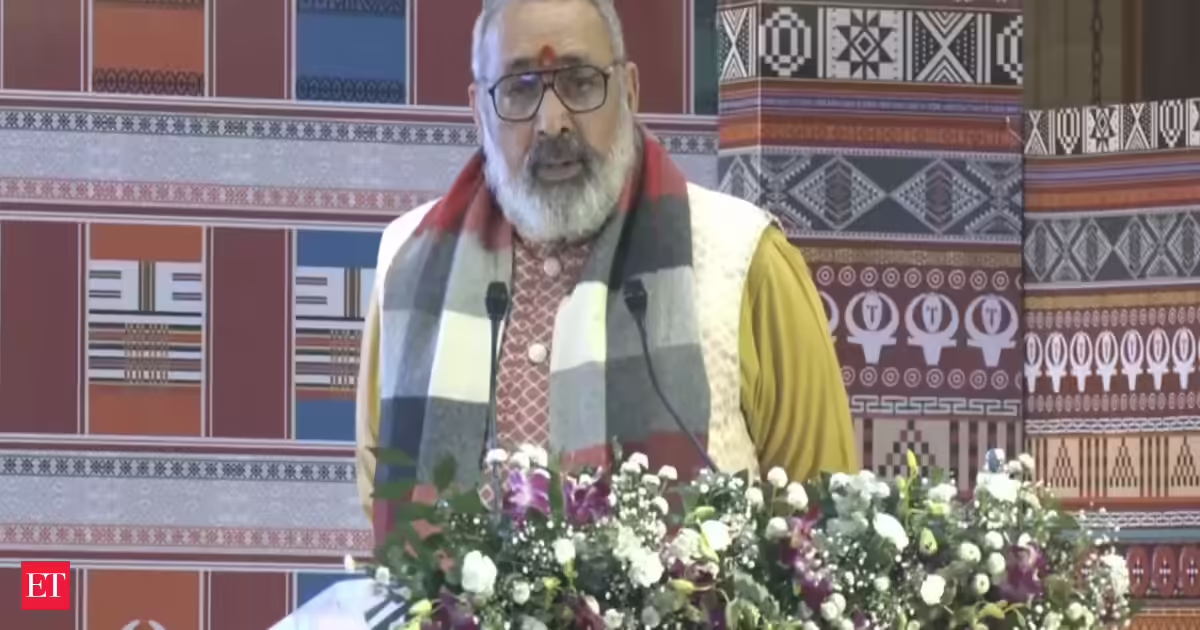
The textiles ministry has stepped up efforts to position India as a global textile hub, drawing up a roadmap to achieve $100 billion in textile exports by 2030 with a focus on sustainability and free trade agreements (FTAs).Sustainability emerged as a key theme during the two-day summit concluded Wednesday, with stakeholders highlighting the growing importance of traceability, recycling and compliance with global environmental standards. Industry representatives recommended adopting digital product passports, developing textile recycling ecosystems, and establishing easier compliance norms for micro, small and medium enterprises (MSMEs).Union Minister of textiles Giriraj Singh said in his address that the sector’s growth would depend on translating policy discussions into action at the state and district levels. He called for greater focus on product-market mix, value addition, and compliance with sustainability and environmental standards. Secretary Neelam Shami Rao further mentioned the need to translate recommendations received from states, districts, industry stakeholders and export promotion councils into a comprehensive National Textile Export Roadmap. Commerce Secretary Rajesh Agrawal urged exporters to make better use of market-access opportunities created through FTAs and encouraged states to actively participate in the revived District as Export Hubs (DEH).The discussions also underlined the need to improve ease of doing business, diversify markets and products, and attract anchor investors, with a stronger push for man-made fibres (MMF). Participants emphasised building in-house design capabilities, responding to changing consumer preferences, and developing globally competitive “Champion MSMEs”. Strengthening export finance, risk mitigation tools and strategic market access initiatives were also flagged as key enablers to boost exports and promote Brand India globally.
India targets $100 billion textile exports by 2030, focus on sustainability, FTAs
India is aiming to become a global textile powerhouse, targeting $100 billion in exports by 2030. The strategy emphasizes sustainability, including recycling and environmental compliance, alongside leveraging free trade agreements. Key initiatives involve digital product passports, supporting MSMEs, and enhancing product-market strategies. The focus is on translating policy into action across all levels to boost the sector and promote 'Brand India' internationally.
258 words~1 min read