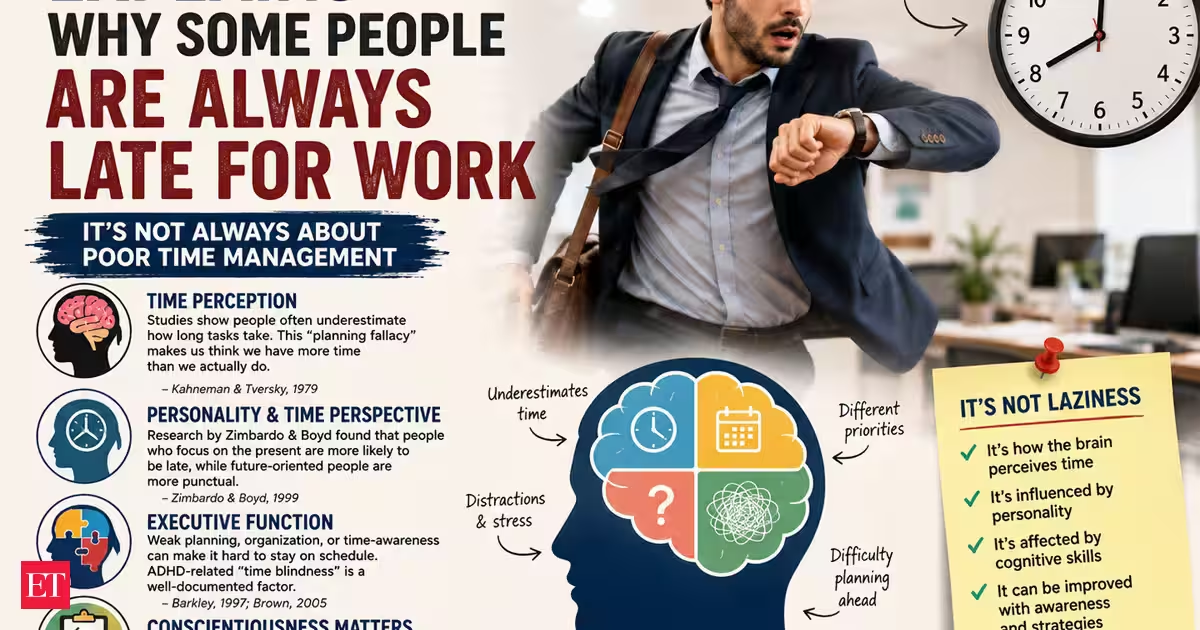
Almost everyone knows someone like this. They receive an assignment two weeks in advance. Nothing happens. Days pass. The task sits untouched. Then suddenly, 4 hours before the deadline, something changes. Their energy appears. Their focus sharpens. Within a few hours, they accomplish what they could not do for days. To outsiders, this behavior often looks like laziness. Psychology suggests a different explanation. For many people, the problem is not a lack of intelligence, discipline, or ambition. Instead, their brain struggles to activate until urgency creates enough emotional energy to begin. The reality is that deadlines can temporarily become the fuel their brain has been waiting for.Why The Brain Struggles With Distant RewardsOne explanation comes from Temporal Motivation Theory, developed by psychologist Piers Steel. Humans naturally prioritize immediate rewards over future rewards. When a deadline is far away, the brain treats it as low priority. The task feels abstract. The consequences feel distant. As a result, motivation stays low. But as the deadline approaches, something changes. The future suddenly feels real. The brain immediately upgrades the task's importance. This is why someone can ignore an assignment for days and then suddenly work intensely hours before submission.Why Anxiety Sometimes Becomes MotivationPsychologists also connect this habit to Yerkes-Dodson Law. This theory explains that moderate levels of stress can improve performance. For some people, low-pressure environments actually reduce productivity. Their brains need a certain amount of stimulation before fully engaging. A close deadline creates exactly that. Heart rate increases. Attention narrows. Distractions become less appealing. The brain enters action mode. This does not mean stress is healthy in large amounts. It means some people unintentionally train themselves to rely on urgency.Why Procrastination Is Often Emotional, Not Time ManagementMany people assume procrastination is a scheduling problem. Psychologists increasingly view it as an emotional regulation issue. People often delay tasks because the task triggers uncomfortable emotions.For example:You Might Also Like:Fear of failureFear of criticismFear of making mistakesFeeling overwhelmedPerfectionismThe brain seeks relief. Scrolling social media, cleaning the house, or watching videos temporarily reduces discomfort. Unfortunately, the task remains unfinished. As the deadline approaches, avoiding the work becomes more stressful than doing it. Only then does action begin.Why The Brain Loves The Adrenaline RushSome people unknowingly become dependent on deadline pressure. Psychologists connect this to Reward Sensitivity Theory. The brain releases dopamine when challenges become immediate and exciting. For certain individuals, urgency creates stimulation. The ticking clock increases engagement. Modern examples are everywhere. Students may complete an entire presentation overnight. Remote workers may finish a week's worth of work in one afternoon before a client meeting. Content creators may publish projects just hours before a scheduled release. The pressure itself becomes energizing.Why Perfectionists Often Delay The MostSurprisingly, procrastination is common among high achievers. Psychologists explain this through Perfectionism Theory. Perfectionists often avoid starting because they fear producing imperfect work. The internal dialogue becomes exhausting. "What if this isn't good enough?", "What if I fail?"Waiting until the deadline creates a psychological escape route. If the outcome is imperfect, they can blame time rather than ability. This behavior quietly protects self-esteem.You Might Also Like:Why Modern Technology Makes This WorseToday's world is designed to distract attention. Notifications compete for mental resources every few minutes. Psychologists call this Attentional Fragmentation. The brain constantly switches between tasks. Emails. Videos. Messages. Social media feeds. This continuous interruption makes deep work harder to begin. Deadlines temporarily override these distractions by forcing focus.Why Some People Work Better Under PressurePsychologists also discuss Parkinson's Law, which suggests work expands to fill the time available. When someone has two weeks, they may unintentionally stretch a three-hour task across fourteen days. When they have three hours left, they concentrate intensely. The reduced time frame eliminates overthinking.Why Gen Z And Millennials Relate To This MoreModern adults live in environments filled with constant information and competing priorities.Many juggle:You Might Also Like:Multiple digital platformsSide hustlesRemote workContinuous connectivityTheir brains are rarely fully at rest. For some, deadlines become one of the few moments when priorities become crystal clear. The urgency simplifies decision-making.The Bigger Psychological TruthPsychology suggests people who only work when deadlines are close are rarely lazy. More often, they are relying on a brain that has learned to activate under pressure. The most important insight is that procrastination is often an emotional issue rather than a character flaw. The brain is not refusing to work. It is waiting for enough urgency to make the task feel meaningful. Perhaps that is why so many intelligent, capable people struggle with the same pattern. The challenge is not learning how to work harder. It is learning how to create motivation before panic arrives. Because while deadlines can temporarily unlock productivity, relying on stress as fuel eventually becomes exhausting.FAQsWhy do some people only work when deadlines are close?Psychology suggests urgency makes the brain prioritize tasks and increase motivation.Is procrastination a sign of laziness?Not necessarily. Research often links procrastination to emotional regulation, anxiety, and perfectionism.
Psychology says waiting until the last minute to work is not laziness: How deadlines and time pressure trick the brain into finally taking action
Psychology suggests that people who only become productive when deadlines are approaching are rarely lazy. More often, they are relying on a brain that has learned to respond to urgency and external pressure. The key insight is that procrastination is often rooted in emotional regulation rather than a lack of character, discipline, or motivation.
818 words~4 min read