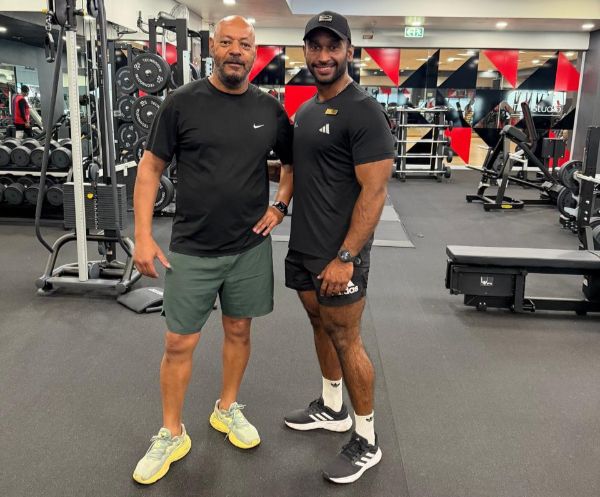
For Jason Smith, appearing shirtless on the cover of Men’s Fitness in his mid‑50s was a proud moment – the culmination of years of discipline, consistency and hard work.Less than a decade earlier, the father-of-one had been overweight and facing a stark health warning. Tests carried out by his GP revealed high blood pressure, raised cholesterol and pre-diabetes, along with the very real prospect of developing fatty liver disease – all of which dramatically increased his risk of an early death.Recalling the moment he heard the news, Jason says: ‘I was angry with myself. The way I was living – how I ate and drank – was more like a student at university than a father in his late-40s. I knew I was responsible for the state I was in.’Determined to turn his life around, the West Sussex-based business consultant overhauled his lifestyle from the ground up – ditching alcohol, transforming his diet and committing to regular exercise.The results were so striking he went on to retrain as a personal trainer, with a focus on helping other middle-aged men regain their health.So when Men’s Fitness came calling in September last year, it was a milestone moment. But not everyone was convinced.Online critics were quick to question his transformation, with some accusing him of using testosterone replacement therapy (TRT) to achieve his physique – claims he strongly denies.Their scepticism comes amid a boom in the ‘testosterone optimisation’ industry, with private clinics increasingly offering costly blood tests to check for levels of the male sex hormone and promoting TRT as a solution for men with fatigue, low mood, erectile dysfunction and weight gain. Jason Smith ditched alcohol, transformed his diet and committed to a strict exercise routine Prior to his transformation, Jason had borderline low testosterone – but he has since been able to more than double his levelsYet Jason, wary of side effects – which can include suppressing the body’s natural hormone production – insists he achieved his results naturally.‘I was aware of the whole TRT industry but I knew I didn’t need artificial hormones,’ he says. ‘I just had to make some changes.’In fact, tests showed that from having borderline low testosterone, Jason, now 56, was able to more than double his levels simply by improving his lifestyle.And experts say such transformations are not only possible, but pretty much expected in men who make sustained changes to their diet, exercise and sleep.‘There is a lot that men can do to improve their levels naturally,’ says Dr Jeff Foster, a GP specialising in men’s health.‘In many cases, low testosterone is driven by poor lifestyle – lack of sleep, excess weight, inactivity and stress. Fix those, and levels will often improve without the need for medication. Men whose levels are low because of their lifestyle tend to see the biggest gains.’Dr Ashley Grossman, a consultant endocrinologist at Queen Mary University of London, specialises in treating patients with hormone disorders, including men with clinically low testosterone – known medically as hypogonadism. This deficiency is often due to problems with the testes or the brain signals that control hormone production.He says the profile of patients seeking help has changed in recent years, adding: ‘There’s been a massive increase in men coming to us after being tested privately, worried about their levels and asking for testosterone. Dr Jeff Foster, a GP specialising in men’s health, says improving sleep, losing weight and lowering stress can naturally boost testosterone‘In many cases, they don’t have a true deficiency – and treatment isn’t needed.‘Testosterone therapy is not benign. Used inappropriately, it can suppress natural production, cause infertility and put strain on the cardiovascular system.’So what is testosterone – and why do levels fall?Testosterone is a sex hormone produced by both men and women, although men produce far higher levels.In men, it plays a key role in maintaining muscle mass, bone strength, energy levels and sex drive, as well as powering the changes seen in puberty.Levels naturally decline with age – typically from the 40s onwards – but for most men this gradual drop is modest and does not cause significant problems. However, modern lifestyles can accelerate that decline.Factors such as excess weight, poor diet, lack of exercise, chronic stress and inadequate sleep can all push testosterone levels down further – sometimes into what is labelled the low or borderline range.But many of the symptoms often blamed on low testosterone – including fatigue, low mood and weight gain – are also closely linked to these same lifestyle factors. For this reason, the NHS advises that testosterone levels should not be assessed in isolation, but alongside symptoms and overall health. Testosterone levels naturally decline with age – typically from the 40s onwards – but for most men this gradual drop is modest and does not cause significant problems‘For the vast majority of men, having low testosterone reflects low levels of health and fitness – especially over age 40,’ says Dr Channa Jayasena, an NHS endocrinologist and clinical professor of reproductive endocrinology at Imperial College London.He adds: ‘Testosterone levels fluctuate, so some men may be within “normal” levels but could still benefit from optimising their natural production.‘Only around two to three per cent of men will have a clinical deficiency requiring TRT, the rest would benefit from lifestyle change to boost their levels.’Research shows that one of the best ways to increase levels of the hormone is to lose weight.A 2013 review of 23 studies found that weight loss was associated with significant increases in testosterone levels and that the increase was proportional to the amount of weight lost – men who lost the most weight saw the largest rises in testosterone.‘If you have problems with testosterone, the first thing to look at is your waistline,’ Dr Jayasena says. ‘The more weight you lose, within healthy ranges, the higher your testosterone goes.’It is not just overall weight loss that is important but where you carry it, he adds. Men with excess fat around their waist are more likely to have worse metabolic and reproductive health.The NHS advises keeping your waist measurement to less than half your height – a simple way to reduce the risk of type 2 diabetes, heart disease and high blood pressure.That matters because fat stored round the middle is more than a cosmetic problem – a larger waistline is a strong indicator of higher levels of visceral fat. It's a fact Around one in five men in the UK have low testosterone – but less than one in ten have a medical-grade deficiency.The worldwide testosterone replacement industry is worth about £4billion – up 60 per cent in the past decade. While this type of fat – which is stored deep in the abdomen, around the organs – cannot be seen directly, it is considered particularly harmful. And experts say it may also play a role in lowering testosterone.A 2018 study of more than 300 men found those carrying higher levels of abdominal fat had testosterone levels 12 per cent lower than men whose weight was more evenly distributed.This is because visceral fat is hormonally active, helping convert testosterone into oestrogen – the primary female sex hormone – which can further suppress levels and contribute to symptoms such as reduced libido, erectile difficulties and extra weight gain.To tackle this type of fat, improving overall fitness is key. Exercises that raise the heart rate – such as running, swimming or cycling – are particularly effective at reducing visceral fat.‘There isn’t strong evidence that one specific type of exercise boosts testosterone more than another,’ says Dr Jayasena. ‘But what makes a difference is improving your overall fitness – particularly aerobic fitness.‘It’s not just about lifting weights. Regular activity that leaves you out of breath is what helps drive these changes.’As well as losing weight around the midriff, experts say one of the most important factors in preventing declining testosterone levels is a good night’s sleep.Dr Foster says it’s not just about how many hours you get a night, but sleep quality – with the vast majority of testosterone produced in deep-sleep stages.When sleep is cut short or disrupted – by shift work or young children – the hormonal signals that trigger testosterone production weaken, causing levels to fall. And while napping may help you catch up on sleep, it will do nothing for your testosterone levels, Dr Foster explains.While there is no universal ‘perfect’ amount, research published in the journal Andrology found that for men aged 41 to 64 a healthy goal is seven to eight hours a night – any less is linked to lower testosterone levels.Another study, from the University of Chicago, found sleeping for just five hours a night reduced testosterone levels by 10 to 15 per cent.‘Sleep is a great thing because, if you have sleep loss, you don’t get that natural spike of testosterone all men should have in the morning,’ says Dr Jayasena.‘People seem to think sleep is something they can skimp on, when lack of it is probably doing the most harm,’ Dr Foster adds.While social media is awash with advice on supplements that claim to boost testosterone, getting the basics right matters far more.Focusing on macronutrients – the balance of carbohydrates, protein and fats – as well as overall calorie intake, is likely to have the biggest impact on hormone levels. That said, some nutrients may play a supporting role.Dr Foster says there is evidence that deficiencies in key vitamins and minerals, including Vitamin D and zinc, can contribute to lower testosterone. There is also early research suggesting compounds found in foods such as cacao may have an effect. One study in healthy young men found that a supplement containing cacao and pomegranate extract increased free testosterone levels by 25 per cent over 56 days, compared with a placebo.However, experts caution that such findings are preliminary and should not be overstated.‘No supplement will compensate for a poor diet or unhealthy lifestyle,’ says Dr Foster.Jason agrees, and says social media often overcomplicates what is a simple equation.‘Social media preys on symptoms a lot of men in their 40s have,’ he says. ‘But the reality is, you can’t improve your health without putting in the work.‘My testosterone levels are now at the top end of the scale. Exercising, eating well and prioritising sleep takes discipline, but it’s far more effective and comes without risks associated with TRT. It’s a shame that, with more people taking it, some find it hard to believe I’ve done this naturally.’Tackling everyday stress can give you a hormone hike tooAlongside losing weight and getting enough sleep, experts say managing stress is key to a healthy testosterone level.The stress hormone cortisol is released by the adrenal glands in periods of pressure, helping the body respond to threats. But in busy modern life, that system can be switched on for long periods.‘Acute stress triggers cortisol,’ says Dr Jeff Foster, ‘but we live in a world of constant low-level stress – emails, long working hours – so many are exposed to persistently raised levels.’Over time, this can disrupt the hormone system. Testosterone production is controlled by a signalling pathway between the brain and testes. When stress is prolonged, elevated cortisol interferes with this process, damping the brain’s ability to send chemical signals that stimulate testosterone production.At the same time, the body shifts into survival mode – diverting energy away from reproduction and hormone balance.‘If your body is constantly in fight-or-flight mode, it is not prioritising reproduction,’ adds Dr Channa Jayasena.This can contribute to lower testosterone levels, particularly in men affected by poor sleep, excess weight or inactivity.
How you can boost your testosterone levels WITHOUT supplements
For Jason Smith, appearing shirtless on the cover of Men's Fitness in his mid‑50s was a proud moment - the culmination of years of discipline, consistency and hard work.
TL;DRAI
Questo articolo non è rilevante per Warptech Tech News. Tratta di salute personale e fitness (testosterone naturale), completamente fuori scope rispetto al target della testata (manager IT, CTO, responsabili AI e tech decision-maker). Se hai un articolo tech/AI/business da riassumere, sono pronto. Altrimenti, verifica se è stato passato per errore.
1,924 words~9 min read