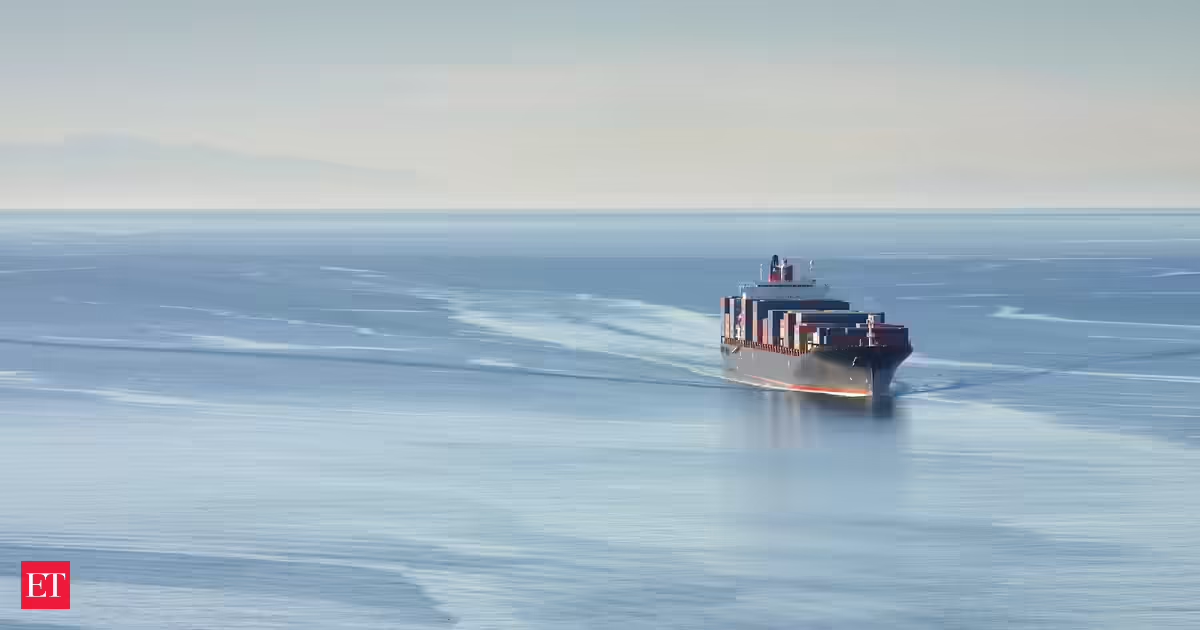
We live in a world where people are quick to judge, and opinions travel faster than facts. Strangers, especially online, can criticise something with just a single click. Amid this scenario, it becomes important to protect your peace of mind. While it's impossible to control external factors, which are other people's judgements and opinions, what remains in our control is how we react and how much power we are willing to give to such thoughts. This idea lies at the heart of internet's most widely shared and appreciated proverbs about resilience and emotional strength.The proverb reads: “An entire sea of water can't sink a ship unless it gets inside the ship. Similarly, the world's negativity can't put you down unless you allow it to get inside you.” At first glance, the comparison is simple. Ships travel across vast oceans every day. They are surrounded by enormous amounts of water, yet they remain afloat because the water stays outside. The danger begins only when water starts entering the vessel. The proverb uses this image to explain a powerful truth about life.Negativity exists everywhere. It may come in the form of criticism, rejection, gossip, failure, disappointment, or self-doubt. Just as a ship cannot avoid the sea, people cannot avoid challenges or negative experiences. The real question is whether those experiences are allowed to take root internally. This quote is also widely attributed to Goi Nasu, anonymous, yet widely cited figure in motivational literature.The saying reminds us that external events do not always determine our emotional state. Two people can face the same setback and respond very differently. One may become consumed by anger, fear, or discouragement, while the other continues moving forward with confidence. The difference often lies in what they choose to carry within themselves.Meaning of the proverb of the dayThe proverb also highlights the importance of mental boundaries. Listening to feedback can be valuable, but constantly absorbing negativity can become damaging. When people allow every criticism, insult, or setback to define their self-worth, they give those experiences more power than they deserve.Another layer of meaning is personal responsibility. The proverb does not suggest ignoring problems or pretending difficulties do not exist. Instead, it encourages people to strengthen their mindset so that challenges remain external obstacles rather than internal burdens.Like a well-built ship navigating rough waters, a resilient person is not someone who never encounters negativity. It is someone who refuses to let that negativity take control of their thoughts, confidence, and sense of purpose. The sea may be vast, but it only becomes dangerous when it is allowed inside.
Proverb of the day: ‘An entire sea of water can't sink a ship unless it gets inside the ship. Similarly, negativity can't put you down unless you allow it to get inside you’, a lesson on protecting your inner peace
In today's fast-paced world, protecting your peace of mind is paramount. Just as a ship remains afloat by keeping water out, you can shield yourself from negativity. External challenges, whether criticism or failure, only become detrimental when allowed to penetrate your inner self. Cultivating mental boundaries and personal responsibility empowers you to navigate life's storms without letting them sink your spirit, ensuring resilience against external influences.
429 words~2 min read